
This factor separates profitable ice cream stores from those that cannot survive beyond the second year.
The Ice Cream Stores industry in the United States has grown over the last five years to 2025 at an annualized rate of 5.8%, reaching $7.4 billion, including 0.9% growth in 2025 itself, according to IBISWorld (2025). There are opportunities for ice cream stores operating in the market. However, stores must manage profitability just like their products.
How Does Your Ice Cream Business Model Affect Ice Cream Shop Profitability?
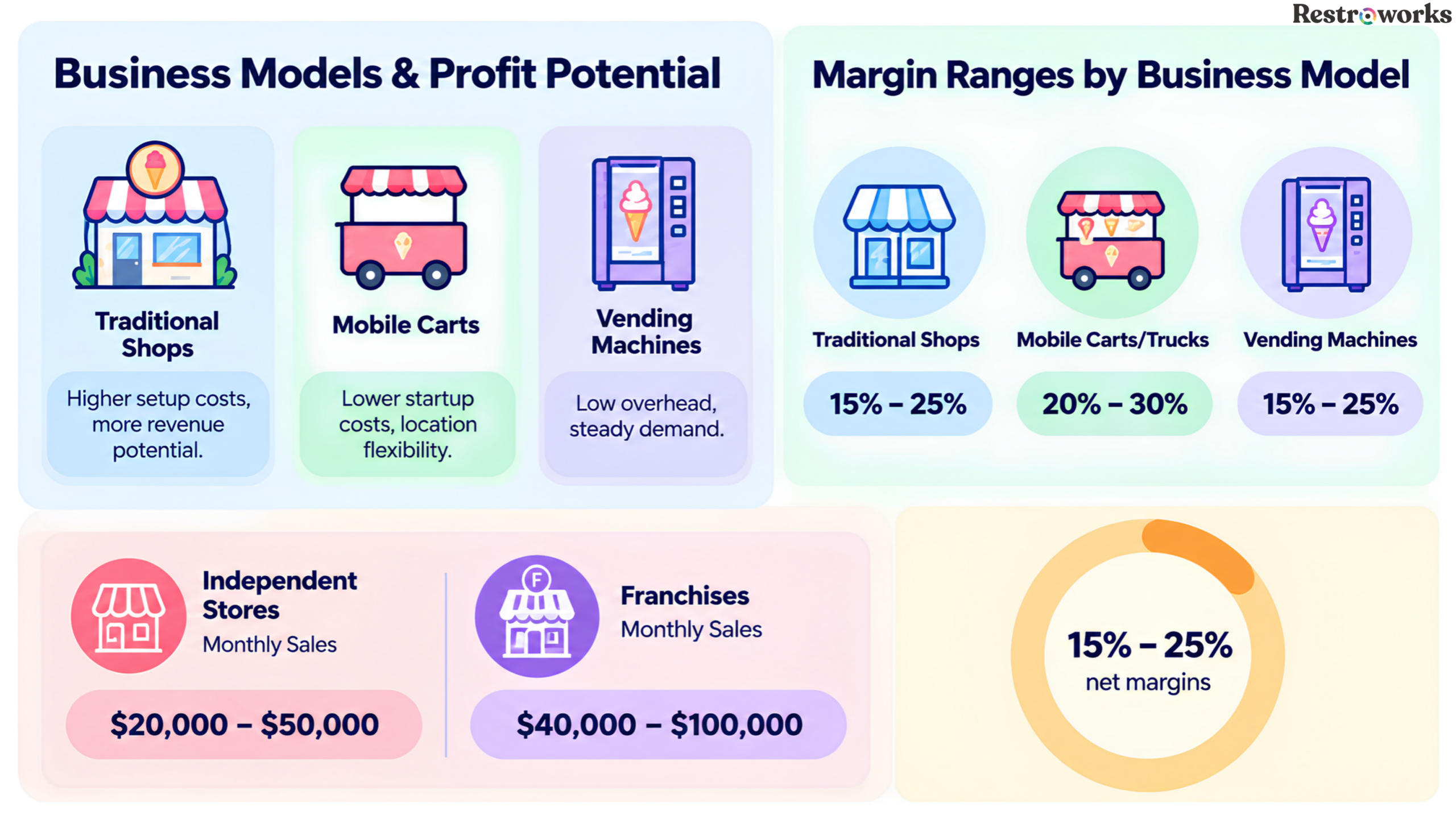
Different business models in the ice cream industry, such as traditional shops, mobile carts, and automated vending machines, offer varying profit potentials, with mobile carts often having lower startup costs but limited by weather and location permits. Margin sizes vary significantly depending on the business model an ice cream shop chooses. Different ice cream business models, including conventional shops, mobile ice cream stands, and ice cream vending machines, offer different potential margins; mobile ice cream businesses, such as trucks and carts, generally have lower overhead costs and can achieve profit margins ranging from 20% to 30%.
The ice cream machine is a decisive factor in margin size across business models. Soft-serve ice cream machines have higher gross margins than hard ice cream products. Soft-serve ice cream products often provide higher margins, typically between 60% and 75%. The margin difference between hard-serve ice cream machine business models is that conventional batch freezers have higher ingredient and labor costs per unit sold, plus inventory management costs, compared to soft-serve machines, which often use a single countertop machine.
Ice cream franchise outlets incur costs such as franchise fees and royalties, which reduce net profit margins relative to independent ice cream stores at the gross level. Nonetheless, franchises may achieve higher profitability through better supplier prices, proven operational systems, and strategic placement in data-driven locations. Monthly sales for independent ice cream stores range from $20,000 to $50,000, while franchises range from $40,000 to $100,000.
What Profit Margins do Independent Ice Cream Shops Earn?
Independent ice cream shops typically earn net margins of 15% to 25%. This wide range reflects the strengths of independent shops, such as flexible menu pricing, unique flavors, and low overhead costs; however, it also reflects weaknesses like high ingredient costs per unit and limited supplier negotiating power. On average, ice cream shops have a net profit margin of 20%, while some may have higher margins depending on cost management and menu prices.
Sam’s Fried Ice Cream, a 200-square-foot ice cream shop in America, earns over $200,000 annually by focusing on value-added processing rather than production, combined with street fair activities and lean overhead. Lean operations like this can serve as a template for other independent ice cream shops aiming to increase sales and exceed typical margins for their size.
How Does an Ice Cream Machine Choice Affect Your Profit Margins?
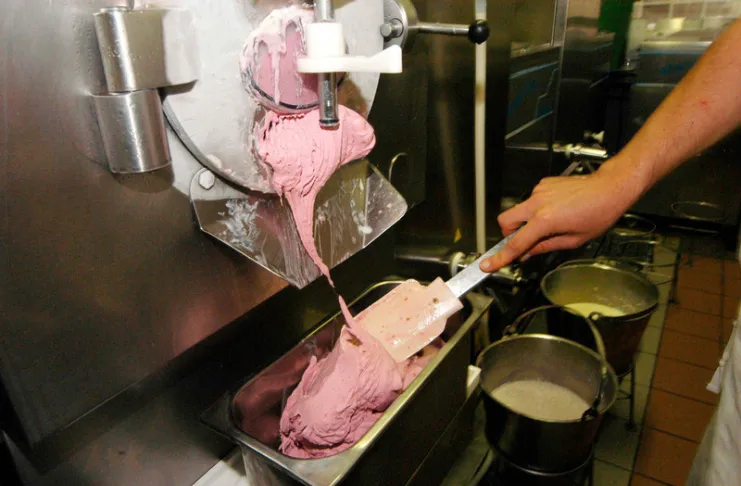
Choosing the right ice cream machine is perhaps the most important decision for an ice cream shop’s long-term profitability. The monthly expense difference between leasing and buying an ice cream machine can be as high as $1,500-$3,000, which directly affects margin calculations. A soft serve ice cream machine, running at optimal efficiency during peak hours, can generate up to $200 in sales per labor hour, a figure no hard ice cream shop without soft serve can reach.
Soft serve ice cream usually provides higher margins, ranging from 60% to 75%. An ice cream machine that is properly maintained and uses portion calibration and scheduling to run efficiently minimizes waste and labor costs. Managing labor costs is crucial to maintain profitability in ice cream shops, with monthly wages often ranging from $5,000 to $15,000. An ice cream machine that minimizes labor required per serving, whether it is a soft serve ice cream machine, batch soft serve machine, or automated hard ice cream machine, minimizes labor cost per average serving.
A machine that makes ice cream and incorporates technology to save energy can also reduce utility costs, one of the highest expenses for shops running freezing machines 12-16 hours a day. Energy-efficient ice cream machine equipment will result in higher daily margins year-round.
Controlling waste and portion sizes is crucial to keep gross margins high, and it starts with the right ice cream machine.
What is the Average Profit Margin for an Ice Cream Parlor?
The average gross profit margin for a traditional ice cream parlor varies widely depending on factors such as location, product offerings, and effective management of the parlor’s cost of goods sold. Gross profit margin averages about 20% for ice cream shops, though some may be higher.
Cost of Goods Sold (COGS) for ice cream shops should ideally be between 18% and 35% of total revenue to maintain healthy profit margins. For an ice cream parlor that sells hard ice cream as well as premium products such as specialty sundaes and waffle cones, COGS will vary depending on ingredient quality and product volume. High-margin products like toppings, merchandise, and hot drinks greatly increase an ice cream parlor’s profitability.
Meadow Gold shifted from mass market to premium and raised gross profit margins to 55%, adding 17% new clients in its first month of operation, proving the impact of premium pricing and a product mix designed to improve margins in ice cream stores. (Source: Meadow Gold Case Study, Dia Brands) Ice cream parlors that focus on selling high-end ice cream products, combined with high-margin items such as specialty sundaes and waffles, have consistently shown better margins than the average ice cream shop.
Rent in busy areas can take up 9% to 15% of an ice cream shop’s revenue, while suburban or neighborhood locations typically cost less, ideally keeping rent around 5% to 8% of revenue. For an ice cream parlor aiming to maximize revenue through premium pricing, seasonality plays a major role in ice cream shop profitability, with summer months potentially driving revenue up to 40%, while winter can see a drop of around 30% in sales.
What Factors Affect Hard Ice Cream Profit Margins?
Hard ice cream production margins are smaller than soft ice cream margins at nearly every cost point. Hard ice cream requires more production machinery, ingredients, and storage capacity, all of which are costly and lead to smaller gross margins.
The profitability of hard ice cream shops depends largely on whether they make their own hard ice cream or buy it from another party. Owner-made hard ice cream commands higher prices and a stronger brand, but it also involves higher production and maintenance costs and greater spoilage risk than soft-serve ice cream. Supplier-made hard ice cream involves lower costs and less work, although it doesn’t offer the same differentiation as owner-made hard ice cream.
Front Porch Ice Cream, a U.S. regional ice cream manufacturer based in North Carolina, doubled sales in one year by positioning itself as a premium, authentic brand, filling a gap left by established competitors in the craft ice cream market. This strategy increased their average transaction value and margins, without changing their core ice cream offering. Hard ice cream stores that position themselves on unique flavors, locally sourced ingredients, and high premiums, rather than matching the prices of commodity ice cream brands, can earn higher profit margins.
How Do You Boost Revenue and Improve Profit Margins?
To improve profit margins in ice cream shops, they should focus on both increasing revenue and cutting costs.
First, to increase revenue, focus on raising average order value. This is because high-margin products, such as specialty sundaes, waffle cones, hot drinks, and combination sales, can increase average order value without necessarily increasing the number of customers. A focus on average order value (AOV) can significantly boost total annual revenue for ice cream retailers. Customer loyalty programs can encourage customers to visit more often and buy more each time. Customer loyalty programs and Seasonal demand significantly impact ice cream shop revenue, with summer months potentially driving sales up to 40%, while Ice cream shops can experience a revenue drop of up to 30% during winter months, making it crucial for operators to plan for these seasonal fluctuations. To mitigate the impact of seasonal fluctuations, ice cream shops can introduce a winter menu featuring warm desserts and take-home pints to maintain customer interest during colder months.
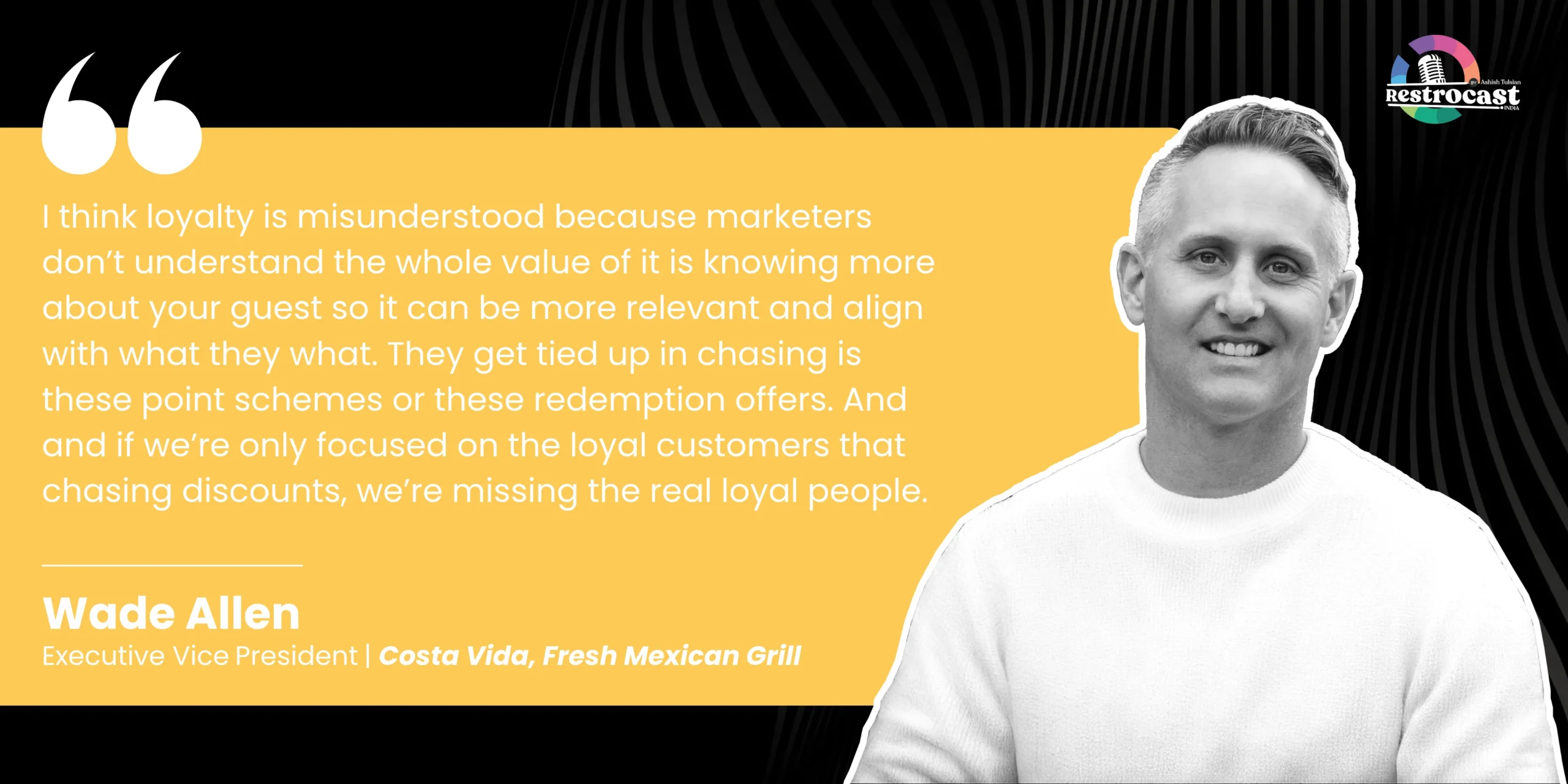
Wade Allen, on the Restrocast Podcast, discussed how many marketers misunderstand loyalty and why it matters.
On the cost side, bulk purchasing of key ingredients reduces direct costs and improves gross margins across every menu item. Efficient scheduling of staff around the ice cream machine’s peak throughput hours reduces labor costs without sacrificing service quality. Inventory management systems that track product mix performance by day and hour let ice cream shops streamline operations, reduce waste, and align offerings with customers’ preferences in real time.
By diversifying their product portfolio to sell bubble tea alongside ice cream, Smoove Ice Cream earned $500,000 annually at a 13% operating margin. This tactic not only helps during downtime but also strengthens brand identity and reduces the operational overhead of having only one product, ice cream, on the menu.
In his Forbes contribution, Yehong Zhu mentioned that “average profit margins for ice cream as of 2013 were 23%, which is greater than the profit margins for snack foods, candy, cereals, and sugar – making it one of the most profitable products.” To achieve such a high average profit margin, you need operational efficiency across all cost categories and a smart pricing strategy.
Profitable margins in an ice cream shop are possible, but only with accurate financial forecasting, the right ice cream machine for your business, control of labor and operating costs, and an appropriate pricing strategy. The typical ice cream shop in the U.S. can earn between $200,000 and $500,000 per year, while the highest revenue makers earn more than $1 million annually. The businesses that achieve such high numbers aren’t the ones offering the greatest variety of products or serving the most customers; they’re the ones that maintain consistent quality and control their cost of goods sold without outsourcing profits.