

Restaurant franchise marketing is unlike any other because you must market a nationwide brand name while running highly localized campaigns at each location that match the specific customers, culture, and competition there.
Mess up the balance, and you either come off as too corporate and lose your local appeal, or vice versa, and no one benefits.
The opportunity is significant, but so is the competition for consumer spending. The National Restaurant Association’s 2026 industry outlook now projects U.S. restaurant and foodservice sales of $1.36 trillion in 2026, with inflation-adjusted growth of 0.8%.
In this context, franchise marketing plays a role in how restaurant franchises can capture their fair share of growing consumer spending.
What You Will Learn
- How to create a franchise marketing plan that ensures a balance between national brand identity and local identity
- The marketing techniques, both online and offline, that attract new customers to franchise outlets
- How to create customer loyalty and retain customers by offering great customer service and personalization in marketing
- The marketing techniques of content marketing, social media marketing, and email marketing that attract repeat customers
Why Restaurant Franchise Marketing Requires a Distinct Approach
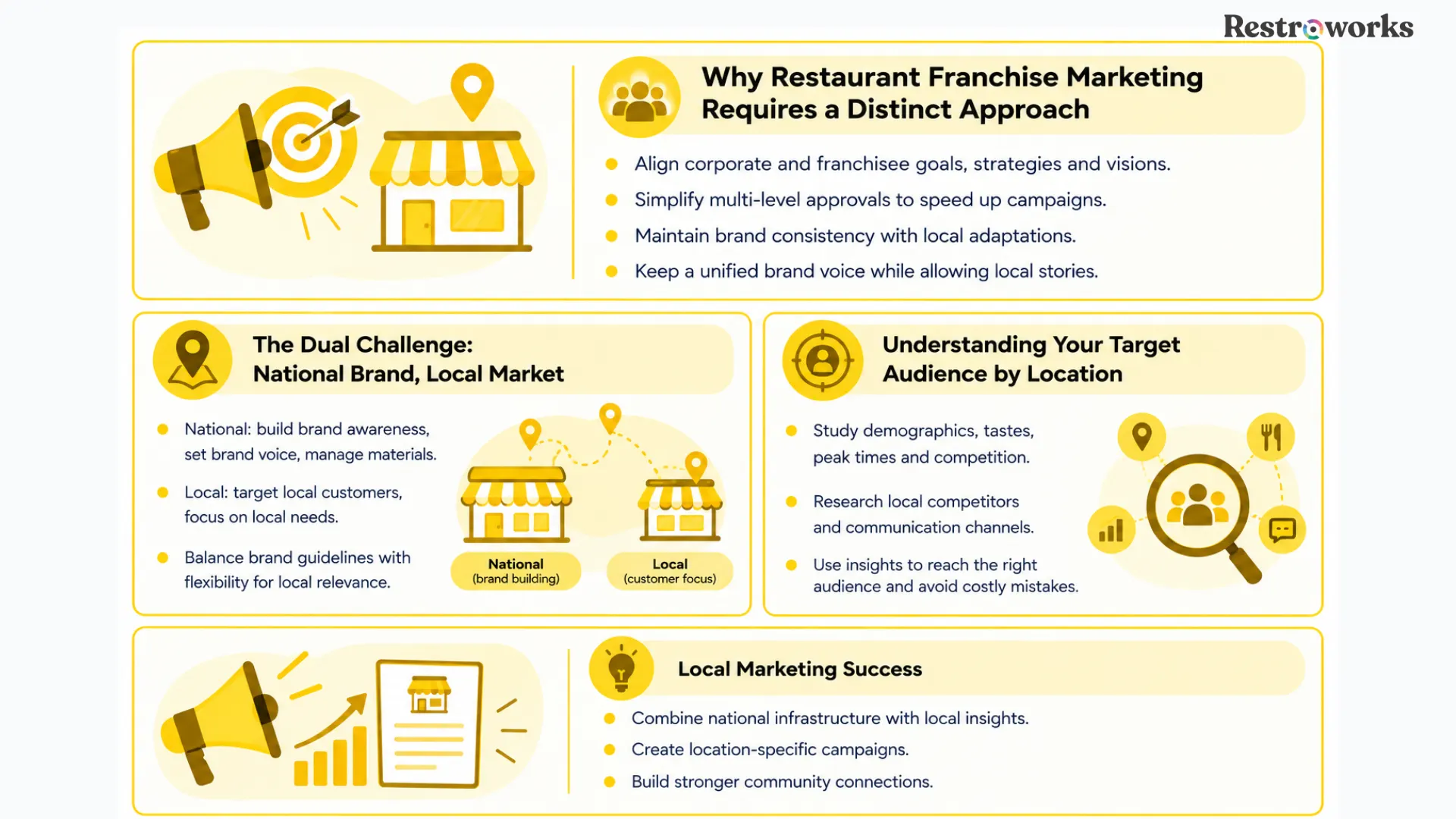
Restaurant franchise marketing requires a distinct approach because it has to align two parties, the franchisor and each franchise owner, while keeping the brand consistent across locations that each serve a different local market.
Three challenges set it apart from marketing a single restaurant-
- Corporate and franchisee goals, strategies, and visions can vary widely across different franchises
- Marketing initiatives often require several approvals across corporate levels before implementation
- Franchises need to maintain brand consistency while allowing local adaptations
Marketing is also where franchisees are often least satisfied with their franchisor. Eric Stites, CEO of Franchise Business Review, which surveys franchisees across hundreds of brands, has said that across all the years of its research, stronger marketing programs, effective technology, and innovation are the key drivers of franchisee satisfaction.
The Dual Challenge: National Brand, Local Customers and Market
Franchising marketing takes place on two levels at once. Nationally, the franchisor builds brand awareness through national marketing campaigns, develops brand voice policies, and manages corporate marketing materials.
At the local level, the franchise owner must target the specific local customer base, the customers who will live, work, and dine in their area of trade.
To run a successful franchise marketing campaign, the system must balance corporate guidelines that protect strong brand identity with enough leeway for the franchise owner to create campaigns relevant to the local area. Successful restaurant franchises treat this as a collaboration:
- The corporate company provides the infrastructure and brand identity.
- The franchise owner brings local knowledge and local marketing.
Understanding Your Target Audience by Location
Market research tailored to individual franchise locations forms the basis for successful local marketing. Demographics, tastes and preferences, peak times, and competition levels vary widely by market; a marketing approach that works well for one franchise location will fail when applied to another.
Conduct local market research before developing any marketing strategy for an individual franchise location. Learn about your local target audience and their decision-making process, other competitors, and communication channels they use.
This analysis will guide future marketing decisions and prevent mistakes from targeting the wrong customers through the wrong communication channels.
Building a Restaurant Franchise Marketing Plan
Build a franchise marketing plan in three steps: combine national campaigns with local marketing strategies, allocate a budget at each level, and set specific, measurable goals that you review every month.
Utilizing local SEO strategies, such as optimizing Google My Business profiles and incorporating location-based keywords, can significantly improve a franchise’s visibility to nearby customers searching for services.
Budget allocation must be planned at each level:
- Brand fund: Franchisees typically contribute 1% to 5% of gross sales to fund national or regional campaigns.
- Local marketing: Local marketing requirements are often lower, around 0.5% to 2% of sales, though some brands set higher minimums. For example, Toastique requires franchise owners to spend at least 2% of monthly gross sales on local marketing.
Setting Marketing Goals and Measuring Results
Marketing objectives must be specific and measurable before launching a campaign: new customers, repeat business, more checks, or increased foot traffic during specific times of day. Marketing campaigns without specific objectives tend to achieve vague results.
Analyzing these numbers monthly helps owners decide whether to invest more in or eliminate non-performing campaigns.
Digital Marketing for Franchise Locations
Franchise marketing strategies must account for the unique challenges of the franchise model, including the need for consistent messaging and the risk of varying customer experiences across locations.
Digital channels are now where most diners decide where to eat. In a PYMNTS survey of more than 2,200 US consumers, 62% of restaurant customers said they use Google to search for restaurants, more than any other digital platform, and 51% called it the single best platform for researching restaurant information.
AI is quickly becoming another channel: according to DoorDash’s 2026 Trends Report, 22% of consumers have already used AI tools like ChatGPT or Google Gemini to help choose where to eat.
Local SEO and Strong Online Presence
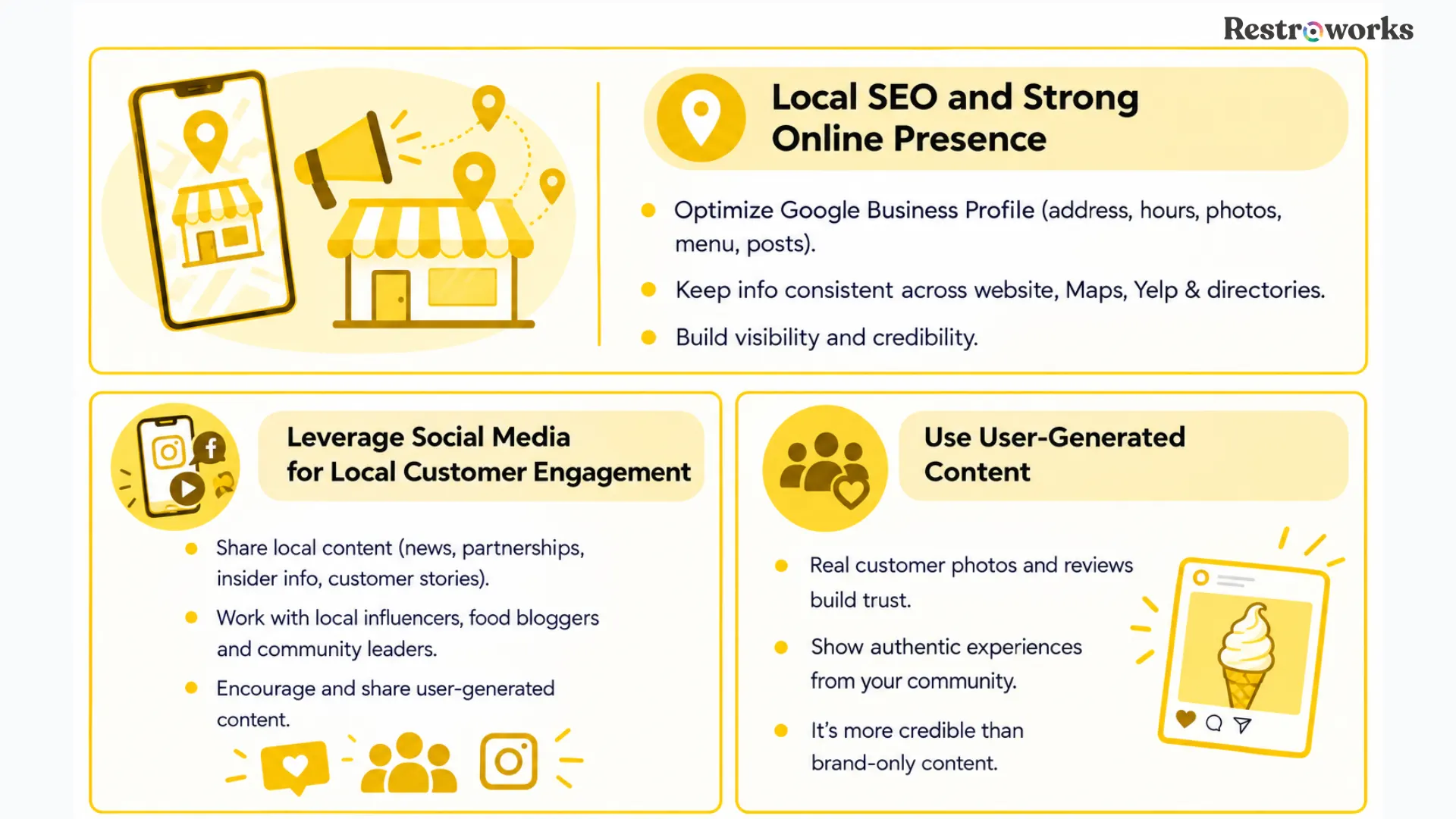
The best digital marketing investment for franchises is Local SEO. This involves optimizing your Google Business Profile for each location, including the correct address, hours, photos, menu, and regular posts that increase visibility for customers searching for local dining spots.
The key to successful local SEO is keeping consistent, accurate information across all your listings online.
It is important that you have consistent information across your website, Google Maps, Yelp, and other directories for your franchise locations.
When information is inconsistent (for example, showing different hours of operation on Google Maps and Yelp), you reduce visibility and lose credibility with customers.
Inconsistent information, such as different hours on Google Maps and Yelp, reduces visibility and costs you customers. According to BrightLocal’s Local Business Discovery & Trust Report, 62% of consumers would avoid using a business if they found incorrect information online.
Leverage Social Media for Local Customer Engagement
With social media marketing, franchises can engage customers through localized content tailored to the local marketplace.
Use social media platforms to post local content such as local news, community partnerships, insider information, and customer stories, along with general brand content.
Social content has a direct impact on restaurant visits: a 2025 MGH survey found that 58% of users have visited a restaurant after seeing it on TikTok.
Working with local influencers with a genuine following in your business area can help franchise marketing campaigns reach a targeted audience more cheaply than expensive social media franchise advertising campaigns.
Smaller creators are also the most affordable: nano influencers (1,000 to 10,000 followers) charge a median of $480 per sponsored post, compared with $1,840 for micro influencers. Good partners include:
- Local food bloggers
- Community leaders
- Local social media personalities with a local following
Share user-generated content. Content from happy customers is one of the most credible types of franchise marketing content. In Emplifi’s 2026 consumer trust survey, 63% of consumers said they trust user-generated reviews, while AI-generated content was the least trusted format.
EXPERT OPINION
Franchises can benefit from sharing successful marketing strategies across locations, letting them learn from one another and strengthen the overall brand.
Digital advertising is projected to attract significant consumer attention, with advertisers expected to spend $190.5 billion on digital ads in 2024, making it a crucial component of franchise marketing strategies.
Thorough marketing training and clear guidelines are crucial to local marketing success, helping franchisees avoid missteps and align with corporate goals.
Direct Mail Campaigns and Local Promotions
Direct mail campaigns still work for franchise restaurants when focused on specific residential areas within their trade area. This can be a well-crafted direct mail piece with a local promotion attached, such as an offer for first-time customers only or an offer linked to a local event.
Direct mail remains one of the strongest-performing offline channels. According to the ANA’s 2024 Response Rate Report, direct mail delivers a median ROI of 112%, higher than paid search (93%) and online display (89%).
Local Events and Community Partnership Marketing
Being part of the local community is the best marketing investment you can make in ROI because it forms relationships rather than just raising awareness. Support a local sports team or take part in a local festival. Organize a community event at your location.
All of this will earn you goodwill, drive word-of-mouth marketing, and provide content for future digital marketing efforts. Partner with local businesses for cross-promotion.
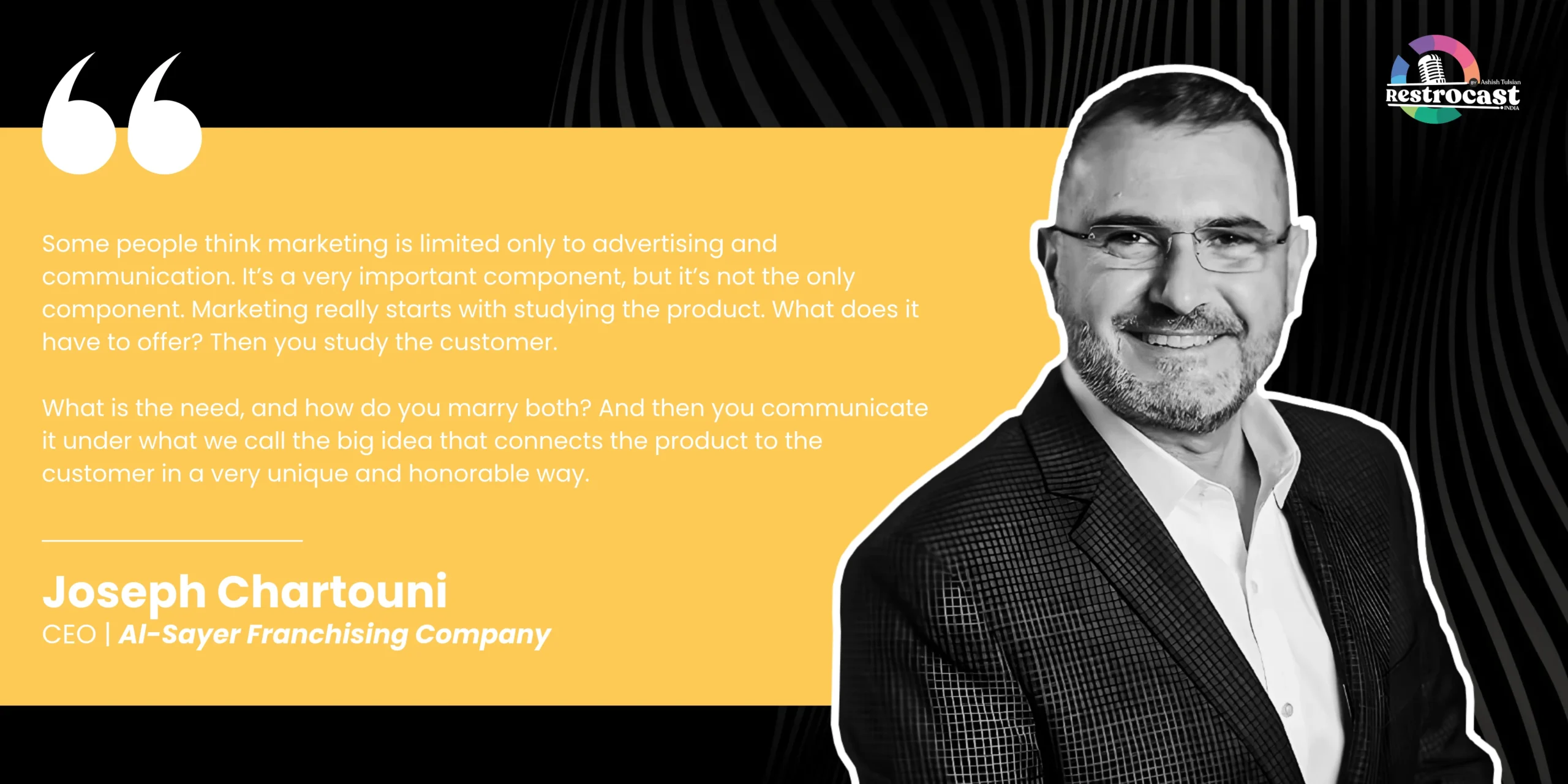
Joseph Chartouni, on the Restrocast, explained that marketing is more than advertising and that understanding it and meeting customers’ demands is essential.
Building Brand Loyalty and Exceptional Customer Experience
A customer loyalty program is a winning marketing strategy that can encourage repeat visits and foster loyalty by offering incentives like exclusive discounts, rewards, or early access to new products.
Starbucks Rewards shows what a well-structured program can achieve:
- 35.8 million 90-day active US members as of Q3 fiscal 2026
- 59% of US company-operated store spending comes from Rewards members
- More than $13 billion in member spending in fiscal 2025
Loyalty Programs That Drive Repeat Business
Loyalty programs are one of the most effective ways to retain customers across franchise locations, because they give diners a concrete reason to come back.
The data backs this up. According to the Paytronix Loyalty Report, which analyzes restaurant and convenience loyalty programs: