


You forecast your restaurant demand because it’s meant to reduce uncertainty. You look at past data, identify patterns, and plan your staffing, inventory, and service around it. Sound good enough?
Not so much. What even the most accurate forecasts may be unable to predict confidently is the weather. You can account for seasonality, and you can expect a weather change to shift demand. But it’s harder to factor in when and how that change will impact operations.
And this is where it gets even more complicated. Because it impacts when customers show up, what they want to order, and most of all, if they will even come at all. A study by Ohio State University even reports that the weather not only affects customer traffic, but also their mood and experience at a restaurant.
So, how do you plan for weather changes in your forecasts? Let’s look at the impact of weather on restaurant forecasts and how you can adapt to it smartly.
What you will learn
- What are the weather changes that impact consumer demand?
- Ways to improve weather forecasting for your restaurant business
- Operational adjustments to make for your restaurant
What are the Key Weather Variables Impacting Customer Demand?
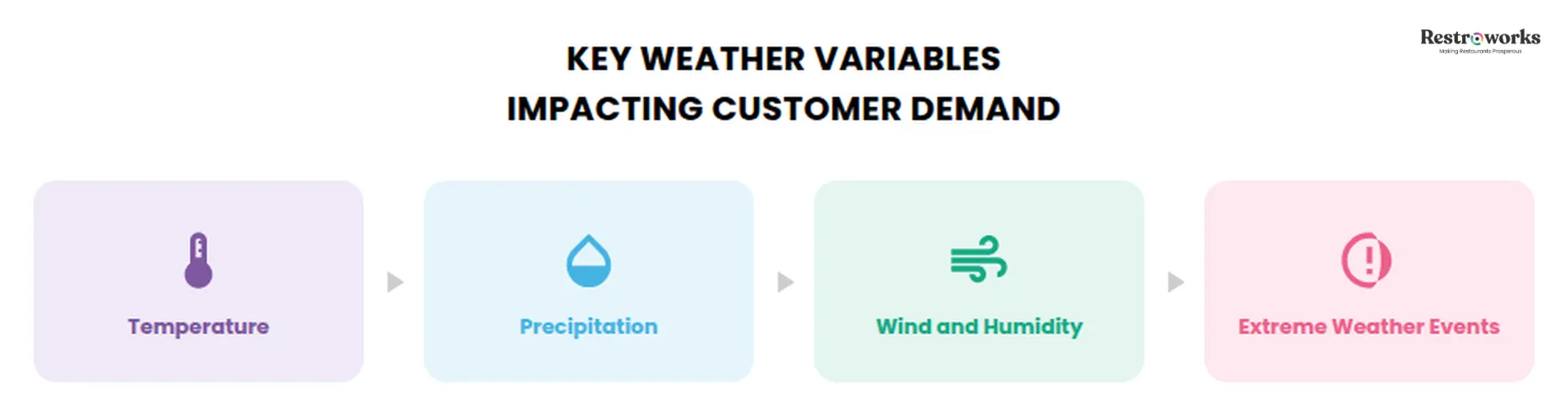
If you want to factor weather into your forecasts, only considering broader weather aspects like temperature and rain may not be enough. Different variables impact customer behavior and menu preferences differently.
In fact, research reveals that different weather variables like temperature, rainfall, and air quality have an effect on takeaway orders in online food ordering. So, it’s worth looking into these variables-
- Temperature: Temperature has one of the most visible effects on demand. It also impacts foot traffic, with good weather increasing dine-in traffic.
- Precipitation: Rain and snow days reduce dine-in traffic, especially for casual visits and gatherings, while increasing delivery and takeaway orders.
- Wind and Humidity: High humidity and strong winds can make outdoor dining less enjoyable and impact high-street locations. While they may not directly change demand, they can change where customers choose to sit.
- Extreme Weather Events: Inclement weather conditions like heatwaves, storms, or cold snaps can totally disrupt normal patterns with less predictable demand and service disruptions. Extreme weather like snowstorms can cause a 10-40% drop in dine-in traffic, while cold, wet days can result in a 2-3% decline in revenue.
How Does Weather Impact Restaurant Demand Forecasts?
Weather is one of the most crucial external factors that impacts operations and restaurant demand forecasts. Since you cannot predict the weather from historical data and patterns, it becomes trickier to create accurate forecasts.
Here are various ways it impacts your restaurant demand and the accuracy of your forecasts-
1. Fluctuating Foot Traffic and Demand
A sudden change in the weather will reduce walk-ins or change your predicted peak hours. This is to say that demand may be there, but not at the time or volume you expected, which makes it harder to predict kitchen and staffing needs.
And if this isn’t hard enough, bad weather also affects people’s moods, making them 2.9 times more likely to give a restaurant a poor rating. According to Milos Bujisic, the co-author of studies uncovering the relationship between weather and negative restaurant reviews, “Restaurant managers may see more than the usual bad reviews on certain days, and it may have nothing to do with the service or the quality of the food. Restaurants can’t control the weather, but it may affect how customers review them.”
2. Shift to Delivery and Takeout

Rain, extreme heat, or cold weather conditions make more customers order online from food delivery apps or opt for takeaway. But if you don’t account for this change in ordering channel, you will be underprepared for delivering food orders and end up allocating more staff for dine-in.
3. Change in Customer Preferences
The weather also influences what people feel like eating. People may want more comforting soups or hotter beverages at coffee shops in chilly winters. This will impact item-specific demand, which in turn will change your inventory planning and kitchen prep decisions.
But on another note, this also gives you the opportunity to capitalize on these seasonal trends by giving customers what they want and increasing restaurant sales.
4. Staffing Issues
Accurate demand forecasts help you predict staff requirements better. But when a weather shift happens, you may start seeing staffing issues.
For instance, you may have scheduled enough staff to cover your weekend dinner service, but it rains, and you suddenly see a spike in delivery orders. So not only are the servers sitting idle, but you’ll also need more delivery drivers.
Weather can also affect employee availability, adding another layer of unpredictability to how a restaurant operates and manages staff.
How to Improve Weather Forecasting for the Restaurant Industry?
You can’t control the weather, but you can lower its impact on your future sales. The goal is to understand how different conditions affect your demand and use the insights for smarter decisions.
Let’s see how-
1. Use Weather Analytics
Start by treating weather as a quantifiable, measurable input instead of a general observation. This involves tracking the past patterns to see how specific conditions have influenced your restaurant sales, footfall, and order behavior over time.
Here, focus on the following aspects-
- Map demand against specific variables like temperature ranges, rainfall levels, and humidity
- Identify the temperature limit where demand shifts (for instance, if demand changes only after a certain temperature is crossed)
- Identify demand changes during bad weather conditions
2. Build Weather-Based Demand Patterns

Once you have the historical sales data, you need to consider local weather conditions. Instead of looking at the overall demand, compare similar days (demand-wise) with different weather conditions. This helps you create more realistic benchmarks.
For instance, you can compare rainy days or weekends vs dry days or weekends, hot weekdays vs days with moderate temperature, and identify repeatable patterns in demand timing and channel mix to understand how weather has impacted everything.
3. Rely on AI Forecasting Algorithms
As more and more weather trends and variables enter the picture, manual forecasting processes start to fall short. Add in other factors like day of the week, service period, daypart, or customer behavior, and it becomes difficult to accurately predict demand based on the weather.
This is where AI models and forecasting algorithms are better equipped to process these inputs together. These tools continuously learn from new data and detect weather patterns you may not, and adjust forecasts accordingly. These systems can-
- Access weather data from multiple sources, including forecast predictions, historical data, and real-time weather measurements.
- Combine weather information with other restaurant data, like sales and demand patterns, to generate forecasts.
- Apply advanced machine learning algorithms to detect non-linear relationships between weather changes and customer demand.
AI-powered demand forecasting, integrated with weather-related factors, helped 3 BBQ brands cut down food waste by 55% and boost profits by 40%.
4. Implement Predictive Analytics
Predictive analytics takes things a step further by using both historical data and external inputs, like weather forecasts, to anticipate demand shifts before they happen. This helps you be more proactive in addressing customer demand.
Demand analytics help you adjust staffing and prep based on upcoming weather impacts and predict changes in demand timing and customer behavior for enhanced decision-making. To make predictive analytics work better for your restaurant-
- Use near-term meteorological forecasts (which are relatively reliable) to adjust short-term demand plans.
- Test lag effects, where weather doesn’t impact demand immediately, but with a delay. For instance, heavy rains today may affect the breakfast service the next morning.
- Run “what-if” scenarios to prepare for different weather conditions.
Phil Crawford, Ex-CTO at CKE Restaurants, talks about how AI in restaurants can improve analytics on Restrocast–

Watch the full conversation here-
Weather Forecasting Strategies by Restaurant Business Type
Most restaurant demand forecasts generalize restaurants on some level. In reality, different restaurant types have different operations and demand patterns that don’t respond to the weather the same way.
That’s why weather forecasting needs to be tailored to your business model.
A. Quick Service Weather Adjustments
Quick-service restaurant formats typically see high demand. In fact, weather, such as rain, has less influence on QSRs’ traffic than on casual-dining restaurants.
Nonetheless, weather conditions can bring short-term volatility in terms of where the demand comes from. So, you may still see demand, but instead of walk-ins, there are more delivery orders online.
Instead of changing your entire demand forecast, adjust channel-wise or peak-hour demand in your forecast. Perhaps you can-
- Expect a higher share of deliveries during rain or extreme temperatures
- Predict peak demand during evenings or nights during the unreasonably warm days
- Keep demand more evenly spread on pleasant sunny days
B. Full-Service Restaurant Weather Planning
Now with full-service restaurants, things are a bit different. For this format, you can look at conversions to understand the impact of demand.
So you may see a full house on your reservation management system, but weather conditions like rain or cold will likely increase cancellations, delays, or no-shows. This may also reduce walk-ins.
As a result, it’s a good idea to expect more variability in service flows, even if the bookings are high.
C. Outdoor Dining and Seasonal Venue Considerations
Out of all restaurants, those with outdoor and seasonal venues are the most directly impacted by weather. A bit of rain or strong winds will make your outdoor space unusable. And when that happens, your capacity will drop immediately.
So, before adjusting your demand forecast, figure out your actual capacity for the day. Next-
- Plan indoor and outdoor seating options separately
- Check the weather closer to service time and adjust
- Have a backup plan ready if conditions change
- Consider using your outdoor space partially for minimal weather change, such as low winds.
Operational Adjustments Based on Weather Forecasts
Here are the various adjustments you can make to your operations to manage your demand based on the changing weather-
1. Optimize Menu Offerings

To ensure demand even during unpredictable weather, start with your menu. Build a versatile menu that caters to various weather conditions and related customer preferences. This can include introducing seasonal specials or promotional menu items according to weather changes.
For instance-
- Promote cold beverages, light meals, and quick bites during hot weather
- Run seasonal specials like hot chocolates or peppermint-infused hot beverages during cold weather
- Add more snackable items during the rainy season
You don’t need to change or rebuild your entire menu for every season change; a few additions will work wonders in catering to customer preferences and adding freshness to your menu.
2. Adjust Staff Schedules
When weather changes impact your demand, it is your staffing schedules that matter the most. If your weather analytics predict good weather for the upcoming weekend, schedule more servers and kitchen staff to match the expected demand. Using AI demand planning and scheduling software is a good way to eliminate the guesswork and avoid wasting costs.
For instance, a large fast casual restaurant chain with over 660 stores was spending over $50 million in labor expenses annually due to inaccurate demand forecasting. But with AI-enabled hourly demand predictions, the chain saved $31 million in labor costs and $3.4 million in man-hours annually.
Plus, to make staffing more responsive, make your schedules flexible enough to accommodate weather impact-
- Have more employee shifts for breakfast or dinner services than lunch on hot days
- Reallocate more staff to the kitchen and for delivery when you expect online delivery orders to increase
- Don’t lock in schedules very early if you’re uncertain about weather forecasts
- Always keep a small buffer to adjust schedules or reallocate shifts to handle sudden changes
3. Track and Manage Inventory
Inventory planning usually depends on expected restaurant sales. But weather will also affect what sells just as much as how much sells. So not only do you need to plan inventory for the customer volume, but also for specific menu items.
For example, a hot day may not reduce overall orders, but more people may order cool beverages. If your inventory doesn’t consider item-level demand, you either run out of high-demand items or overstock unpopular ones.
At the same time, food accounts for 30% of a restaurant’s costs, and unfavorable weather can increase them even further. So, it’s important to adjust your inventory levels aligned with expected fluctuations to reduce wastage and food costs.
4. Dynamic Pricing and Weather-Related Promotions
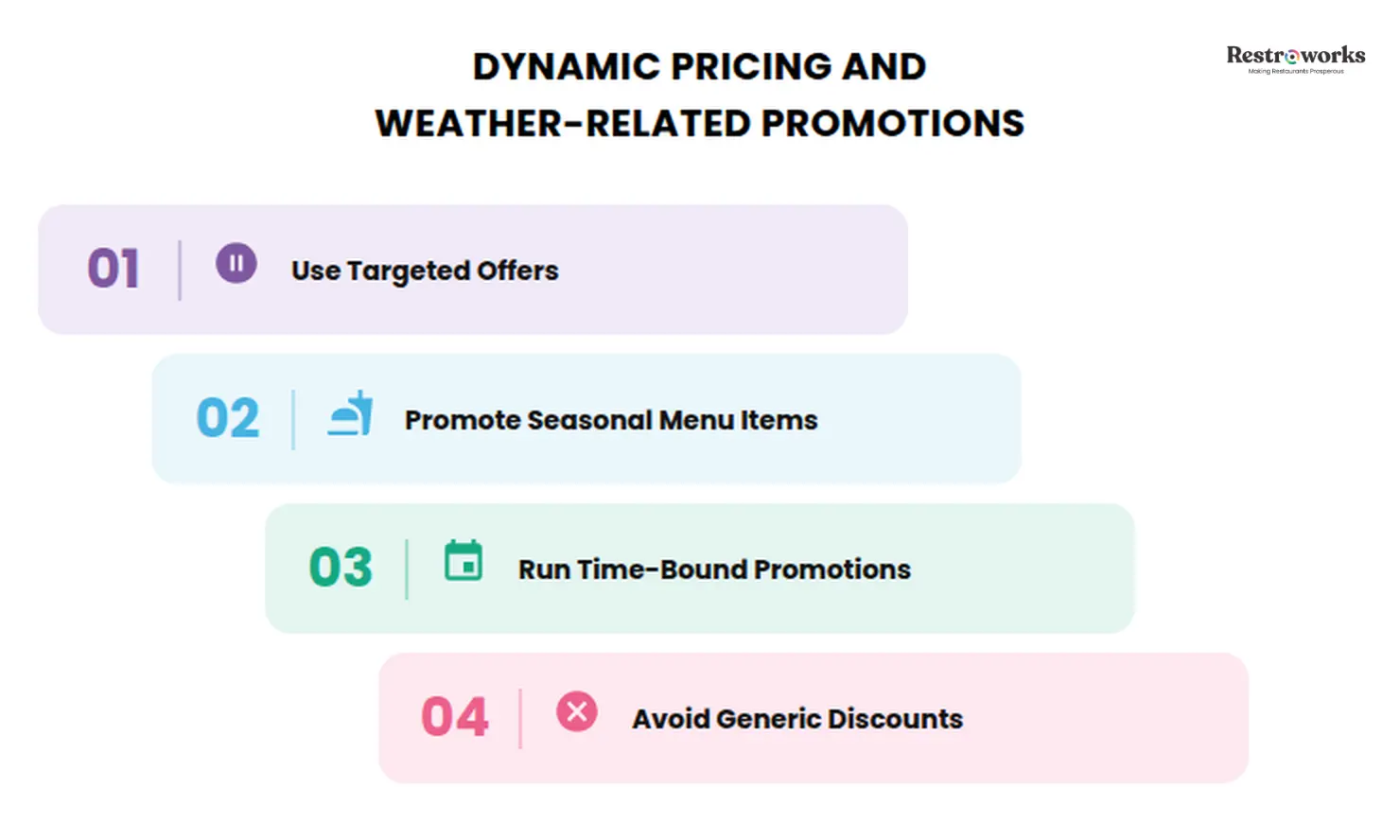
Changing restaurant demand when the weather shifts also means you have a chance to increase your revenue. You can use your weather forecasts to implement targeted promotions and dynamic pricing to boost sales.
Some of the simple ways to do this are-
- Use targeted offers on food delivery apps during rain or extreme weather to boost delivery orders.
- Promote seasonal menu items or new additions based on the current weather conditions. For example, a new mango iced tea or a refreshing watermelon cooler to beat the heat.
- Run time-bound promotions if demand is low during certain hours
- Avoid generic discounts and focus on nudging demand where you need it
Weather will always introduce some level of uncertainty into restaurant operations. You can’t control it, and you can’t predict it perfectly. But you can definitely change if, at all, it disrupts your operations.
The difference comes down to how you use it in your planning. Start factoring in weather changes into your forecasts, and you’ll see how much demand shifts across timing, channels, and consumer behavior, and what it means for your business.