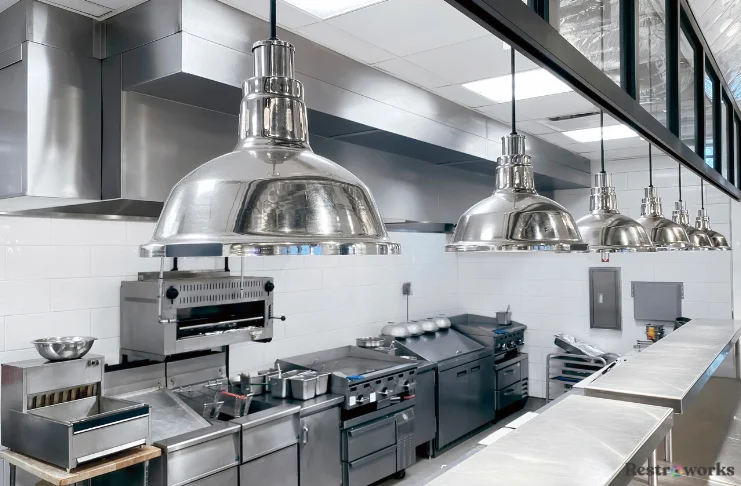

Starting a cloud kitchen might sound like a modern trend, but it’s rapidly becoming one of the smartest ways to get into the food business today. With more people depending on food delivery and online ordering, entrepreneurs no longer need a fancy setup or a prime location to grow. Unlike traditional restaurants, a cloud kitchen is designed solely for efficiency, quality, and reaching customers via delivery platforms. Whether you’re a home chef or looking to launch a food empire, knowing how to start a cloud kitchen can be the key to opening doors in the food industry.
What You Will Learn
- The fundamentals of setting up a cloud kitchen business
- Key factors for success in delivery-first food businesses
- Cost structure and profitability insights for better planning
- Practical tips for growing the business in a competitive market
What is a Cloud Kitchen and How Does It Work?
A cloud kitchen, also called a ghost kitchen, refers to a food delivery-based business that does not include a dining area. Unlike traditional restaurants, where people go, sit, and enjoy their food while interacting with others, a cloud kitchen relies solely on food delivery and online ordering.
The cloud kitchen concept involves food preparation in a commercial space and delivery directly to the customer’s doorsteps via delivery apps or a dedicated delivery team. There is no need for front-of-house staff, expensive interiors, or prime real estate.
The major contributions of DoorDash, Uber Eats, and Grubhub towards the popularity of cloud kitchens in the US cannot be ignored. These apps serve as delivery platforms, connecting customers with food businesses.
The biggest difference between a cloud kitchen and a traditional restaurant is that a cloud kitchen is designed to grow gradually, rather than spending crores of rupees on a traditional restaurant.
Why Are Cloud Kitchen Food Businesses Growing So Fast?
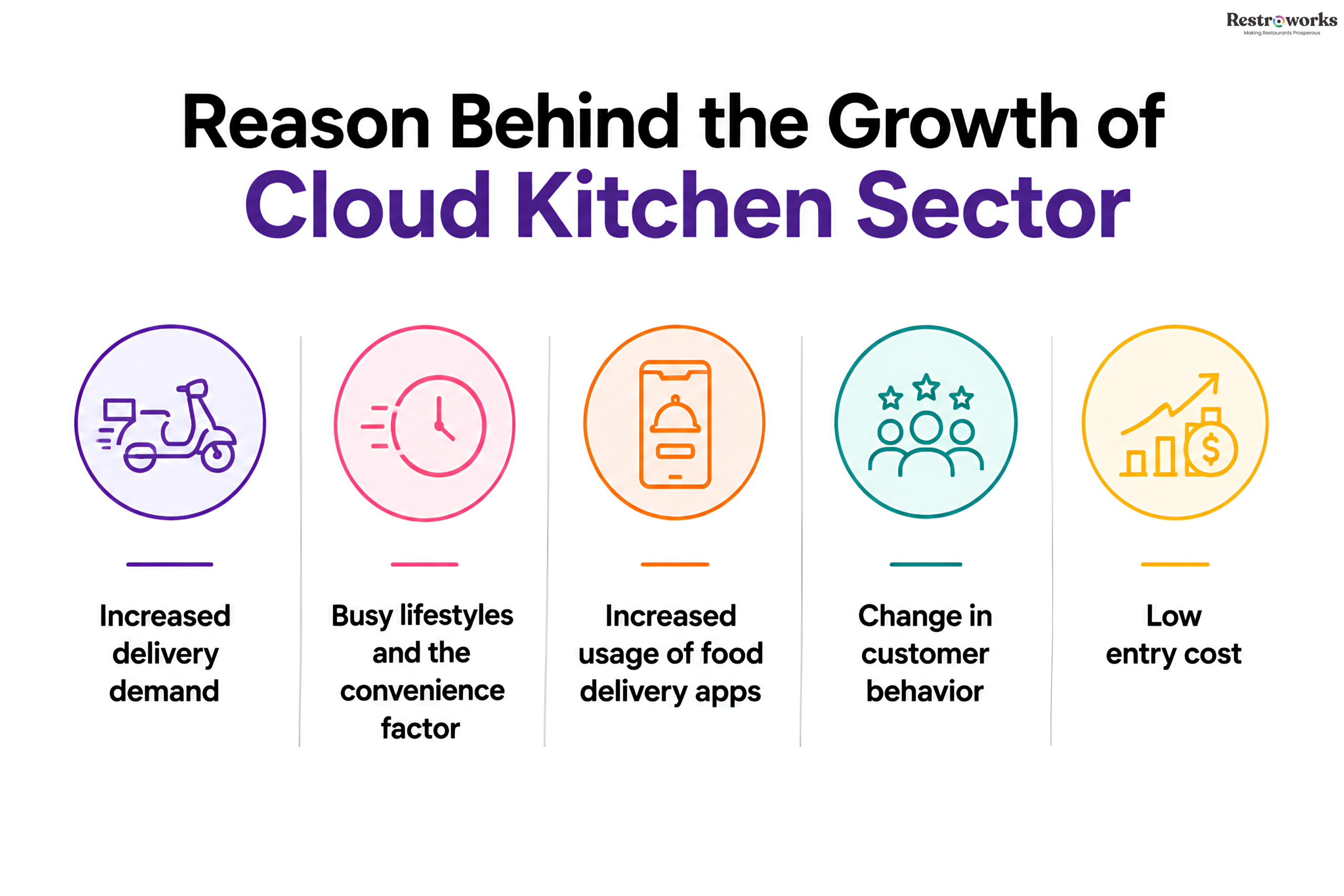
The restaurant industry in the U.S. has seen a significant shift toward delivery-first dining. Cloud kitchens are expanding because they align with the new food consumption patterns.
As per Statista, the online food delivery market size in the U.S. is expected to reach $430.85 billion by 2025. It is expected to reach $602.78 billion by 2030 at a CAGR of ~6.9%.
This is because of the following reasons:
- Increased delivery demand
- Busy lifestyles and the convenience factor
- Increased usage of food delivery apps
- Change in customer behavior
Another key factor is the cost. Unlike traditional restaurants, cloud kitchens can get started at a low cost, making them an ideal option for new entrepreneurs.
Furthermore, the delivery pattern indicates an increase in the number of consumers who prefer to eat at home rather than go to restaurants.
How to Start a Cloud Kitchen Concept Step by Step?
Here is a step-by-step guide to starting a cloud kitchen. It is a combination of planning, creativity, and discipline.
1. How Do You Create a Strong Cloud Kitchen Concept?
Creating a strong cloud kitchen concept is the beginning of creating a successful business. It’s not just about choosing what kind of food you want to serve; it’s more about creating a strong concept that resonates with your audience. This is where your business plan truly starts, as your concept will influence everything from menu design to branding and pricing. Ask yourself:
- What cuisine will you serve?
- Who is your target audience? Are you catering to workers, families, or health enthusiasts?
- What makes your brand different? It could be your flavors, pricing, packaging, or overall experience.
For example: Healthy meal bowls, Gourmet burgers, or Vegan comfort food.
Your restaurant concept should align with market research and market demand.
Look for competitors on food delivery apps and analyze what works for them. It is in this area that you will attract customers and make your business stand out in a crowded market.
2. How Do You Identify Your Target Audience?
Understanding your target audience is very important when you are opening a cloud kitchen. If you do not know the people you are targeting, it will be difficult to establish your food business. Therefore, when you are setting up a cloud kitchen, you should consider the following when identifying your target audience:
- Age group – Are you targeting students, working professionals, or families?
- Income level – This is important when determining the price of your food products.
- Ordering habits – Do you have customers who prefer premium options, quick meals, or food at odd hours of the night?
By understanding your customer preferences, you can:
- Develop menu items that align with your audience’s lifestyle and taste
- Set pricing that feels reasonable and attractive
- Improve overall customer satisfaction through better services
When you clearly understand your customers, your branding, marketing, and operations become much more aligned, and you can grow your cloud kitchen business more effectively.
3. What’s the Best Location for a Cloud Kitchen?
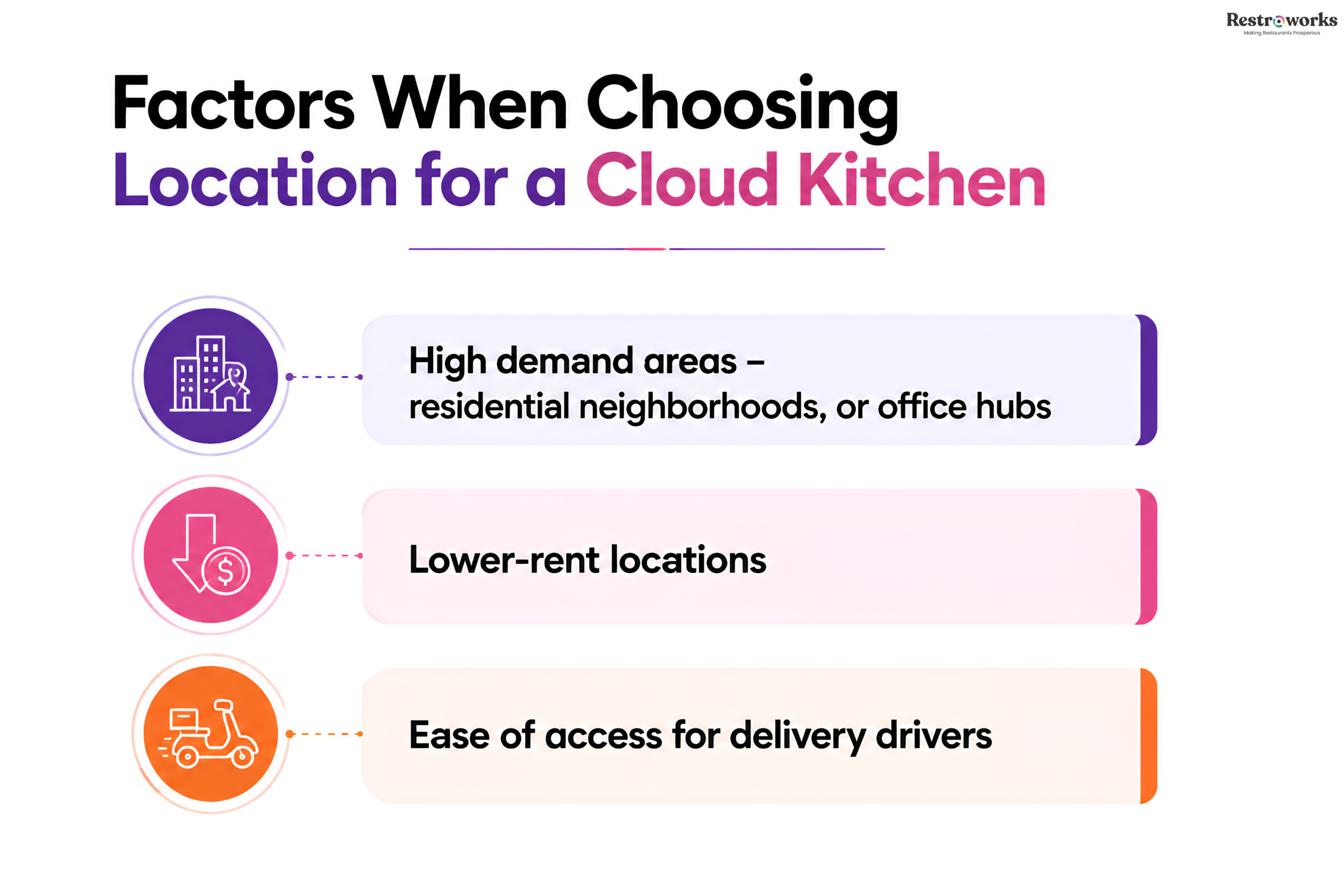
Choosing the location for your cloud kitchen is yet another significant step. Even though consumers are not eating in a physical space, your location directly affects your delivery cost, efficiency, and audience reach.
The following are the factors to consider when choosing a location:
- High demand areas – Select locations with high delivery activity, like commercial kitchen space, residential neighborhoods, or office hubs
- Lower-rent locations – Since your business won’t be visible to consumers, you can choose a lower-rent zone to save costs.
- Ease of access for delivery drivers – Ensure easy entry/exit points and parking availability to speed up pickups.
Unlike a traditional restaurant, foot traffic doesn’t define your success. Rather, it’ll depend on your efficiency in delivering products to customers.
Well-planned locations help reduce delivery time, improve customer service, and increase your chances of repeat orders, making them vital for running a cloud kitchen business.
4. Business Plan to Optimize Menu and Packaging for the Delivery System
Managing the menu and packaging is important for a food business in a cloud kitchen as it affects customer satisfaction and repeat business. Everything in a cloud kitchen revolves around delivery. Hence, it is important that the menu and packaging are optimized for delivery.
What factors to follow when optimizing your menu:
- Food that can be delivered easily – Avoid foods that become soggy
- Menu that is limited but effective – It is always better to keep it simple to maintain consistency and speed
- High-margin offerings – It is important that you choose a menu that is profitable
Packaging is another important aspect for maintaining food quality during delivery. Make sure you:
- Use durable, leak-proof containers to avoid spills
- Maintain the temperature so that food arrives fresh and hot
- Using containers that maintain consistency and reflect your virtual brand
Packaging is important for maintaining the high quality of food and for making your food business look like it serves high-quality food.
INDUSTRY INSIGHT
5. What Technology Do You Need to Run a Cloud Kitchen?
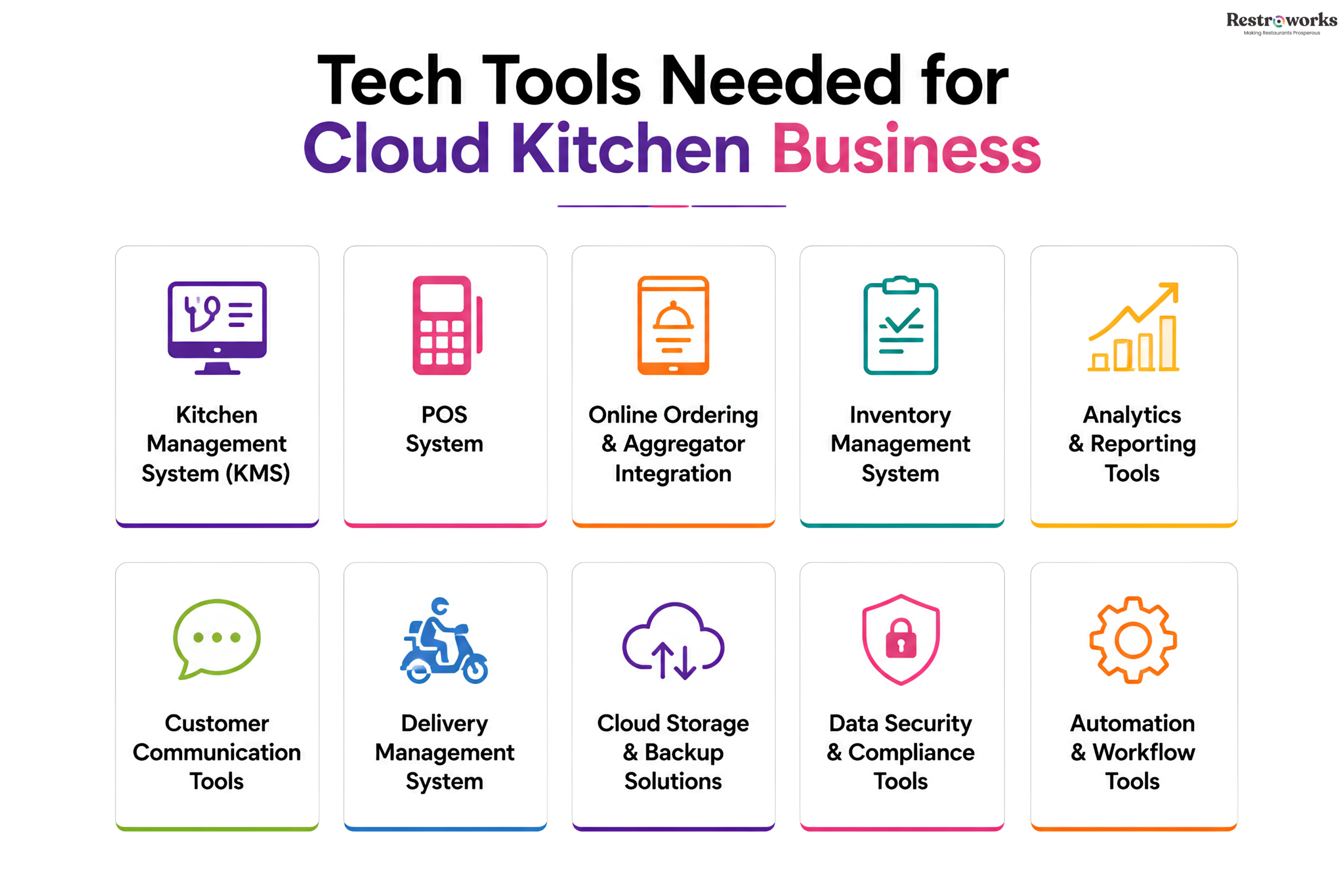
Restaurant technology is the most important aspect for maintaining the efficiency of your food business. As everything relies on speed, accuracy, and proper coordination, the right technology will make a huge difference in your daily operations.
Fundamental tools you’ll need include:
- A reliable POS system – This is useful in managing orders, tracking sales, and processing bills.
- Order aggregation software – This helps in handling orders coming through various online platforms into one dashboard.
- Inventory tracking tools – This will help you manage your stock levels and avoid wastage.
A good POS system is especially important because it allows you to handle high order volumes without confusion or delays.
Technology also helps with:
- Faster order processing
- Better food management and consistency
- Real-time performance tracking
6. What Are the Costs and Unit Economics?
One of the biggest benefits of a cloud kitchen model is its cost-effectiveness, especially when compared to a traditional food business model, which demands huge investment costs in setting up a dining space, interior decor, and front-end staff. However, despite the minimal costs of setting up a cloud business, it is important to understand unit economics to build a profitable business.
Some of the major costs involved in running a food business through a cloud kitchen model include rent for your kitchen space, salaries of your staff, food costs, packaging costs, and commissions of food delivery platforms. For example, if your average order size is around $20, then around $6 would go towards commissions and around $7 towards food costs. This leaves a very small profitable margin, and hence, every step should be taken carefully.
In order to maintain a profitable food business, it is vital to maintain food costs while ensuring proper business planning. A well-planned business roadmap will help you track expenditure, set menu pricing, and prepare a solid layer for long-term success.
7. What Food Industry Licenses and Legal Requirements Are Needed?
Before opening a virtual kitchen in the U.S., it is important to learn the legal requirements of your business. Although you’re not operating like traditional restaurants where you need a dining space, it’s still helpful to adhere to strict legal regulations in your area concerning your business’s operations.
To run your business legally, you will need to obtain:
- Business license – This helps you to run your food business legally in your city or state.
- Health permits – They are issued by the local health department after your kitchen has been inspected for hygiene standards.
- Food safety certifications – This includes a food handler’s or a food protection manager’s certification.
Proper food handling practices must be followed at all times apart from these requirements. This involves ensuring cleanliness, storing ingredients properly, and maintaining safe cooking procedures.
Additionally, it’s vital to note that your area might have restrictions on where your cloud kitchen can operate. Adhering to these legal needs from the beginning not only avoids shutdowns or fines but also builds trust among consumers. A complaint-free business attains credibility, food safety, and smoother operations in the long run.
8. How Do You Market and Grow Your Cloud Kitchen?
Your marketing efforts and strong online presence are vital in growing your cloud kitchen business. This is because your business’s visibility depends solely on how well you showcase your brand online and across delivery platforms.
A strong marketing plan should focus on both discovery and retention. Start by:
- Optimize your listing on delivery platforms using clear briefings and high-quality images
- Using promotions to increase your visibility on delivery platforms, reach a wider audience, and gain first-time visitors.
- Using social media to create a brand identity that can be easily recognized
Platforms like Instagram and TikTok are especially effective for social media advertising, as they allow you to visually showcase your food and connect with your audience.
You can:
- Post attractive images of your food
- Use local influencers to reach a wider audience
- Run targeted campaigns depending on customer tastes
Remember, consistency is key. Post regularly and engage with your users to build trust, customer loyalty, enhance brand recall, and retain customers over time. This is a good strategy to turn your first-time consumers into loyal buyers.
What Are the Different Food Delivery Apps or Models for Cloud Kitchens?
Another pillar of a cloud kitchen business is delivery, and hence, it becomes important to select the right delivery model as it also affects your profit and customer satisfaction. As your whole business is based on how smoothly your food reaches the consumers, it is important to explore and learn all the possible options.
- Aggregator-Based Delivery: The most common delivery aggregators, like Uber Eats, DoorDash, and Grubhub, are the ones that ghost kitchen prefers. These delivery partners manage the entire process from order taking to delivery. It is hence easier for you to start a cloud kitchen business as they provide instant access to a huge consumer base. The only negative aspect is that they have high commission fees, which affect your margins.
- Own Delivery System: Restaurant owners can choose to build their own delivery system to reduce dependency on aggregator-based delivery platforms. This strategy gives you more control over customer experience, delivery time management, and branding. This most commonly provides long-term profits. The downside of this strategy is managing your own delivery system, which requires labor, operational plan, and technology costs.
- Hybrid Model: This approach combines both models. You will be using aggregator platforms for reach and then slowly shift towards your own delivery services. This helps you in maintaining customer retention and business profits, which makes it a more strategic and practical option for your cloud kitchen business.
In a recent conversation, Wade Allen highlighted:
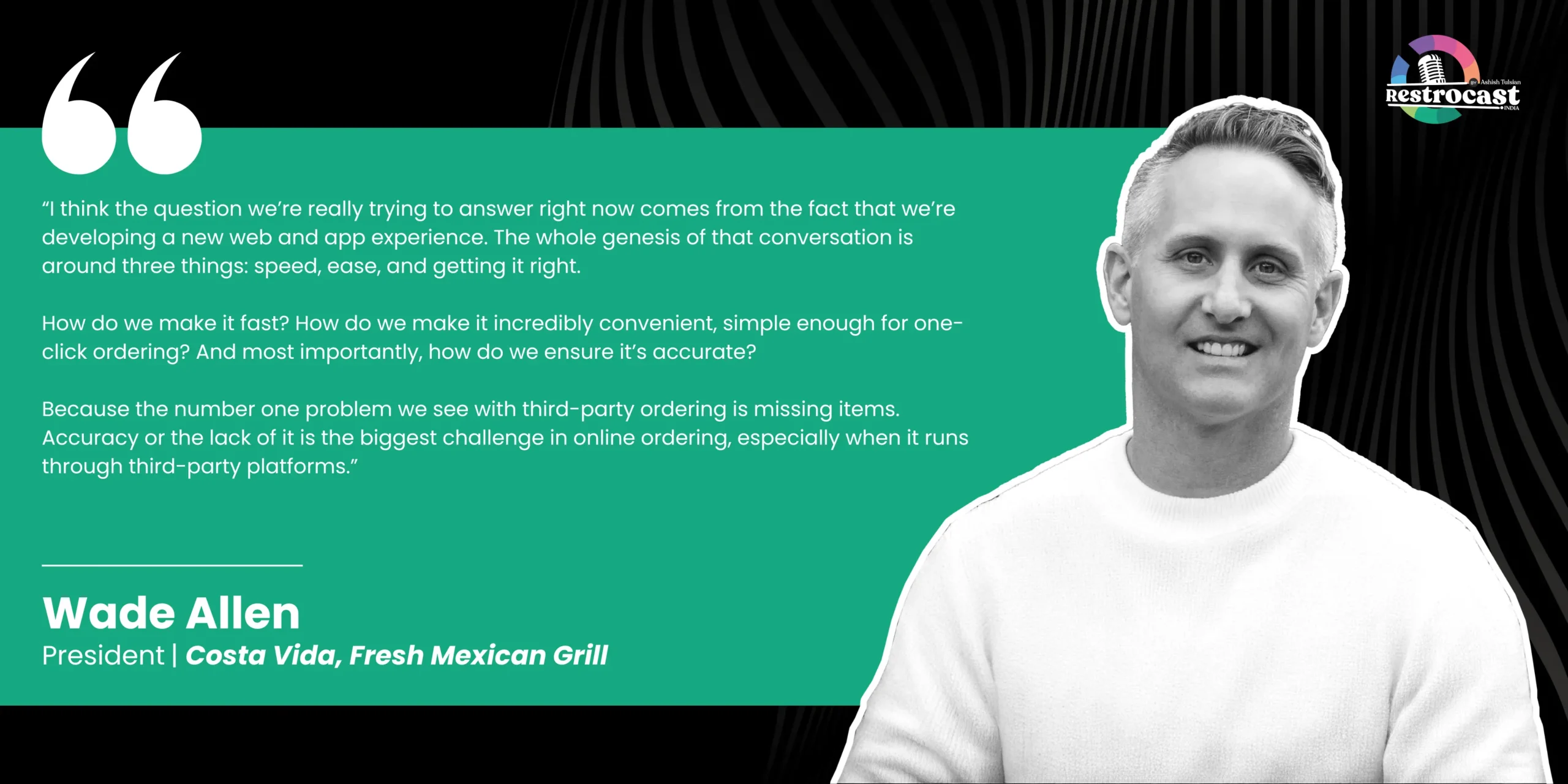
Hence, the selection of the delivery model becomes strategic. Restaurants that depend on aggregators or third-party apps may face issues with consistency, while those focusing on a hybrid approach can ensure accuracy, reliability, and customer satisfaction.
What Are the Benefits of a Ghost Kitchen?
The cloud kitchen model offers several advantages, especially for those looking to enter the food business with flexibility and lower risk. Here’s a breakdown of the key benefits:
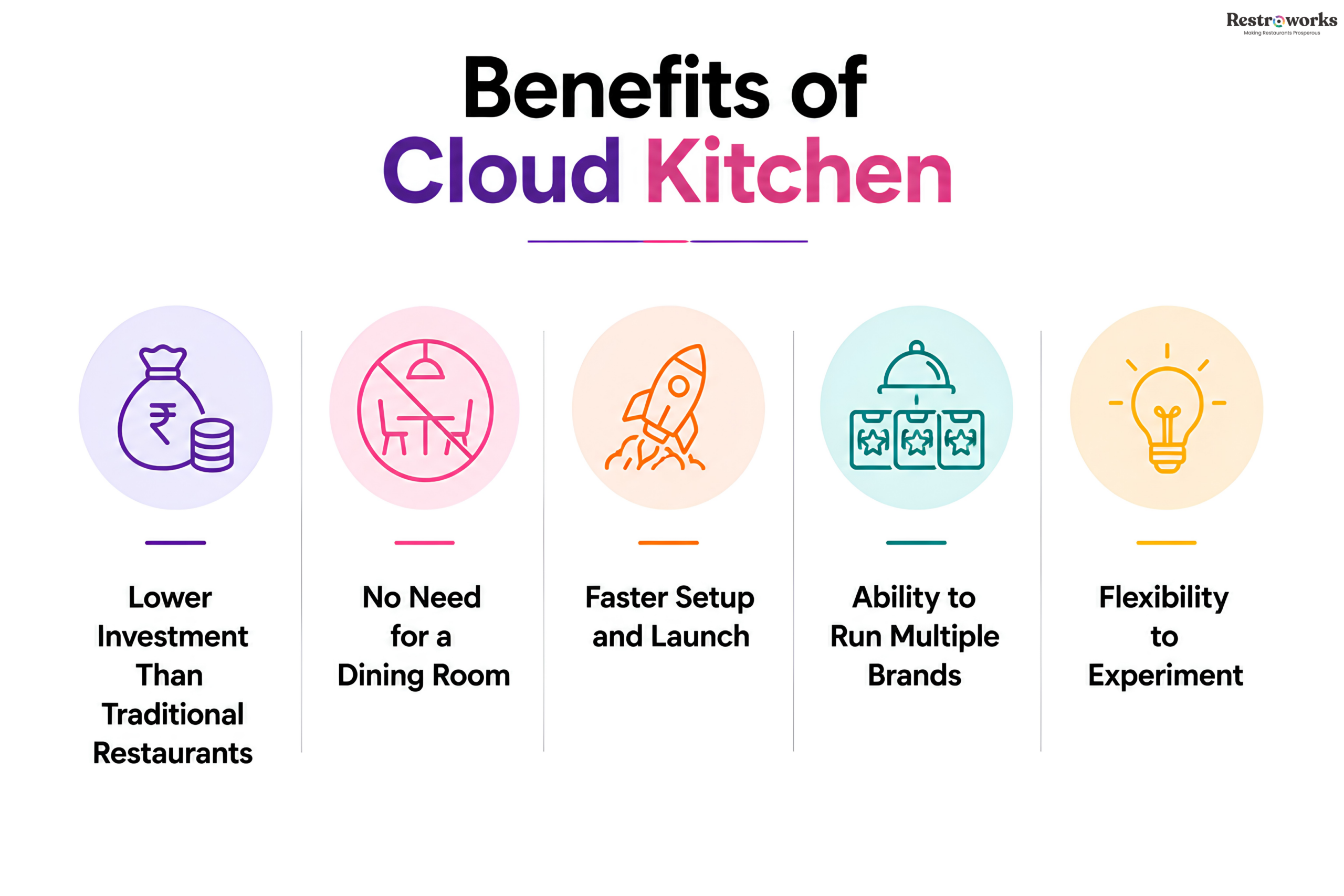
- Lower Investment Than Traditional Restaurants
One of the biggest advantages of a cloud kitchen is the lower startup cost. Unlike traditional restaurants, you don’t need to invest in interiors, furniture, or a large staff for a dining area. This makes it easier to launch your business with minimal financial pressure. - No Need for a Dining Room
Since the entire operation is focused on food delivery, there’s no requirement for a dine-in space. This eliminates expenses related to rent in prime locations and front-of-house management, allowing you to focus entirely on quality control and operations. - Faster Setup and Launch
A cloud kitchen can be set up much faster than brick-and-mortar restaurants. Without the need for complex infrastructure, you can start operations quickly and begin generating revenue sooner. - Ability to Run Multiple Brands
Many ghost kitchens operate multiple brands from a single kitchen. This means you can serve different cuisines or target different audiences without setting up separate locations, increasing your earning potential. - Flexibility to Experiment
The cloud kitchen model allows you to test new menu items, pricing strategies, and concepts with lower risk. This flexibility helps you adapt to changing customer preferences and market trends.
What Mistakes Should You Avoid When Starting a Cloud Kitchen?
Restaurant operators may feel like starting a cloud kitchen is much easier than opening a traditional restaurant, but remember, there are various common mistakes that can affect your profits and success if not managed properly.
Ignoring the quality of the food you are producing is one of the biggest pitfalls of any cloud kitchen business. It is also important to maintain the consistency and taste of your food, as your customers do not get a chance to see the food before consuming it. Taste of your food also helps in building the trust of the customers.
Focus on adhering to the quality of packing as it can easily ruin the overall customer experience. Avoid delivering any soggy items, spills, or temperature loss, as it can cause negative reviews.
A weak marketing strategy is another common mistake. This means that just listing your brand name does not guarantee success. This may make it hard for you to attract customers in a competitive market.
A lack of proper market research can also impact your business profits. Not evaluating the pricing of your items, your customer needs, or competitors can lead to poor decision-making.
The last pitfall associated with cloud kitchens involves inadequate adaptation to customer trends. This means that trends keep changing constantly, and the business should adapt accordingly.
Consistency is the key to improving satisfaction and business success.
Success Stories: Case Study: K Hospitality
K Hospitality embarked ͏on their cloud͏ kitchen venture with͏ a clear vision: to͏ ͏leverage the growing trend of delivery and online ordering. Their͏ journey began with a focus͏ on efficient operations and strategic cloud ͏kitchen set up, ensuring t͏hat thei͏r kit͏chens were optimized for delivery-only service.
Key Strategies and Learnings
One͏ of ͏the key strategies K Hospitality employed was͏ investing ͏heavily in restaurant marketing. They utilized online marketing to build a strong͏ digital presence. These included targeted restaurant promotion͏ ideas, engaging restaurant social media marketing, and a robust restaurant internet marketing strategy. They also focused on a͏ unique restaurant marketing͏ plan, emphasizing quality and con͏sistency in their food offerings.
R͏esults and Achievemen͏ts
K Hospitality’s ͏efforts p͏aid off significantly. They͏ saw a subs͏tantial ͏incr͏ease in customer orders and built a loyal custom͏e͏r base, thanks to their str͏ategic use of digital marketing for restaurants. Their͏ clou͏d kitchen model allowed them to ͏lower overhead costs whi͏le maximizing reach and effici͏ency. Today, they are a leading example of how to successfu͏lly create a cloud kitchen and thrive in a͏ competiti͏ve market.
For͏ more details on K ͏Hospit͏ality’s su͏cce͏ss s͏tory, visit their case study.
One of the best ways to get into the current booming food business without breaking the bank is by starting a cloud kitchen venture. This is especially so because, with the correct business idea and understanding of consumer behavior, you can build a brand name for yourself in the restaurant industry. However, you need to be agile and ready to learn and adapt to changing trends while running a cloud kitchen business. If you are successful in doing so, you can turn it into a profitable venture for yourself in the changing food industry.