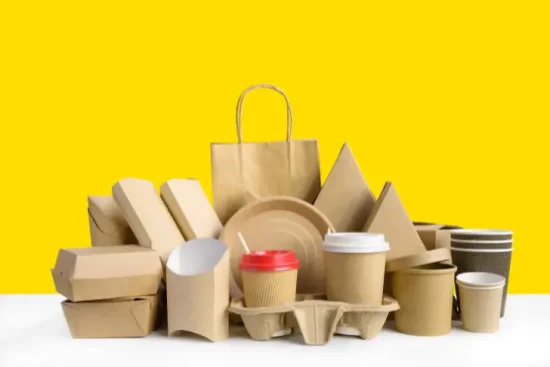
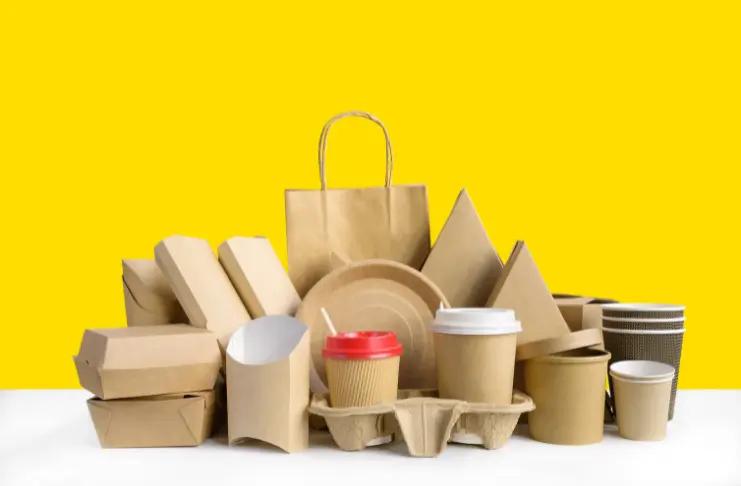

Cloud kitchen packaging covers the containers, boxes, wraps, and bags that carry food from a delivery-only kitchen to the customer’s door. Packaging typically consumes 3% to 10% of a cloud kitchen’s revenue depending on average order value, making it one of the largest controllable line items after food cost. A 2018 Ipsos survey for the Paper and Packaging Board, still the most-cited US benchmark on this topic, found that 72% of American consumers say packaging design influences their purchasing decisions. For a cloud kitchen, that means your container is doing the work that a dining room, a server, and table presentation do for a traditional restaurant.
The U.S. cloud kitchen market reached $80.3B in 2025 and is expected to reach $203.7B by 2033, according to Grand View Research.
“You must ensure all dishes overcome the 30-minute takeout box test. This really puts the chef’s execution and understanding of the ingredients to test.” — Wilson K Lee, CEO, Profitable Restaurant Owner Academy, Forbes Business Council
What You Will Learn:
- The different types of cloud kitchen packaging
- Features of packaging
- The best solutions
Types of Cloud Kitchen Packaging
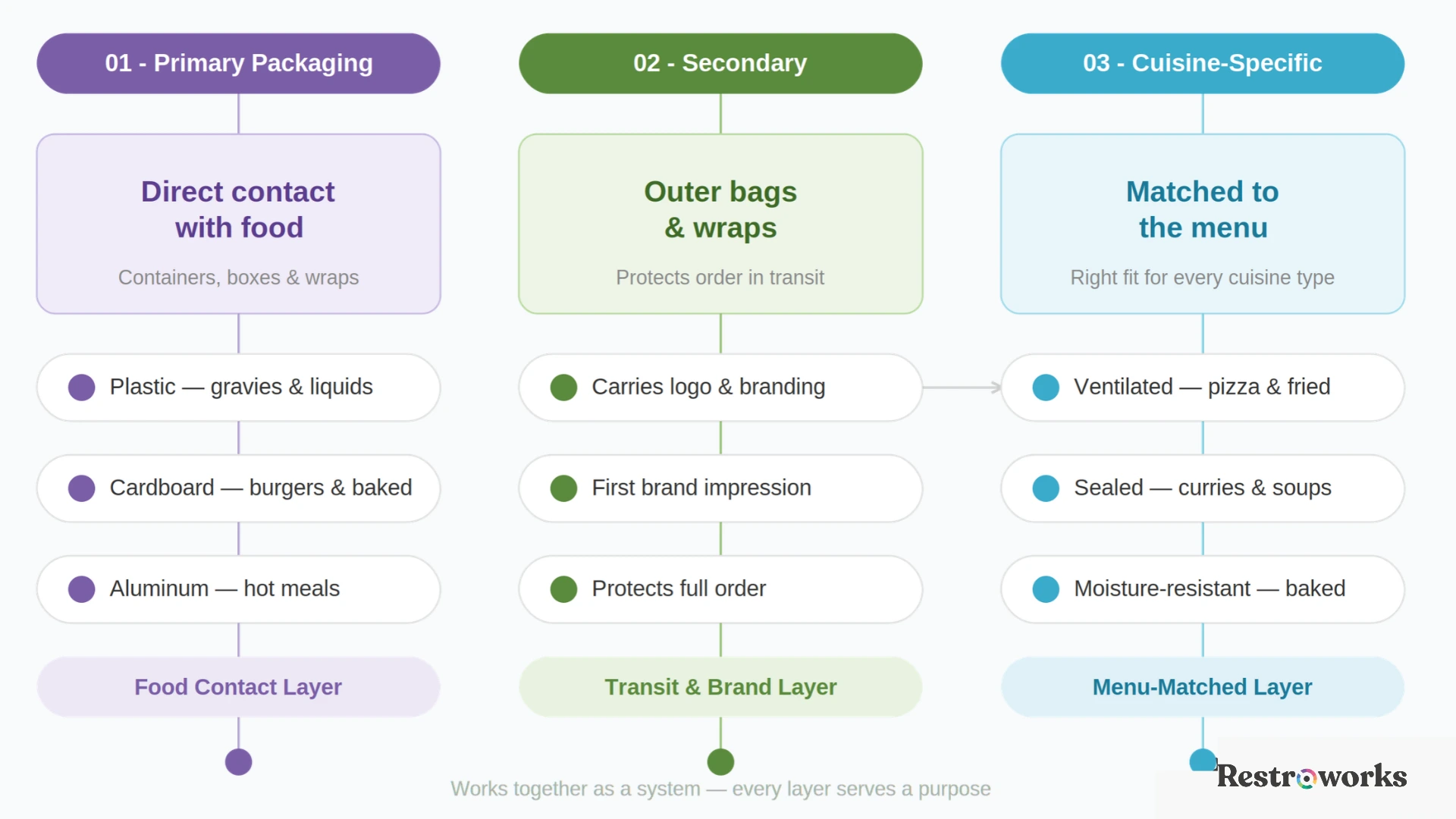
Each food type needs a different container. Getting this wrong is the fastest way to trigger refund requests and one-star reviews.
Primary Containers by Food Type
For cuisine-specific needs: use vented corrugated boxes for pizza and fried chicken to prevent steam from making the crust soggy. For curry and sauce-heavy dishes, choose sealed PP containers with gasket lids rather than snap-fit lids, because steam condensation loosens snap-fits after about 20 minutes. Pack sauces and dressings in separate 2 oz or 4 oz sealed sauce cups rather than inside the main container, so the customer controls portioning and the entree stays dry in transit. For sandwiches and wraps, foil-lined paper keeps the bread from absorbing moisture while retaining heat. If your menu includes microwave-reheatable items, mark containers clearly as microwave-safe or not, because customers will reheat in whatever you send. Customer satisfaction depends on matching the container to the dish, not using one container for everything.
Secondary Packaging and Branding
The outer bag is the first thing your customer sees. It carries your logo, your brand colors, and a first impression before they even open the food. At minimum, print your logo and a QR code linking to your direct ordering site on the outer bag. A discount code insert or thank-you note directing customers to your direct ordering channel can convert third-party delivery orders into repeat direct business. For kitchens running multiple virtual brands from one location, a shared base container with brand-specific sticker sleeves keeps inventory manageable while giving each concept a distinct identity. On the packing line, use a color-coded sticker system to prevent cross-brand mix-ups during peak hours: assign each virtual brand a sticker color, and train staff to match sticker color to ticket before sealing.
Eco-Friendly Cloud Kitchen Packaging
Sustainability has moved from a nice-to-have to a baseline expectation, especially among younger consumers who drive the majority of delivery orders. McKinsey research found that green packaging in cloud kitchens increases customer confidence and trust. They say recyclability is the most important sustainability trait, followed by recycled content in packaging.
The broader U.S. biodegradable food packaging market, spanning all food segments, reached $1.6 billion in 2025 and is projected to hit $137.9 billion by 2035, growing at a 4.8% CAGR. Cloud kitchens are one of the fastest-growing segments driving that demand.
Bagasse, kraft paper, compostable PLA, and recyclable cardboard perform as well as traditional plastic for most food categories. At bulk quantities of 5,000 or more units, bagasse clamshells typically cost 0.15-0.25 each, compared to 0.20-0.40 for custom-branded plastic alternatives. Unbranded PP plastic containers (0.05-0.20) remain the cheapest option at any volume, but they lack the premium feel and environmental signaling that bagasse provides. Some delivery platforms offer green badges or priority placement for restaurants using certified compostable packaging.
The numbers speak for themselves.
Volume-Based Material Decision Guide
Your monthly order volume should drive your material choice:
- Under 3,000 orders/month: Use unbranded plastic containers with custom-printed sticker labels. Primary container cost is around $0.25 per unit, including the sticker, with total per-order packaging (container, bag, inserts) reaching 0.60-0.80. At this volume, the per-unit premium for eco-friendly materials is harder to absorb.
- 3,000 to 7,000 orders/month: Switch to unbranded bagasse clamshells with sticker labels. At 5,000-unit MOQs, bagasse drops to $0.23 per unit, making it cheaper than branded plastic. This is also the volume where delivery platform sustainability badges become worth pursuing.
- Above 7,000 orders/month: Invest in custom-printed bagasse with your logo printed directly on the container. Print setup costs (200-500) amortize across 25,000+ units, bringing per-unit cost to roughly $0.28 while eliminating the sticker labor entirely.
Cloud Kitchen Packaging Costs and ROI
Packaging typically costs $0.40 to $1.50 per order. For a kitchen processing 30,000 orders per year, the numbers work like this:
Savings from cheaper packaging: $0.50 less per order x 30,000 orders = $15,000 saved annually.
Cost of cheap packaging failures: If the cheaper option causes 5% more refunds at an average order value of $18: 30,000 x 5% x $18 = $27,000 in refunded revenue. This holds if you refund the full order. At a partial refund rate, the direct cost only exceeds the savings above roughly 56% of order value. The stronger case against cheap packaging is not the refunds themselves but what comes with them: negative reviews, platform rating drops, and a reduced delivery radius.
How to Test Your Packaging Before Buying in Bulk
Do not order 5,000 units of anything you have not tested under real delivery conditions. Here is a practical protocol:
- Pack your most sauce-heavy menu item in the container. Seal it with the same tape or method your kitchen uses.
- Place the sealed order in a delivery bag and leave it in a car trunk or outdoor area at roughly 75°F for 30 minutes.
- After 30 minutes, check three things: (a) press the lid to test seal integrity, (b) look for condensation pooling at the bottom or lid, and (c) measure the food temperature with an instant-read thermometer.
- For hot entrees, the food should stay above 135°F, the FDA Food Code (section 3-501.16) minimum for hot holding. Below that threshold, the container doesn’t retain heat long enough for your delivery radius. The Food Code is a model code, so check your state or local limit.
- Document results in a spreadsheet comparing all sample containers before placing a bulk order.
Note that lab-tested heat retention of 45 minutes can drop to 20-25 minutes under real delivery conditions with multiple stops and weather exposure. Test in your actual conditions, not ideal ones.
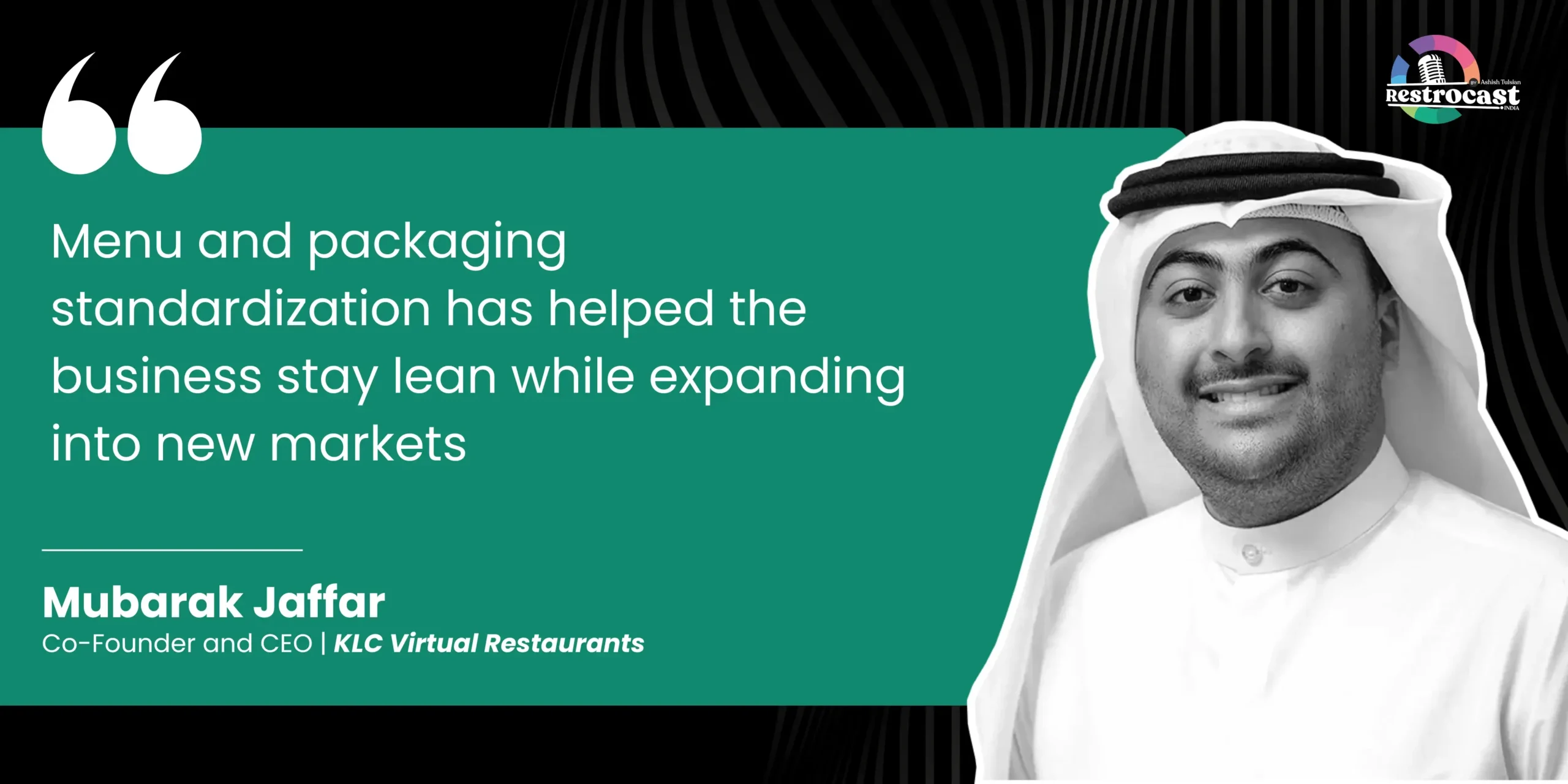
Mubarak Jaffar, Co-Founder & CEO of KLC Virtual Restaurants, who has successfully scaled over 20+ virtual brands across 18+ cloud kitchens in the GCC region, spoke about this during a recent episode of Restrocast, hosted by Ashish Tulsian, CEO of Restroworks.
DoorDash asks restaurants to consider minimizing your carbon footprint by using recyclable, reusable, or eco-conscious materials where possible. Uber Eats emphasizes tamper-evident packaging container standards. Grubhub focuses on temperature retention. Platform requirements change frequently, so contact your delivery platforms directly for current policies rather than relying on published guidelines.
Your packaging costs 0.40-1.50 per order and represents 3-10% of revenue depending on your average order value. Match your containers to each dish type using the material table above. Run the 30-minute delivery simulation test with your three highest-complaint menu items before committing to any bulk purchase. At 5,000-unit MOQs (roughly 2,000-3,000 monthly orders, since most orders use two to three containers), bagasse clamshells cost less than custom-branded plastic while signaling quality to the 72% of consumers who say packaging influences their purchase.
Your next step: Order sample packs from two to three of the suppliers listed in FAQ Q2 below, run the testing protocol this week with your top menu items, and document the results before placing a bulk order.
Listen: Beyond the Box Podcast — Ghost Kitchen Gurus