

Understanding What “Low-Cost Marketing” Really Means for Restaurants
Low-cost marketing is often misunderstood as doing marketing cheaply. That interpretation misses the point. Low cost does not mean low effort, low intent, or low quality. It means being deliberate about where time and energy are spent, and choosing approaches that deliver results without relying on large budgets.
Restaurants that succeed with low-cost marketing are often selective in their approach. This involves moving away from one-off efforts that create short bursts of attention, and toward signals that customers recognize and respond to over time.
Low-Cost Marketing is About Long-Term Success
One-time promotions and heavy discounts often create immediate visibility, but they rarely change how customers choose or return. Low-cost marketing takes a longer view. It emphasizes consistent visibility and steady reinforcement to build recall and trust without constant incentives.
In fact, perceived value plays a central role here. Customers may return not because a restaurant was cheaper once, but because the experience consistently met expectations. Clear menus, reliable customer service, and predictable quality do more to support marketing outcomes than temporary price reductions.
Why Does Low-Cost Marketing Matter for Restaurants?
Marketing matters because it directly influences why and how often customers choose a restaurant, and not just whether they are aware of it. In an industry where options are abundant and switching costs are low, customer decisions are shaped by familiarity, trust, and recall. Marketing is what reinforces these signals over time.
When done intentionally, your low-cost marketing efforts support the business in several measurable ways-
- Drives Repeat Visits: Consistent marketing keeps the restaurant top of mind after a visit. This reduces reliance on constant acquisition and increases customer lifetime value.
- Shapes Customer Expectations: Clear communication about the menu, positioning, and experience helps customers know what to expect, improving satisfaction and reducing friction.
- Influences Behavior and Spending: Marketing doesn’t stop when the customer walks in through the door. Menu cues, staff recommendations, and in-store prompts guide choices, often increasing average order value without overt upselling.
- Builds Familiarity: Restaurants compete most directly with nearby options. Regular, recognizable marketing signals help establish presence and preference within the local trade area.
- Encourages Value-Led Decisions: Strong marketing shifts focus from price-led decisions to value-led ones, making demand more stable and margins easier to protect.
- Supports Long-Term Brand Recall: Even for independent restaurants, brand matters. Marketing ensures customers remember the experience, not just the meal, making repeat visits more likely.
What are the Common Restaurant Marketing Mistakes That Waste Money?
Understanding the common marketing mistakes restaurants make is a good way to clarify what low-cost marketing should avoid before exploring what it should focus on-
1. Overusing Discounts
Discounts can bring in traffic quickly, but customers get used to them fast. When offers run often, people start waiting for deals instead of choosing a place on their own. Over time, this hurts margins and makes demand harder to predict, without building real loyalty.
2. Posting Without Purpose
Social media activity is often mistaken for marketing. Posting regularly without a clear motive, be it driving a visit, highlighting a specific item, or engaging customers, just creates unnecessary noise. Visibility alone rarely translates into action unless the message is intentional and consistent.
3. Treating Marketing As a One-Time Activity
Approaching marketing as one big campaign at a time, followed by periods of no activity, will rarely generate the results you need. Restaurants that approach marketing this way see inconsistent results because customers don’t build familiarity from isolated messages. Marketing works best when it is treated as a routine activity.
4. Focusing Only on Getting New Customers
Focusing only on new customers is an inefficient way to grow. Returning guests already know the brand, cost less to reach, and are more likely to recommend it. When they’re ignored, restaurants miss one of the easiest ways to grow.
5. Copying Competitors Blindly
What works for one restaurant may not work for another, even within the same area. Differences in pricing, format, customer mix, and cost structure matter. Copying tactics without understanding these factors often leads to mismatched expectations and poor returns.
How to Choose the Right Marketing Ideas for Your Restaurant?
The effectiveness of any marketing idea depends largely on how well it aligns with the restaurant’s positioning and goals. This is because not every restaurant is solving the same problem.
A café trying to increase weekday traffic faces a very different challenge from a QSR managing peak-hour volume or a casual dining restaurant focused on repeat visits. Applying the same marketing playbook across formats usually leads to poor results.
Before planning your marketing ideas, it helps to step back and consider a few practical factors-
- Restaurant Type: QSRs benefit from speed, clarity, and frequency, while cafés and casual dining rely more on experience, dwell time, and familiarity. Delivery-first models prioritize visibility and repeat ordering.
- Location and Foot Traffic: A high-footfall area demands different tactics than a destination restaurant. Visibility, signage, and timing matter more in walk-in-heavy zones.
- Customer Profile and Dining Occasions: Office workers, families, students, and tourists respond to different cues. Marketing should align with when and why customers choose to dine.
As a thumb rule, consider starting with ideas that are easy to execute, easy to repeat, and easy to adjust. This will help build momentum and let you see what working without overloading your team.
12 Low-Cost Marketing Ideas That Actually Work for Restaurants
Here are 12 low-cost marketing ideas that restaurants can apply to stay visible and bring customers back without increasing spend.
1. Ask for Reviews
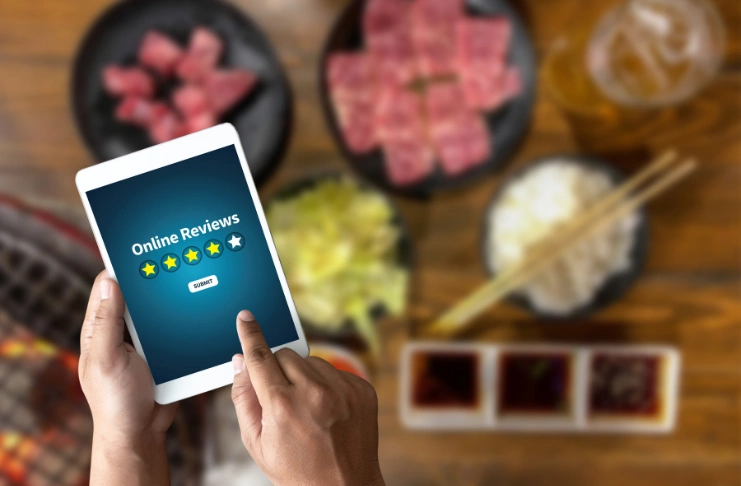
Positive reviews strongly influence how customers choose restaurants, especially when they are deciding between nearby options. Now the real challenge here lies in convincing customers to leave reviews, without being overbearing.
What usually works is keeping the ask light and well-timed. A quick mention at the end of a good meal, a short line on the receipt, or a small sign near the exit is often enough. Long explanations or repeated reminders tend to do more harm than good.
At the same time, what matters is consistency. When reviews come in regularly, your restaurant stays visible and credible in local Google searches. Over time, this becomes part of how customers find and trust you.
2. Highlight Bestsellers on the Menu
Menus influence customer decisions more than any other marketing asset inside the restaurant. Highlighting bestsellers helps customers choose with confidence, especially during first visits, without relying on discounts or pushy upselling.
Most customers want reassurance that they are ordering something others enjoy. Bestseller cues provide that reassurance without pressure. This can be as simple as placing popular items where the eye naturally goes, adding a short descriptor, or using a small visual marker.
From an operational perspective, bestsellers are usually easier to execute consistently and are familiar to staff, which improves service flow. In many cases, they also support margins better than lesser-known items.
3. Run Limited-Time Specials
Limited-time specials are a smart way to engage diners because they give them a clear reason to act now instead of later. The mistake many restaurants make is tying these specials only to discounts. You do not always need to lower prices to create urgency.
What usually works better is limiting availability. A seasonal dish, a weekend-only item, or a short-run menu addition gives regular customers something new to come back for. It also gives your team a concrete reason to talk about what’s different this week. To implement this, you can-
- Keep the offer window short and specific.
- Focus on items you can execute confidently and consistently.
- Promote it in-store and online with the same message.
When done well, limited-time specials create repeat visits without training customers to wait for offers.
4. Use Social Media With a Clear Goal
Social media becomes frustrating when it turns into posting for the sake of posting. Before you share anything, it helps to be clear about what you want that post to do.
Some posts are meant to bring people in. Others are meant to highlight a specific item or remind customers what you are known for. Problems start when one post tries to do everything and ends up doing very little.
So when you find yourself asking, “What should we post today?” you can-
- Post about today’s special, a limited-time item, or what’s fresh off the line right now
- Show how a popular dish is prepared or plated, or explain why it’s a customer favourite
- Share the vibe during service hours, staff interactions, or how the kitchen operates to deliver a seamless experience
When each post has a purpose, your social media strategy feels less like a chore and more like a useful extension of your restaurant.

5. Show Behind-the-Scenes Content
Behind-the-scenes content works because it makes your restaurant feel human and familiar before customers even walk in. Prep work, plating, opening routines, or staff moments help people understand what goes into the experience.
This kind of content does not need to be polished. In fact, simple and real usually perform better than overproduced visuals. Customers respond to what feels honest and everyday.
Not to mention, it also helps bring more visibility. Google’s local business guidance consistently emphasizes that businesses with photos receive more direction requests and higher engagement than those without them. This applies strongly to restaurants, where visuals influence decisions early.
Behind-the-scenes content builds trust over time. It shows consistency, care, and personality, without trying to sell anything directly.
6. Promote the Next Visit In-Store
Most restaurants focus all their marketing on getting customers through the door. Very few use the visit itself to set up the next one. That’s a missed opportunity.
Instead, use in-store prompts for loyal customers as they are already engaged. A short message on the receipt, a table tent, a line on the bill folder, or a note on takeaway packaging can quietly plant the idea of returning. This is not the place for long explanations or heavy offers.
Here are a few ideas you can try-
- Highlight what’s coming next: A new dish launching next week or a seasonal item available for a limited time.
- Promote a specific return window: A weekday-only special or a quieter time you want to drive traffic to.
- Tie the message to the current visit: “If you liked this dish, try this next time.”
- Use takeaway packaging: A short note reminding customers when or why to order again.
- Keep it single-minded: Focus on one clear message instead of multiple prompts.
7. Train Staff to Recommend Items
Staff influence ordering decisions more than any sign or post ever will. A simple recommendation when the customer is placing the order will carry more weight than a menu highlight.
Plus, this does not require scripted selling. The staff can simply recommend items based on what sells best or on their specialty, so it sounds more natural and not like upselling.
A few simple ways to build this habit within the staff are-
- Knowing which items to suggest and when
- Framing recommendations around preference
- Keeping it conversational and optional
From an operations standpoint, this is low effort but high impact. Staff already speak to guests throughout the visit. Giving them clarity on what to recommend turns everyday interactions into consistent marketing moments, without changing service flow.
8. Focus on SMS and Email Marketing
Relying only on social media platforms means you never fully control who sees your message. An email or SMS list gives you a direct way to reach customers when it matters.
The key is setting expectations early. Customers are more willing to share contact details when they know what they will receive in return. This could be updates on new items, limited-time offers, or early access to specials.
To make list-building work-
- Keep sign-ups simple and optional
- Be clear about how often you’ll communicate
- Send messages that are timely and relevant
Used thoughtfully, email and SMS help you stay connected without shouting for attention. It’s one of the most reliable ways to support repeat customers over time.
9. Bring Back Inactive Customers
Not every customer who stops visiting is lost for good. In many cases, they simply drift away. A gentle nudge is often enough to bring them back.
Re-engagement works best when it feels timely and specific. A message that acknowledges the gap and gives a clear reason to return performs better than a generic offer. This could be a new menu item, a limited-time special, or a reminder tied to a familiar dining occasion.
A few practical guidelines:
- Focus on customers who have visited before, not long-term inactive lists
- Keep the message short and relevant
- Avoid aggressive discounts unless there is a clear reason
According to data from Bain & Company, increasing customer retention by just 5% can raise profits by 25% to 95%. Re-engagement is one of the simplest ways to improve retention without expanding reach.
EXPERT OPINION
10. Partner With Local Businesses
Local partnerships help you reach customers who already spend time in your area. When done well, they feel practical rather than promotional.
The best partnerships are simple and relevant. A café teaming up with a coworking space, or a casual dining restaurant collaborating with nearby offices, works because the audience overlap already exists. So, when choosing businesses to partner with, here’s what you need to keep in mind-
- Choose partners with similar customer profiles
- Keep the offer easy to explain and easy to redeem
- Promote the partnership on both sides
Local collaborations also signal community presence. Customers are more likely to trust and try restaurants that feel connected to their neighborhood rather than operating in isolation.
11. Create Shareable In-Restaurant Moments
Customers rarely share restaurants because they were told to. They share when something feels worth talking about.
This does not require elaborate or themed decor. Often, it is a small detail done consistently. A distinctive plating style, a thoughtful note on the table, or a visually appealing signature item can be enough to trigger a photo or mention.
Restaurants with more bs tend to see higher engagement and interest. Here, the key to attracting customer engagement is intention. Ask yourself what part of your experience customers are most likely to notice and remember. Then make that moment easier to capture and share, without forcing it.
12. Stay Visible in Your Local Area
For most restaurants, the strongest competition is not city-wide. It is local. Staying visible within your immediate trade area matters more than chasing broad reach.
Local visibility is built through repetition. Regular updates, consistent visuals, and accurate information help customers recognize your restaurant when they are deciding where to eat. This includes maintaining current photos, hours, online menus, and responses across local listings.
Google reports that searches with “near me” intent continue to grow year over year, particularly for food and dining. Restaurants that keep local information up to date are more likely to convert that intent into visits.
Visibility is not about being everywhere. It is about showing up reliably where local customers already look.
How to Build a Sustainable Low-Cost Restaurant Marketing Plan?

Building a comprehensive marketing plan allows you to create a clear structure for decision-making, focus effort, and track outcomes without adding overhead. Here’s how you can go about it-
1. Start with Clear Goals
Start by being specific about the outcome. Vague objectives make it difficult to decide which ideas are worth pursuing. For most restaurants, the key marketing goals include-
- Driving first-time visits to increase awareness and trial
- Increasing repeat frequency by staying top of mind
- Improving average order value through better menu and in-store cues
Choose one primary goal to anchor the plan. Secondary goals can follow, but clarity at this stage prevents mixed messaging later.
2. Understand Your Target Audience
A plan only works when it matches how people actually use the restaurant. Different groups come in for different reasons, and they don’t respond the same way. Office lunch crowds, weekend families, and evening diners all behave differently, and plans need to account for that instead of treating everyone the same.
3. Map Marketing Actions to the Customer Journey
Instead of planning marketing by channel, plan it around when customers interact with your restaurant. A simple customer journey view helps ensure coverage without duplication.
Break this into three stages:
- Before the visit: discovery, awareness, and consideration
- During the visit: menus, staff interaction, in-store prompts
- After the visit: follow-ups, online reviews, re-engagement
This approach helps you see where effort is concentrated and where gaps exist. It also prevents over-investing in one stage while ignoring others. A plan built around the customer journey is easier to execute and easier to evaluate.
4. Set a Simple Timeline
A marketing plan needs a clear time window to deliver results. It doesn’t have to be complex. Looking at it monthly or quarterly is usually enough. Decide what needs regular review, what shifts with the season, and what stays the same.
5. Measure Results
Once the plan is in place, it’s important to measure whether your marketing tactics are working or not. This does not require complex tracking or detailed reports. A small set of clear signals is usually enough.
For instance, if your goal is repeat visits, look at how often customers come back within a given period. If you are running specific offers or menu pushes, track redemptions or changes in sales for those items. For email or SMS campaigns, response and click rates are more useful than overall reach.
Plus, review these numbers regularly. The aim is to spot patterns over time and make changes to your existing processes.
Conclusion
Effective restaurant marketing doesn’t require constant promotions. It requires clarity, consistency, and attention to the details customers notice. This will help create familiarity, improve recall, and encourage repeat visits.
At the same time, you don’t need to do everything at once. Start with what fits your format and team, track what works, and build from there to get the best out of your plan.