
Benefits of Accurate Restaurant Sales Forecasting
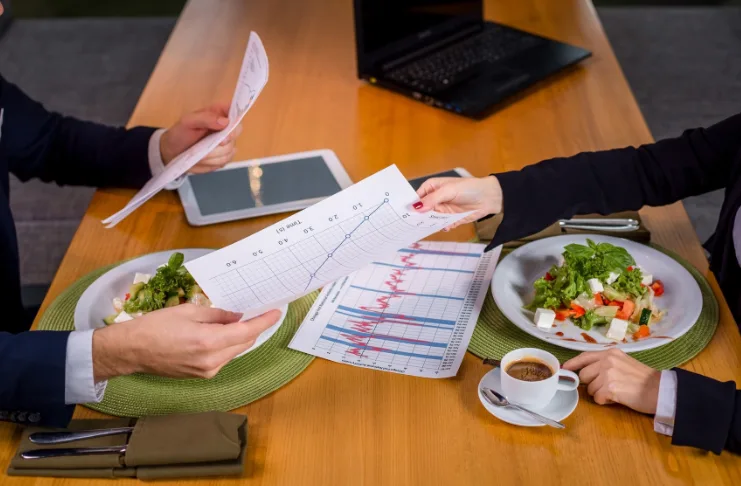
Accurate restaurant demand and sales forecasting allows you to make more informed decisions around inventory management, kitchen prep, and staffing. This way, your everyday restaurant operations run smoothly, and customer service improves.
Let’s look at the important benefits of demand forecasting for restaurants in detail-
1. Better Inventory Management
Restaurant profit margins are already limited; you don’t want poor inventory management to affect your finances. With a clear idea of customer demand, restaurant sales forecasting helps you avoid understocking or overstocking inventory. This directly reduces food waste and improves kitchen efficiency.
2. Cost Control
Forecasting helps you avoid unnecessary spending — on excess inventory, overstaffing, or last-minute ingredient purchases at higher food costs. For instance, a restaurant that sees a high seasonal rush can use forecasting to order inventory ahead of time without worrying about seasonal price hikes or storage costs.
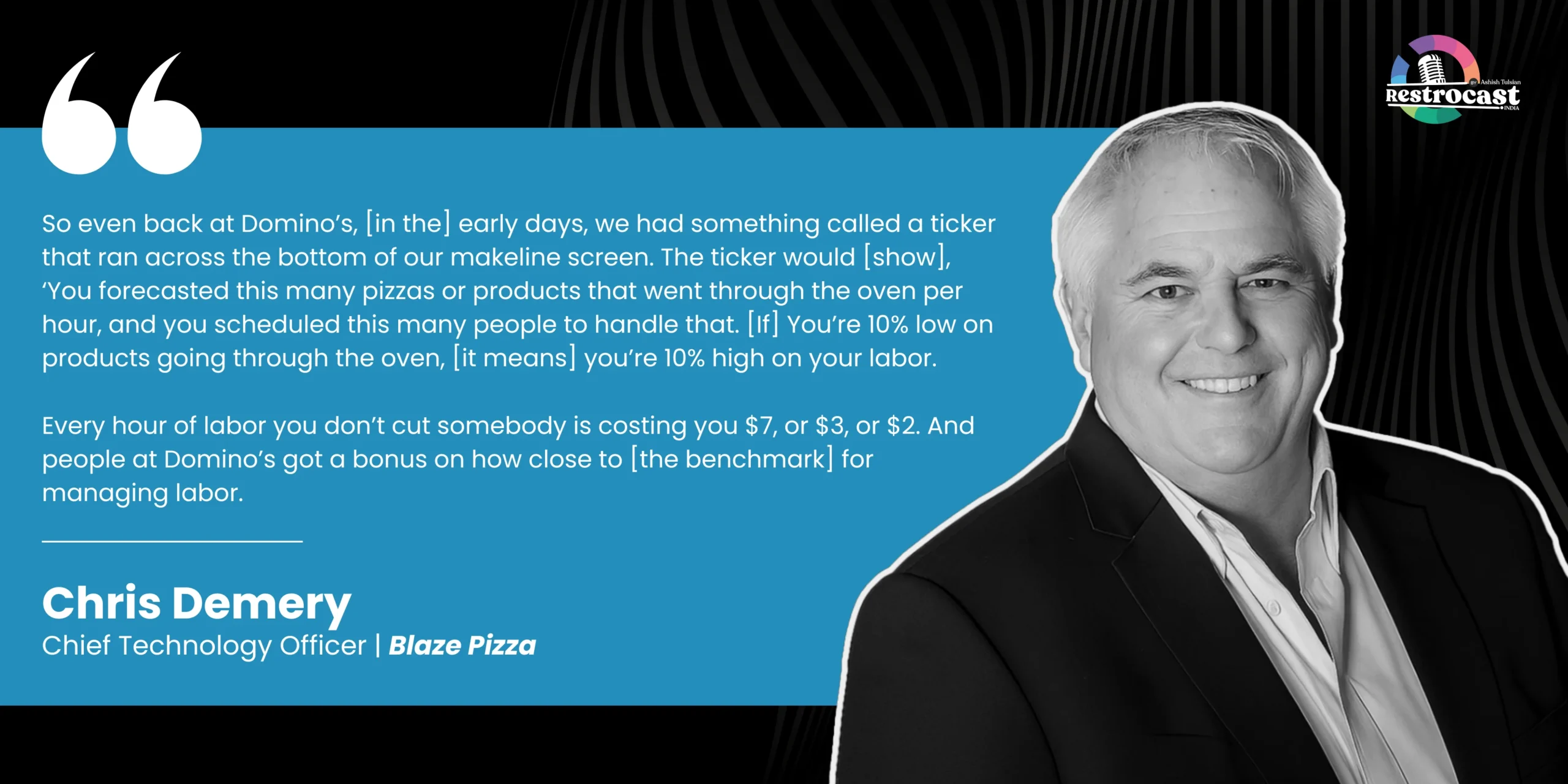
A good example of how accurate forecasts impact inventory, labor, and costing decisions comes from Domino’s Pizza. In a Restrocast episode, Chris Demery, Chief Technology Officer at Blaze Pizza, shares-
Watch this interesting conversation here-
3. Enhanced Decision Making
Access to reliable demand forecasts makes decisions around menu, pricing, inventory needs, or even employee hours easier. It gives you the confidence to respond to changing customer behavior and seasonal patterns quickly while balancing food and labor costs.
For instance, if you see low demand for particular menu items, you can simply remove them from your menu or reduce the ingredient quantities for those items to save food costs.
4. Improved Customer Experience
Poor demand planning is not only bad for your kitchen, but also for your customer satisfaction. If you’re consistently running out of popular items or making customers wait too long during service, it’s going to show up in your online reviews or customer retention metrics.
But forecasting helps you identify peak traffic hours or popular menu items, so you are better equipped to manage customer reservations and orders.
What Influences Your Restaurant Demand?
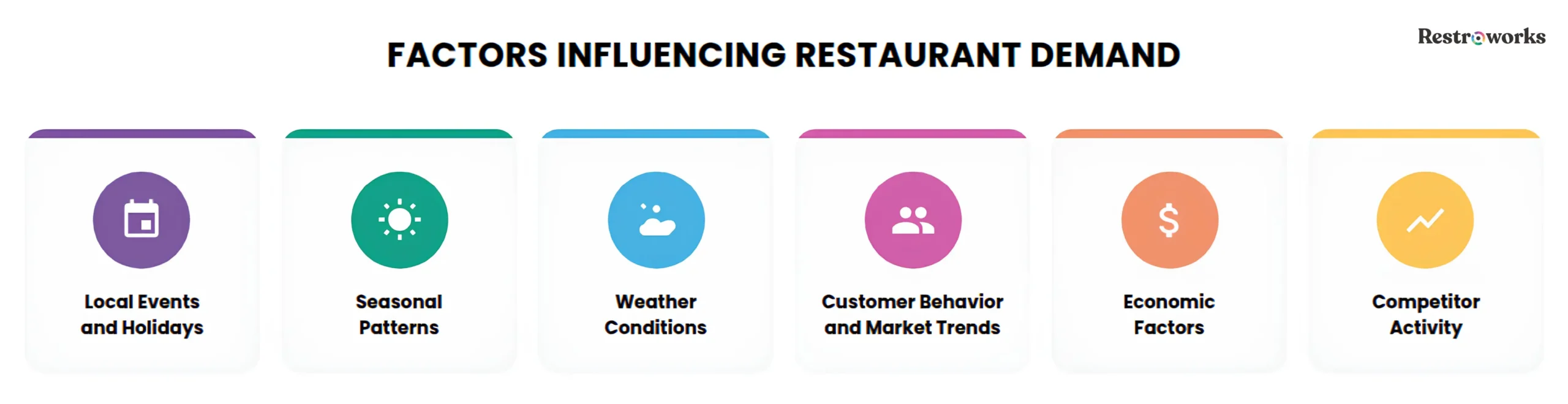
If you only do a past trend analysis without understanding why those numbers changed, it will only get you so far. It is important to account for various external factors that influence customer demand, traffic, and restaurant sales.
Here are the key variables you must plan for-
- Local Events and Holidays: A concert, office event, or even a busy weekend in your area can suddenly increase traffic spikes. Similarly, holidays might bring more people in at a specific time of the day, making it important to forecast demand accurately.
- Seasonal Patterns: If you’re located in a tourist city, certain months will bring more traffic than others. Similarly, a seafood restaurant may see higher demand for Tuna fish in the summer and for Crabs in the winter. This makes it critical to identify your seasonal cycle for inventory management and menu decisions accordingly.
- Weather Conditions: Weather not only affects whether people will order, but also how they order. For instance, a rainy evening might see a drop in dine-in orders, but an increase in deliveries.
- Customer Behavior and Market Trends: Changing menu and market trends influence customer preferences, which in turn affect how you plan your menu. Identify what people are ordering more — from food delivery app data, reviews, or social media — and prepare for menu items demand accordingly.
- Economic Factors: External economic changes impact customer spending more than you think. An increase in prices or service tax may discourage customers from eating out. Or they might adjust to these changes with fewer add-ons, lower average order value, or a shift toward cheaper items.
- Competitor Activity: If a nearby restaurant reduces its price, launches a new menu, or suddenly goes viral on social media, you’ll feel the change, sometimes immediately. So, track when and where competitor activity affects your orders to respond timely.
How to Conduct an Accurate Forecast for Restaurant Demand?
There’s no shortage of data in a restaurant. You have sales numbers, customer reservations, order patterns, daily reports, and more. The real challenge is turning that into a forecast you can rely on.
To achieve that, you need a structured approach to understand and forecast future demand. Here’s how-
1. Gather Historical Data
Start by gathering the past restaurant sales, guest traffic, and inventory data from your POS system. This sets the stage for your demand analysis and forecasting.
Go back at least 3-4 weeks and review your daily, weekly, and monthly numbers, and break them down into segments across-
- Dayparts (lunch vs dinner)
- Channels (dine-in, delivery, takeaway)
- High-volume menu items
Such in-depth segmentation will result in a more accurate forecast that aligns with your daily service reality.
2. Identify Trends in Customer Behavior
Once you have the past sales data, look for patterns to understand where the demand mostly is and how it varies. First, look for consistency. Ask yourself-
- Which service hours attract higher customer traffic?
- Did demand increase gradually or within a short window?
- Which menu items were high in demand and driving the highest revenue?
Next, identify how stable these trends are. For example, you might notice that week after week, your dinner demand is fluctuating more than lunch. Or that specific days, such as weekends or holidays, are bringing in more delivery orders.
3. Set a Baseline Forecast
One way to prepare a demand forecast for restaurants is to look at the order volume, since it directly reflects what customers ordered. With this data, build a baseline. The idea is to establish what “normal” looks like for your restaurant and set a starting point for calculations.
In simple terms, you can do this by comparing and analyzing historical sales data from “similar” days and taking a simple average. For example, if the last few Fridays have brought about 300-350 orders, you can have similar expectations for the next one.
4. Adjust for Seasonal Trends and Events
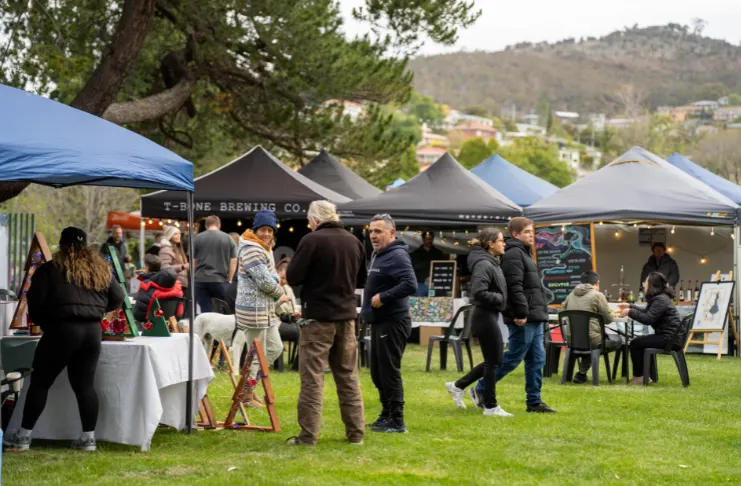
Historical sales data tells you what has happened, but it doesn’t account for what’s coming up. This is where you need to factor in anything that could shift demand, like holidays, long weekends, local events, or seasonal changes.
This is because these numbers may not reflect normal demand, so it’s important to be mindful of seasonal patterns while menu planning.
5. Account for External Factors
Some of the biggest demand shifts come from factors that you have no control over. Weather changes, competitor activity, and ongoing promotions can all influence how customers order. This is where you need to actively track and recognize which external factors are likely to influence demand and when.
The National Restaurant Association is an excellent source to keep up with the changing market trends and recent happenings within the restaurant industry.
6. Implement Technology for Forecasting Restaurant Sales
You don’t need advanced tools to forecast effectively, but you do need consistency in how you track and update your data. At a basic level, a simple spreadsheet recording daily restaurant sales, customer traffic, order volume, or projected sales will work well.
But as your data grows over time, technology will become necessary to identify patterns and refine your estimates. You can use your POS and inventory management systems to automate forecast data collection and sales forecasting, which will reduce errors and encourage informed decision-making.
7. Monitor and Adjust
Demand forecast isn’t steady, and it certainly cannot improve on its own. The only way to improve your planning is by comparing expected demand with what actually happened.
For instance, you can review where the forecast was off after each service or day. Was there a difference in total order volume? Did certain items sell faster than expected? Was there an external factor you didn’t account for?
Plus, regularly adjust your processes and sales forecasting techniques to reflect new data or recent changes to accurately estimate future forecasts.
Restaurant Demand Forecasts: Menu Mix and Item-Level Demand Predictions
Forecasting customer demand gives you a rough idea of how busy you’ll be. What it doesn’t tell you is what that demand will look like, in terms of fast-selling items and ingredient usage.
This is where another level of restaurant demand forecasting — menu mix and item-level forecasting comes in. It considers order distribution across your menu and uses those insights for accurate predictions for individual items.
A granular analysis of your menu demand makes it easier to plan the kitchen prep, ensure inventory management, and deliver an exceptional customer experience. Here’s what it can involve-
1. Understanding Your Menu Mix
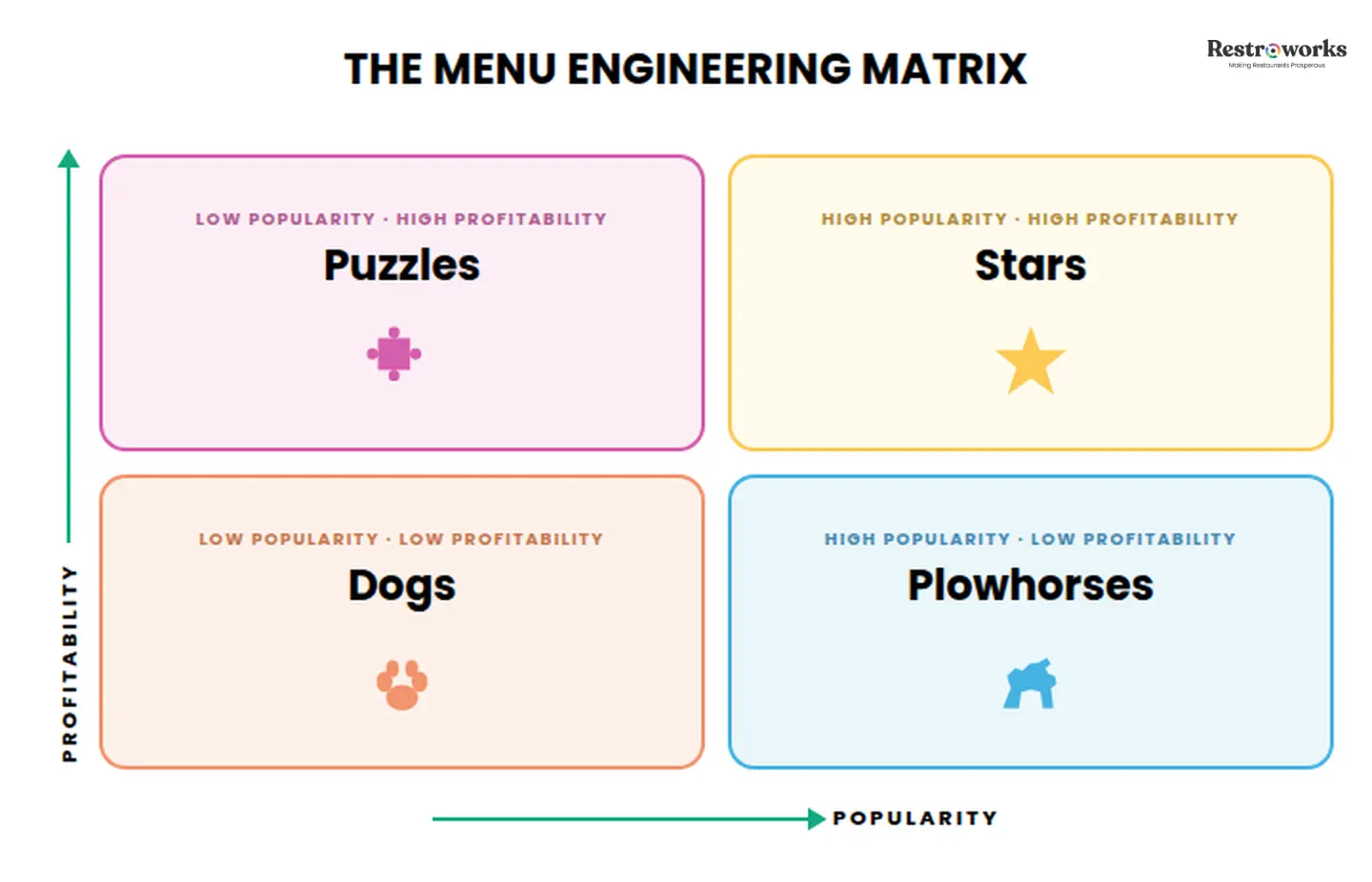
Your menu mix is at the heart of your menu forecast. This involves identifying which items contribute to most of the sales and which hold a smaller chunk of orders.
For this, you can use a menu engineering matrix and classify your menu items based on popularity and profitability. While it’s typically used for pricing and menu design, it’s just as useful for sales forecasting-
- Stars (high popularity, high profitability): These items make up for 50-60% of the total orders and have a high demand. Forecast them closely using past sales and order share, and keep a small buffer.
- Plowhorses (high popularity, low profitability): While these items are high in demand, their popularity can fluctuate if there’s a change in pricing or combos. You can forecast them based on historical data, and prepare for fluctuations during promotions or bundle offers, so as not to strain your inventory level.
- Puzzles (low popularity, high profitability): These items may sell sporadically and in low volumes. So the best way to plan demand for these items is to ensure availability, while avoiding over-prepping.
- Dogs (low popularity, low profitability): These items have minimal impact on overall demand. As a result, you don’t need detailed forecasting. Worst case, you can even consider removing these from the menu.
Once you understand the demand patterns across your menu mix, you can apply the insights to better forecast the expected order volume.
2. Estimating Item-Level Demand
Once you understand your menu mix and high-demand items, item-level sales forecasting for restaurants becomes easier. Based on your menu mix calculation, let’s say you expect around 200 orders on a given day, and your menu mix looks like this-
- Burgers make up for 40% of orders
- Fries contribute 30%
- And beverages are ~60% (since most orders include one)
Based on this, you can estimate approximate order quantities and inventory requirements for each.
3. Adjusting for Menu Changes and Promotions
Your menu mix is not fixed. Any change to your menu or pricing can shift how orders are distributed. For instance, if you are running promotions pushing a specific item or a combo offer, that item is likely to attract higher demand than usual.
Consequently, other menu items may see reduced demand. In these cases, relying on the past mix and ordering patterns will be ineffective. So, it’s better to account for these promotions as a temporary shift in demand and adjust your expectations accordingly.
How to Use Menu-Level Forecasts in Restaurant Operations?
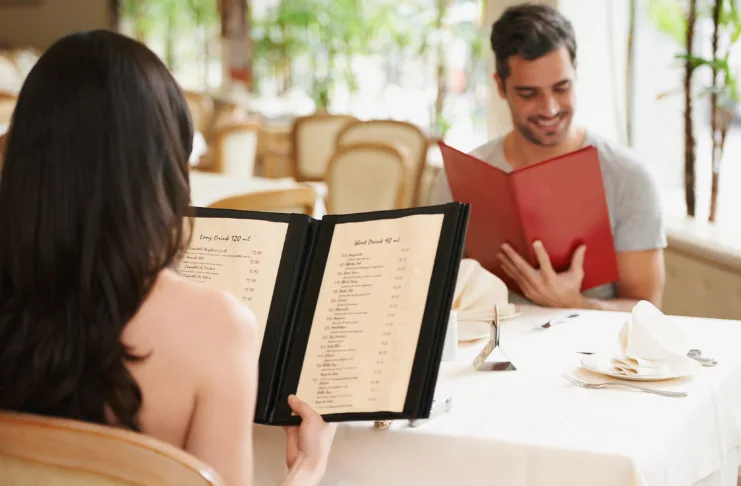
Based on your analysis and item-level forecast demand, you can-
- Manage inventory purchase for highly popular items
- Align kitchen prep time and quantities with actual expected orders
- Anticipate any high-pressure items in the kitchen in advance
To predict inventory needs, you can use this formula-
Inventory requirement = (Forecasted Sales x Menu Mix x Portion Size) / Vendor Pack Size
Here, the vendor pack size is the standardized quantity in which your vendor sells a particular ingredient.
Plus, this is where accurate restaurant forecasting also helps you control food and labor costs, which make up for 55-65% of total sales. When item demand is estimated correctly, you can avoid over-preparation and stockouts — two of the most common sources of waste and lost revenue.
Top Restaurant Demand Forecasting Methods and Tools
Most restaurants don’t need complex models to forecast demand effectively. What matters more is choosing an approach that fits how your demand behaves and using it consistently.
Here are the most practical techniques and tools you can use for restaurant forecasting-
A. Time-Series Forecasting for Restaurants
Time-series forecasting looks at how demand has changed over time and uses that pattern to estimate what comes next. It works on the assumption that past behavior, such as weekly patterns, seasonal spikes, and recurring trends, will not change unless something new happens.
You can use the following methods for time-series restaurant forecasting-
- Moving/Rolling Averages: Instead of relying on a single day, it considers the average of a few recent comparable days to estimate the demand for the next one. It uses the formula-
Forecast = (Week1 + Week2 + Week3 + Week4) / 4
- Exponential Smoothing: This method helps in forecasting future restaurant sales and demand values by averaging past sales data, while giving more weight to recent data.
For instance, if demand patterns show that Sunday lunch service performs 40% better than other weekdays, you can prepare your kitchen, staff, and ingredient availability accordingly.
B. Casual Forecasting
You already know how several internal and external factors directly affect your demand. Casual forecasting is a technique that helps you account for these factors.
Applying casual forecasting for restaurants involves looking at the following factors-
- Local events
- Weather changes
- Economic factors
- Marketing strategies and promotional activities
C. Machine Learning and AI
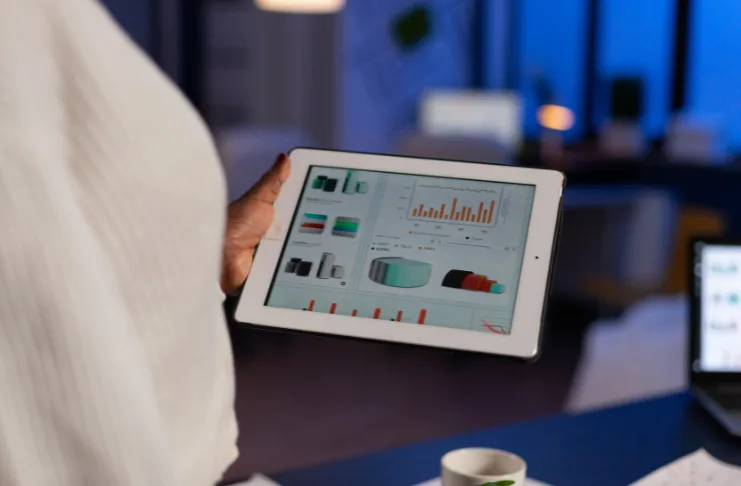
Machine learning models take restaurant sales forecasting a step further by analyzing large volumes of data and using predictive and multifactor analysis to identify patterns that may be less obvious. These systems can combine historical sales data, menu performance, and external variables such as weather, events, and trends, all while continuously adjusting forecasts as new data comes in.
For restaurants with higher volumes or multiple locations, AI forecasting can significantly improve accuracy and reduce manual effort. In fact, research suggests that machine learning demand forecasting models have higher accuracy over traditional forecasting methods when verified using real restaurant store data.
Here are some ML models that you can apply-
1. Regression Models
Regression models estimate demand by linking it to specific factors that influence it. Instead of just looking at historical data, they try to answer: which variables are driving demand, and by how much?
So in a restaurant context, a regression model will help answer-
- How much does demand increase on weekends?
- What is the impact of a promotion or discount?
- How does weather or time of day affect order volume?
For example, say you run a casual dining restaurant and notice that Fridays and Saturdays are always busier, or colder nights bring in more delivery orders. A regression model can quantify this more accurately, like-
- +20% demand on Saturdays
- +15% delivery orders when it rains
- +10% increase in orders during promotions
This way, you can start adjusting your forecast based on exact factors instead of guesswork.
2. Neural Networks
Neural networks help detect patterns that aren’t obvious or linear. Instead of assigning fixed weights to factors (like regression), they learn complex relationships automatically from large amounts of data.
They’re useful when restaurant demand is influenced by multiple factors. So, imagine a multi-location QSR brand where demand depends on-
- Time of day
- Location
- Ongoing campaigns
- Day-specific behavior
- Menu promotions
A neural network may detect patterns like combo offers on the first weekends of the month that attract higher demand. The model does this by learning from repeated patterns.
How to Measure the Accuracy of Demand Forecasting?

If you want restaurant forecasting to get better over time, you need a simple way to track how close your estimates are to actual performance. Here’s how you can go about it-
A. Track the Forecasting Gap
Start by looking at the difference between what you planned and what actually happened. Say you forecast 200 orders for the day and end up getting 180, which means you’re off by 20 orders or 10% on your forecast.
This difference will be manageable on a busy day. Even if you have overprepared, it will not disrupt your service. But on the other hand, consider a slower day. If you expected 80 burger orders and only got 60, you’re still off by 20 orders.
This time, the forecasting error is close to 30%, and it can significantly impact your staffing and inventory management decisions, leading to more waste or idle staff.
B. Consider What Good Forecasting Accuracy Is
As a good thumb rule, aim to stay in an 80-90% forecasting accuracy range.
- Around 85% accuracy is a good industry benchmark.
- If the accuracy of your forecasts falls below 75%, it can indicate inefficiency in methods and planning.
- And if you’re achieving accuracy above 90%, it can sometimes indicate that you’re overordering with a large buffer.
C. Identify Patterns and Adjust Forecasting
Measuring accuracy only becomes useful when you can make better decisions based on it. You know the forecast was off, so now focus on the why.
Maybe there was a difference in total orders, or maybe it was because of a specific time slot or item. For example, if demand was higher than expected, a promotion, a local event, or even a shift in weather could influence customer behavior.
Based on your understanding, adjust your forecasting processes-
- Review accuracy weekly instead of relying on daily fluctuations
- Track key categories separately (for example, beverages, proteins, or dry goods)
- Look for patterns in the forecasting errors. Are you consistently overestimating or underestimating demand?
- Consider factors such as peak hours vs non-peak hours, ordering channels
Over time, analyzing these patterns makes you more aware and improves the accuracy of your forecasts.
Common Demand Forecasting Mistakes and How to Fix Them?
- Using outdated or incorrect data: If your data isn’t clean or up to date, your forecast won’t be either. Outdated data, missing entries, or using data from promotion or event days will affect your calculations. So regularly vet your data to eliminate any outdated or inaccurate data.
- Relying on instinct: Even if you have years of restaurant experience, basing forecasts on your gut feeling can lead to a gap between reality and expectations. Instead of just using your memory, refer to data and make informed financial decisions based on your experience.
- Ignoring external variables: Failing to consider external factors like economic changes, local events, or competitor activity can make forecasts unreliable.
- Not using technology: When data is scattered or tracked manually, it’s harder to spot patterns or keep forecasts updated. This becomes a bigger problem as operations grow. Use your POS systems and inventory software that centralize sales, inventory management, and demand data to improve visibility.
- Skipping regular reviews: Forecasting is often treated as a one-time task rather than an ongoing process. Without reviewing what actually happened, mistakes repeat, and accuracy doesn’t improve over time. So, regularly compare expected vs actual demand and adjust your approach over time.
No matter how experienced you are in the restaurant industry, you cannot predict future sales. But forecasting demand is one way you can identify what’s next. It gives you the clarity to align your kitchen, staff, and inventory management with demand while managing food costs.
But most of all, it helps you make informed decisions and meet customer expectations. Once you understand patterns in demand behavior and adjust for what’s changing, you can create more reliable forecasts.