

On average, you can expect the food truck cost to be around $100,000 to $150,000, which includes mostly every expense related to the truck, equipment, permits, and initial inventory. Of this, the average purchase price of a new food truck alone is $109,500 in 2026.
As Ross Resnick, CEO of Roaming Hunger, puts it: “Starting a food truck business could start as low as $30k but could go up to $300k-plus based on how you want to launch.”
Several factors that actually determine whether you are at the lower end or the higher end of this range are:
- Whether you buy a new, used, or rent a truck
- Your location and local permit costs
- Menu complexity and kitchen equipment needs
- Your staffing decisions
Startup costs for a food truck generally range from $40,000 to $150,000 for the vehicle itself, with additional costs for permits, licenses, equipment, and initial inventory. The total cost to open a food truck typically falls between $50,000 and $150,000, depending on location, truck size, and business needs.
Food Truck Cost by Truck Type: New, Used, or Rented
The first biggest expense that you’ll need to incur when starting a food truck business will be to “buy” the food truck itself. For that, you have four key options:
#1: Getting New Custom Food Trucks
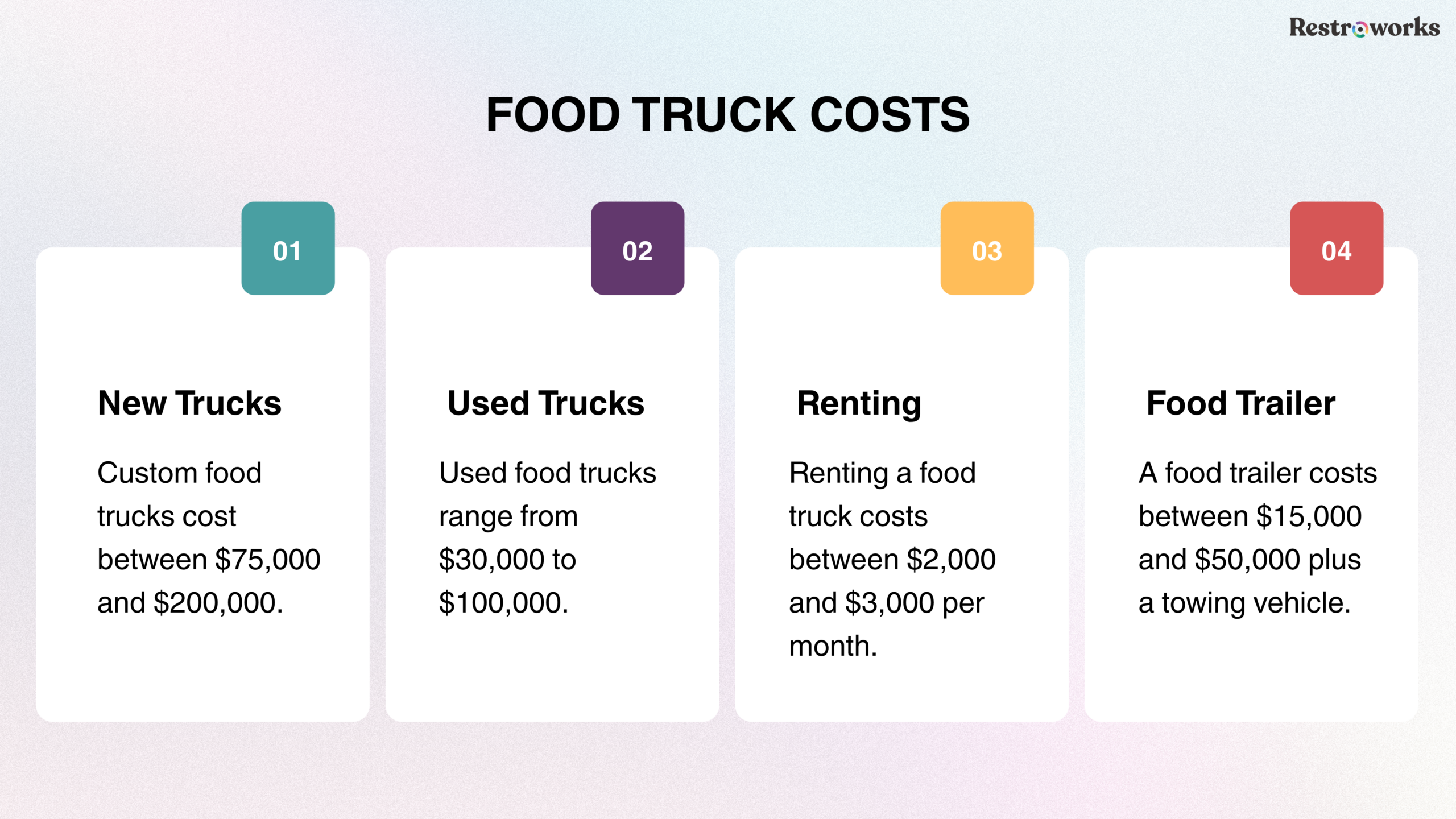
New custom food trucks cost between $75,000 and $200,000, with specialized builds exceeding $250,000. The upside here is that you get warranties, a layout built to your menu, and zero repairs, but you may have to wait 3–6 months for delivery and make a significant investment upfront.
“Generally, it’s a good idea to start with a manufacturer of food trucks that’s in your state to get a quote and an idea of what the expectations are for building standards,” says Matt Cohen, founder and CEO of Off the Grid.
#2: Used Trucks
Used food trucks typically range from $30,000 to $100,000. Quality used trucks cost $40,000 to $80,000 in most markets. So, you should always budget an extra $5,000 to $15,000 for repairs, repaints, and equipment upgrades.
#3: Renting a Food Truck
Renting a food truck typically costs between $2,000 and $3,000 per month. Thumbtack data puts the national average even lower, which comes to around $1,249 per month, with prices ranging from $850 to $1,833.
One important thing to note here is that while renting a food truck offers lower initial costs, it does not build equity, whereas purchasing a truck can provide long-term value and the ability to resell.
#4: Food Trailer
A food trailer costs between $15,000 and $50,000 and requires a separate towing vehicle that would again cost an extra $20k-$50k. The total cost of a food trailer setup is almost always comparable to that of a used truck, but it comes with a lot less mobility.
How Much Do Kitchen Equipment and Build-Out Costs Cost?
Kitchen equipment and build-out costs typically range from $10,000 to $50,000, which may include cooking appliances, refrigeration, and ventilation hoods. As for the exact breakdown,
- Cooking appliances (griddles, fryers, ranges): $8,000–$20,000
- Refrigeration and storage: $3,000–$8,000
- Sinks, plumbing, water tanks: $2,000–$5,000
- Ventilation and fire safety: $3,000–$8,000
- Generator and power: $2,000–$6,000
- POS system (card readers, WiFi, receipt printers): $1,000–$3,000
💡Most Important: Trust us and invest in a POS system. It is non-negotiable for tracking food costs, managing orders, and running fast service efficiently.
How Much Will Permits, Licenses, and Legal Compliance Cost You?
To start a food truck and operate for one year, an entrepreneur spends an average of $28,276 on permits, licenses, and legal compliance. And that’s not even it; sometimes, first-year regulatory costs can exceed $28,000 in high-cost areas.
What Permits Do You Actually Need?
The types of permits and licenses required to operate a food truck fall under five categories: administrative, health/menu/food safety, vehicle requirements and safety/hazard prevention, employment, and zoning. They cost:
- Business license: $50–$500
- Food service permit: $100–$1,000
- Health department permit (from your local health department): $200–$1,500
- Mobile vending permits: $500 to over $10,000 annually, depending on the city
- Fire safety permits can range from $50 to $500.
- Parking permit: $500–$10,000+ annually
Licenses and permits can cost between $500 and $3,000+ annually, depending on local regulations. The average operational cost for permits and licenses across the top 19 food truck cities is approximately $1,864, but again, that’s just an average – your expenses here will entirely depend on which city you operate in.
How Does Location Influence Your Permit Budget?
The location of your food truck significantly affects the ease of obtaining permits and licenses, with some cities being more favorable than others for food truck operations.
Cities like Portland, Denver, and Orlando are considered friendlier to food trucks, while cities like Boston and Washington, D.C., have more stringent regulations and higher fees. The average permit and license costs for food trucks can vary widely by city, with some cities charging as little as $590 while others, like Boston, can charge over $17,000.
As Ross Resnick of Roaming Hunger notes: “If a restaurant was not built in the right location, it will probably go out of business, whereas a food truck can just drive somewhere else.”
That mobility is perhaps your best hedge against a bad market.
INDUSTRY INSIGHT
What Will Your Truck’s Monthly Operating Costs Amount to?
Monthly operating expenses often run between $5,000 and $10,000. Where does this money go exactly?
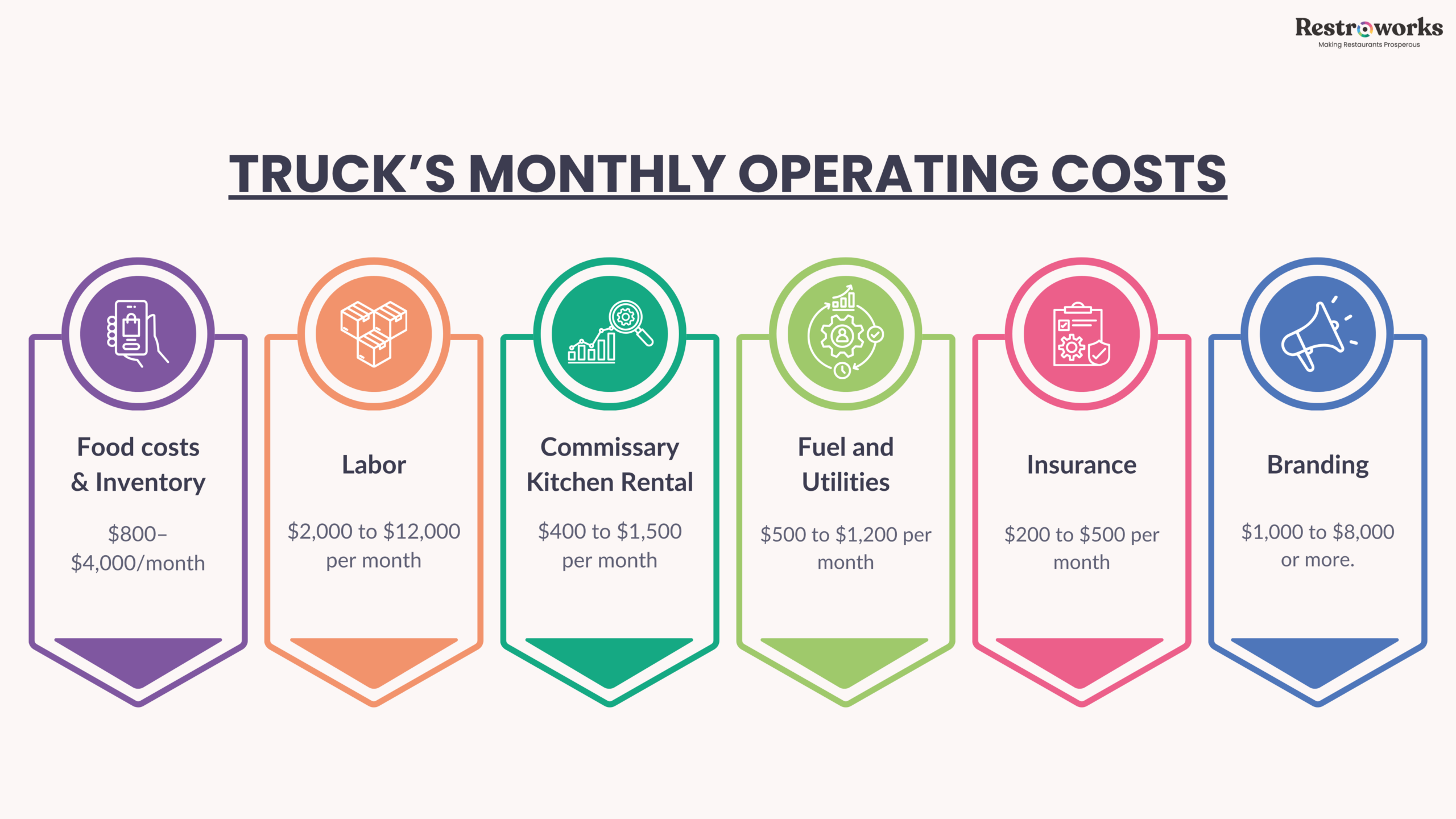
Food costs and inventory: $800–$4,000/month.
Initial inventory costs can range from $1,000 to $5,000 to stock for opening day. On average, food truck owners can expect to spend about $2,000 to $10,000 on initial food and inventory costs, depending on menu size and pricing strategy.
Labor: Labor costs can range from $2,000 to $12,000 per month, depending on staff size. Monthly labor costs more broadly range from $3,000 to $15,000 for larger operations with full teams. Yes, going solo saves money, but it will also mean you alone will have to put in 60–80 hours of work per week.
Commissary kitchen rental: This is often required in most cities and ranges from $400 to $1,500 per month. Some cities require commissary agreements to even obtain a health permit from the local health department.
Fuel and utilities: Fuel and utilities for food trucks cost between $500 and $1,200 per month. Food truck owners typically spend $250 to $500 per month on fuel alone, depending on usage and distance traveled.
Insurance: Monthly insurance costs for commercial auto and general liability range from $200 to $500 per month (roughly $2,000–$6,000 annually).
Branding: Wrapping and branding your food truck will cost somewhere between $1,000 and $8,000 or more.
“Social media is an opportunity to amplify your personality in a particular direction–that’s why it’s been so effective for food trucks. And because ultimately, food trucks are mobile. If you’re cruising around and there’s some uncertainty about when you’re going to be in a particular place at a particular time, social media allows you to give your customers confidence that you’re going to be there,” says Matt Cohen.