
Quick service restaurant statistics Canada

Quick Service Restaurant Statistics Canada: Market Size, Growth Trends & Consumer Insights

Home / Blog /  

Quick Service Restaurant Statistics Canada: Market Size, Growth Trends & Consumer Insights

Read summarized version with

Quick service restaurants remain one of the most consistent and scalable segments of Canada’s foodservice industry. Their strength lies in repeat demand, broad consumer reach, and operating models built for volume and speed—factors that continue to support high demand.


At the same time, the way QSRs are growing has evolved. The number of ordering channels has increased, people visit more frequently, and expectations are changing, all of which are influencing restaurant performance as well as menu or location decisions in Canada. 


Understanding these shifts is essential for operators looking to optimize margins, improve throughput, and align service formats with how Canadians choose to order today. This blog brings together key quick-service restaurant statistics from across Canada to provide a clear view of market size, growth patterns, and consumer behavior.

KEY TAKEAWAYS

  • Canada’s QSR sector is one of the largest foodservice segments, accounting for over half of the total foodservice industry nationwide.
  • Growth in this sector is driven by digital ordering, delivery, and menu innovation that features diverse flavors and healthy eating.
  • At the same time, small QSR brands are growing faster than big brands, especially in the post-pandemic
  • Consumers visit QSRs frequently, with younger adults and urban households leading demand.
  • Price and convenience consistently rank as the top decision factors for Canadians.

Market Overview: Size and Value of Canada’s QSR Industry

Here’s a quick look at the size of Canada’s quick service restaurant industry-

A. Total Market Size

Canada’s quick service restaurant sector represents a major share of national foodservice revenue, driven by high visit frequency and consistent consumer demand.

  • The QSR segment generated over CAD 44.8 billion in annual sales in 2024 — the largest category within the food services industry, positioning it as one of the largest limited-service markets globally.
  • This represents roughly 46.4% of total foodservice sales in Canada, ahead of full-service restaurants.
  • Across 2024, limited-service sales grew by +5.5% year-over-year, outpacing many other subsectors.

Standardized menus, high transaction volumes, and value-led pricing continue to anchor QSR performance at a national level. Together, these factors reinforce the segment’s role as a dependable revenue engine within Canada’s restaurant industry.

Total market size

B. Unit Counts and Penetration

Quick service restaurants form a substantial part of Canada’s overall foodservice footprint.

  • Canada’s food services and drinking places subsector includes more than 100,000 establishments, of which quick service is a substantial share.
  • Within this universe, limited-service eating places (including QSRs and fast food) often constitute the largest segment by outlet count due to high density in both urban and suburban markets.
  • According to industry research, smaller QSR brands led the sector growth between 2019 and 2023, adding 1,000 new outlets compared to only 200 new outlets by big QSR chains.

This distribution highlights that wide physical presence and format accessibility remain core to how QSRs achieve scale across Canada.

C. Growth Trajectory 

Canada’s QSR segment has demonstrated steady expansion over the past several years.

  • As of 2025, the quick-service restaurant market held more than 53% share of the Canadian foodservice industry.
  • Sales from limited-service restaurants surpassed pre-pandemic levels by 2022 and have continued to rise since.
  • From 2019 through 2024, limited-service formats recorded stronger cumulative sales growth than the overall foodservice sector.
  • This growth reflects sustained consumer reliance on convenience-led dining rather than short-term recovery effects.

Quick Service Restaurant Statistics Canada: Consumer Behavior and Eating Out Trends

Customer trends

Quick service restaurants in Canada are shaped by high visit frequency, convenience-led ordering habits, and strong value expectations. Canadian consumer behavior data reveals who visits QSRs most often, how they order, and what influences repeat visits. 

Understanding these signals can help operators align menus, pricing, and service formats with actual demand-

  • When choosing a restaurant for delivery, 56% of consumers prioritize menu pricing, while 54% consider the variety of options available on the menu.
  • The Gen Z in Canada accounts for 20% of the total visits to foodservice restaurants and 30% of the visits to quick-service restaurants.
  • Gen Z consistently favors authentic and diverse cuisine and QSR brands that share their values.
  • About 30% of Canadians have worked at a fast food restaurant at some time.
  • For 29% of Canadians, the availability of healthy eating options is important at a fast food or quick service restaurant.
  • Three in four Canadians (75%) are eating out less often due to rising living costs, with 81% of those aged 18-34 reporting reduced frequency.
  • However, per capita consumer spending at QSRs reached $1,135 annually, slightly above that of full-service restaurants at $1,035, despite overall cutbacks.
  • 65% of Canadians replace a traditional meal with a snack at least monthly, led by Millennials (53% weekly) and Gen Z (50% weekly).

What are the Growth Trends Shaping QSRs in Canada?

The following industry trends highlight the factors currently driving growth across the Canadian market-

A. Digital Ordering and Delivery Expansion

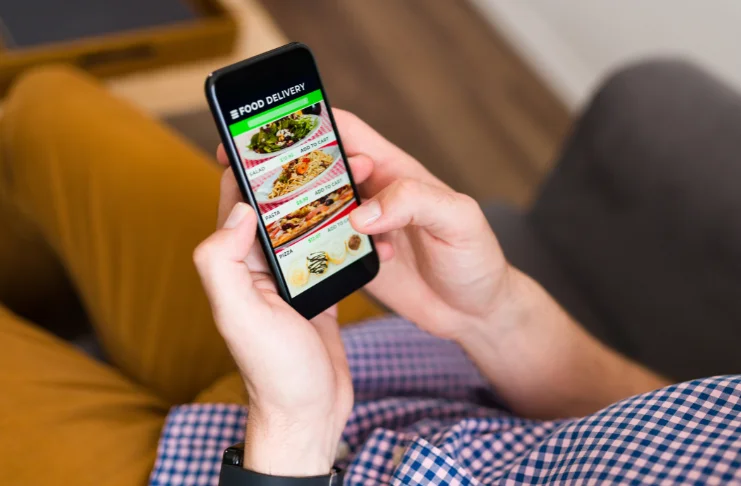
Digital and delivery channels are rapidly reshaping how Canadians engage with quick-service restaurants. In 2024, Canada’s online food delivery market generated approximately $18.99 billion in revenue, and is projected to rise by about 51% to $28.64 billion by 2030.

Within this landscape, 54% of Canadian consumers prefer to order food delivery through third-party apps or websites, underscoring the dominance of digital channels in routing orders to restaurants, including QSRs. 

Third-party platforms such as SkipTheDishes, a major Canadian delivery service, play a significant role in this shift by expanding digital reach and off-premise sales for operators.
Digital ordering

B. Menu Innovation and Health Trends

Menu innovation remains a significant growth factor within Canada’s QSR sector. According to industry trend analysis, value-driven options like hot sandwiches, global flavors, and comfort menu items are among the fastest-rising categories in Canadian menus, reflecting both convenience and evolving taste preferences.

C. Price Sensitivity and Value Perception

Value perception continues to drive QSR demand in Canada. Consumer surveys indicate that 47.3% of Canadians rate affordability as the most critical factor when buying food, followed by nutrition considerations (24.9%).

In a sector where price competitiveness matters, quick-service restaurant operators that combine value meals, combo offers, and dynamic digital promotions tend to maintain higher visit frequency across economic cycles.

INDUSTRY INSIGHT

QSR traffic growth in Canada outpaced full-service in 2025 as the segment logged a 4.3% increase in traffic in the most recent quarter, while full-service restaurant visits declined by about 0.7%.

D. Climate-Driven Demand and Seasonal Ordering Patterns

Canada’s climate plays a direct role in how QSR demand is distributed across the year and across order channels. Colder months consistently drive higher reliance on drive-thru, takeaway, and delivery apps, while dine-in traffic becomes more seasonal compared to warmer markets.

Weather sensitivity also influences menu performance. Portable, heat-retaining items and bundled meals tend to perform more consistently in colder months, while promotional activity often aligns with value and convenience rather than experiential dining.

For Canadian QSR operators, growth is also tied to how effectively operations and menus are aligned with seasonal ordering behavior driven by climate.

Conclusion

Canada’s quick service restaurant sector continues to hold a strong position within the broader foodservice industry, supported by its scale, consistent demand, and high visit frequency. The data shows that growth is being shaped by how Canadians diners order, what they value on menus, and how price sensitivity influences choice.

As consumer preferences continue to evolve, QSRs that remain data-driven and operationally agile will be best positioned to capture sustained demand in the Canadian market.

Frequently Asked Questions

1. How big is the QSR market in Canada?

The quick service/fast food industry in Canada was reported at CAD 45 billion in revenue in 2024, marking a strong recovery post-pandemic.

Approximately 12.7 % of adult Canadians reported eating at a fast-food restaurant the previous day in survey data on consumption patterns.

McDonald’s Canada. With over 1,460 locations nationwide and serving about 2.5 million customers daily, McDonald’s Canada is the largest quick service restaurant by footprint and visits.

The global QSR market is projected to grow from around $316 billion in 2024 to about $384 billion by 2030 at ~3.3 % CAGR.

Newsletter subscription banner

Talk to a restaurant expert today and learn how Restroworks can help your business.

Request Demo >

Share

Discover More Insights to Power Your Journey

Cloud Kitchen Marketing: 13 Strategies to Boost Orders in 2026

Cloud kitchen marketing is how a delivery-only kitchen creates demand it cannot get from foot traffic: delivery-app listing optimization, virtual…

Cloud Kitchen Cost in 2026: Startup, Monthly & Profit Breakdown

Starting a cloud kitchen costs between $20,000 and $60,000 for a single-brand operation in the United States in 2026, based…

Managing Food Safety and Quality Across Restaurant Chains with Software: A Smarter Compliance Strategy

Food safety and quality management in chain restaurants through software solutions is not just a matter of technological adoption. It…

POS
Cost-Effective POS Software for New Ice Cream Shops
Cost-Effective POS Software for New Ice Cream Shops That Scale

Opening an ice cream shop is exciting, but choosing the wrong POS system can quietly drain your margins before you…

Are Ice Cream Shops Profitable? What the Numbers Tell You

You love ice cream, we love ice cream, everyone loves ice cream - this part is easy and super obvious,…

How to Write an Ice Cream Shop Business Plan in the US

When Jeni Britton Bauer first started talking to people about her ice cream dream, someone gave her advice that changed…

Join. Learn. Grow.

Sign up to receive the latest hospitality insights and stories straight to your inbox

Streamline your operations with Restroworks