
In short: Starting a cloud kitchen in the United States costs roughly $10,000 to $33,000 if you launch from a shared or commissary kitchen, and $25,000 to $103,000 if you build out an independent space. The gap is almost entirely equipment and renovation, which a shared facility already provides. The sections below break down every line: startup, monthly, by city, by business model and by cuisine, plus the break-even math that tells you when the numbers actually turn a profit.
Planning to get into the cloud kitchen business but do not know where the cloud kitchen cost actually goes?
You are not alone in this.
With the growth of the food industry, cloud kitchens are becoming popular among budding entrepreneurs and restaurateurs. A cloud kitchen is also called a ghost kitchen or virtual kitchen. The model reduces the costs tied to a traditional restaurant business by operating from a commercial building without a dining area, which lets you serve customers more efficiently through food delivery apps.
The global cloud kitchen market, valued at 76.5 billion US dollars in 2025, is expected to reach 175.14 billion US dollars by 2034, a CAGR of 9.70% from 2026 to 2034.
Before investing, you should know what it costs to open a cloud kitchen. Whether you are opening a new kitchen or expanding an existing brand, knowing the ongoing costs, hidden costs, risks and challenges involved is how you avoid surprises down the line.
The cost breakdown includes leasing space, purchasing kitchen equipment, investing in technology and building a marketing budget to attract and retain customers in a competitive market.
What You Will Learn
- Every startup and operational expense involved in setting up and running a cloud kitchen, including the hidden costs most guides skip.
- How costs change by city, by business model and by cuisine, so you can budget for your situation rather than a national average.
- How long it takes to recover your investment, and the second break-even point nobody warns you about.
- Practical ways to manage your expenses and improve your profit margins.
What Are the Startup Costs of a Cloud Kitchen?
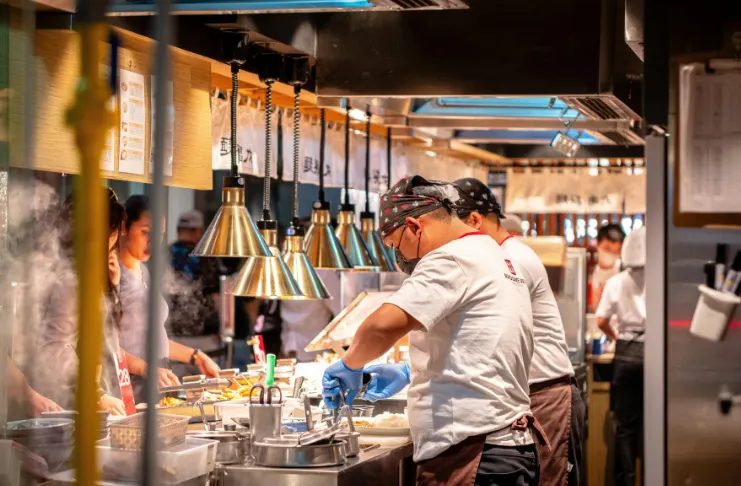
There are four core cost categories to plan for before starting your cloud kitchen, plus licenses and renovation. Most first-timers underestimate two of them, permits and security deposits, so build in a buffer of 15% to 20%.
Here is the full one-time picture before we break down each line.
1. Utilities
Utilities contribute significantly to your cloud kitchen costs. Electricity, gas and water range from $500 to $2,000 monthly, varying with kitchen size and the number of orders you take.
High-BTU concepts such as wok stations and pizza ovens sit at the top of that range. To get a more precise figure, track your utility bills over the first few months. That helps you budget effectively and shows you where consumption can come down.
2. Labor
Skilled kitchen labor helps you run operations properly and maintain food quality. Hiring covers recruiting, interviewing and selecting the right candidates, including skilled cooks, cleaning personnel and kitchen assistants.
There is no fixed price here, as it varies by location and by the experience of the people you hire, but your labor cost should sit between $3,000 and $15,000 monthly. Cloud kitchens run lean, often with only three to four employees.
Budget for training and onboarding as well. Restaurant industry research puts the cost of replacing one frontline employee at $5,864 on average, according to Deloitte citing Cornell University research.
3. Maintenance
To keep your kitchen functioning properly and avoid costly breakdowns, follow a regular maintenance schedule. Budget $500 to $1,500 monthly for daily cleaning, deep-clean sessions, sanitation supplies and an emergency repair reserve.
Regular equipment maintenance prevents damage and extends appliance lifespan. Unexpected issues still arise, so keep a reserve for repairs so your kitchen is never out of order.
A preventive schedule of quarterly hood and grease-trap cleaning, monthly refrigeration coil cleaning and weekly fryer boil-outs heads off most of it.
4. Marketing
To attract an audience and grow your business, you need to put in marketing effort. Your cloud kitchen margins are affected directly by how much you invest here.
Use social media, Google Ads and the food delivery apps to reach your audience. Offline strategies such as flyers and local partnerships can also build brand recall at a good return.
Marketing costs may run as low as $500 per month or as high as $5,000, depending on the strategies used and the size of your campaigns. Monitor the return on investment of each strategy so you can identify what works and move money toward it.
5. Delivery Platform Fees
Collaborating with food delivery platforms is a must for a cloud kitchen, but it comes with a real cost. Platforms such as Uber Eats, DoorDash and Grubhub bring you the bulk of your audience, and they charge a commission fee of 15% to 30% per order. That directly compresses your cloud kitchen margins.
To reduce the impact, negotiate lower commission rates as your volume grows, offer incentives that encourage direct orders through your own website, and compare platforms to find the best terms for your category.
The Hidden Costs No One Talks About

Several recurring costs never appear in startup budgets but hit every operator: grease-trap pumping, exhaust-hood deep cleaning, pest-control contracts, commercial waste disposal, and commissary or facility fees.
Payment processing is the quiet extra line, running roughly 2.5% to 3.5% of total card transaction volume across sales channels. Customer acquisition is the invisible startup cost, because with zero foot traffic every first order has to be bought.
Rising input costs compound all of this. Deloitte’s Future of Restaurants study found that 88% of restaurant leaders say high input costs, both materials and labor, are squeezing them despite slowing inflation.
A direct online-ordering channel is the single biggest lever against these costs. Orders taken on your own site bypass the aggregator commission entirely, so the saving goes straight to your bottom line.
How Delivery Commissions Actually Hit Your Margins
Everyone quotes “15% to 30% commission”. Few show what it does to a real order. Using the reference model from the break-even section below, a $15 average order with $7 of food and packaging cost, here is what each channel actually leaves you.
That $3.50 is what has to cover your rent, salaries, insurance and every other fixed cost before a single cent of profit. It is why cloud kitchen operating margins can be thinner than a dine-in restaurant’s on the same menu, even though startup costs are far lower.
The lever every profitable operator pulls is shifting order mix toward owned channels and negotiating commissions down as volume grows.
Multi-Brand Cost Efficiency: Do Extra Brands Really Pay?
Running multiple virtual brands from one kitchen is the cloud kitchen model’s signature advantage, but “minimal added cost” is a myth. Each additional brand needs its own menu photography, packaging design and inventory, platform onboarding and menu-engineering time.
The upside is real when demand exists. Extra brands spread your fixed costs, rent, equipment and core staff, across more revenue streams, and multiply your visibility on the delivery platforms.
The discipline is to add brands to demand you have already validated, and to budget the marginal cost honestly rather than assuming it is zero.
Real Cloud Kitchen Cost Examples
- Chicago Operator: Spent $43,000 in total startup costs and reached 380 orders a month by month four, but needed until month eight to hit operational break-even at 520 orders, because delivery commissions averaged 27% against the 23% they had modeled. The lesson: model your commissions high, not low.
- Turnkey Against Independent, Head-to-Head: A turnkey pod in Atlanta runs $3,200 a month all in, covering space, equipment and utilities. An independent 300-square-foot kitchen at $2,800 base rent adds utilities, pest and waste, internet and grease-trap service, reaching $4,470 in actual monthly cost. The headline rent is the cheaper one, and the real monthly cost is not.
- Adding a Brand: A Los Angeles wing concept added a burger brand using the same proteins and fryers, for a total of $7,050 across packaging, photography, platform promotions and menu development. That generated $3,800 a month in incremental revenue but only $760 a month in incremental profit after commissions, taking over nine months to recover rather than the 60 days often claimed.
What Licenses and Permits Are Required for a Cloud Kitchen?
Dealing with licenses and permits can be daunting, but it is an important step. Having the necessary documentation in place keeps you compliant with local laws and helps you build trust with your customers. You should obtain several key licenses and permits before you start cooking.
1. Types of Licenses Required
- Health Permits: Essential for any business handling food. These confirm your business meets the required hygiene and safety standards. The inspection process can be tough, but it is designed to protect both you and your customers.
- Business Licenses: This legally enables you to run your business and involves registering your business name and obtaining a tax identification number.
- Federal Registration: Any facility that manufactures, processes, packs or holds food for US consumption must register with the FDA.
The cost of obtaining licenses varies widely depending on your location, so allocate between $1,000 and $3,000 for permits and licenses.
This is a considerable chunk of your upfront cloud kitchen investment, yet it is non-negotiable if you want to run a legitimate business. To get an exact figure for your area, contact your local health department and business licensing office.
2. Process of Obtaining Licenses
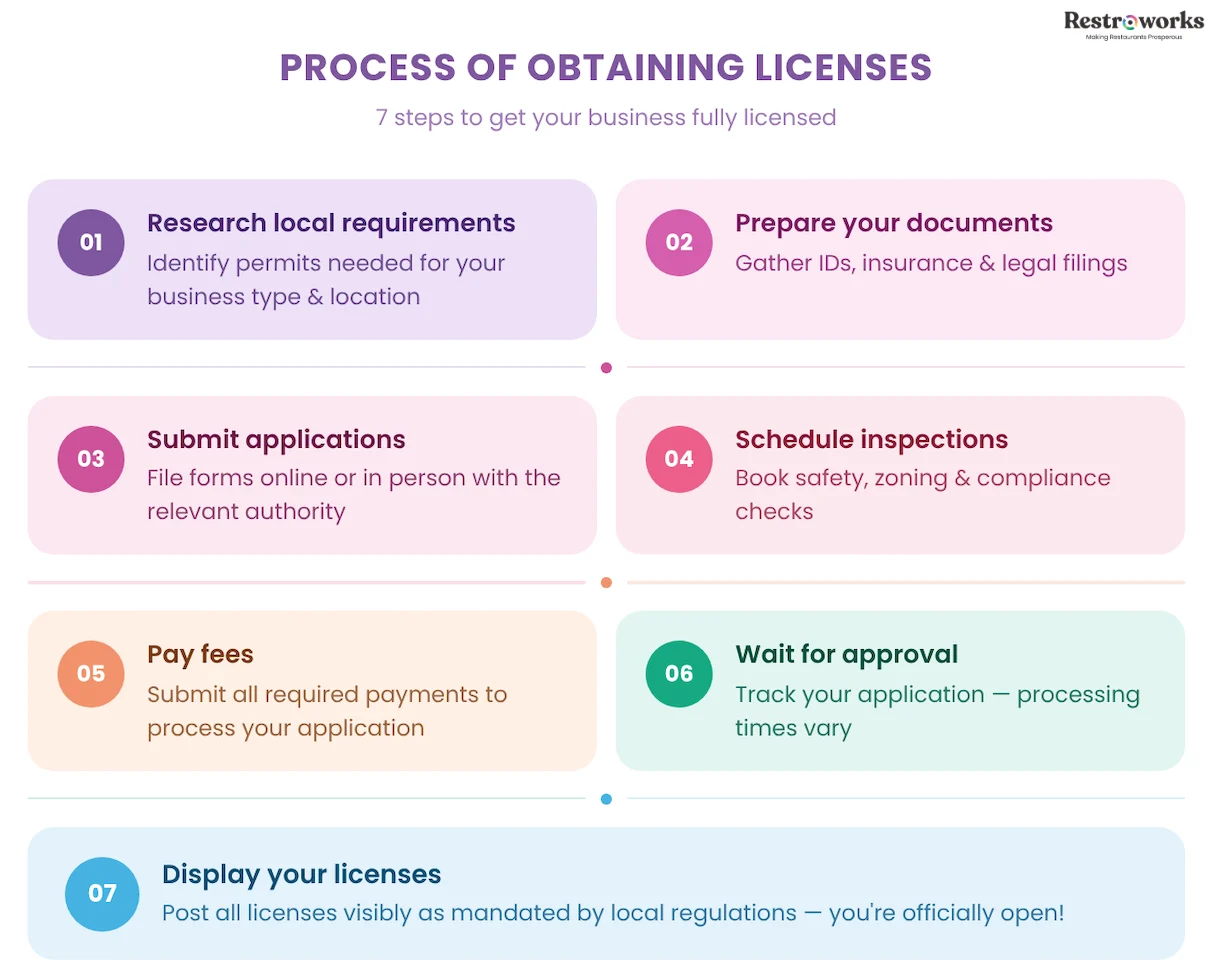
Obtaining the relevant licenses is not an easy process, but doing it correctly avoids delays and added cost. Here is the step-by-step:
- Research Local Requirements: Regulations vary significantly by city and state, so start by finding out exactly what is needed in your area.
- Prepare Your Documents: Collect your business plan, lease agreement, kitchen layout and proof of insurance.
- Submit Applications: Complete and submit your applications for health permits and business licenses, filling out every form precisely to avoid rejections or delays.
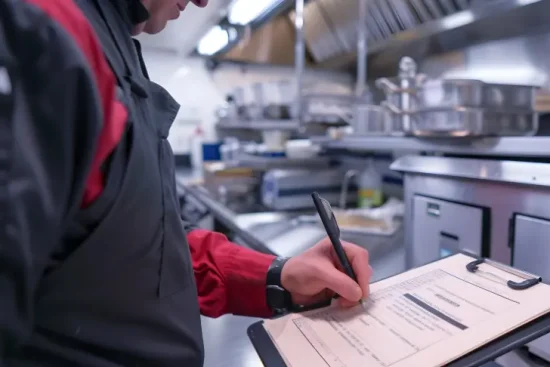
- Schedule Inspections: For health permits, you will need an inspection of your kitchen. Make sure the space is clean, well organized and meets all health and safety standards.
- Pay Fees: There are usually costs attached to both the application and the inspection. Be prepared to pay these upfront as part of your setup cost.
- Wait for Approval: Approval can take anywhere from a few weeks to a couple of months. Use that time to finalize the rest of your kitchen setup and marketing plan.
- Display Your Licenses: Once approved, display your health permits and business licenses prominently in your kitchen. This keeps you compliant and reassures customers of your commitment to quality and safety.
How Much Does Insurance Cost for a Cloud Kitchen?
Insurance protects your investment and keeps your business running smoothly. Here are the policies to consider and what they cost.
1. Types of Insurance Needed
There are two main types of insurance you must consider when insuring your cloud kitchen.
- General Liability Insurance: Every business, including a cloud kitchen, should hold this. It protects you in the event of an accident, injury or property damage. For example, if a delivery driver slips and falls while collecting an order, this insurance covers the legal and medical costs. Expect $1,000 to $5,000 per year.
- Workers’ Compensation Insurance: If you have staff, you need this. Compensation to staff covers medical bills and wages if an employee falls ill or is injured at work. It is mandatory in most states. Expect $500 to $2,000 per year.
- Product Liability Insurance: Critical for a food business, because it covers claims arising from foodborne illness or an allergen incident. An undeclared-allergen claim from a delivery customer is exactly what this policy is designed for, and general liability will not cover it.
- Commercial Property Insurance: Covers your equipment and inventory against fire, theft and damage.
- Business Interruption Insurance: Replaces income if a covered event such as a fire or extended equipment failure shuts you down.
2. Cost Estimation for Insurance
Your premiums depend on the size of your kitchen, the number of staff, the value of your equipment and your location. Regions prone to natural disasters attract higher premiums. Many operators bundle general liability, property and business interruption into a single Business Owner’s Policy to reduce the total cost.
What Technology Investments Are Needed for a Cloud Kitchen?
Investing in technology is a genuine turning point for cloud kitchens. The initial investment may seem high, but the long-term advantages make it worthwhile if you plan properly.
1. Advanced Technology Integration
Technology in a cloud kitchen extends well beyond a POS system. It is about building a process capable of handling a high order volume without errors. That includes automation such as smart ovens, automated cooking appliances and robotic prep systems, which lower labor costs and improve consistency.
Integrating an advanced POS system with your inventory management software means you never run out of key ingredients, and it gives you visibility into sales trends. That data-driven approach also informs your marketing, letting you run targeted campaigns that lift sales and improve your profit margin.
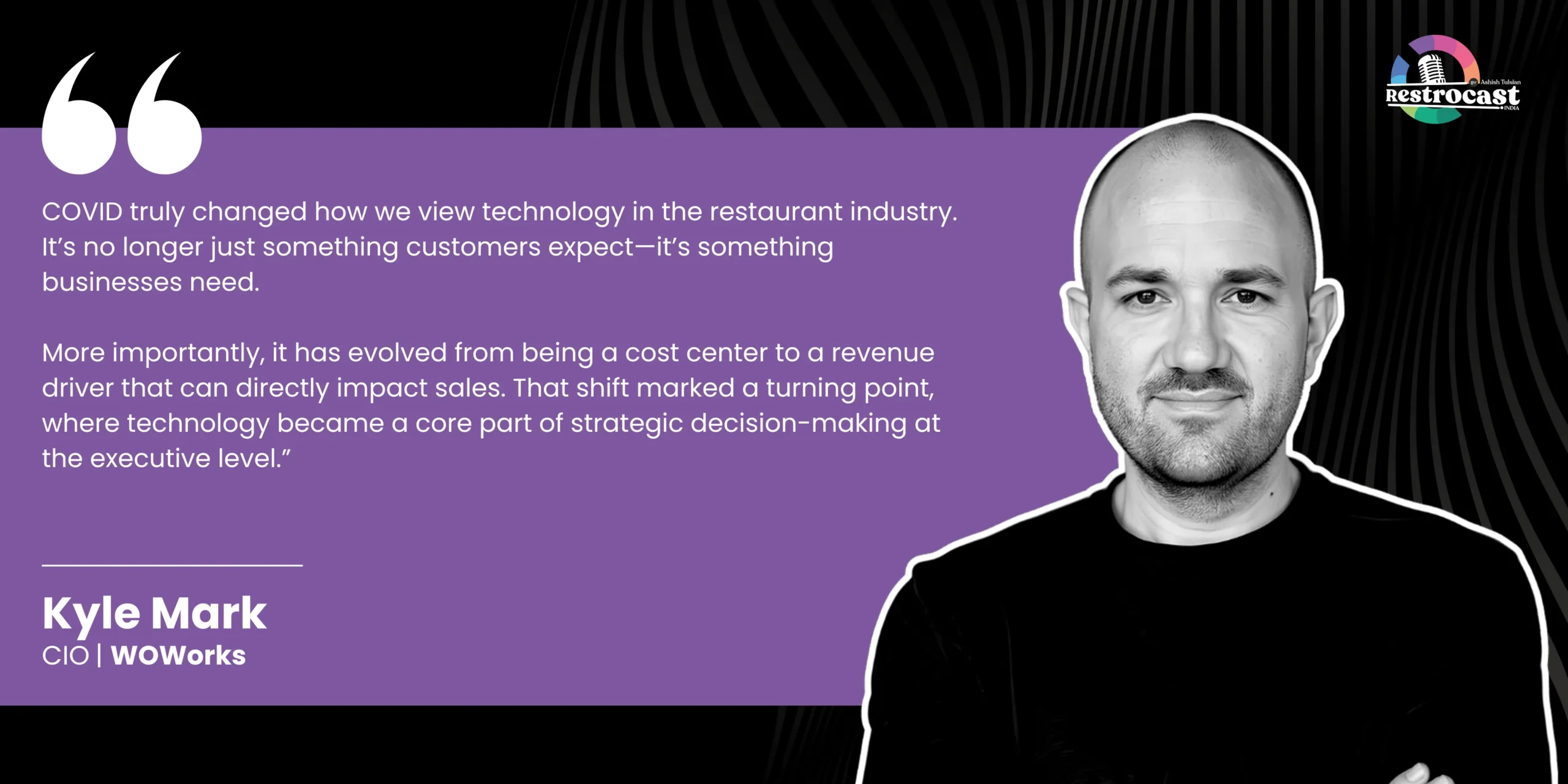
Kyle Mark highlighted how technology is transforming the way restaurants operate and grow:
2. Cost Analysis of Technology
When evaluating investment in cloud kitchen technology, consider both short-term and long-term cost. The initial investment may include high-quality hardware and software, employee training and system setup, ranging from $2,000 to $10,000 depending on the level of technology. The long-term savings and efficiency gains typically outweigh that initial cost.
Automated inventory control reduces the chance of overstocking or understocking, which minimizes waste while making sure you can fulfill demand.
That efficiency also translates into lower marketing costs, because you can use customer data to build campaigns that actually convert.
A direct online-ordering channel belongs in the same stack. Because orders taken on your own site avoid the aggregator commission entirely, consolidating POS, direct online ordering, kitchen display and inventory management into one system is usually cheaper than running separate tools and paying full commission on every order.
How Much Does It Cost to Renovate a Cloud Kitchen Space?
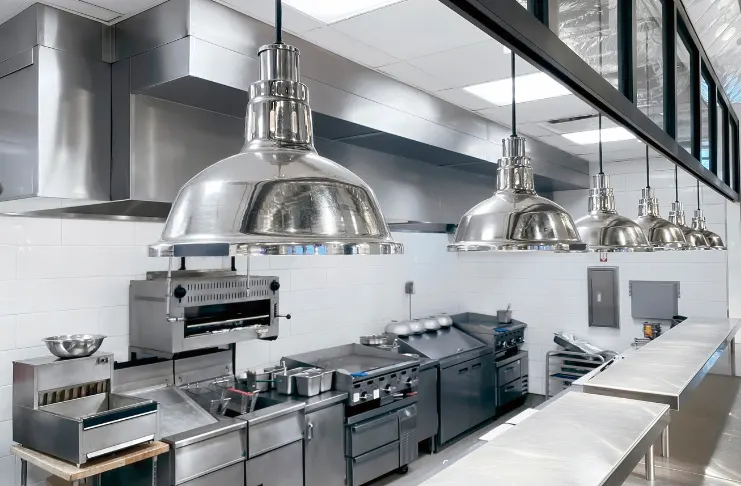
Whether you are starting from scratch or converting an existing space, planning your renovation costs helps you run your kitchen properly and avoid unexpected bills.
1. Initial Renovation Requirements
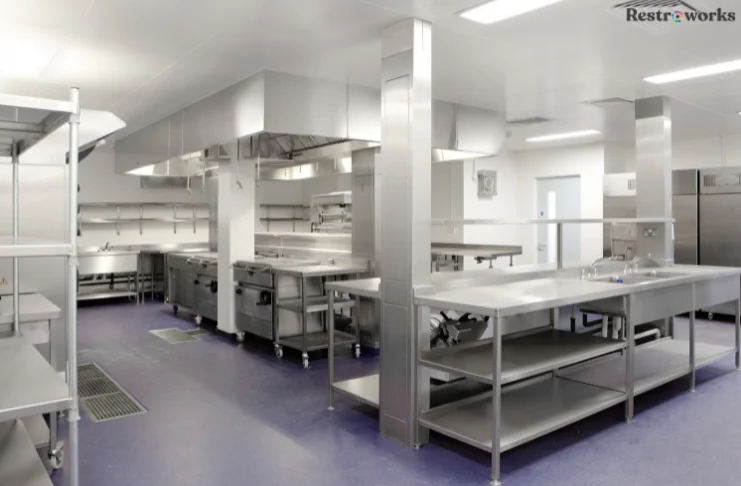
Initial renovation is about customizing the space to your operational needs: an efficient kitchen layout, compliance with health and safety regulations, and the right facilities.
A cloud kitchen does not need a customer-facing area, unlike a traditional restaurant, which saves a lot. You still need to plan for commercial-grade ventilation, adequate plumbing and electrical setups, and a workflow that runs cleanly from prep areas to cooking stations.
On average, initial renovations cost anywhere from $5,000 to $20,000. This covers construction, installation of necessary equipment and compliance with local building codes. Budget by scenario rather than a single wide range:
- Existing commercial kitchen, cosmetic updates: at the lower end of the range, covering minor equipment installs, a deep clean, signage and workflow changes.
- Converting a retail or warehouse space, full build-out: at the upper end and beyond, with ventilation, plumbing and electrical work making up the bulk of it.
For context, a traditional restaurant remodel runs far higher: roughly $55,000 for a mid-range remodel and about $110,000 for an upscale one, per Bain & Company’s spatial economics data.
2. Ongoing Renovation Needs
You should not rely on a one-time renovation. As your business grows you may need to update or expand, and regular maintenance keeps your equipment working and your kitchen compliant. That includes periodic checks and upgrades to ventilation, plumbing, electrical work and cooking equipment.
Set aside around 5% to 10% of your annual revenue for upgrades and maintenance. That keeps the business running and supports long-term profitability without disrupting operations when something needs replacing.
What is the Break-Even Point for a Cloud Kitchen?
Conducting a break-even analysis tells you when your food business covers its costs and starts generating profit.
1. Calculating Your Break-Even Point
The break-even point is where your revenue equals your expenses. To calculate it, you first need to separate fixed from variable costs. Fixed costs do not change with sales volume and include rent, salaries and insurance. Variable costs change with production and include ingredients, packaging and delivery costs.
The formula:
Break-even point (units) = Total fixed costs ÷ (Sales price per unit − Variable cost per unit)
For example, assume $10,000 in fixed costs per month. You sell meals at $15 each, and your variable cost per meal is $7. You then need to sell 1,250 meals per month to break even.
2. What Commissions Do to That Number
The formula above assumes you keep the full $15. On a delivery platform, you do not. Applying the commission rates from the section above to the same reference model shows how much the channel mix moves your break-even point.
The same kitchen, the same menu and the same fixed costs need more than twice the order volume to break even on full-commission aggregator orders than on direct orders. This is why shifting order mix toward your own channel moves the needle harder than simply chasing volume.
3. The Second Break-Even Point
Cloud kitchens face two break-even points, not one. Operational break-even is the point where you cover your monthly expenses. Cash-on-cash break-even is the point where you recover your original startup investment.
Most guides quote only the first and let readers assume the second, which is how “profitable in six months” turns into a cash gap that sinks an undercapitalized operator. Plan for a burn while you build order volume, and treat recovering your startup capital as a separate milestone with its own timeline.
4. Strategies to Reach Break-Even Faster
Reaching break-even quickly takes planning and efficient operations. Reducing expenses is the direct route: negotiate better rates with suppliers, reduce energy consumption, and automate specific tasks to save on labor. Reviewing and optimizing your expenses regularly has a real effect on your cost breakdown and your bottom line.
Raising revenue is the other route. Effective marketing attracts more customers and lifts sales, while promotions, loyalty programs and special deals drive repeat orders.
Shifting even a portion of your volume to direct ordering, as the table above shows, reduces the number of orders you need to break even at all.
What is the Expected Return on Investment for a Cloud Kitchen?
1. Estimating ROI
To evaluate your ROI, compare your initial investment with the returns you generate over time. Add up all your initial costs, including setup and ongoing expenses, then calculate your returns by taking your monthly revenue and subtracting your operating costs.
ROI = (Net profit ÷ Total investment) × 100
For example, if your total investment is $100,000 and your annual net return is $20,000, your ROI is 20%.
The period for generating a return varies with your business model and how efficiently you run, but on average it takes one to three years before the business generates a profit on its investment.
2. Improving ROI
- Optimize your menu: Refine your menu to focus on high-value items. This reduces waste and improves kitchen productivity.
- Increase order volume: Use local advertising, SEO and social media to increase visibility and sales.
- Control operating costs: Review your expenses regularly and look for savings that do not sacrifice quality. Negotiate better supplier deals and invest in energy-efficient equipment to reduce utility bills.
- Shift your channel mix: As the break-even table shows, moving orders to your own site is the highest-leverage change available to most operators.
- Diversify your offerings: Additional revenue streams such as catering services or branded merchandise can stabilize income and improve your profit margin.
How Can You Reduce Costs in a Cloud Kitchen?
The management of costs in a cloud kitchen is not about cutting corners; it is about making better decisions. Here are practical ways to reduce costs:
- Keep your menu focused: Limit your menu to a few dishes with overlapping ingredients to keep inventory costs low and avoid waste.
- Opt for refurbished or leased equipment: You do not need everything brand new to run efficiently.
- Build a lean team: Keep your team small and cross-train them to handle multiple tasks in the kitchen.
- Use integrated tech: You do not need separate systems for orders, inventory and reporting. One system for all of it costs less and breaks less.
- Leverage low-cost marketing: Focus on organic growth through social media and reviews, and improve your presence on the delivery apps.
- Move orders to your own channel: Every order that comes through your site instead of an aggregator keeps 15% to 30% more revenue in the business.
In the long run, analyzing your sales data, such as your top dishes and peak order times, also helps you cut unnecessary expenses and raise profitability without compromising quality.
Setting up a cloud kitchen involves everything from one-time startup costs like space, equipment, technology and inventory, through to recurring operational costs such as utilities, labor and delivery commissions. Initial costs are unavoidable, but managing them efficiently is what determines profitability over the long run.
What makes a cloud kitchen attractive to entrepreneurs is its ability to scale. Whether you are starting a new venture or growing an existing one, the model gives you a route to meet demand without a restaurant’s overhead.
The decision comes down to three questions: how much capital do you have, which city are you operating in, and which cuisine are you cooking? Answer those honestly, budget for the hidden costs, model your break-even in both dimensions, and a well-planned cloud kitchen can be a genuinely profitable venture in today’s online food industry.
KEY TAKEAWAYS