


What are the Different Ice Cream Shop Concepts?

Within the ice cream business concept, you can choose from different models, based on your investment level, target customers, and whether you want to focus on foot traffic, takeaway, or online orders.
This is an essential decision that sets the foundation of your brand identity and decides everything from menu size and pricing to store design and marketing style for you. Here are the popular ice cream shop concepts-
A. Seasonal vs Year-Round Ice Cream Parlors
Ice cream is a seasonal dessert. Which means demand is usually the highest during warmer months, and operating the entire year can be costly. So, unless you operate in a year-round warm climate, keep it that way.
A seasonal model can reduce operating costs such as utilities and staffing during off-season periods. It works well in tourist areas, beach towns, or locations with strong summer foot traffic.
On the other hand, if you want to open a year-round ice cream shop, you’ll have to build consistent customer demand. You can achieve this by expanding your menu to include hot beverages, frozen yogurt, soft serves, or indoor seating experiences.
A year-round ice cream shop requires higher operating costs but can generate more stable annual revenue.
B. Ice Cream Truck Business
Ice cream trucks are mobile dessert businesses that give you the flexibility to sell ice cream from multiple locations instead of a fixed storefront. All you need is a functional food truck and the right permits to sell at events, neighborhoods, parks, and schools.
You also avoid some major expenses that come with a permanent location, like high rent and large interior build-outs, making it a more cost-effective option.
That said, running a mobile ice cream truck is not as simple. Your success depends heavily on thorough market research, choosing the right locations, managing permits, and building a brand people instantly recognize.
C. Fixed Menu vs. Self-Service Ice Cream Shops
A fixed-menu ice cream shop gives customers a set selection of classic and seasonal flavors, sundaes, shakes, and desserts to choose from. This setup is easier to manage because you have better control over inventory, portion sizes, and food costs.
Self-service brick-and-mortar shops work differently. Customers build their own desserts by choosing flavors, toppings, and portion sizes themselves. This way, you can offer a more interactive and personalized experience, which can encourage customers to spend more per order.
But it comes with a trade-off. Self-service setups can lead to higher ingredient waste and inconsistent portion control if not managed carefully. So, you’ll need a strong system in place to keep costs in check.
How to Start an Ice Cream Shop or Truck?
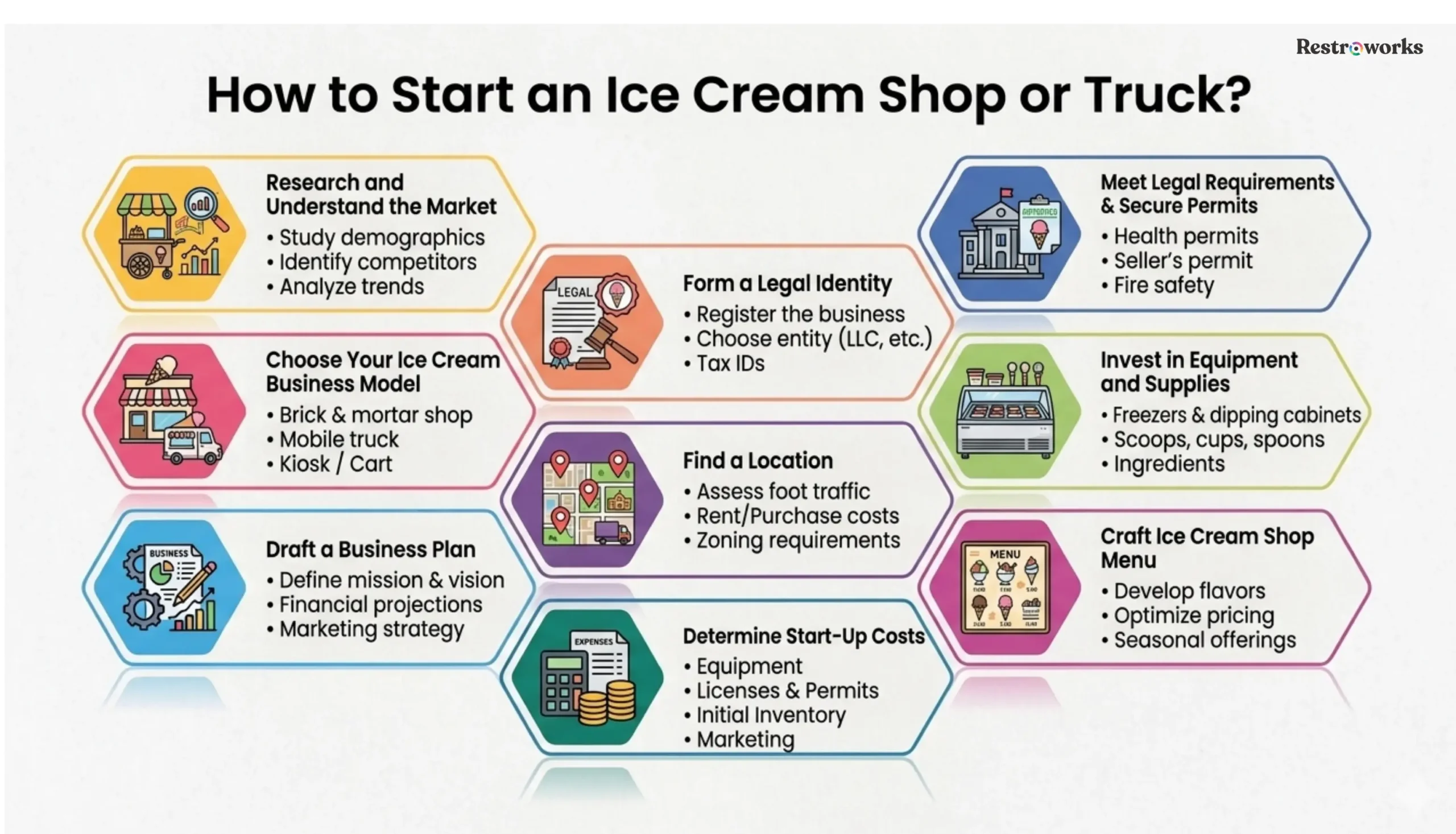
An average American consumes roughly 20 pounds or 4 gallons of ice cream every year. Which means opening an ice cream business is a highly profitable option. And even then, a clear launch plan helps reduce risks, and adopting the right ice cream shop management software early makes it easier to scale once customer demand grows.
Here are the various steps involved in starting your standard ice cream shop-
1. Research and Understand the Target Market
Before diving into the ice cream business, it’s important to understand the industry landscape. The ice cream market is thriving, with changing customer expectations. They now want unique combinations, premium ingredients, customizable desserts, plant-based options, and an experience that feels worth coming back for.
Keeping up with these trends can help you build a menu that caters to customer preferences. Along with trends, you need clarity on who you want to serve. Start by researching-
- Popular ice cream concepts in your target area
- Competitor pricing and menu styles
- Competitor branding, presentation, social media engagement, and customer experience
- Seasonal demand patterns
- Customer preferences, including vegan, low-sugar, or premium options
- Average startup and operating costs
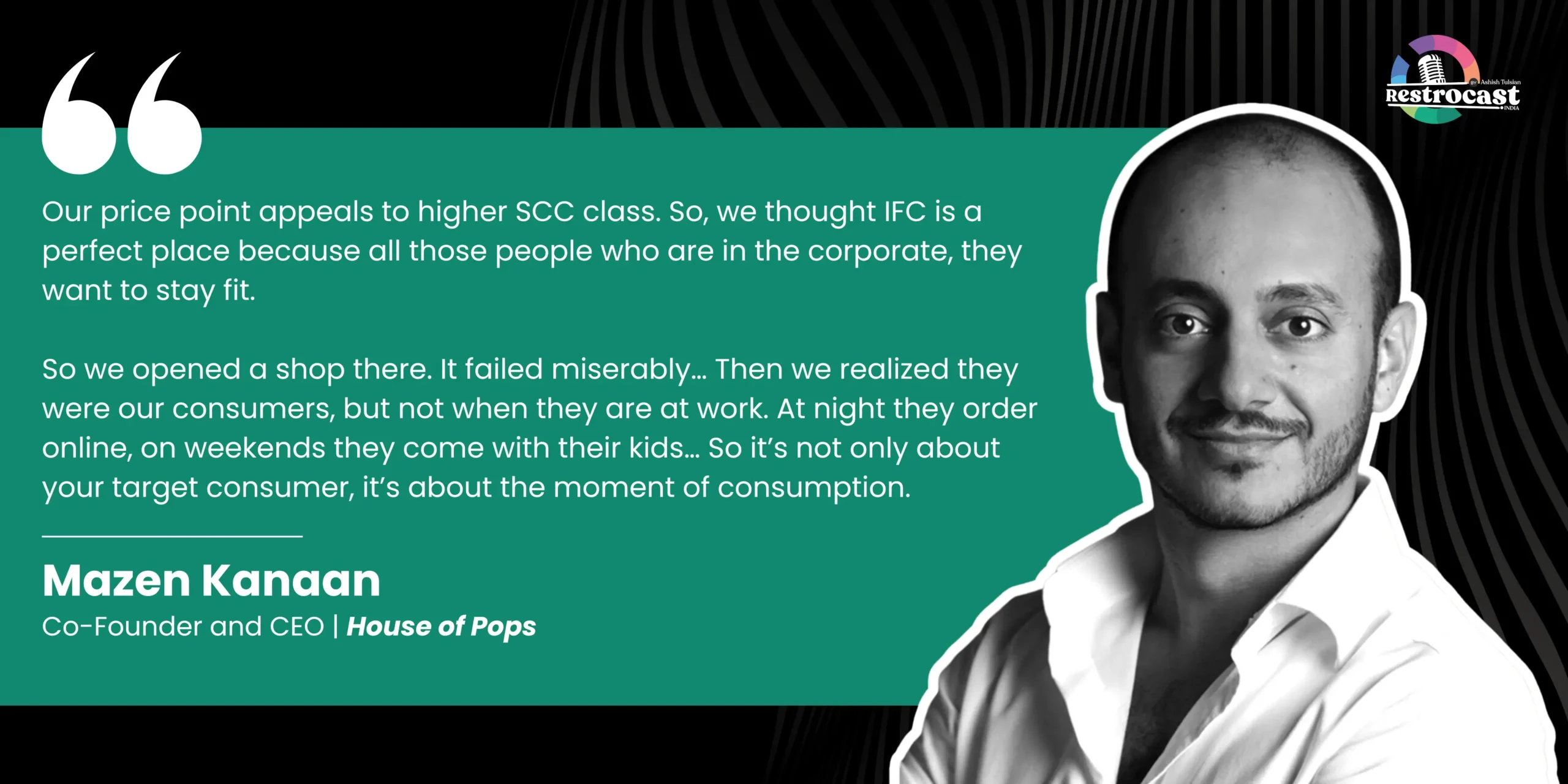
As you research the market, don’t just focus on who your customers are. You also need to understand when, where, and why they actually buy ice cream. Speaking on the Restrocast podcast, Mazen Kanaan shared how assumptions about customer behavior led to a failed location decision for House of Pops-
2. Choose Your Ice Cream Business Model
Now you know your market, it’s time to figure out the business model that you want to go with. Different models offer different levels of investment, flexibility, and customer interaction, so the right choice depends on your goals and budget.
Common ice cream business models include-
- Traditional ice cream parlors
- Seasonal scoop shops
- Ice cream trucks or carts
- Delivery-only business
- Franchise ice cream businesses
And there’s no rule that you can’t experiment with formats. For instance, you can consider opening a small truck or kiosk as a way to enter the market with lower upfront investment, and expand to a full-service shop as you build a customer base.
3. Draft a Business Plan
A business plan helps you write down your ice cream shop idea in practical and financial terms. You can answer operational and business questions like: What are your revenue targets for the first year? How many customers do you aim to serve daily? What is your brand and customer experience going to look like?
So your business plan should cover basics like-
- Your business concept and target market
- Business mission and vision statements
- Startup and operating cost breakdown
- Menu pricing strategy
- Revenue projections
- Marketing and promotion plans
- Staffing and operational structure
These goals will help guide your operations and growth strategy. Plus, the business plan also becomes an essential document when you want to apply for loans, attract investors, or bring in business partners.
4. Form a Legal Identity

So your concept is taking shape, and you know what your ice cream business is going to look like. It’s time to handle the legal side of the business and establish an entity.
A legal identity protects your brand, ensures compliance, and makes it easier to manage taxes, business licenses, and future expansion. Start by choosing your business structure, whether a sole proprietorship, partnership, LLC, or corporation. The structure you choose affects your taxes, liability protection, and how you manage ownership and profits.
Many small ice cream businesses choose an LLC because it offers liability protection while keeping the setup relatively simple. You’ll also need to:
- Register your business name
- Apply for an EIN (Employer Identification Number)
- Open a business bank account
- Obtain food service licenses and permits
- Check local health department requirements
And if you plan to run an ice cream truck business, make sure you also understand local rules around parking permits, mobile vending zones, and event permissions.
5. Find a Location
A great location helps drive steady foot traffic. While a bad one? It can make even the strongest restaurant concepts struggle. High-traffic areas, such as near schools, office parks, sporting events, residential neighborhoods, or tourist attractions, are ideal for your ice cream truck or store.
So, when scouting for good locations, consider the area’s demographics: do they align with your target audience? It’s equally important to evaluate the competition in your chosen location. If you open a shop in an already saturated market, you will need a very strong USP to stand out.
Also, look at the accessibility, parking facilities, and rental costs to identify the perfect location.
6. Determine the Ice Cream Shop Start-Up Costs
Starting an ice cream shop in the U.S. requires lower investment, costing between $20,000 and $50,000, based on location, ice cream shop equipment, and whether you’re buying or leasing a space. And if you want to go for a more upscale or full-service setup, costs can go up to $75,000-$250,000.
You’ll need upfront investment for equipment such as display freezers, mixers, and display units, along with costs for location leasing or purchase, interiors, and branding. You’ll also need to budget for inventory like cream, flavorings, packaging, plus marketing, permits, and staff salaries.
6.1 Secure Investment for Your Ice Cream Business
Unless you’re lucky enough to have enough savings to bootstrap your ice cream business, you’ll need to look for reliable investment sources to fund your capital needs. Here are some of these options that you can consider-
- Small Business Loans: You can apply for traditional bank loans or SBA-backed loans to cover equipment costs, location setup, and initial operating expenses.
- Investors or Business Partners: Angel investors or partners can provide capital in exchange for equity or profit sharing.
- Franchise Financing: If you’re opening a franchise store, some franchise brands offer financing support or have lender partnerships to help cover startup costs.
But before you go out to raise capital, build a strong financial plan that breaks down expected costs, revenue streams, and business profitability to gain investor confidence.
6.2 Set up Business Bank Accounts
Opening a separate business bank account may seem avoidable at first, but it makes managing your ice cream business much easier in the long run. It helps you keep personal and business expenses separate, so you can easily track expenses, manage cash flow, and prepare accurate financial records for tax filing and reporting.
It also makes your business look more professional when dealing with suppliers, lenders, or potential investors. As your operations grow, a dedicated business account is a smart way to manage day-to-day expenses like payroll, vendor payments, inventory purchases, and utility bills without turning your finances into a mess.
7. Meet Legal Requirements and Secure Permits

Before you start serving customers, you’ll need to make sure your ice cream business meets all legal and food safety requirements. This includes registering your business and applying for the licenses and permits required in your city or state.
Health and safety compliance is a major part of this process. Local authorities will inspect your shop or truck to check food storage and handling, cleanliness, refrigeration, and temperature control standards. If you plan to make your own ice cream or sell products wholesale, you may also need to follow additional FDA and state-level regulations.
Other ice cream shop licenses will include-
- Business License: You’ll need this to legally operate your ice cream shop in your city or state. It is issued by your local government and confirms that your business meets basic operational and zoning requirements.
- Employer Identification Number (EIN): Issued by the IRS, the EIN is required for tax filing, hiring employees, and opening a business bank account. Even if you don’t hire staff immediately, you’ll still require an EIN for financial operations.
- Food Handler’s Permit: This is a certification to confirm that the business and the staff understand food safety, hygiene, and handling standards.
- Mobile Food Vendor Permit: If you’re planning to open an ice cream cart or truck, a mobile food permit allows you to sell food in public spaces. This will also cover route approvals, safety checks, and local operating guidelines.
- Building Health Permit: If you’re opening a retail ice cream shop, you’ll need a building health permit to confirm that it meets the health, sanitation, ventilation, and food storage standards.
- Ice Cream Shop Liability Insurance: While not a license, liability insurance protects your business from risks such as food safety claims, customer injuries, or property damage.
8. Invest in Equipment and Supplies
To ensure smooth operations and top-notch customer service, it’s essential to look for reliable ice cream equipment and inventory suppliers. Some of the must-haves include-
- Ice cream machines
- Storage freezers and refrigerators
- Ice cream scoops and serving tools
- Storage containers and prep equipment
- A high-performance point-of-sale system to help streamline transactions and track sales effectively.
You’ll also need to stock up on everyday supplies and inventory before the ice cream shop opening to handle the launch rush, such as-
- Premium ice-cream flavors and mix-ins
- A variety of toppings like sprinkles, syrups, chocolate chips, nuts, and more.
- Packaging supplies such as cups, takeout containers, spoons, and lids
- Beverage mugs or to-go cups
- Cone holders for serving and displaying cones
By equipping your shop with the right tools and supplies, you can deliver a seamless and delightful experience to your customers while maintaining operational efficiency.
9. Craft Your Ice Cream Shop Menu
Your menu is the start of the show. The variety, the uniqueness, and the taste are why customers will choose your business again and again.
So, to create a diverse and enticing menu, start with classic favorites like chocolate, vanilla, and strawberry, then add customizable options such as build-your-own sundaes, soft serves, or mix-ins. You can also include unique flavors inspired by local ingredients or trends, like lavender honey or chili chocolate, to attract customers who want to try new things.
Take it a step further by adding dietary options to the menu. For health-conscious customers or those with dietary restrictions, adding vegan, low-sugar, and dairy-free choices is a good idea.
What are the Top Marketing Strategies for an Ice Cream Business?
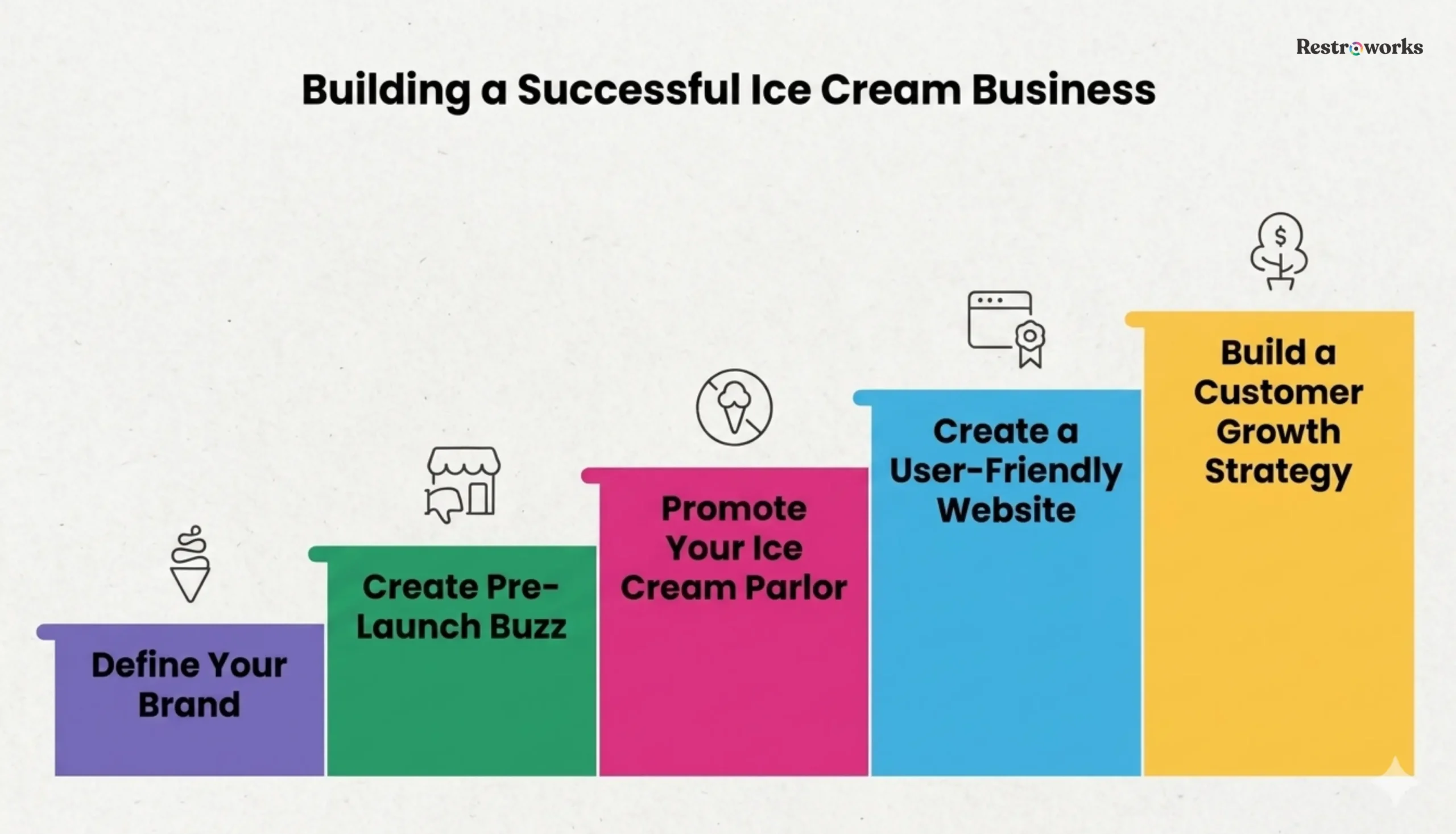
Even with a unique menu or strong branding, customers still need a reason to notice your business, visit for the first time, and come back regularly. Marketing plays a huge role in that, especially in an industry where visuals, experience, and word-of-mouth influence people to try something new.
Here’s how you can do it right-
1. Define Your Brand
What makes your ice cream business different? How do you see yourself in the market? How should your customers remember you? Which one do you want to be: a premium, nostalgic, trendy, family-friendly, health-focused business?
The answer to all these questions is your branding. A clear brand identity shapes everything from your store design and packaging to your social media content and menu names. Think about your business goals, mission, vision, and market positioning to establish your branding.
Keep that brand positioning consistent across signage, social media, packaging, and in-store experience to build stronger brand recall.
2. Create Pre-Launch Buzz
If no one knows about your new ice cream shop on the launch day, that’s not a good start to the business. So, make sure the business reaches your target audience even before you open the door.
Use social media platforms like Instagram, TikTok, and Facebook to build anticipation about your ice cream shop. Post teasers about your brand story, menu highlights, and behind-the-scenes glimpses of the preparations.
You can also share countdowns, polls asking followers to vote on classic ice cream flavors they’re excited about, or sneak peeks of your shop’s design to create engagement. Hosting a soft launch or a pre-opening event for friends, family, and local influencers can also generate early buzz.
3. Promoting Your Ice Cream Parlor

Many ice cream shops market heavily during launch and then disappear online. Consistency is what will keep customers engaged long term. Since ice cream is a highly visual business, get on Instagram and TikTok to-
- Post product photos, new flavors, and behind-the-scenes content
- Partner with local influencers or food bloggers
- Run seasonal promotions and limited-time flavors
- Participate in local events, school programs, or community festivals
The idea is to stay visible enough that customers think of your shop whenever they want dessert.
4. Create a User-Friendly Website
Whether you like it or not, most customers will first check your website, Instagram, or Google listing before walking through the doors. If they cannot quickly find your menu, hours, location, or ordering options, there’s a good chance they move on.
Here are some tips for your business website-
- Create a clean website with easy navigation
- Make sure the website loads quickly
- Add your full menu with clear pricing and high-quality product photos
- Include store hours and contact information
- Offer online ordering options or links to third-party delivery platforms
- Optimize your website and content for mobile users
5. Build a Customer Growth Strategy
You don’t want customers to come once and forget all about your business. You want them to come back, and the best way to do that is through engaging interactions.
This involves social media content, brand loyalty programs, and SEO optimization. For instance, you can-
- Post seasonal flavors, limited-time desserts, and special birthday offers on social media.
- Offer punch cards, birthday rewards, or exclusive discounts on repeat purchases.
- Partner with nearby cafés, bakeries, schools, or local events to increase visibility and reach new audiences.
- Optimize your Google Business Profile with local SEO to appear in nearby searches and Google Maps results.
- Work with local food creators and influencers.
Plus, pay attention to customer feedback, online reviews, and buying patterns to understand what people enjoy most.
An ice cream business can be one of the most enjoyable ways to enter the food industry. But it requires careful planning, strong branding, consistent operations, and a clear understanding of customer preferences to succeed.
When done well, your ice cream shop can become a place people genuinely enjoy returning to and create memories at. As trends and customer preferences evolve, stay flexible with your menu items, marketing, and overall customer experience to remain competitive and continue growing over time.