


Here’s an eye-opening fact: restaurants lose more than $400 per week, or $20,800 a year, due to food waste. And honestly, it doesn’t take much to get there.
Think about your everyday bakery operations. You may bake extra batches to avoid stockouts, over-order perishable ingredients, or forget about expiry dates. These small gaps in planning and visibility begin to affect both inventory costs and daily profitability.
The result? Studies show that waste can account for up to 20% of total bakery production. That’s exactly why more bakeries are investing in reducing waste with bakery software to improve forecasting, track inventory more accurately, and plan production.
What you will learn
- Major sources of food waste in bakeries
- Does your bakery need better waste management?
- How bakery management software helps reduce waste and cut production costs
Where Waste Happens Across Bakery Operations
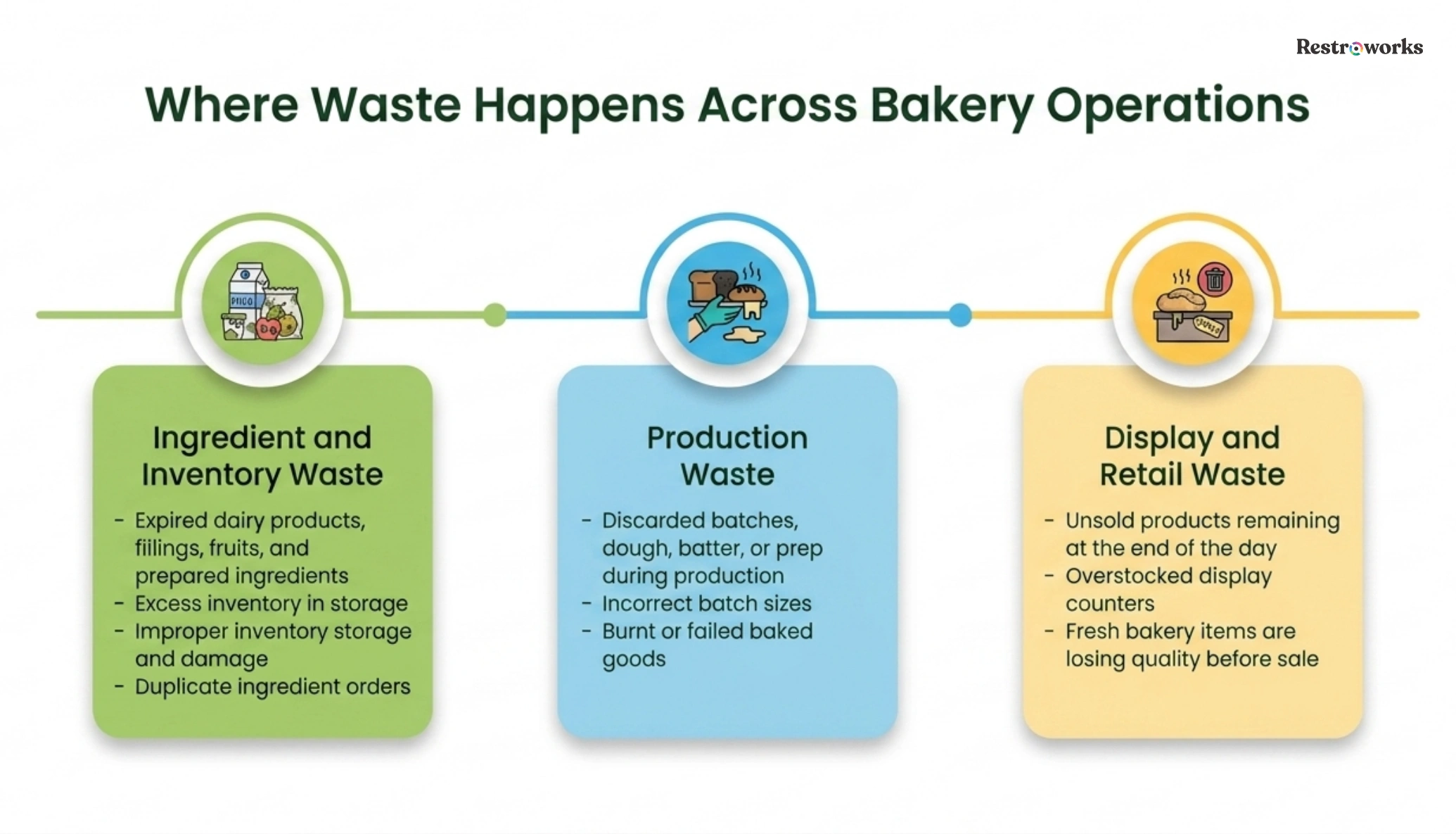
America throws away nearly 60 million tons of food every year, representing almost 40% of the entire US food supply. In the case of bakeries, these products typically have a shorter shelf life. This means a slight oversight in inventory purchase, baking schedules, or storage can lead to unnecessary waste. In any bakery operation, this is how waste builds up-
Ingredient and Inventory Food Waste
A large portion of bakery waste starts with ingredients and storage. This can include-
- Expired dairy products, fillings, fruits, and prepared ingredients
- Excess inventory in storage
- Improper inventory storage and damage
- Duplicate ingredient orders
- Leftover inventory after seasonal promotions or limited-time bakery products
Production Waste
Your bakery can generate food waste during prep and baking, sometimes in the form of extra batches of cookies or simply incorrect measurements. This can include-
- Extra batches
- Discarded dough, batter, or prep during production
- Incorrect batch size calculations
- Burnt or failed baked goods
- Dough residue or scrap dough during prep
- Error in measuring ingredients
- Damage or rough handling from one prep stage to another
Display and Retail Waste
Fresh bakery items have a limited shelf life, which means unsold inventory can quickly become unusable by the end of the day. Display and retail waste can include-
- Unsold products remaining at the end of the day
- Overstocked display counters
- Fresh bakery items are losing quality before sale
- Discounted bakery products
Signs Your Bakery Needs Better Waste Management
For any foodservice business, waste is a daily problem. Handled poorly? It can lead to serious financial and environmental consequences, be it higher food costs, wasted labor and energy, or greenhouse gas emissions.
That’s why it’s important to recognize where waste is happening in the first place. If the situations below sound familiar, your bakery store may need a more structured approach to waste management-
- You regularly throw away unsold products at the end of the day
- You order extra inventory ‘just to be safe’ more often than necessary
- You are unable to keep track of expired ingredients
- You use estimates to decide production levels
- Inventory counts don’t match the actual stock in storage
- You rely heavily on discounts and markdowns to clear inventory
If you find yourself saying yes to most of these situations, technology is the answer. Bakery management software helps you manage these issues with better visibility into inventory management, production, and sales data.
With it, your team can track ingredient usage, monitor stock levels in real time, forecast production more accurately, and identify which areas are generating the most waste. This makes it easier to reduce overproduction, control costs, and manage inventory levels.
Reducing Waste in Bakeries Software: How Does It Help?
When every stage of your bakery operations — procurement, storage, preparation, and sales — creates food waste, you cannot tackle them separately. A centralized system that tracks inventory availability and usage across all these stages is the only way to control production waste and reduce costs.
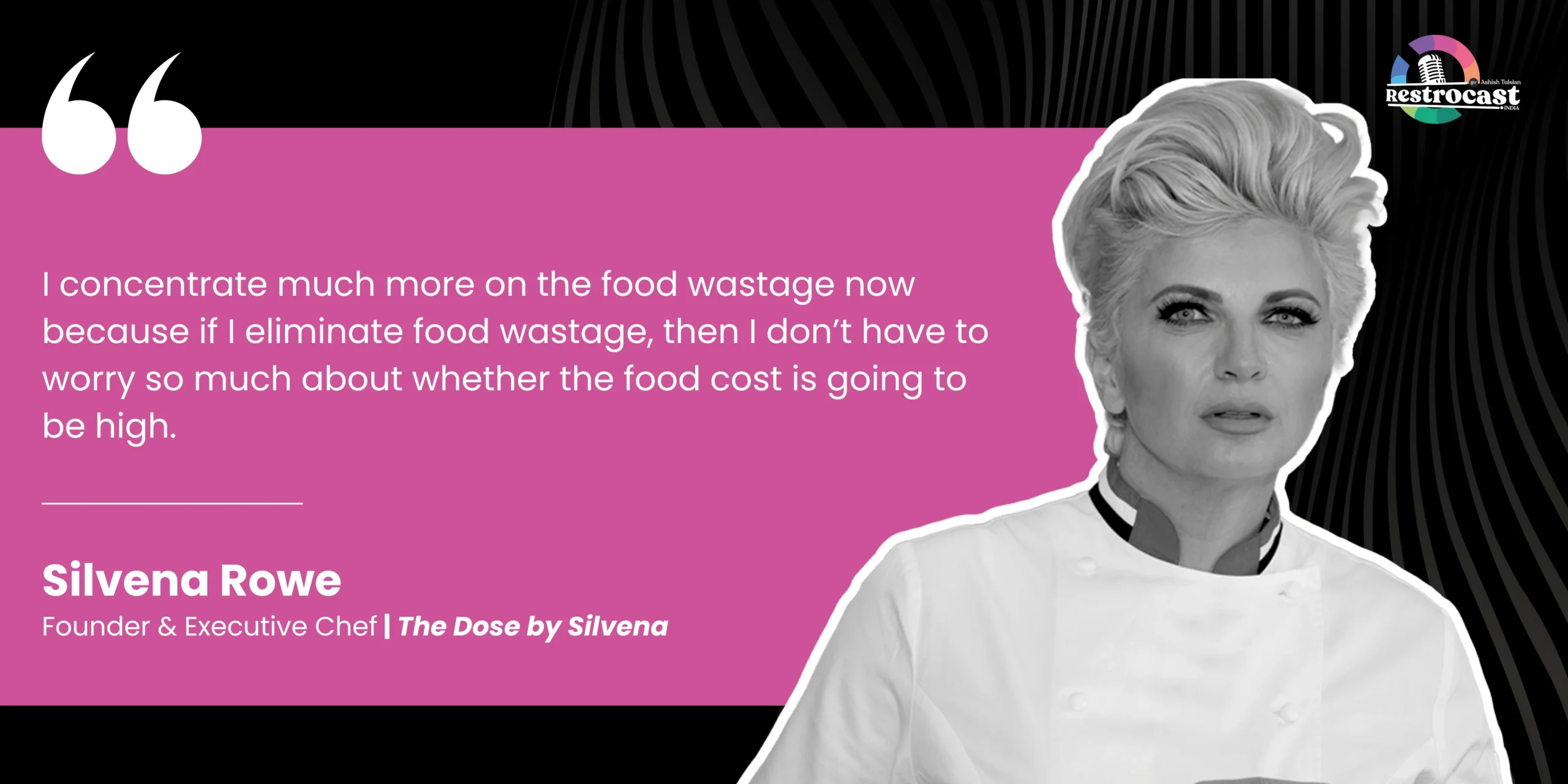
And food waste, especially in high-volume kitchens, is tied directly to profitability. Silvena Rowe, Founder & Executive Chef, The Dose by Silvena, explains it simply-
Here’s how smart bakery management software can help you reduce wastage with full traceability-
1. Demand Forecasting and Production Planning
One of the biggest causes of bakery waste is producing more than customers actually buy. AI-driven demand forecasting helps you make better production decisions using historical sales data, peak-hour trends, seasonal demand, and menu performance.
Your bakery management software uses the historical POS data and external demand patterns to predict future customer orders or traffic, so your team can do batch size calculations accordingly. With this approach, you can-
- Avoid baking extra goods during slow periods
- Reduce end-of-day leftovers
- Prepare extra baked goods only if the projections show high upcoming demand
- Bake only high-in-demand products
2. Real-Time Inventory Tracking
Bakery inventory needs to move quickly, given how most ingredients are highly perishable. But ensuring quick movement won’t be possible unless you get real-time visibility into it.
Fortunately, bakery software with strong inventory management capabilities and POS integration lets you easily track procurement, stock levels, and ingredient usage. For instance, these systems use the FIFO approach to make sure kitchens use the earliest-received inventory first.
Combined with expiry date monitoring and low-stock alerts, this reduces the chances of ingredients left unused in storage, spoilage, and wastage. Food stays fresh, and you save on costs. With better inventory management, you can-
- Map specific ingredient quantities to their recipes, so every sale on POS automatically deducts the relevant raw materials from the stock.
- Track expiry-sensitive raw materials in real time
- Reduce duplicate or unnecessary purchasing of food resources
- Maintain more accurate stock counts
And not just that. Inventory visibility also improves the purchase process. You can place inventory orders based on actual usage trends, which helps avoid under- or overstocking.
3. Recipe and Yield Management
Simply put, recipe and yield management through bakery software lets you track recipe quantities, ingredient mapping, batch sizes, and expected output for every bakery item.
You can configure accurate recipes with exact ingredient quantities mapped to each, so everyone follows the same measurements, portions, and production quantities in the kitchen. This way, there won’t be any variations in dough quantity, fillings, toppings, or portion sizes, which usually increase ingredient waste.
- Strong yield management helps standardize portions
- Ensure accurate inventory tracking
- Maintain consistent batch quantities
- Improve yield consistency across products
It also gives teams a clearer understanding of how much inventory each product actually consumes during production.
4. Waste Tracking and Analytics
Waste tracking and analytics help you measure exactly where the waste is originating from and why. With insights into real-time inventory management, recipe management, and sales, you can track wastage by product, raw materials, category, or time period to identify recurring patterns.
You can also see why it has happened, be it due to spoilage, overproduction, or preparation errors. For instance, you notice through POS data that blueberry cupcakes regularly remain unsold by closing time. Or that the kitchen has been using 100g extra flour for 1 batch of cookies.
In the former situation, the staff will be disposing of cupcakes every night, and in the latter, flour usage has increased. In both cases, there’s significant waste and additional costs. With accurate waste tracking and analytics, you can-
- Identify products that generate the most waste
- Track spoilage and expiry dates
- Monitor waste across production and retail operations
- Measure waste levels over time
- Compare waste across shifts or stores
- Get variance reports to track recorded vs actual inventory consumption
Catch up on this interesting conversation with Silvena Rowe here-
How to Track and Measure Waste Reduction in Your Bakery?
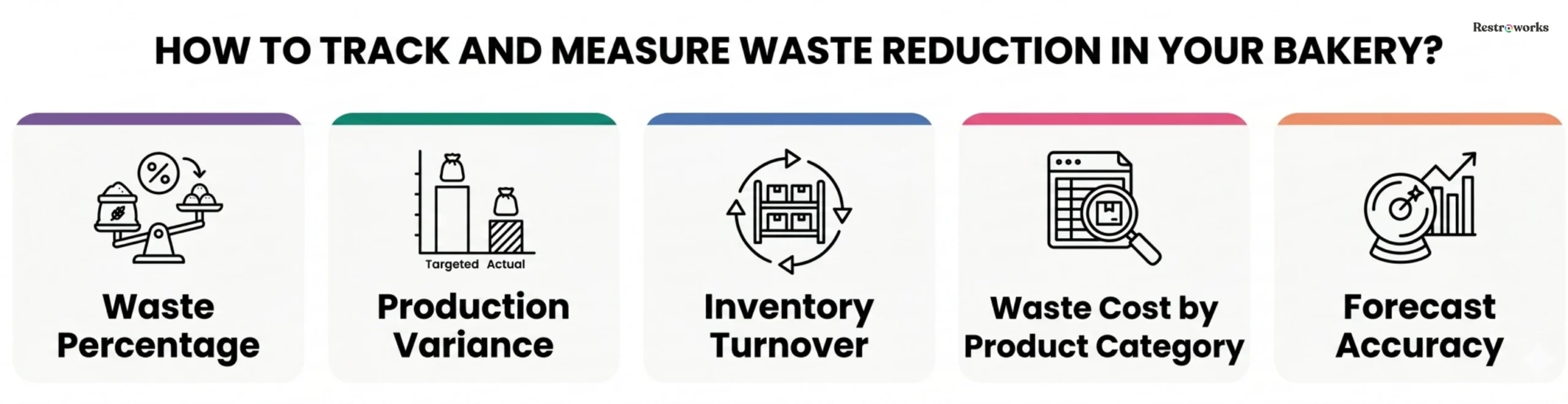
You can only improve what you track. With waste tracking dashboards in bakery software, you can access the right production reports and track the right KPIs to see if you need to make any changes in purchasing, production, inventory, or forecasting for waste control. These are-
- Waste Percentage: This shows the percentage of purchased or prepared inventory that’s wasted. If your waste percentage keeps increasing, it usually means issues in purchasing, production waste control, or product demand.
- Production Variance: Production variance measures the gap between your production forecasting and actual usage.
- Inventory Turnover: Inventory turnover helps you understand how quickly ingredients move through storage and production. Slow-moving inventory often increases the chances of spoilage and expiry-related waste.
- Waste Cost by Product Category: Tracking waste costs by category helps you identify which bakery items generate the highest losses through unsold inventory or excess production.
- Forecast Accuracy: Forecast accuracy measures how closely your production data estimates match actual sales patterns. Accurate forecasting reduces waste, controls inventory usage, and ultimately, helps you save food costs.
Waste is part of bakery operations, but left unmanaged, it can quickly affect your inventory costs, production management, and overall profitability. With the right bakery management software, you can track waste more accurately, improve forecasting, manage inventory more efficiently, and gain better visibility across operations.