

#1: Restroworks
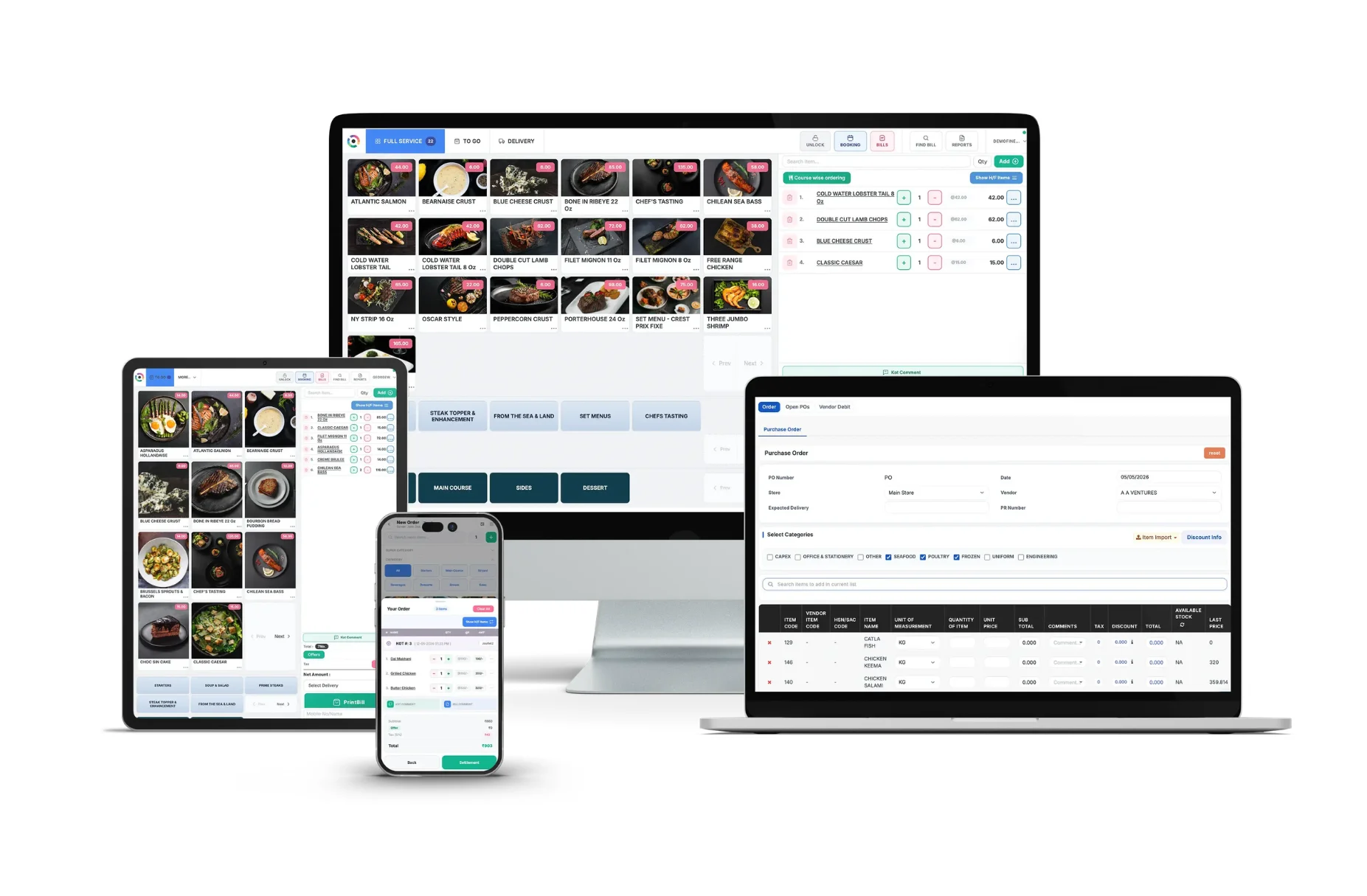
Restroworks is a cloud-based restaurant POS software and a full-on management platform that’s a go-to for more than 30,000 restaurants in 52+ countries. Its Middle East client portfolio includes well-known brands like Al Baik, Starbucks, Chili’s, Nando’s, Subway, Caribou Coffee, Magnolia Bakery, Café Bateel, Denny’s, Cinnabon, Juan Valdez, Herfy, and Zaatar w Zeit. It also has a Dubai office at the Dubai International Financial Centre (DIFC), so there’s a local point of contact for restaurants in the UAE.
On the product side, most users say it is super duper easy to use, customer service is on point, and it is value for money.
The best part is that it caters to both sides of the business, i.e., it protects margins at the back (via recipe costing, variance tracking, inventory management, central kitchen operations, and supply chain management), and it helps double revenue at the front with tools like RestroAPP (for food delivery), RestroGO (self-service kiosk), RestroSCAN (QR-code ordering), and RestroWEB (online ordering website).
What Does It Offer?
- I am personally intrigued by their newest addition – NEO – which is an AI-powered command center for every customer touchpoint, be it delivery aggregators, web ordering, QR ordering, or kiosks. It lets marketing and ops teams manage menus, pricing, offers, and item availability across channels, down to outlets. Its agentic AI executes changes from plain-language prompts (in beta), which you can verify before anything goes live. Also, since NEO is natively built into Restroworks POS, there’s no middleware in between.
- It supports BFCD architecture (Brand, Format, Cluster, Deployment), which means it lets you set menus, prices, and configurations once at the brand level and have them flow down to each format (QSR, cafe, cloud kitchen), cluster (region), and outlet, with overrides at lower levels where needed. This, I’d say, is very, very useful for Dubai groups that run several brands and formats.
- You get native Arabic and English support across menus, receipts, and screens, alongside multi-currency capabilities + Restroworks is hardware-agnostic, which means you can keep using whatever system you already own.
- It gives you a real-time business intelligence dashboard with 200+ reports across every outlet, and you can access these reports both on the web and through their cockpit app on your mobile devices.
- Restroworks is big on data privacy and security as well, with ISO 27001 and ISO 27017 certifications, SOC 2 attestation, and GDPR compliance.
- Then, there are also 500+ integrations available across delivery, restaurant operations, loyalty, and accounting. Yes, you get native Talabat, Deliveroo, Careem, Noon, and Keeta integrations.
- It also works offline, which means even if there’s no internet, you can keep billing (if I’m sure, for up to 48 hours).
Pros
✔️ It consolidates/brings sales, stock, and delivery data in one place, so there is no reconciliation gap.
✔️ Commission-free direct ordering channels
✔️ I really love the fact that it doesn’t force you into one hardware, so you can be more flexible overall.
✔️ Highest review-site ratings in this list, with round-the-clock support (24/7/365).
Cons
❌ Because Restroworks is built for multi-outlet and enterprise groups, in case you’re a small cafe that needs mostly only billing and basic inventory, you could end up paying much more than what you’ll use.
#2: Foodics
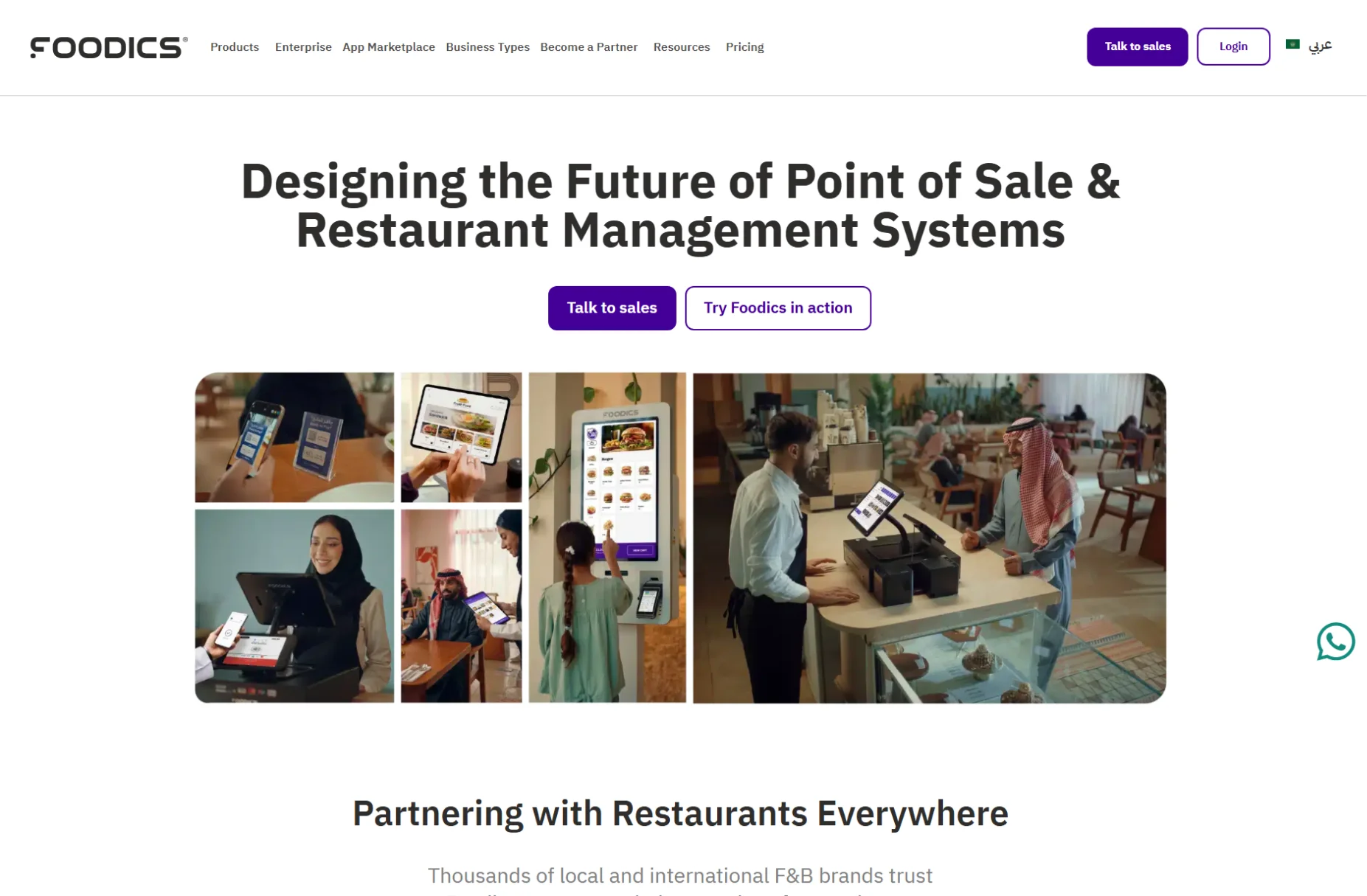
Foodics is a Saudi-founded cloud-based restaurant POS software with offices across the UAE, Saudi Arabia, Egypt, Jordan, Kuwait, and the Netherlands.
Right now, Foodics serves 30,000+ outlets in around 35 countries, has 120+ marketplace partners, and has processed over six billion transactions (as of 2022). It is trusted by many F&B brands in the GCC and has raised around $198 million to build out the product.
What Does It Offer?
- Cloud-based POS for dine-in, takeaway, and delivery.
- Menu management includes modifiers and combos, which I’d consider really important for QSRs specifically.
- Inventory, accounting, and employee tools are brought in the same account.
- If you really, really value customer retention (which I know everyone should), Foodics offers some great customer loyalty programs and guest-data features.
- There’s also a large marketplace with 120+ integration partners.
- Reporting and analytics across outlets, with online ordering support.
Pros
✔️ The biggest thing I like about Foodics is familiarity. It already has a strong GCC presence, which means finding employees who have used it before should be easier.
✔️ Reviewers generally find it easy to set up and administer.
✔️ A deep partner ecosystem.
✔️ It also scores well for menu management, reporting, loyalty, and delivery.
Cons
❌ Honestly, I’d be a little cautious if I were running a very large enterprise and Foodics was the only option. Because as I scrolled through its G2 reviews, most of them were from small businesses (around 61%, to be exact), so naturally there’s less independent evidence for truly large-scale restaurant operations.
❌ Inventory management scores lower than its other features.
❌ Some reviewers call its subscription overpriced and criticize the quality of customer support.
❌ And one more thing: before you commit, I’d absolutely advise you to ask for an all-in quote, because if you go on to pay for hardware and add-ons individually, it will cost you a lot.
#3: Sapaad
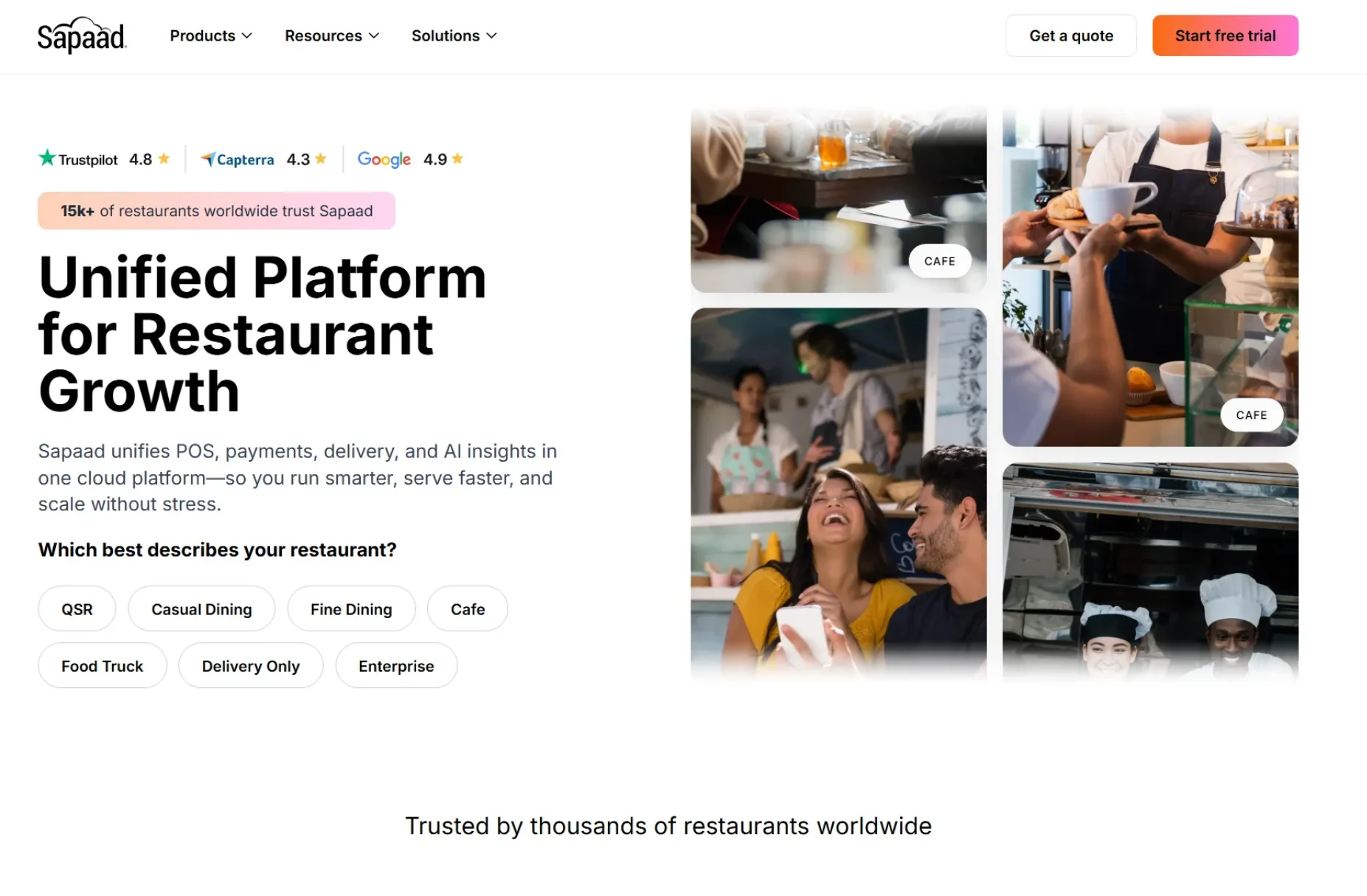
Sapaad was founded in 2013. It’s headquartered in Singapore with offices in Dubai and India. It’s cloud-based, and 15,000+ restaurants worldwide use it, mostly across the UAE, Saudi Arabia, Qatar, Kuwait, Bahrain, India, and Singapore.
The best thing about Sapaad is that it offers the exact tools Dubai operators mostly need, like home delivery, call-center ordering, and strong aggregator links. + Its integration marketplace includes Talabat, Deliveroo, Zomato, and last-mile providers like Quicqup.
What Does It Offer?
- Table management, waiter app, and kitchen display system.
- End-to-end inventory and recipe costing.
- CRM, loyalty, and SMS marketing tools
- Online ordering and home-delivery management are built-in.
- You also get analytics and reporting across outlets.
- And importantly for Dubai, there are integrations with Talabat, Deliveroo, Zomato, and last-mile providers such as Quicqup.
Pros
✔️ The interface is very easy to navigate and for new staff to learn.
✔️ Because it’s cloud-based, I like that I can access the back office from virtually anywhere through any browser.
Cons
❌ Reviews on Capterra are more mixed. For example, one full-service operator called it beta-like, and another felt the owner view was weak.
❌ There are also relatively fewer reviews available to be able to give any definitive opinion.
❌ Before you invest in Sapaad, I’d say ask the vendor to walk you through its reporting and recipe tools, because I genuinely couldn’t find any verifiable review around their depth.
#4: Grubtech
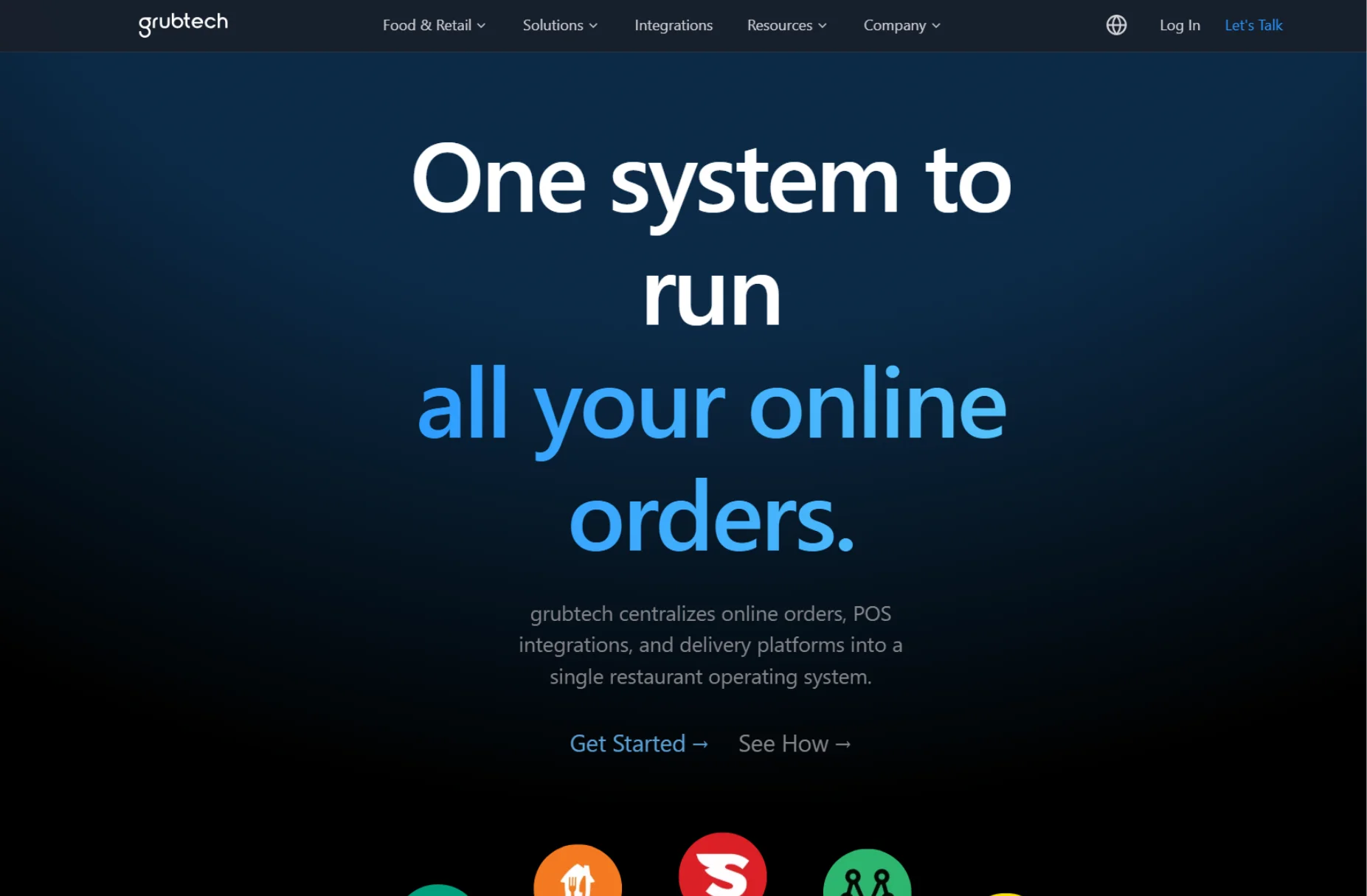
Grubtech is a Dubai-founded company. Its flagship product is gOnline. What it does is –
It pulls orders from delivery platforms like Talabat, Deliveroo, etc., into one dashboard and then syncs them with your POS, ERP, inventory, and logistics systems.
Plus, there are also other products –
- gKitchen (kitchen display system)
- GrubCENTER
- gOnline Lite for boutique outlets
- GrubPOS.
Right now, Grubtech serves 700+ brands across 18 markets. Also, the company claims that it can cut click-to-doorbell time by around 20% and save 25% of labor costs.
What Does It Offer?
- A single dashboard for all aggregator and direct orders.
- Orders automatically sync with POS, ERP, inventory, and third-party logistics.
- Kitchen display and order sequencing
- Menu syncing, snoozing items, and stock updates across channels.
- Data and reporting for delivery performance.
Pros
✔️ Built in Dubai specifically for aggregator-heavy delivery and cloud kitchens.
✔️ It lets you keep your existing POS (no need to buy an entire setup altogether) and add new sales channels on top.
✔️ It can also eliminate the ridiculous number of tablets and manual order re-entry that I have heard so many restaurants, mostly delivery-heavy ones, complain that they hate dealing with.
Cons
❌ It is not a complete restaurant management system. You probably can’t expect the same depth in inventory, procurement, or financial management that you may get from other platforms on this list.
❌ There are very few independent reviews on G2 and none on Capterra.
❌ If your existing POS already has strong native aggregator integrations, you’re essentially adding another subscription on top of it, which might not even be a justified investment to make if you really sit down to calculate it all.
#5: Oracle Simphony
Oracle Simphony can literally be one of the best software options for you if you run a hotel, resort, stadium, or any big venue. It is cloud-based, has roughly 40 years of lineage, is used across 180 countries, and is super configurable for regional language, currency, and tax rules.
What Does It Offer?
- An all-in-one cloud-based POS that connects front of house, back office, and kitchen.
- Multilingual, multi-currency, and region-specific compliance capabilities.
- Countertop terminals, workstations, and tablets for tableside and mobile ordering.
- Inventory and supply chain tools.
- An integrated kitchen display system.
- Marketing and customer loyalty programs, plus 200+ partner integrations.
Pros
✔️ Serves a very wide range of formats
✔️ Strong for hotel F&B
✔️ Enterprise-wide updates across properties from one place.
Cons
❌ Premium pricing. Reviewers say it is very expensive.
❌ Implementation can be slow.
❌ Runs on Oracle hardware or a limited list of validated third-party devices, so you’ll need to double-check compatibility before you plan to reuse your existing hardware.
❌ Customer support is unreliable.
#6: Quarey
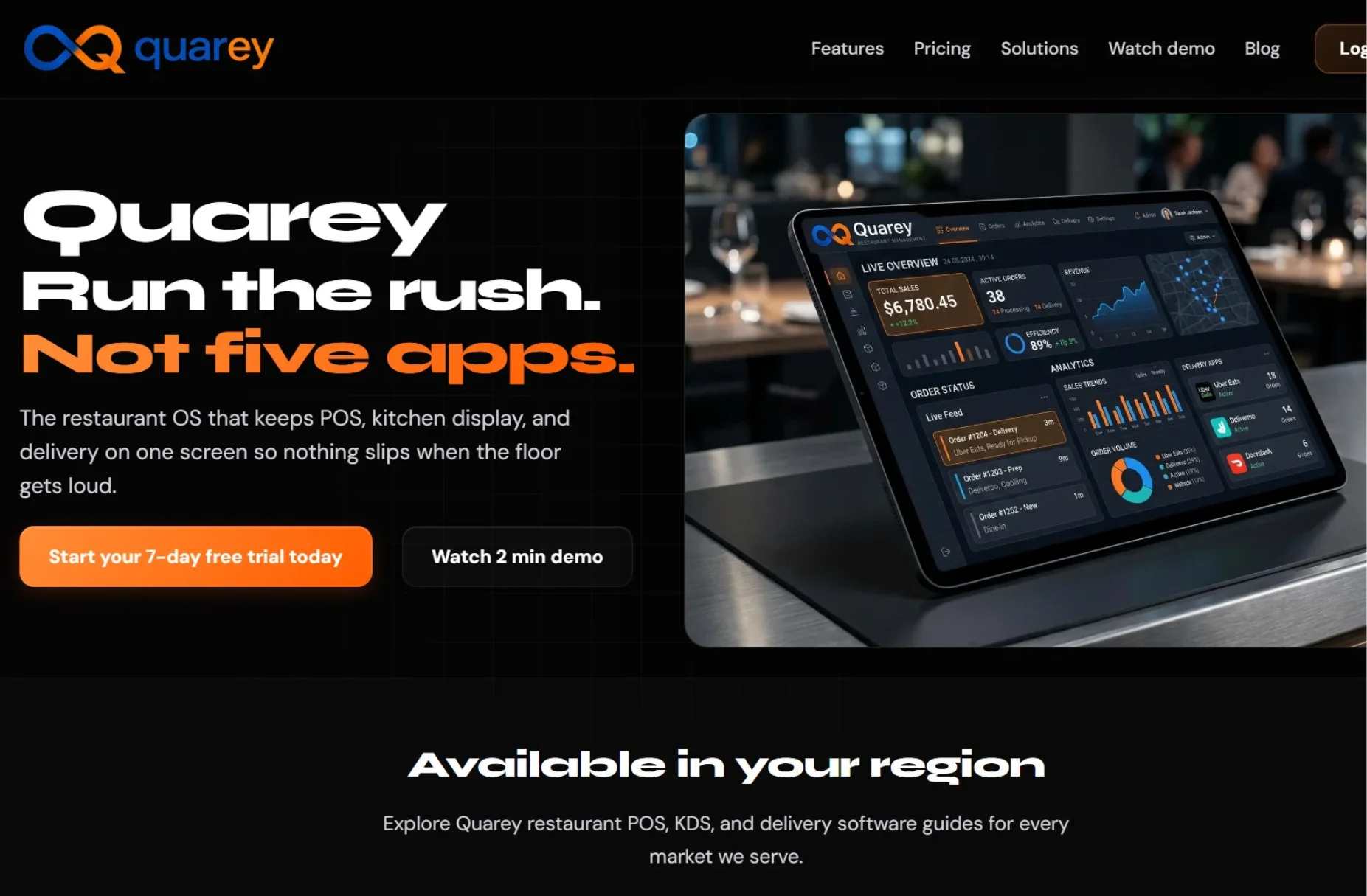
Quarey does not have much of an established footprint yet, but I still included it in this list because it has some genuinely good offers (at least that’s what I can make out from their website and judging from the clients they manage).
It offers POS, KDS, delivery management, rider management, inventory, CRM, finance, and online ordering – all in one platform. Like, isn’t that basically everything you may need to run your Dubai restaurant?
What Does It Offer?
- A restaurant POS system with a kitchen display system
- Delivery management and rider management
- Inventory management and stock management
- CRM and guest data tools
- Finance and reporting
- Online ordering
Pros
✔️ Rider management and finance are in the same platform as the point of sale.
✔️ A wide module list for a single subscription.
✔️ I think it makes the most sense for operators handling both in-house delivery and aggregator orders.
Cons
❌ My biggest concern is the lack of independent proof. There are no verified G2 or Capterra reviews, so it’s difficult to judge how well the platform performs at scale.
❌ Plus, there’s not enough evidence for whether it’d work for fine dining restaurants and hotel-style setups.
#7: Revel Systems
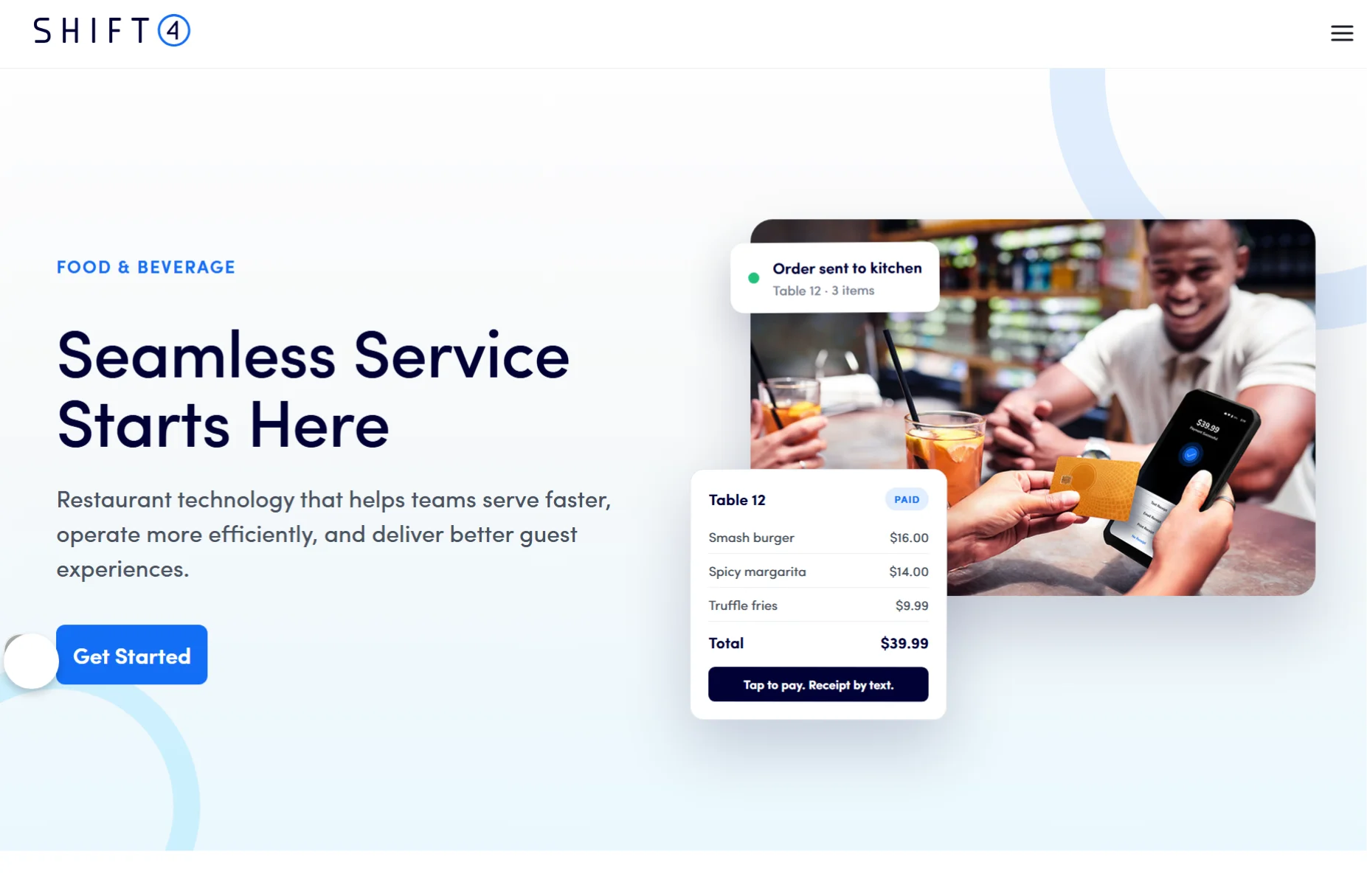
Revel Systems (now acquired by Shift4) is iPad-native restaurant POS software that is now part of Shift4 payments.
It has a strong presence among specialty coffee chains, fast casual brands, and franchise networks in the UAE region, + it supports Arabic language settings and GCC VAT configurations.
What Does It Offer?
- An iPad interface
- Centralized management console for menus, pricing, permissions, and promotions.
- Offline mode for billing during outages.
- Open API for third-party integrations.
- Integrated payments through Shift4.
Pros
✔️ Easy for new staff to learn
✔️ Centralized control suits franchise and multi-site brands.
✔️ Reliable offline processing for mall outlets.
Cons
❌ It is expensive.
❌ I also wouldn’t make it my go-to choice for luxury fine dining restaurants because I think (drawing from the reviews, of course) the service flow is kinda complicated.
❌ Its Capterra score is just 3.6, which is the lowest in this list.
#8: Syrve
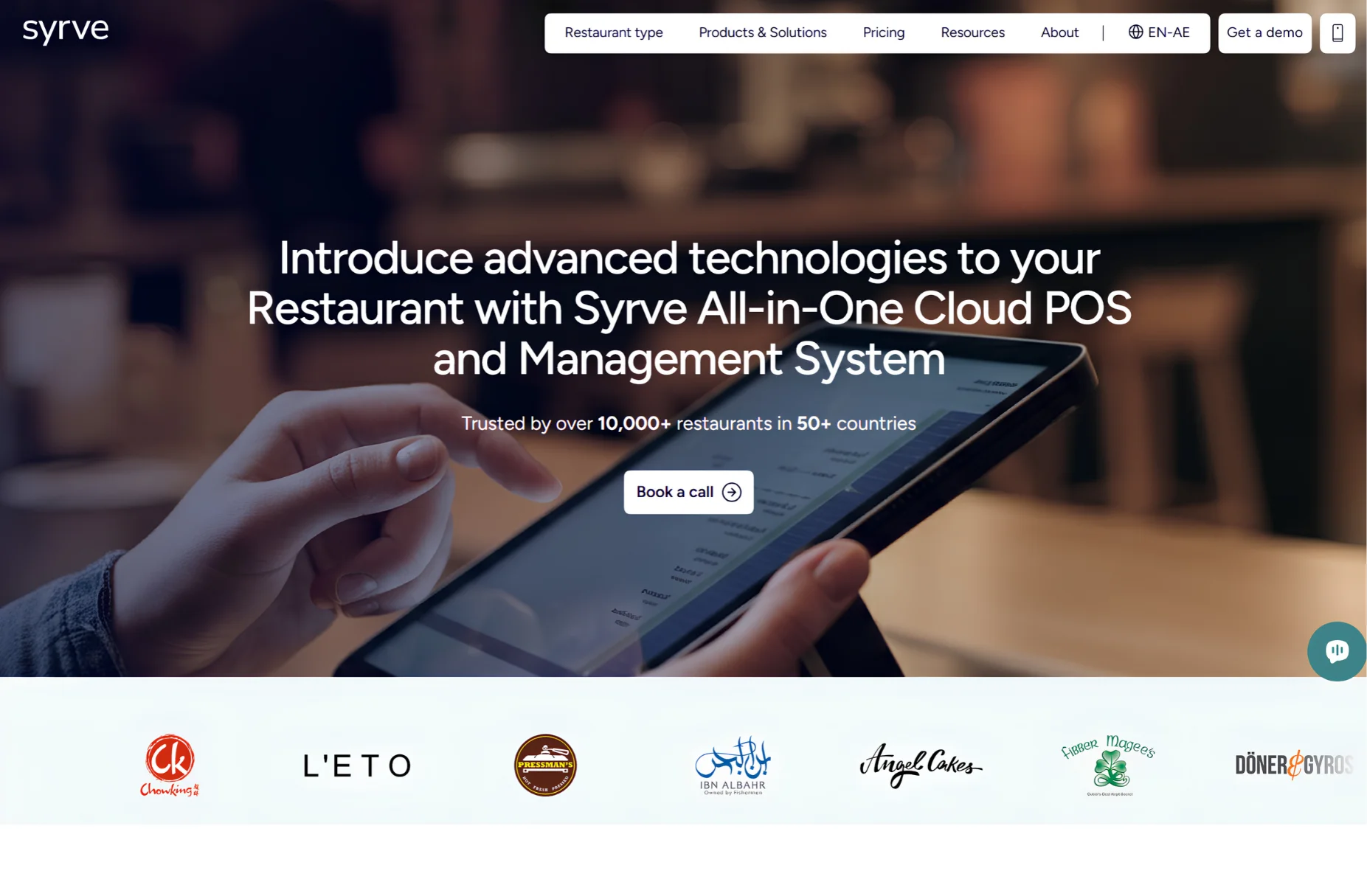
Syrve is headquartered in the UAE and took over iiko’s international operations in May 2022. It now serves 10,000+ restaurants in 50+ countries, supports 20+ languages, and works with 40+ partners.
One gap is that I couldn’t find any verified reviews on G2, Capterra, or even GetApp for Syrve, so I can only write based on what its own website claims.
What Does It Offer?
- Restaurant POS software, a waiter app, and table management
- Delivery and takeaway management
- Inventory, recipe management, and menu management
- Kitchen display system
- Staff scheduling and reporting
- AI forecasting and AI invoice scanning
- Integrations with aggregators, accounting, and payment tools
Pros
✔️ UAE-headquartered with a regional team and a deep Dubai customer base.
✔️ AI invoice scanning and forecasting to support tighter food cost control.
✔️ Wide module coverage in one restaurant POS system.
Cons
❌ The biggest limitation is the lack of independent reviews. I can’t verify anything. I just trusted the vendor to be truthful.
❌ A platform this broad usually needs a proper onboarding plan, and it comes with a real learning curve.
❌ Pricing and modules vary, so get a full quote.
Worth a Mention: Other Names You’ll Hear in Dubai
Other than the eight platforms listed above, I also found some other names that people had mentioned in the review sections of these platforms, kind of in comparison. Some of them are:
Polaris ERP – It’s a GCC-based ERP with a restaurant module.
CUBES – If you search for good UAE-based POS, CUBES is sure to come up in your search results, and as per reviews that I have read, it’s definitely worth checking out too.
Omega POS – It offers real-time access for multi-brand setups.
I did not score these with the same depth, but again, there are plenty of other platforms in the market that you should be checking out. So, you’d better do more research on your own before making any final commitment.