


More than 93% of customer journeys begin with a single search today. And it’s no different for a bakery business. No matter what a person is looking for — perhaps a “bakery near me,” a custom birthday cake, or a specific dietary option — their journey will most likely begin with a search.
Yet, many bakeries struggle to appear in these moments of intent. You may have the most delicious baked goods or a cool store, but if you’re not easy to find online, you’ll be losing business. Search Engine Optimization helps bridge that gap. It allows your bakery to show up when customer intent is high, rank higher among competitors, and reduce dependence on third-party platforms for visibility.
This blog breaks down SEO for bakeries into actionable insights and strategies to help you improve your local visibility and build long-term authority.
What you will learn
- Why does search engine optimization matter for a bakery business?
- The key bakery SEO strategies to boost your business’s online visibility
- Top tools and ways to measure SEO performance
How Do Customers Discover Businesses Today?
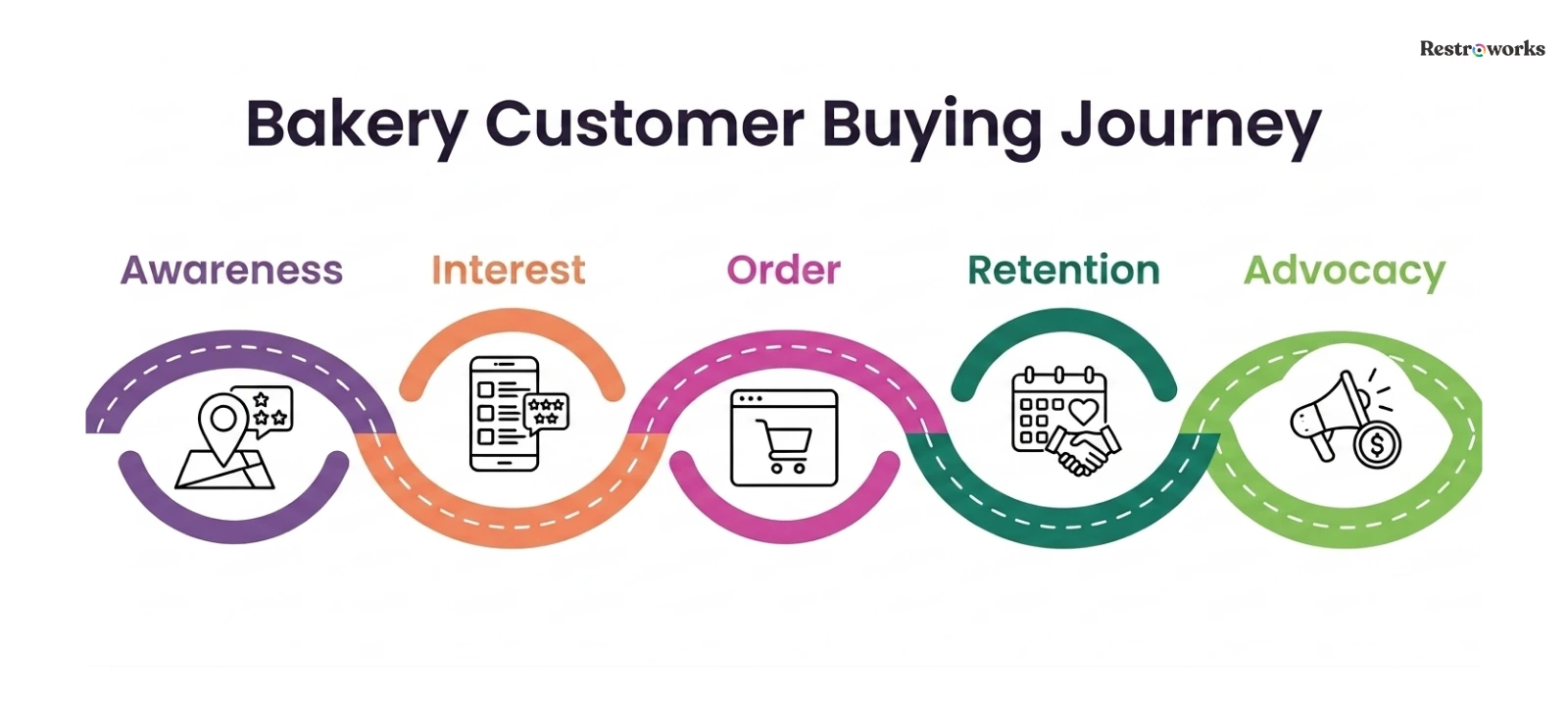
Google search often starts with a clear intent. When someone looks up “custom cakes delivery” or “bakery near me,” they already know what they want; they’re now looking for the best way to get that. And that decision follows a journey, from awareness to consideration to evaluation and purchase.
- Search (Awareness): This is where the journey actually begins with a specific problem or need. Customers search to figure out options like “custom cake ideas” or “eggless bakery near me”. Bakeries’ search engine optimization helps you appear here with the right pages and content, so you’re part of the initial discovery set.
- Decision (Consideration): Once they have the options, they evaluate. They compare relevance, menu items, pricing, images, reviews, and more. SEO for bakeries at this stage helps you align your content, local listings, and the bakery’s online presence with what customers are choosing.
- Order (Decision): If your bakery meets expectations, a customer will be ready to order via call, delivery app, or store visit. Bakery SEO tactics here make sure they don’t change their mind by offering them a seamless experience. This includes clear information, easy navigation, and a strong local presence to convert intent into action.
Why Does SEO Matter for Modern Bakeries?
For most bakeries, demand isn’t the problem; visibility is. Customers are actively searching for cakes, desserts, and nearby options every day, but not every bakery shows up when they do. In fact, 46% of all Google searches have local intent, which means visibility at this stage directly determines if your business is going to be considered at all.
At the same time, intense market competition has changed customer expectations. They compare different bakeries for menus, photos, reviews, availability, and pricing before deciding. SEO helps close that gap.
It ensures your bakery is visible, credible, and easy to choose when customers are actively evaluating their options. Here’s why a strong SEO strategy matters-
- Drives foot traffic: Online search doesn’t just bring website traffic; it also leads to store visits. Many users check directions, call directly, or walk in after finding a bakery through search, making SEO contribute to revenue.
- Direct customer acquisition: With stronger search visibility, customers can find and order from you directly instead of going through third-party online platforms. Plus, you can capture those direct orders using with Restroworks bakery software, while retaining better margins and control.
- Builds long-term visibility: Instead of relying only on seasonal demand, promotions, or paid ads, SEO helps you maintain steady visibility. Relevant content or positive reviews continue to drive discovery, making it a more sustainable channel for consistent demand.
In fact, small businesses that rely on SEO see an average ROI of 400% within only two years.
Key SEO Components and Strategies for Bakery Businesses
Effective SEO for cafes and bakeries features various elements that work together to improve discoverability and visibility for your bakery business. Let’s explore the key SEO components and top SEO strategies to boost your bakery’s online presence and visibility-
A. Keyword Research for Discoverability
Keyword research is the foundation of an effective SEO strategy for bakeries. This involves identifying the terms people use when searching for your bakery products on Google, and then using those terms strategically within your website content to get organic traffic.
Tools like Google Keyword Planner or Ahrefs can help you search for relevant, high-volume keywords and validate them with search volume and competition. You can also use Google’s search autocomplete feature or ‘People Also Ask’ section on SERP to identify what people are searching for.
For bakeries, keyword research focuses on the following categories-
1. Primary Keywords
These are broad terms related to your business, menu, or services that help search engines know about your business. For instance, keywords such as “cakes”, “wedding”, “vegan desserts”, etc, which you can use to generate long-tail keywords.
2. Long-tail keywords
These are highly specific search phrases like “eggless chocolate cake delivery” or “custom cakes with photo” that show clear search intent. They usually have lower competition, making them more valuable for conversions.
You can use these relevant keywords to create content clusters (product pages, how-to content, baking tips blog, service pages) for your bakery website.
3. Product-Specific Keywords
Customers often search for exact products or brand names such as “red velvet cake”, “wedding cake [bakery name]”, “sourdough bread”, instead of bakery product categories. Such branded keywords are important for driving traffic; they have an average organic click-through rate of 20-35%.
Even if you choose unique names for your baked goods, try including product-specific keywords within descriptions or have a clear, dedicated product page or sections on the bakery website to increase searches.
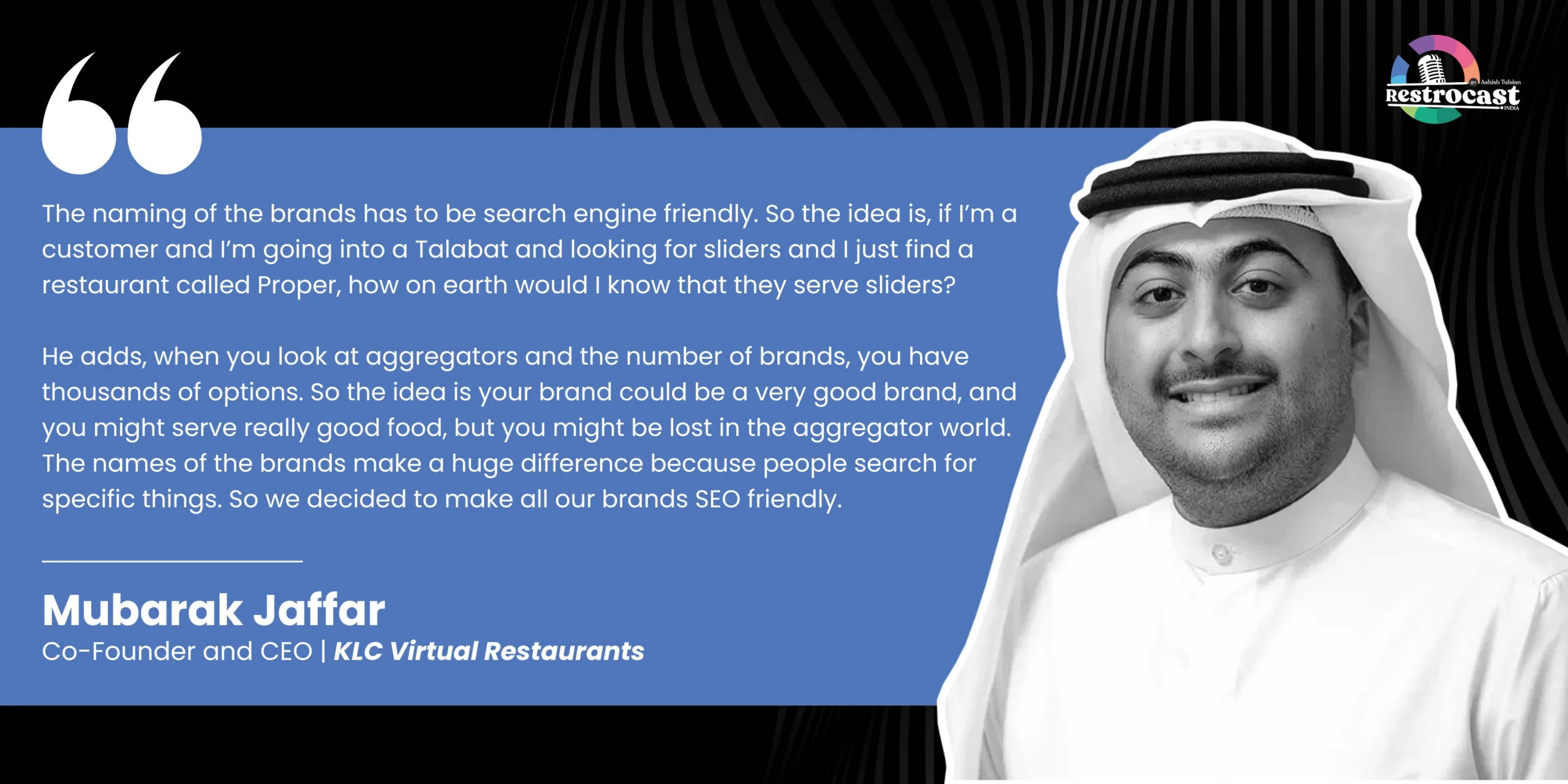
This is something Mubarak Jaffar has implemented at KLC Virtual Restaurants, a company building delivery-only food brands through cloud kitchens. According to him–
4. Location-based keywords
Customers searching for local terms prioritize proximity and relevance. Target local keywords with your city and neighborhood and modifiers like “near me”, “delivery”, “open now” to appear in local searches and attract customers who are ready to visit or order.
B. Content Marketing and Optimization for Bakeries
Content is the heart of your bakery SEO strategy, with at least 72% of small businesses saying it’s effective, which can decide if people engage with your business or not.
Content marketing focuses on creating high-quality, relevant, and engaging content that not only ranks but also helps visitors and converts them. At its core, your content will include-
1. Website Pages
Your restaurant website is often the first search result people will click on after a quick Google search. Make sure it offers them all the information they need to feel confident about ordering. This includes clear, actionable, and keyword-optimized content across-
- Homepage: Your homepage should quickly tell customers what you offer, what you’re known for, and how they can order. It includes a link to different pages like menu, best-selling products, location details, and clear next steps like calling, visiting, or placing an order.
- Bakery menu: Organize your full menu with pricing, sizes, and customization details so customers can quickly decide. Keep it in a simple, easy-to-scan, and visually intuitive format so users can browse options without confusion.
- About pages: This page focuses on your brand story, mission/vision, contact details, or reviews to inform customers about your business.
- FAQ pages: You can answer common questions around ordering, delivery, and customization so customers don’t leave due to uncertainty.
2. Blogs
Your bakery website blog is the place to share information, offer value, and create engagement around your business or industry. Blogs with relevant local keywords and quality content help you build topical authority, which boosts your SERP rankings.
In fact, a small bakery in Florida, Edelweiss Bakery, saw a 460% increase in monthly mobile organic traffic through blogs and targeted SEO for bakeries.
- Build pillar pages around high-volume keywords (e.g., birthday cakes, wedding cakes)
- Add supporting content like flavor guides, baking tips, design ideas, or ” how-to” posts.
- Conduct keyword research to identify topics that address a customer’s challenges or questions.
When customers find helpful, relevant content from a business, it builds confidence. So when they’re ready to order, they are more likely to return to a bakery they’ve already seen.
3. Videos
Video works differently from other content. It doesn’t just support discovery, but it can be a discovery channel on its own, especially through channels like YouTube.
Here, you have the opportunity to create videos around real search intent, show actual products and orders, and boost bakery SEO with keyword-driven titles and descriptions.
C. On-Page SEO for Bakeries
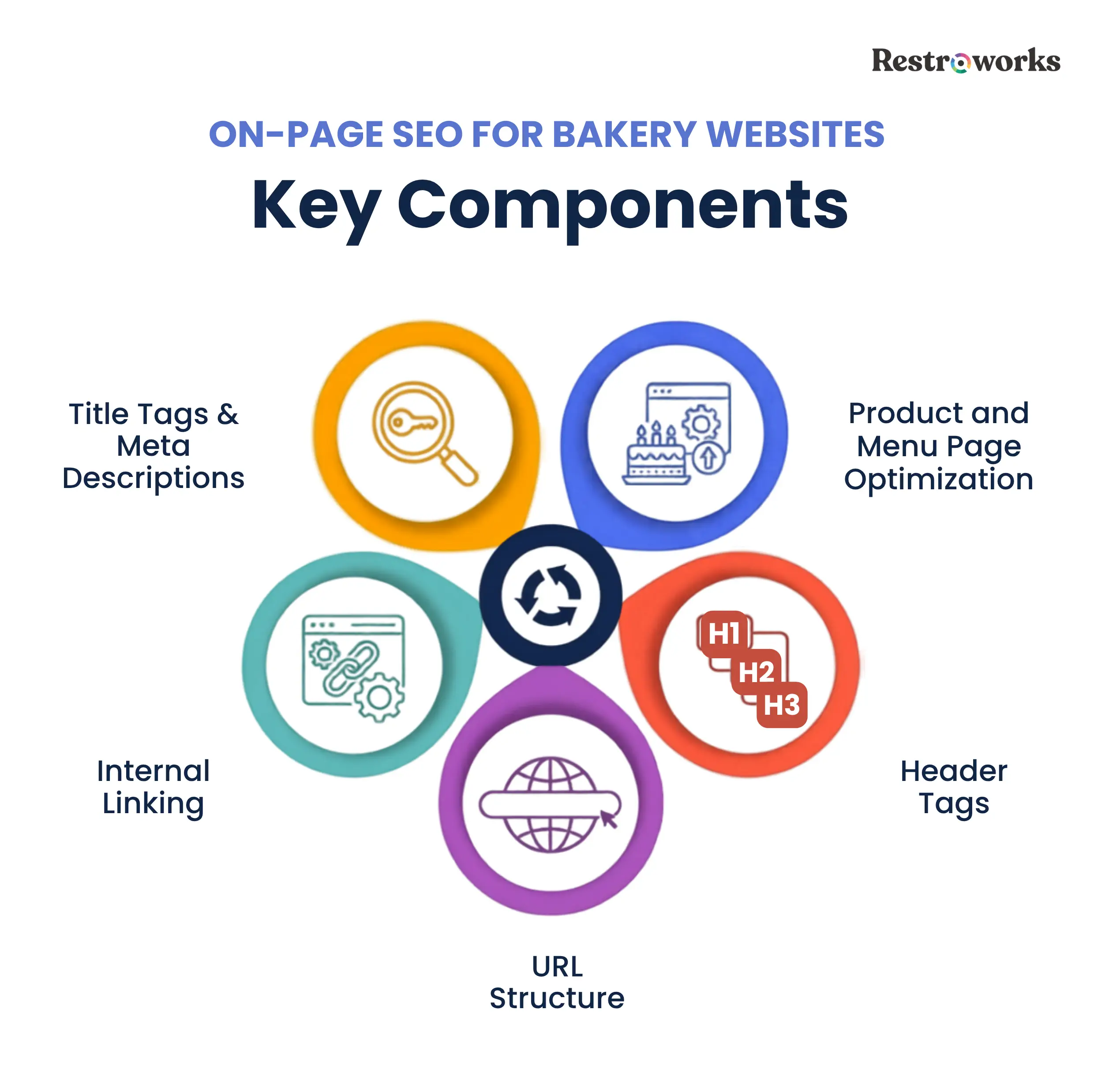
An on-page SEO strategy focuses on optimizing and structuring your website content so search engines can easily find you and understand your content. This includes page titles, descriptions, and HTML elements.
- Title tags and meta descriptions: Every page on your website must have clear titles and meta descriptions with your primary keyword to help search engines understand page relevance.
- Product and menu page optimization: Each important product or category should ideally have its own page with structured content with clear heading tags, engaging content, images, and internal links to related products or categories.
- Header tags: Use H1, H2, and H3 tags to structure your content logically and make it easy to read.
- URL structure: For bakery SEO, your URLs should be clean, readable, and keyword-aligned (e.g., /kids-birthday-cakes).
D. Bakery Website Design and Optimization
This is where everything comes together. You can have the right keywords and content, but if the website itself is hard to use or confusing, people won’t stay long enough to take action.
1. Design and Navigation
Your bakery website should feel simple and attention-grabbing. When someone lands on it, they should immediately understand what you sell and where to go next without scanning too much.
- Use a structured layout and keep the main menu simple and logically divided into subcategories (occasions, menu, ordering, contact details)
- Have clear and visually intuitive CTAs (call, order, directions) to encourage action.
- Avoid too many banners or competing elements to minimize clutter.
From a technical standpoint, a responsive design allows the layout to adjust smoothly across devices. Most users will visit from mobile, so spacing, buttons, and load behavior should be optimized for smaller screens.
2. Visual SEO
For visual customers, high-quality images and videos do most of the work of engaging them. But apart from quality, visuals need to be SEO-optimized to ensure speed and local search visibility. This includes-
- Using descriptive file names (e.g., chocolate-truffle-cake-1kg.jpg)
- Adding alt text with relevant keywords
- Optimizing image size for a faster loading site
3. Content Relevance and Readability
Content SEO isn’t limited to keyword optimization. Search engines also consider a page’s relevance with specific search intent. Search engines evaluate whether your page actually answers what the user is looking for and if it is easy to navigate that information.
- Structure content with clear headings (H1, H2, H3) so intent is easy to identify
- Use direct, intent-matching language (e.g., “custom birthday cakes” instead of vague descriptions)
- Keep each page focused on a single topic to avoid dilution
Well-structured content improves crawlability and helps search engines confidently rank your page for relevant queries.
4. Customer Reviews
Reviews contribute to both search rankings and the bakery’s online presence, especially in local and product-related searches. They act as original, user-generated content that search engines use to evaluate trust and relevance.
- Add reviews to the homepage and not just a separate testimonials page
- Keep them updated to maintain content freshness
- Use structured data (Review schema) to help search engines display ratings
E. Technical SEO for Bakery Websites
Technical SEO ensures search engines can access, understand, and rank your website. You can have the right content and keywords, but if your site loads slowly, feels hard to navigate, or has a poor structure, it won’t perform. It includes-
1. Speed and Mobile Experience
Page speed directly affects search rankings and user behavior, where even a few seconds of delay can affect site visits, mobile experience, and SERP rankings. To improve your website speed, make sure to-.
- Compress images and use modern formats (like WebP) to reduce load time
- Minimize heavy scripts, plugins, and unused code
- Ensure buttons, menus, and text are easy to use on smaller screens
2. Site Structure / Navigation
From an SEO perspective, your website should have a clear structure to allow search engines to crawl, index, and rank your pages. This involves-
- Keeping a logical hierarchy (Home → Category → Product)
- Adding standard HTML tags to navigation links
- Using internal linking to connect related pages
- Submitting an XML sitemap to help search engines find all key pages
3. Schema Markup
Use structured data (like LocalBusiness, Product, and Review schema) to help search engines understand your content better. This improves how your pages appear in search, including rich search results like ratings, pricing, and business details.
4. Internal Linking
Internal linking helps search engines understand your site structure and distribute authority across pages. It also signals which pages are important and how they relate to each other.
- Link related pages using descriptive, keyword-relevant anchor text
- Ensure important pages are not isolated (no orphan pages)
- Maintain a logical linking structure between categories and subpages
Strong internal linking improves indexing, strengthens page authority, and helps search engines navigate your site more effectively.
F. Local SEO Essentials
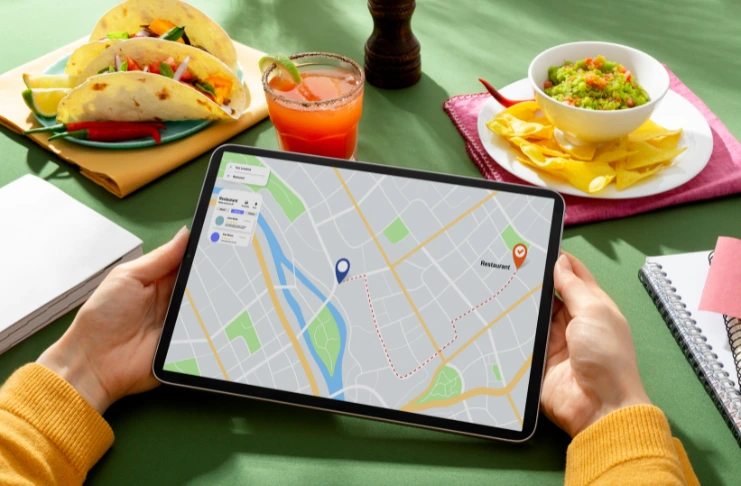
For any local bakery, ranking on local searches like “chocolate croissants near me” or “best brownies in San Francisco” is crucial for targeting nearby customers. This is where your online reviews and optimized Google Business Profile listing help with Local SEO–
1. Google My Business
When customers search for your bakery on Google, this is one of the first things they will see on the page. So, keep it fully updated with accurate hours, categories, high-quality photos, and services. Add products regularly and use posts to highlight offers or seasonal items to keep your local listings active and relevant.
2. Google Maps
Integrating Google Maps on your business listing and website makes it easier for people to find your bakery with an accurate location pin. Also, ensure your business name, address, and categories match exactly across Maps and your website.
To further improve your bakery’s online visibility, add attributes like delivery or takeaway, add geo-tags to your photos, and encourage customers to check in or interact with your listing.
3. Online Directories
When your business shows up consistently across multiple directory listings, it strengthens local SEO and trust signals and improves your chances of appearing in local searches.
So, focus on listing your bakery across different types of platforms, including general online directories (like Yelp or Yellow Pages), industry-specific sites (like Zomato), local business listings, and social platforms.
G. Link Building Strategies
Quality backlinks from other websites to yours are an essential ranking factor on Google. Backlinks help search engines determine your website’s credibility and relevance and bring in referral traffic. You can gain backlinks through-
1. Guest Blogging
Writing guest blogs on popular food websites and baking blogs is a great way to establish your content authority, generate quality links, and reach a new audience. Write about niche topics you have expertise in and link to relevant blogs or pages on your website.
2. Local Partnerships
Local partnerships are one of the most practical ways to build strong links. When you collaborate with other local businesses, such as event planners, cafes, or venues, ask them for a feature on their websites or event pages with links to your business. These links make you locally relevant and help bring in direct customers.
3. Food Influencer Outreach
Working with food bloggers or local influencers who align with your audience and location can help you earn both visibility and backlinks.
You can have them try out your baked goods and ask for detailed customer feedback, product showcases, or event coverage with links to your website. This creates stronger signals and more meaningful exposure
H. E-Commerce SEO for Delivery App Listing
Your food delivery app listing on platforms like Uber Eats or DoorDash works like a mini storefront. Since thousands of similar bakery businesses are competing for the same audience, small optimizations can directly impact visibility and conversions.
This is where your app SEO strategy matters-
- Use clear, searchable product names and structure your menu so local customers can quickly find what they need.
- Add high-quality images along with informative descriptions and an ingredient list to help potential customers understand the desserts
- Update pricing and availability in real-time
- Maintain strong ratings and reviews, as they directly impact both online visibility and ordering decisions.
How to Measure and Improve Bakery SEO Performance?

Once you start with bakery SEO, the next obvious question is: ‘Is any of this actually working?’ Getting results from your local SEO efforts takes time, which makes it all the more important to consistently measure progress through KPIs.
Tools to Track Performance
- Google Search Console: It helps you monitor search performance, measure traffic, fix issues, and submit sitemaps. You can use it to identify pages that are visible but not getting clicks and improve them.
- Google Analytics: The tool lets you analyze website traffic and track clicks, visits, or sessions on specific pages of your website.
- Google Business Profile Insights: Use this tool to see how people find your listing (search vs maps) and track call, request directions, or site visit for measuring local SEO impact.
- SEO Tools: Tools like Ahrefs / SEMrush are useful for tracking local keywords, competitor visibility, and backlinks. These tools help you see where you stand compared to other bakeries in your area.
Measuring and Analyzing Performance
- Track Key Metrics: Focus on KPIs like impressions, clicks, rankings on Google search results page, website traffic, direction requests, and orders. Tracking these regularly helps you see whether your visibility is improving and if it’s bringing revenue.
- Analyze Search Queries: Look at the exact terms people use to find your bakery in tools. This helps analyze whether your content aligns with their search behavior. For instance, if people are searching for “photo cake” but you aren’t targeting the keyword, your bakery won’t show up on search.
- Monitor Competitors: Analyze competitor content and local search rankings. Look at their pages, reviews, content structure, or targeted keywords to understand what they’re doing differently, and where you can improve or differentiate.
- Stay Updated: Search trends shift with seasons, occasions, and customer preferences. In fact, bakery search volume often doubles during major seasonal or local events and holiday periods. Update your content, menu pages, and listings regularly so they stay relevant to what people are searching for right now.
- Test and Improve Regularly: Depending on your analysis, refresh content, try using new keywords, and keep listings updated. This will help you maintain rankings and visibility over time.
SEO for bakeries comes down to a few basics: show up when people search, make it clear what you offer, and make it easy to order. Plus, you don’t need professional expertise to start seeing results.
Focus on getting your listings, pages, and content right, and improve them over time. The more consistent you are, the easier it becomes for potential customers to find and choose your bakery.