
When Warner LeRoy said, “A restaurant is a fantasy – a kind of living fantasy in which diners are the most important members of the cast,” he must specifically be talking about the fine dining restaurants where every single element,f rom the food and service to the ambiance i,s “intentionally” put together to create an experience that guests would want to linger more in.
In fact, the global fine dining industry grew 27% from 2022 to 2024, reaching a projected €28 billion. In the US alone, these restaurants have grown at a 2.4% CAGR between 2019 and 2024, which means people are now open to spending more deliberately on experiences.
Fine dining is characterized by elevated cuisine, meticulous attention to detail, and a commitment to hospitality at the highest standard, creating an immersive experience that goes beyond just eating.
What You’ll Learn
- What is fine dine, and how is it different from casual dining?
- What are the menu, service, and ambiance at a fine dining restaurant?
What Makes Fine Dining Restaurants Different From Casual Dining?
“Fine dining is an occasional treat for most people,” said René Redzepi, and we couldn’t agree more, because fine dining and casual dining aren’t just different price points but completely different philosophies altogether.
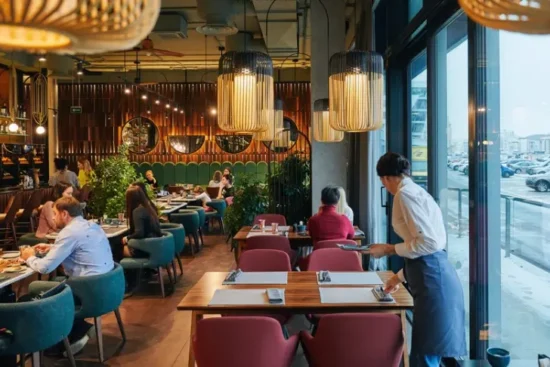
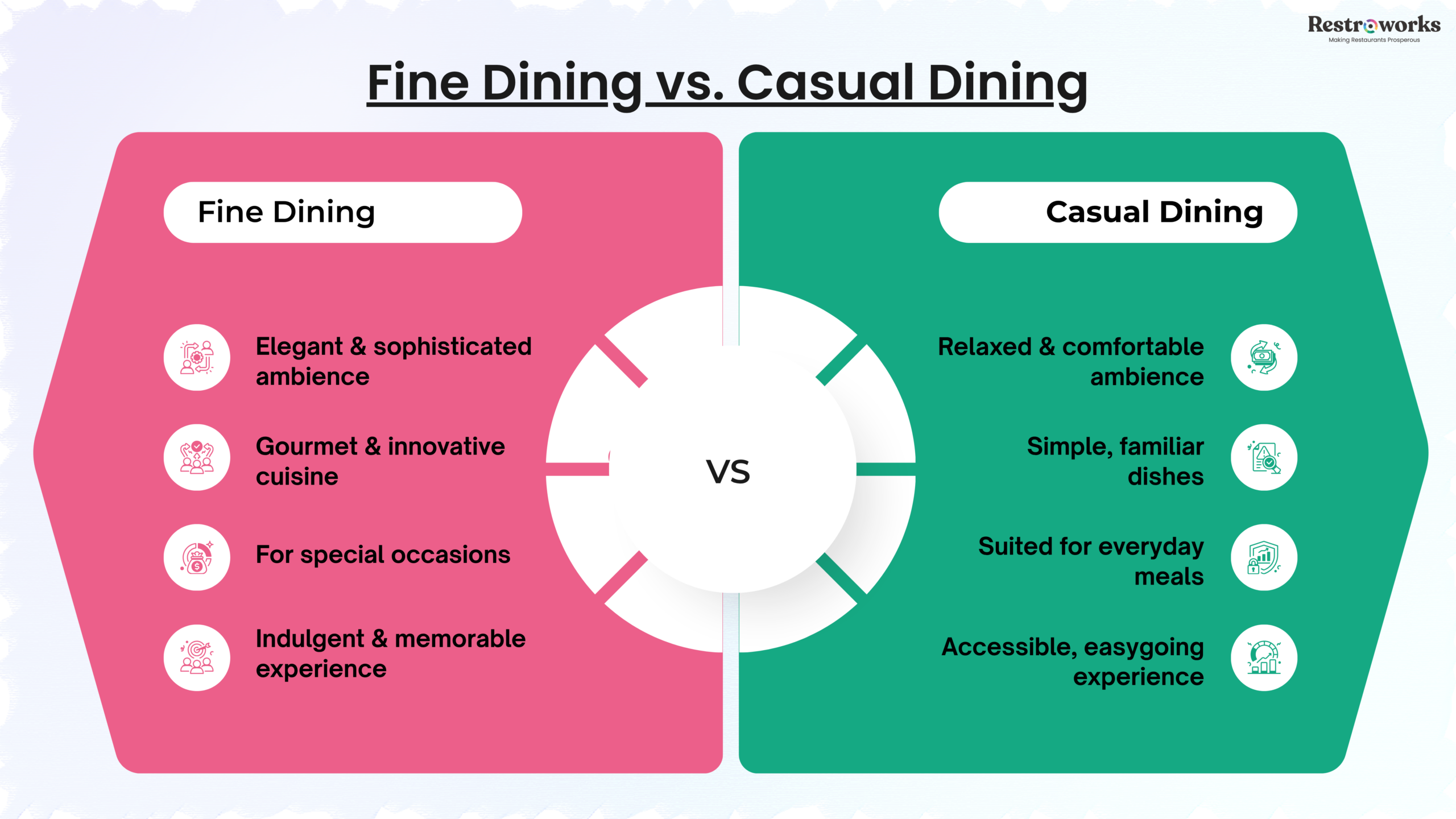
Fine dining restaurants typically offer multi-course gourmet meals, sophisticated service, and an upscale dining atmosphere designed to be indulgent and memorable for diners. Casual dining restaurants, on the other hand, are characterized by a more laid-back and relaxed environment with simpler food offerings.
Fine dining emphasizes elegance, sophistication, and culinary innovation, while casual dining prioritizes familiarity and comfort, often featuring a diverse range of menu options at moderate prices.
The contrast is even sharper when you look at operations. Fast food restaurants prioritize speed. Fast casual restaurants focus on convenience. Casual restaurants deliver comfort. But fine dining restaurants deliver “an event.”
Fine dining is typically reserved for special occasions, contrasting with casual dining, which caters to everyday meals.
The overall experience in fine dining is designed to be indulgent and memorable, catering to diners looking for a special culinary experience, whereas casual dining focuses on comfort and accessibility for a wider audience.
INDUSTRY INSIGHT
Service at a fine dining establishment is “Every day, better in every way. Everything is done with focus, heart, gratitude, love, care, purpose, intention, faith,” says Niki Nakayama, Chef
Exceptional service is the spine of dine-in restaurants, and it’s also their USP.
Fine dining restaurants focus on professionalism and attentiveness, with every service interaction orchestrated to enhance the dining experience. Servers in fine dining establishments are trained to anticipate guests’ needs, ensuring that every aspect of their visit is flawlessly executed.
The service in fine dining is characterized by being attentive yet unobtrusive, with staff being highly trained and knowledgeable about the menu.
Fine dining establishments prioritize personalized service, with hospitality professionals tailoring experiences to individual tastes and preferences. Got dietary restrictions? They already know. Prefer a quieter table? Done before you ask for it.
Even research confirms that the most important determinants of service quality in dine-in establishments focus on customer expectations and service performance evaluation.
What’s the Dress Code and How Do You Prepare for a Fine Dining Experience?
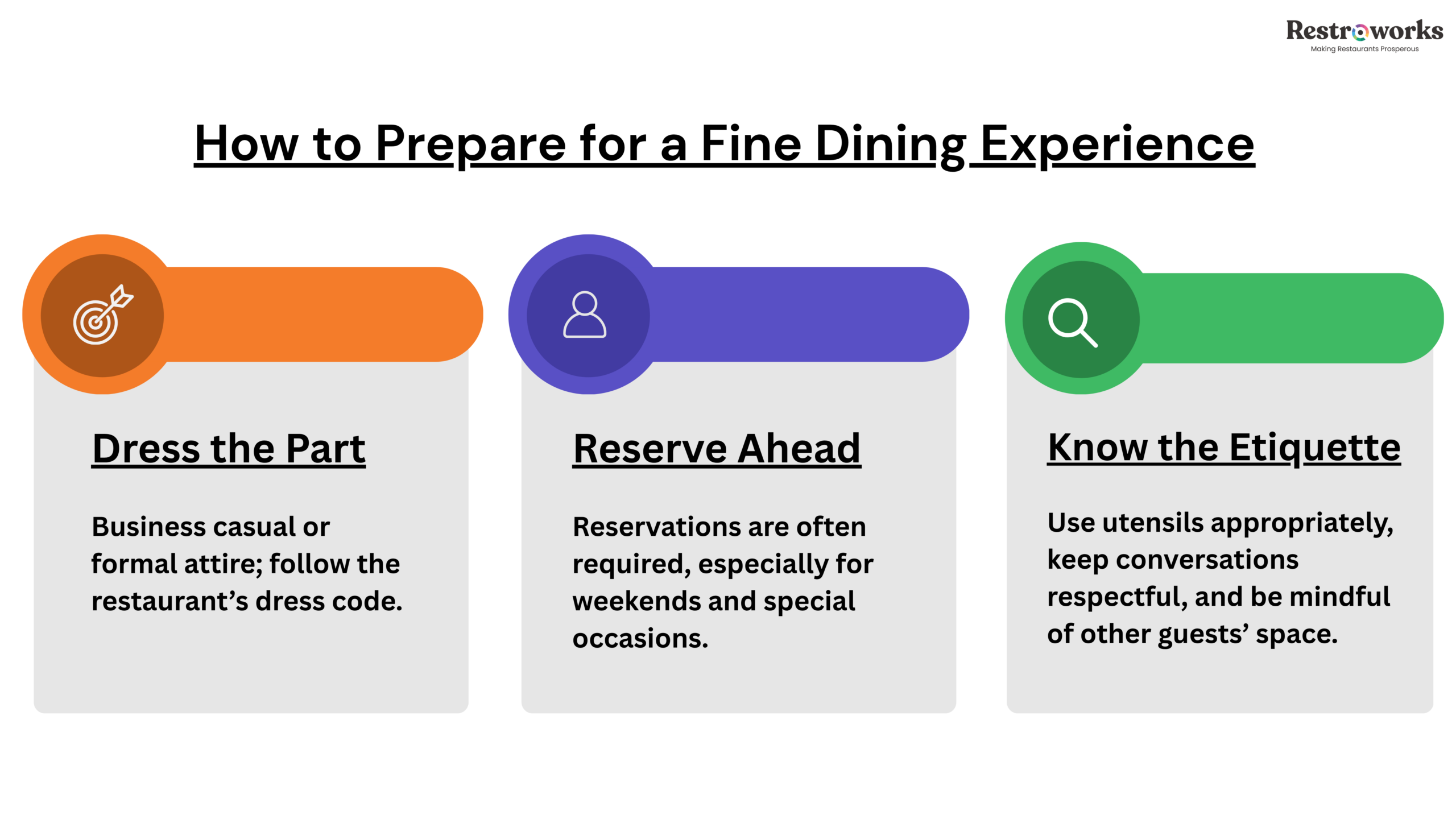
In exchange for the first-class experience, restaurants ask something of guests in return, i.e., to show up well-dressed.
Guests at fine dining restaurants are typically expected to dress in business casual or formal attire, contributing to the sense of occasion and respect for the dining experience. Many fine dining restaurants reinforce this with a clear dress code, i.e., formal attire at the most upscale venues, business casual at others. It signals mutual respect between the restaurant and the guest.
Reservations are often required at fine dining establishments, especially on weekends or for special occasions, to ensure a smooth dining experience. At peak hours and on special evenings, many of these restaurants are booked weeks out. So, you always gotta plan ahead.
Plus, fine dining etiquette includes using utensils correctly, engaging in polite conversation, and respecting other diners’ space to maintain an elegant atmosphere.
|
💡Fact: Fine dining traces its roots to around the 1780s w, when health-conscious bouillon shops evolved into grand “Parisian restaurants like Trois Frères and La Grande Taverne de Londres”. Thus came the first dine-in restaurant in the United States (Delmonico’s). The restaurant contained a 1,000-bottle wine cellar and remains in the same location. The concept evolved further when Swiss hotelier César Ritz partnered with chef Auguste Escoffier at the Grand Hôtel de Monte-Carlo. This became the first restaurant to offer “luxury accommodations and gourmet dining all under one roof”. |
Why Do People Still Choose Fine Dining When Casual Dining Restaurants Are Everywhere?
“Eating is not just a material pleasure. Eating well gives a spectacular joy to life,” says Elsa Schiaparelli
With fast food on every corner and casual restaurants offering comfort at low prices, it’s a valid question – why would you want to pay more?
Because fine dining creates moments.
“A real fine dining experience to me is about providing unique and memorable moments to customers, connecting the personality of the chef,” shares one of the World’s Best Chefs
And as per data, too, 67% of Americans say dining out serves as their social plans, rising to 77% among Millennials.
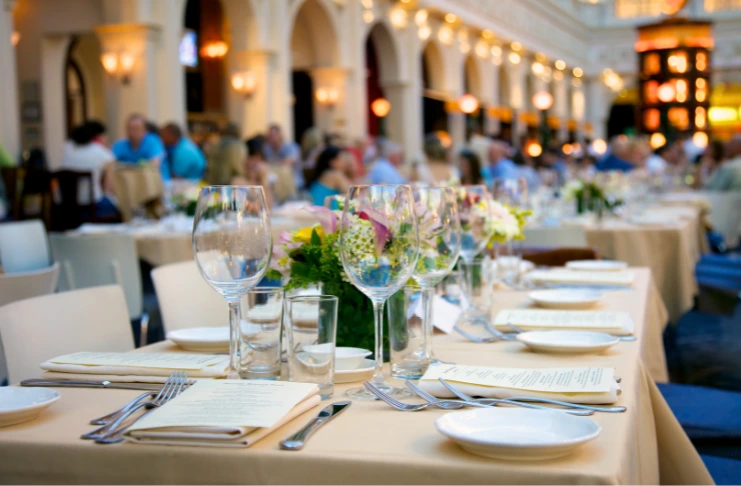
Service, food quality, and elegant ambiance together create a refined atmosphere that no fast-food, casual dining, or even fast-casual experience matches. The exquisite food is just one part. The immersive experience is the point.
It is not about eating. It is about the special occasion it creates and the memory it leaves behind.
As Julia Child said, “People who love to eat are always the best people.” These restaurants exist for exactly those people.