Fast Casual vs Quick Service

Fast Casual vs Quick Service: Key Differences Explained

Home / Blog /  

Fast Casual vs Quick Service: Key Differences Explained

Read summarized version with

The restaurant industry has undergone a tremendous transformation in the last two decades. Today, consumers are presented with more options than ever before, which include fast food establishments and quick service restaurants, as well as fast-casual restaurants, casual dining, and even fine dining. This blog breaks down the key differences between fast casual chains and quick service restaurants from service style to operations, economics, customer expectations, and growth trajectories to help restaurant operators make informed decisions about strategy and model choice.

KEY TAKEAWAYS

  • QSRs win on speed, standardization, and affordable prices, making them built for volume and repeat frequency.
  • Fast casual restaurants sit between fast food and casual dining, offering a better dining experience with more customization and higher-quality ingredients.
  • The biggest operational difference is service style: QSR is optimized for throughput (often drive-thru and streamlined prep), while fast casual handles more made-to-order complexity.
  • QSR protects margins through efficiency and scale, while fast casual relies on higher average tickets justified by fresh ingredients and perceived quality.
  • Both models now compete heavily on convenience through online ordering and digital loyalty, so tech execution is no longer optional; it is a core growth lever.

1. What Are Quick Service Restaurants?

Quick-service restaurants, or fast food, are the quintessential example of speed, convenience, and value. These types of restaurants are built for speed; customers order, pay, and pick up their food quickly.

  • Examples include McDonald’s and Taco Bell, which are known for standardization, efficiency, and cost management.
  • The strength of this business model is its ability to provide low prices, convenience, and regional consistency of menu offerings. It is suited for customers who want a quick meal with little wait time and no attention to ambiance or lingering dining experience. Quick-service restaurants rely heavily on online ordering platforms and delivery services to fuel growth.

2. What Are Fast Casual Restaurants?

Fast-casual restaurants bridge the gap between QSRs and full-service establishments. They combine the convenience of quick service with elements that are more traditionally associated with casual dining.

  • Fast casual brands emphasize fresh ingredients, customization, and often offer a more appealing, comfortable dining space than traditional fast food. 
  • Examples of influential fast-casual chains include Shake Shack and Chipotle, which have used higher-quality food and a brand experience that resonates with consumers seeking something between fast food and sit-down dining. 

What sets these restaurants apart is that customers usually order at a counter but enjoy behind-the-counter food preparation, with better-quality, often customizable orders, and sometimes relaxed seating areas, resembling aspects of casual restaurants but with no traditional table service. 

INDUSTRY INSIGHT

The global fast food and quick service restaurant market continues to show steady growth. Valued at USD 265.86 billion in 2024, it is projected by IMARC Group to reach USD 381.79 billion by 2033, reflecting a CAGR of 3.9% between 2025 and 2033. This trajectory highlights the resilience of QSR and fast casual dining, driven by demand for affordable prices, fresh ingredients, and expanding online ordering channels.

3. A Quick Comparison Table 

Aspect

Quick Service Restaurants (QSRs)

Fast Casual Restaurants

Speed

Lightning-quick service

Quick, but slightly longer prep

Service style

Counter/drive-thru

Counter order, relaxed seating

Food quality

Standardized, convenient

Higher quality, fresh ingredients

Ambience

Functional, bare-bones

Pleasant, modern design

Pricing

Low / value focused

Mid-tier, quality value

Customization

Limited

High

Tech focus

Online ordering + delivery

Online ordering & loyalty apps

Typical brands

Taco Bell, McDonald’s

Shake Shack, Chipotle

4. Service Style & Operations

Quick service restaurants thrive on speed; the term “quick service dining” captures their essence. Order, pay, and receive your meal in minutes. Such service style is optimized to maximize throughput and reduce wait times, often using drive-thru lanes and integrated mobile ordering systems.

Fast casual restaurants, while still quick relative to traditional sit-down casual dining, focus on more thoughtful meal preparation with fresh ingredients and customization during order assembly. The service style emphasizes a blend of convenience with a subtle dining experience that doesn’t compromise quality.

From an operational standpoint, fast casual kitchens handle slightly more complex prep: fresh proteins, customizable sides, and made-to-order items, which demand tighter operational control and staff training compared to the streamlined preparation typical of most QSR menus.

5. Food Quality & Menu Strategy
The key distinction between fast food and fast casual

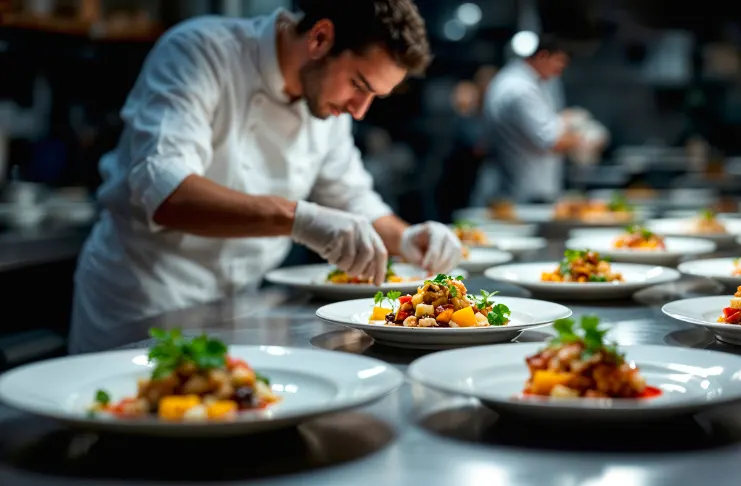
The key distinction between fast food and fast casual often comes down to ingredient perception and menu strategy:

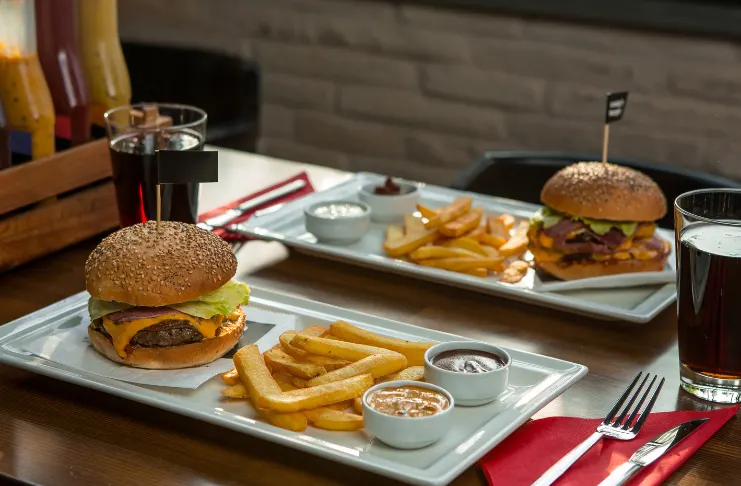
  • Quick-service restaurants focus on standardized menus, often with limited customization options. The priority is consistent taste delivered rapidly at low, affordable prices.
  • Fast-casual restaurants place a premium on high-quality ingredients, from fresher produce to grilled proteins and artisanal offerings, appealing to consumers willing to pay more for perceived quality and transparency.

This distinction matters operationally. Fast-casual menus often command higher average tickets because customers expect premium ingredients and customizable meals. QSR menus, by contrast, are designed to keep costs low and simplify preparation.

6. Technology & Ordering Channels

Both formats leverage technology from online ordering and mobile apps to digital loyalty platforms, but the emphasis often differs.

  • For QSRs, technology is all about speed and throughput: streamlined mobile apps, drive-thru optimization, and delivery integration.
  • Fast casual brands invest in tech that enhances personalization: pre-ordering, loyalty rewards, and customization interfaces, satisfying a demographic that wants convenience plus control over how their food is prepared.

Operators should view tech strategy not just as a fulfillment channel but as a brand differentiator: fast casual customers expect digital engagement that complements their expectations of quality and customization.

7. Pricing and Value Perception

Affordable pricing is the hallmark of the QSR experience; this is why fast food chains like Taco Bell are entry points for price-sensitive consumers around the world. It is this focus on value that makes QSRs attractive for high-frequency, low-value transactions.

Fast casual restaurants, while still relatively affordable, tend to price at a higher level because of the anticipated higher quality of food, more sophisticated supply chain, and more engaging consumer experience. This type of restaurant appeals to consumers who are willing to pay a premium for perceived freshness, variety, and control.

Crucially, both business models can be leveraged for volume growth through pricing and promotion, but the playbook is different: QSR price elasticity is the driver, while fast casual is based on value perception related to product quality.

8. Customer Demographics & Trends
Global consumer patterns show evolving preferences:

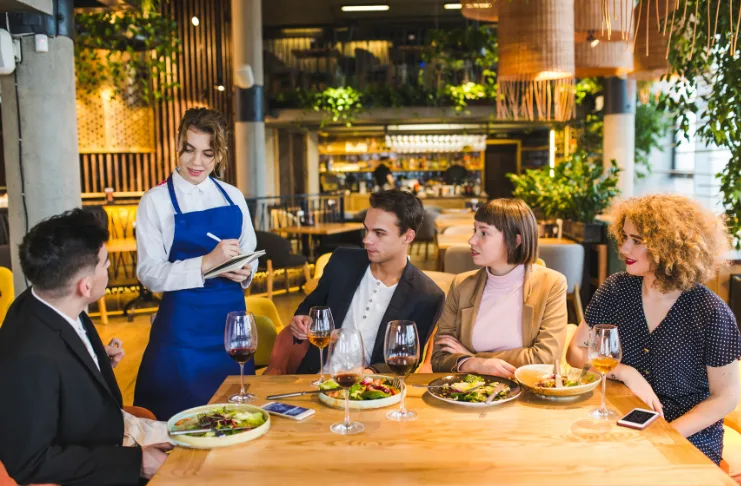
Global consumer patterns show evolving preferences:

  • Recent data indicates that while QSRs still dominate overall volume, visits to fast-casual dining concepts have grown year over year as consumers seek healthier, customizable meals.
  • At the same time, recent trend reports suggest that as economic conditions tighten, some diners trade down from fast casual to more value-oriented QSR choices, underscoring the sensitivity of demand across segments.

This means operators in both segments must remain agile, investing in loyalty programs, flexible menus, and marketing strategies that meet consumers where they are.

9. Ambience & Dining Experience

The restaurant business recognizes experience as a cornerstone of differentiation:

  • Quick service environments prioritize functionality and efficiency. Seating, if offered, is typically minimal and utilitarian.
  • Fast-casual restaurants invest more in design, vibe, and comfort, creating an environment that elevates the casual dining experience without reaching the formality of fine-dining restaurants.

This difference reflects not only expected customer behavior but also impacts staffing, interior design costs, and operational flow.

10. Economics & Unit Performance

From an operator perspective, unit economics vary:

From an operator perspective, unit economics vary:

  • QSRs benefit from high volume and lower per-unit operating costs due to simplified menus and streamlined labor.
  • Fast casual units may operate with higher food and labor costs due to the nature of fresh preparation and additional service components, but can often generate greater per-customer revenue and brand loyalty.

For investors and multi-unit operators, this affects site selection, franchise development, investment returns, and long-term scaling strategy.

11. What This Means for Your Restaurant Strategy

If you’re choosing a model for launch or expansion:

  • Choose quick-service restaurants if your priorities are volume, affordability, and speed in a highly standardized format.
  • Choose fast-casual restaurants if your focus is on quality, brand differentiation, and a superior dining experience centered on fresh ingredients and customization.

Each model has its own path to profitability. QSR leans on efficiency and scale, while fast casual leverages elevated experience and quality perception.

Conclusion

In today’s global landscape, fast casual restaurants and quick service restaurants each serve distinct consumer needs and operate under distinct operational playbooks. While QSRs dominate in speed and affordability, fast casual concepts attract diners with quality, customization, and a modern dining experience. For operators and investors in the restaurant business, understanding these differences from service style to growth trends and economics is critical to making strategic decisions that align with market dynamics and future growth potential.

Frequently Asked Questions

1. Is Chipotle QSR or fast casual?

Chipotle is considered a fast casual restaurant. It blends quick ordering with fresh ingredients, customizable meals, and a modern dining experience, distinguishing itself from traditional quick service restaurants (QSRs) that focus mainly on speed and standardized menus.

Quick service restaurants (QSRs) emphasize speed, affordable prices, and standardized menus, while fast casual restaurants (FCRs) offer higher‑quality food, healthier options, and better ambiance. FCRs bridge the gap between fast food restaurants and casual dining, appealing to quality‑focused consumers.

  • QSR (Quick Service Restaurants): Fast food, counter service, drive‑thru.
  • LSR (Limited Service Restaurants): Includes QSR and fast casual, no full table service.
  • FSR (Full Service Restaurants): Casual dining or fine dining restaurants with table service and broader menus.

A fast casual restaurant combines quick ordering with high-quality, fresh ingredients and a comfortable atmosphere. Examples include Shake Shack and Panera Bread, offering healthier options and a better dining experience than typical fast food restaurants.

Chipotle is firmly in the fast-casual category. Its service style allows for quick ordering but emphasizes fresh ingredients, customization, and healthier options, setting it apart from quick-service dining like McDonald’s or Taco Bell.

Quick service dining refers to fast food restaurants like McDonald’s or Taco Bell, where meals are prepared quickly, priced affordably, and served via counter or drive‑thru. The focus is speed, consistency, and convenience over the dining experience.

Yes, McDonald’s is a classic quick service restaurant (QSR). It prioritizes speed, standardized menus, and affordable prices, making it one of the most recognized fast-food restaurants worldwide and emphasizing convenience and consistency.

A quick service restaurant is defined by fast preparation, counter or drive‑thru service style, standardized menus, and affordable prices. It’s the hallmark of fast food restaurants, designed for convenience and efficiency rather than a premium dining experience.

Chick‑fil‑A is a quick-service restaurant in the fast food category. It emphasizes speed, consistency, and affordable prices, while also highlighting fresh ingredients and customer service, making it stand out among QSR competitors.

Subway is a quick-service restaurant, though it emphasizes fresh ingredients and customization. Its service style is counter‑based, aligning with fast food restaurants, but its focus on healthier options gives it traits of fast casual restaurants.

No, fast casual restaurants differ from quick service restaurants. While both offer speed, fast casual emphasizes high-quality ingredients, fresh ingredients, and better ambiance. QSRs focus on affordable prices and convenience, making them more traditional fast food restaurants.

Newsletter subscription banner

Talk to a restaurant expert today and learn how Restroworks can help your business.

Request Demo >

Share

Discover More Insights to Power Your Journey

Historical Data Usage in Restaurant Forecasting: Improve Demand Predictions

Running a restaurant not only involves preparing delicious meals but also making multiple decisions that require timely, accurate decisions. Estimating…

How Luma Makhlouf Built a Multi-Brand F&B Business on Reputation Alone

The restaurant industry has a way of humbling people who come in from the outside. Luma Makhlouf, a Palestinian-American, finance-trained,…

Forecasting Special Events in Restaurants: Strategies to Predict Demand

Let me shoot you with some unpredictability: you just (right at the very moment) found out that there will be…

Restaurant Forecasting Software Features: Must-Have Tools Explained

A lot of restaurant forecasting still happens manually. You track past sales, scan spreadsheets, and rely on memory to plan…

Leveraging POS Data for Restaurant Forecasting: Improve Demand Accuracy

For a restaurant using a POS system, you’re probably already sitting on a lot of data. These advanced systems track…

Improving Accuracy in Restaurant Forecasting: Strategies & Best Practices

You plan your week based on expected demand. Expected covers, inventory requirements, and staffing levels are all aligned with the…

Join. Learn. Grow.

Sign up to receive the latest hospitality insights and stories straight to your inbox

Streamline your operations with Restroworks