
Best Cloud Kitchen Software in UAE for Smarter, Faster Operations 

Best Cloud Kitchen Software in UAE for Smarter, Faster Operations 

Home / Blog /
Best Cloud Kitchen Software in UAE for Smarter, Faster Operations 

Read summarized version with

What is the best cloud kitchen software in UAE? Well, that’s subjective. If I were running a cloud kitchen or kitchens in the UAE, I’d look for software that, apart from all the relevant features (like POS, inventory, accounting, etc.), also helps me – 

  1. Pull orders from every major delivery platform I use (Talabat, Deliveroo, Careem, Noon, Keeta, etc.) because aggregators handle about three-quarters of UAE food delivery orders.
  2. Issue VAT-ready invoices
  3. Support both Arabic and English
  4. Tell me exactly what each of my brands is earning after commissions

And of course, help me stay compliant with all the rules and regulations. 

So, what all software actually fits these criteria? To find out, I went through G2, Capterra, GetApp, fired tickets on Run The Shift, read other similar listicles, and yes, browsed through LinkedIn to see what people say about a particular product. 

After intense research, I shortlisted 6 tools from the list of 18 I initially started with. Here they are:

My Top Picks

Best Overall – Restroworks. It works really well for multi-brand, multi-location cloud kitchens, offers integrations with all 5 major UAE aggregators, + You get a restaurant POS, KDS, inventory and recipe management, brand-level controls, NEO (AI-powered middleware), and more – all in one platform.

Best UAE-Built Platform for Delivery-First Kitchens – Grubtech. Its middleware, “gOnline,” centralizes platforms, menus, and POS integrations, so every order keeps flowing smoothly.

Best for Kitchens That Own Their Delivery Fleet – Sapaad. It helps with rider assignment, route planning, and offers a commission-free website per brand.

Best for Budget-Conscious Kitchens – Foodics. Its UAE plans start at AED 199 per month, with inventory, delivery aggregators, and cloud-kitchen multi-brand capabilities available as add-ons. 

Best for AI-Powered Delivery Operations – Syrve. It offers AI-powered delivery management through its Captain AI integration that helps with automated dispatching, route optimization, driver coordination, and support for multiple brands and fleets. 

Best for Enterprise Integration Breadth – Deliverect. This software acts as an integration layer between your POS and delivery channels, with 1000+ integrations available.

What’s Changing in the UAE Cloud Kitchen Market in 2026 and Beyond?

In 2025, the UAE’s cloud kitchen market was worth about $430 million, and it is projected to reach $1,082.6 million by 2032, growing at a CAGR of 14.1%. This growth will, of course, bring in intense competition, and that will make it all the more important for operators like you to have full visibility into your food costs, inventory, sales, labor, and overall profitability. 

Moreover, because demand is tilting towards delivery, order management has to be built for food delivery first. If you go by the data, in H1 2026, delivery orders rose 15.2% while dine-in orders fell 10.5%, and delivery’s share of all orders climbed from 25.4% to 30.5%. Yet the average delivery ticket was Dh76.97 against Dh115.81 for dine-in, which means every commission and wasted ingredient can take a big chunk out of your margins.

But can you do anything about the commissions (which are btw 25-30% per order), though? Aggregators process roughly 75% of food delivery orders in the UAE, with restaurant-owned channels handling the rest. And the field keeps growing – Keeta launched in Dubai on 27 September 2025 and reached all seven emirates within 90 days. That brings you to at least five platforms to sync menus, prices, and stock across, plus your own online ordering.

There is also the financial side to it. Every tax invoice needs 5% VAT and your TRN, while mandatory e-invoicing will go live on January 1, 2027, for businesses with AED 50+ million in revenue, and on July 1, 2027, for the rest. For cloud kitchens, the immediate relevance will be on the B2B side, such as invoices exchanged with suppliers, aggregators, and other businesses, rather than every customer receipt. But again, that still means your POS should be able to connect with an accounting system and, where required, an accredited e-invoicing provider, if not already.

Pull all this together, and it is clear that whatever cloud kitchen software you invest in must be able to – 

  • Centralize your marketplace orders
  • Keep menus and prices synchronized
  • Track food and inventory costs
  • Show profitability by brand and channel
  • Support direct ordering
  • Connect your operational data with accounting and compliance workflows

That’s the benchmark I have used as well when comparing these software options, and here’s what I found:

6 Best POS Software for Cloud Kitchens in the UAE

UAE cloud kitchen software compared by best use case, platform capabilities, UAE aggregator integrations, Arabic and VAT support, multi-brand functionality, kitchen and inventory capabilities, user ratings, and pricing.
Software Best For What You're Buying UAE Aggregators Arabic & VAT Multi-Brand Kitchen & Inventory User Ratings Pricing
Restroworks Multi-brand, multi-location cloud kitchen chains Full platform: restaurant POS software + KDS + inventory + analytics + NEO (AI-powered digital ordering middleware) Talabat, Deliveroo, Careem, Noon, Keeta + 500+ integrations, with an Open API for anything beyond the Restroworks Marketplace Arabic and English; VAT/TRN-compliant invoices Brand-level menus, recipes and P&L in shared kitchens Native kitchen display routing, yield-based recipe costing, AI invoice matching G2: 4.8, Capterra: 4.9 Custom quote
Grubtech Delivery-first and multi-brand cloud kitchens Modular platform: gOnline (orders), gKitchen (KDS), gDispatch (riders), gData (analytics), gPicker; works with your POS Talabat, Careem, Deliveroo, Noon, Keeta + 100+ platforms Invoices come from your POS Yes gKitchen KDS and inventory are available as separate capabilities G2: 4.5
Capterra: -
Not published
Sapaad Kitchens running their own riders Cloud POS software with add-ons Talabat, Deliveroo, Noon, Careem (Sapaad Connect add-on) Arabic and English app Multiple brands in one system; website per brand Centralized KDS; real-time stock tracking G2: 4.6, Capterra: 4.4 From $39.99/outlet/month on a 2-year plan
Foodics Budget-led kitchens Cloud POS software with app marketplace Aggregators are included in the Advanced plan Arabic and English; 24/7 bilingual support Paid add-on Kitchen display screen; inventory management from Basic plan G2: 4.6, Capterra: 4.0 AED 199–556/month, billed annually
Syrve Multi-kitchen delivery networks Restaurant POS + delivery and fleet management (Captain AI) 50+ third-party integrations Yes, multilingual support available. You can print out a VAT invoice in Syrve POS only for one closed order while clocked in or at the time of payment. Supported Prep tracking, AI forecasting, automated purchasing G2: - Capterra: - From AED 250/month per till, ex VAT
Deliverect Enterprise brands needing global integration breadth Integration layer between POS and channels Talabat, Noon, Careem, Keeta + 1,000+ integrations Invoices come from your POS Supported Needs restaurant POS software underneath G2: 2.3 Capterra: 2.5 Custom quote

*Ratings are based on G2 and Capterra data, as of November 2026. Plus, review volumes vary across platforms: Grubtech has 2 G2 reviews and none on Capterra; Sapaad has 13 on G2 and 38 on Capterra; Foodics has 49 and 7, respectively; Deliverect has 6 on G2 and 11 on Capterra; and Syrve has no Capterra reviews.*

1. Restroworks

Restroworks - Best cloud kitchen software in the UAE

Restroworks is a hardware-agnostic restaurant management platform used by 30,000+ restaurants in 52+ countries. Its Middle East clientele includes Zaatar w Zeit, Tresind, Sushi Art, Nando’s, Chillis, Caribou Coffee, Cafe Bateel, Subway, Cravia, and Rosa’s Thai, and it has an office in DIFC, Dubai.

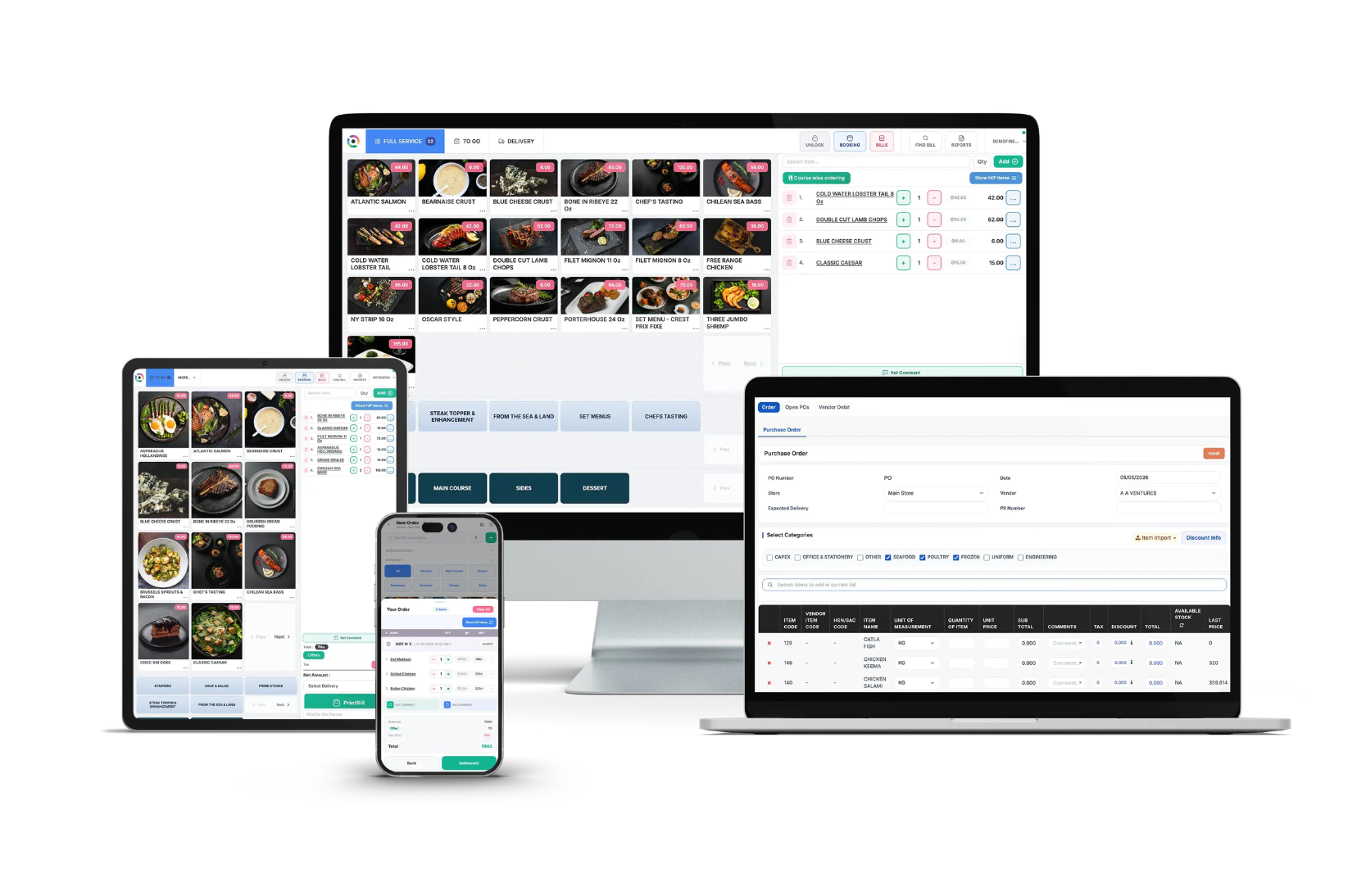
It works on two layers. The OS layer is the restaurant POS software, kitchen display, inventory, and reporting that runs restaurant operations inside the kitchen. The NEO layer is native middleware that manages your menus, prices, and orders across platforms like Talabat, Deliveroo, Careem, Noon, Keeta, your website, kiosks, and QR menus from one centralized dashboard.

What Stands Out: NEO comes from the same company as the POS but runs independently of it, so if the POS goes down, NEO keeps running, menus stay live, and delivery orders keep arriving.

Also, unlike third-party middleware, NEO reads the same menu and pricing data as the restaurant POS, so there’s nothing to reconcile later.

Core Features

  • Native UAE aggregators: Orders from all five major platforms land in the POS and KDS, menu updates sync back, and auto-acceptance keeps acceptance rates high.
  • Per-platform pricing and stock: Price one item differently on Talabat and Careem from one screen, and 86 an item once to pull it from every channel, a cluster of outlets, or one platform.
  • Brand-level P&L: Purchases, consumption, recipes, and costs are tracked per brand, even when brands share ingredients and suppliers. Here, you can also see what each brand and sales channel actually brings in after aggregator commissions.
  • Commission-free direct ordering: With RestroWEB and RestroAPP, restaurants can take orders directly through their own branded website and app, without having to give a cut to third-party aggregators. 
  • Kitchen display systems and forecasting: Tickets route to the right station and bill to the right brand, while AI forecasting sequences production across brands.
  • Real-time inventory management: Yield-based recipe costing, batch reconciliation for bulk prep, COGS and variance reports, and AI invoice matching against POs.
  • Arabic, VAT and approvals: Arabic and English menus and receipts, VAT/TRN-compliant invoices, role-based approvals and scheduled menus.
  • Remote monitoring: The Cockpit app compares brands and outlet clusters with real-time analytics on mobile devices, backed by 500+ third-party integrations.

Pros

  • POS and middleware are from the same vendor but run independently, so there’s no need to depend on a third vendor for anything + one failure doesn’t take down the other. 
  • Sales data, stock, costs, and delivery performance sit in one place for real-time analytics.
  • Hardware-agnostic, so existing terminals stay.
  • 500+ integrations across delivery, payments, accounting, and loyalty
  • Offline operation with automatic data syncing
  • Highest rating and largest review base on this list, with 24/7 support.

Cons

  • NEO’s AI assistant, which helps you make menu and price changes using plain-language prompts, is in beta, as are revert and menu versioning.
  • Built for multi-location restaurants and multi-brand operators; a single one-brand kitchen may pay for more than it uses.

Avoid if: You run one cloud kitchen with one brand and only need aggregator consolidation.

2. Grubtech
Grubtech - Best Cloud Kitchen Software in UAE
Source

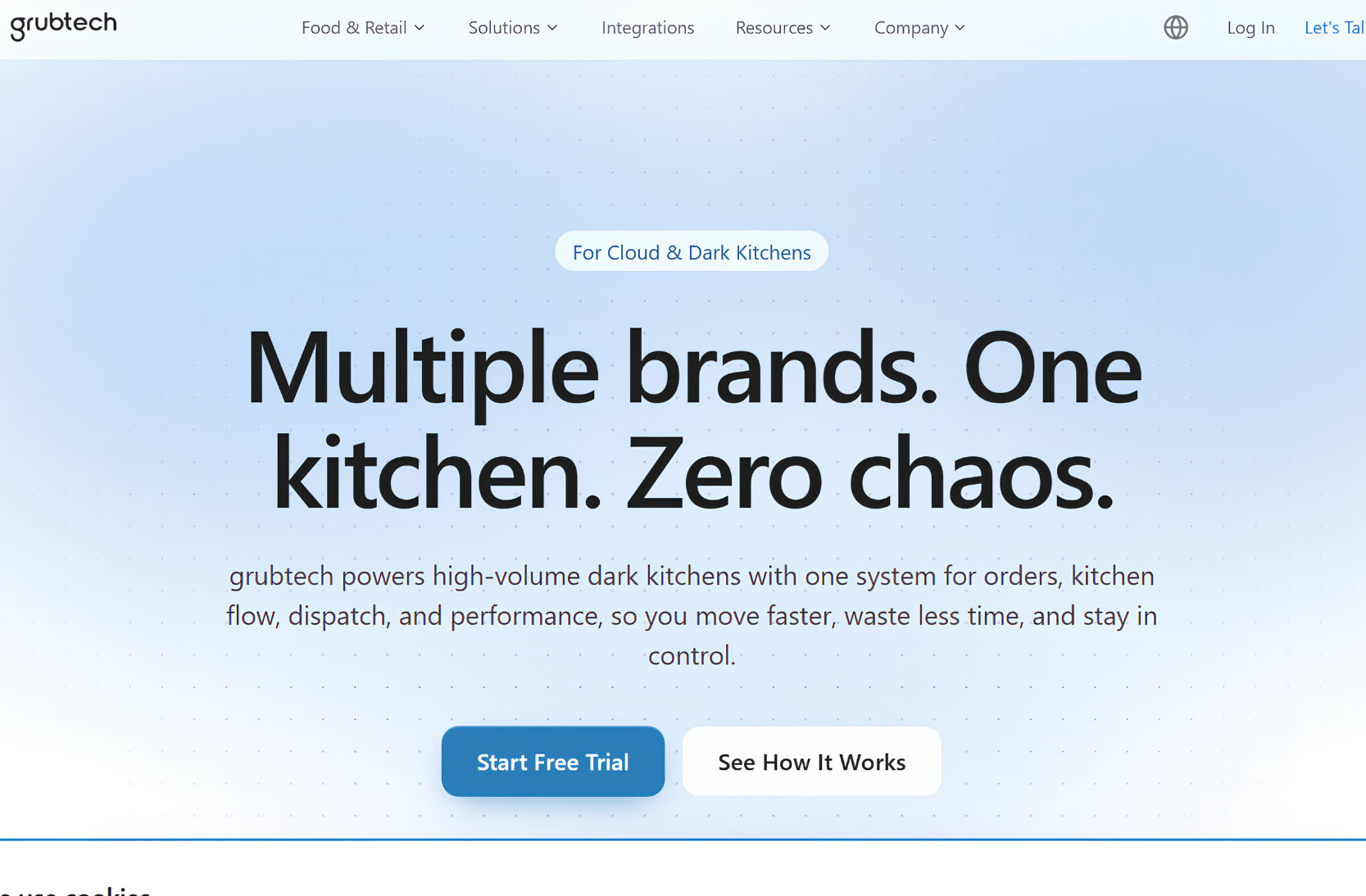
Grubtech was founded in Dubai in 2019 and serves customers across 28 markets in the Middle East and Europe. It’s a modular platform built around delivery-first kitchens: gOnline for orders and menus, gKitchen for the kitchen display, gDispatch for riders, gData for analytics, plus gPicker. All of this works alongside your existing POS. 

What Stands Out: Its dark kitchen setup lets you run unlimited virtual restaurants from one dashboard, with performance tracked by brand and orders routed to the right station.

Core Features

  • Order management dashboard: Live order and dispatch tracking, with automated routing to the kitchen.
  • Menu sync: Update once across platforms, brands, and locations; snooze items when stock runs out.
  • Dynamic pricing and promotions across channels.
  • Analytics: Menu performance, cancellation reports, and peak-hour patterns.

Pros

  • Built in Dubai around the region’s aggregator mix.
  • Reviewers call it easy to use.

Cons

  • Thin review data: two G2 reviews, none on Capterra.
  • Inventory is listed but not detailed, and recipe costing isn’t mentioned; you still need your own POS.

Avoid if: You want one vendor for POS, kitchen, and inventory.

3. Sapaad
Sapaad - Best for Kitchens That Own Their Delivery Fleet
Source

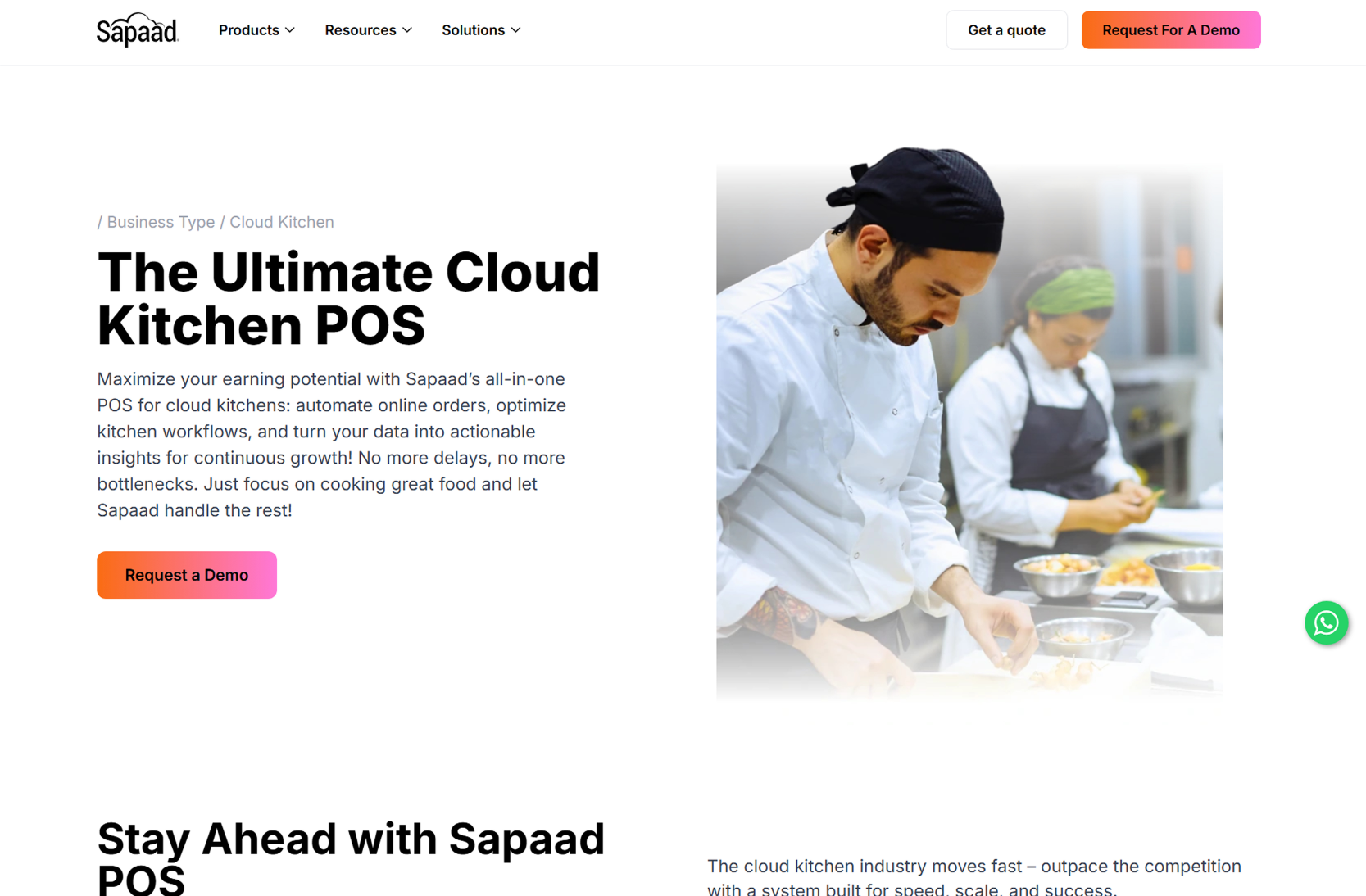
Sapaad is cloud POS software used by 15,000+ restaurants, headquartered in Singapore with a Dubai office.

What Stands Out: Its Home Delivery Manager assigns riders, optimizes routes, and tracks deliveries in real time, which is very useful for cloud kitchens running part of their fleet in-house.

Core Features

  • Multi-brand management with a centralized kitchen display for orders across virtual brands.
  • Sapaad Connect: Talabat, Deliveroo, Noon, and Careem orders flow into the POS; available to UAE customers. 
  • Sapaad.Online: A commission-free online ordering website per brand.
  • Stock alerts and CRM: Real-time inventory tracking, plus customer management tools and customer data for loyalty programs.

Pros

  • Easy to learn and set up.
  • Responsive, hands-on support.

Cons

  • Custom reports are hard to build.
  • Offline mode slows during outages, and adding branches gets expensive.

Avoid if: You need brand-level costing across several cloud kitchens.

4. Foodics
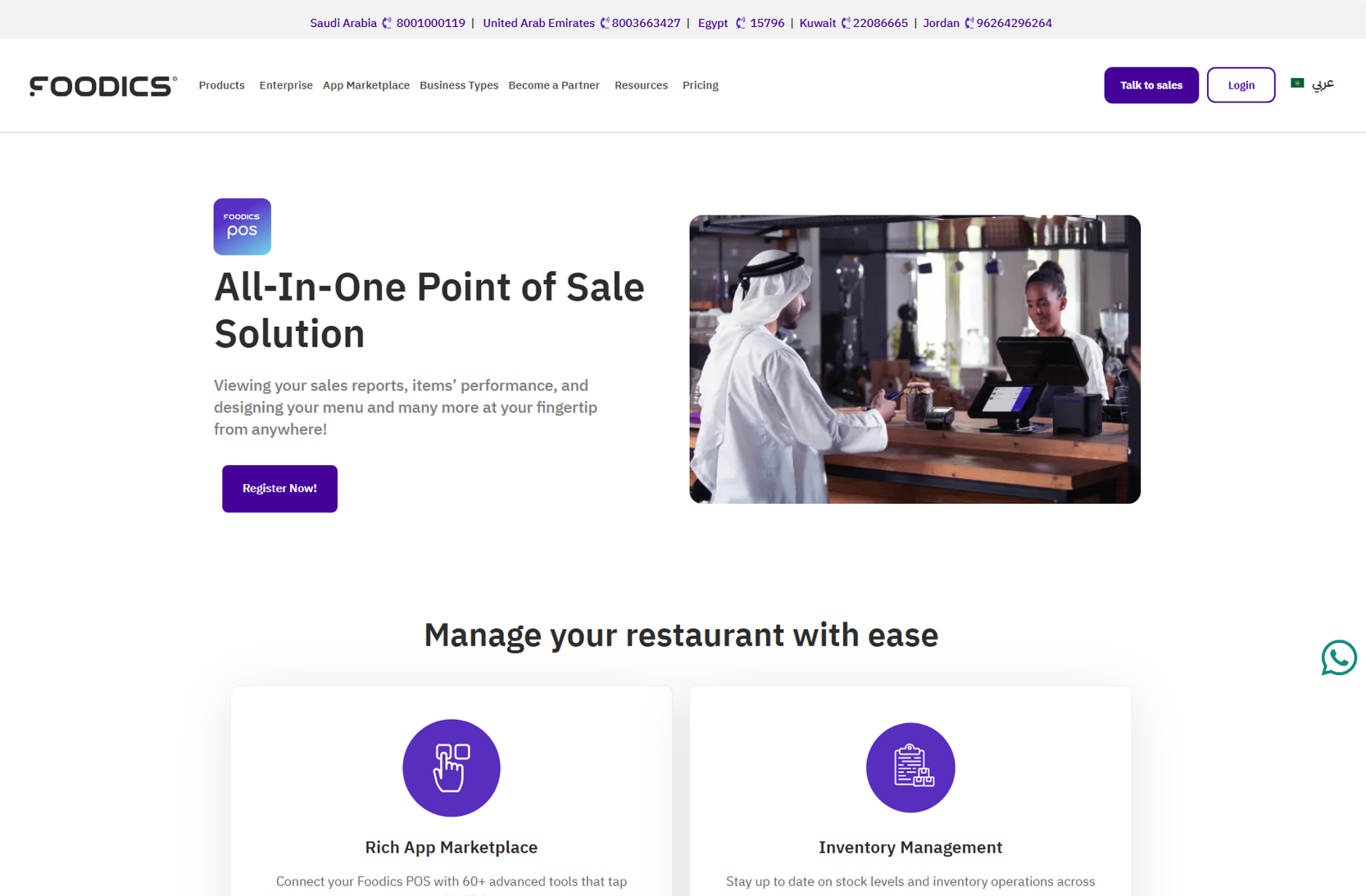
Foodics - Best for Budget-Conscious Kitchens
Source

Foodics is Saudi-born cloud point-of-sale software used by 22,000+ restaurants, cafés and food trucks, offering a kitchen display screen, cloud call center and 60+ marketplace tools in the UAE.

What Stands Out: It publishes tiered UAE plans in AED, so you can budget before a sales call.

Core Features

  • Multi-brand cloud kitchen add-on for separate brand menus in one kitchen.
  • Marketplace: 60+ tools for delivery, accounting, BI, ERP, and loyalty.
  • Inventory management across branches in one dashboard.
  • Cloud call center for customer management: phone orders, customer details, and branch routing.

Pros

  • Quick to set up and understand.
  • Runs restaurant operations in one app.

Cons

  • Support tickets can take a long time to resolve.
  • Some third-party integrations were delayed or failed for users.

Avoid if: You want multi-brand and aggregators on the entry plan; multi-brand is a paid add-on on Basic and Advanced, and aggregators come only with Advanced.

5. Syrve
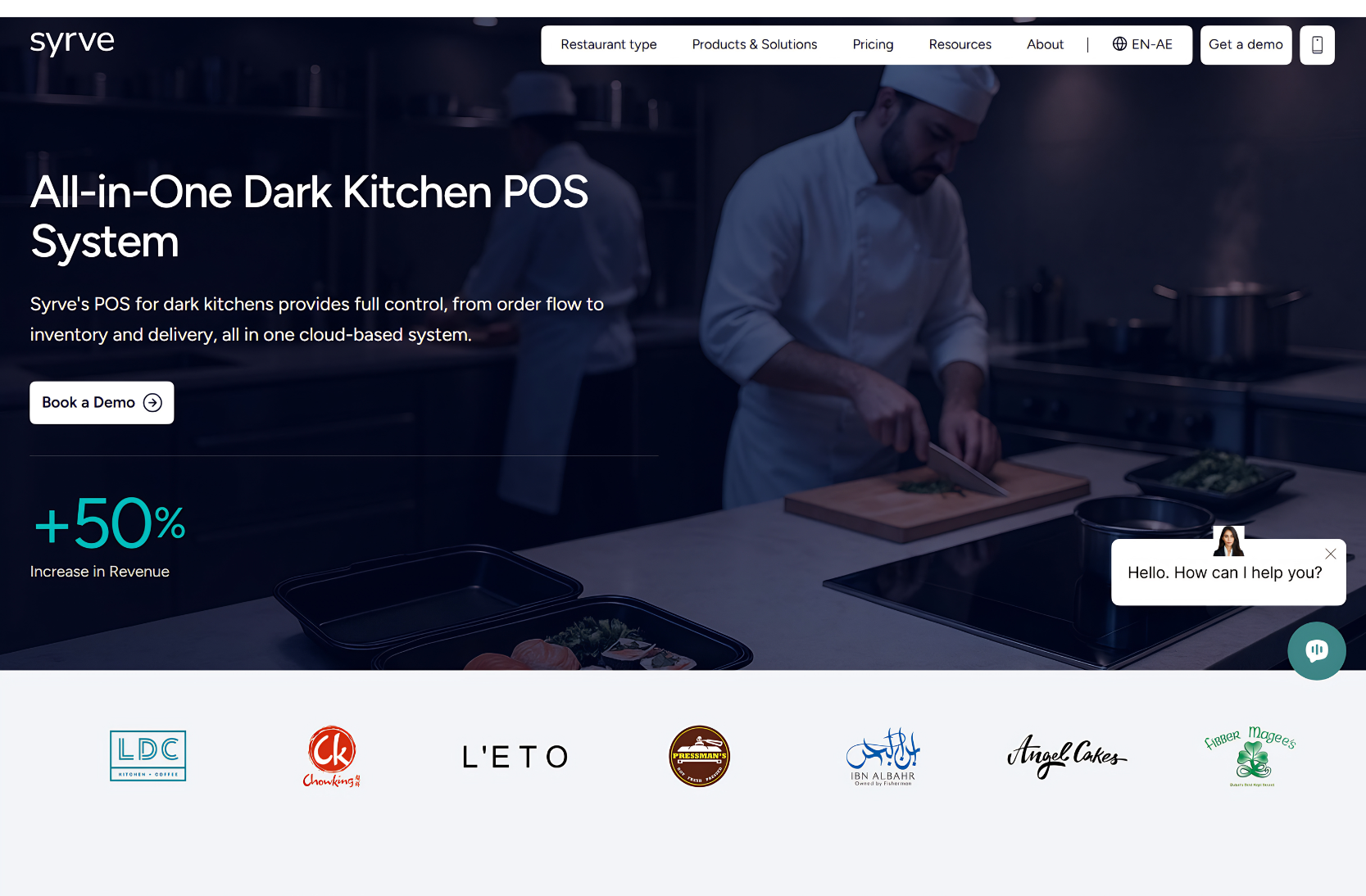
Best for AI-Powered Delivery Operations - Syrve
Source

Syrve is cloud point-of-sale software used by 10,000+ businesses in 50+ countries, with a MENA operation. It also serves food trucks, pizzerias, and quick-service restaurants, and its dark kitchen product covers order flow, delivery, and forecasting across restaurant operations.

What Stands Out: Syrve can send orders to the kitchen with capacity rather than the nearest one, which comes in handy when you’re running several cloud kitchens in one city.

Core Features

  • Unified intake for website, aggregator, and phone orders.
  • Fleet management with route guidance and driver tracking.
  • Kitchen tracking: Prep status updated second by second, with live availability pushed to the web.
  • AI forecasting for staffing, prep, and purchasing.

Pros

  • Trustpilot reviewers praise responsive support.
  • Combines restaurant POS, delivery, and staff scheduling.

Cons

  • No G2 or Capterra reviews.
  • Syrve doesn’t publish its UAE aggregators list, so I’d recommend you double-check if it actually offers integrations with Talabat, Careem, Noon, and Keeta during the demo. 

Avoid if: You need native links to Careem, Noon, and Keeta confirmed upfront.

6. Deliverect
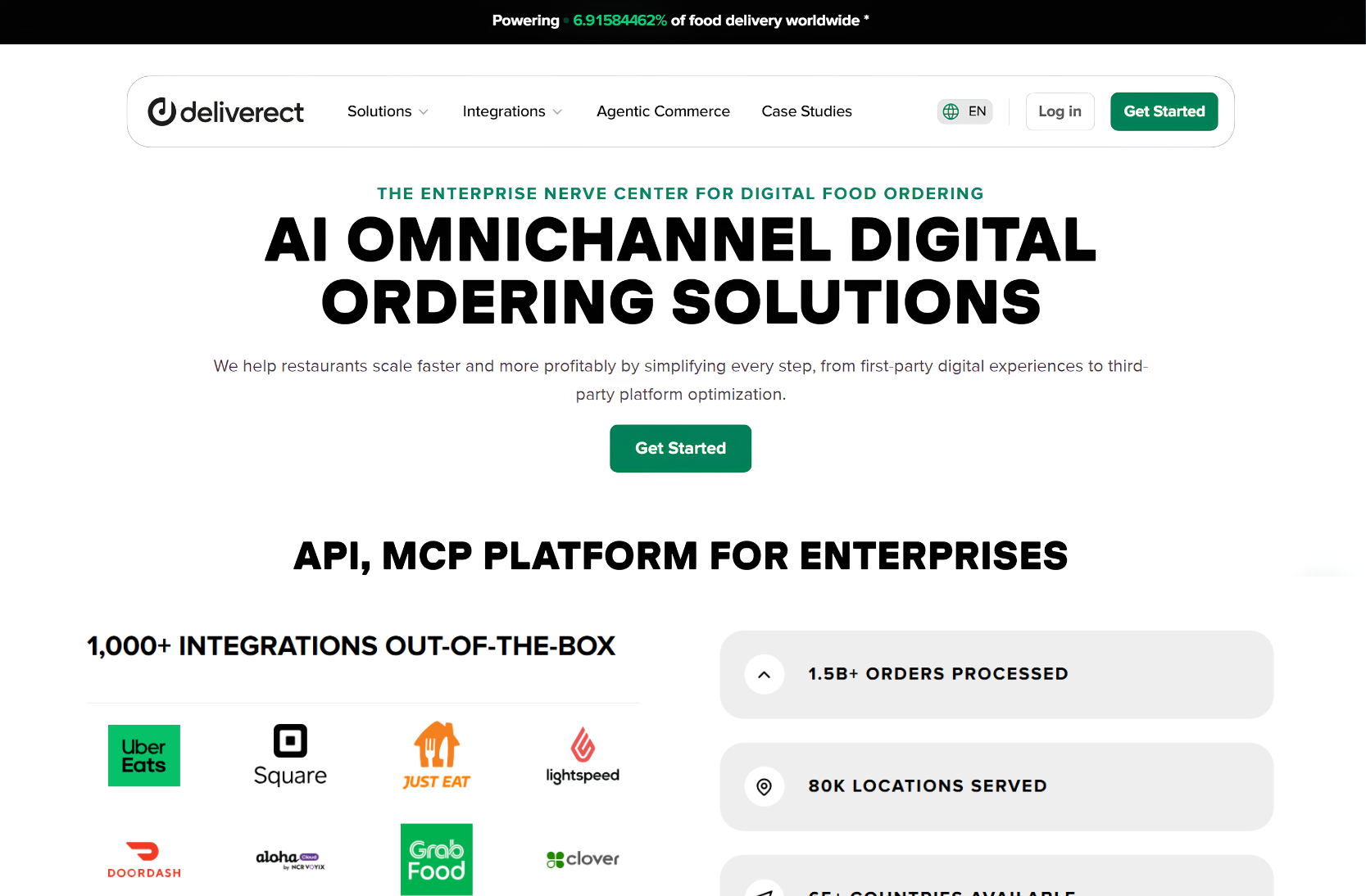
Deliverect - Bridge between your POS and third-party aggregators
Source

Deliverect is a Belgium-headquartered integration platform with 1,000+ integrations across 65+ countries. Regionally, it has partnered with Talabat and integrates with Noon, Careem, and Keeta.

What Stands Out: Integration breadth for brands running existing POS systems across several countries.

Core Features

  • Marketplace management: Menus, real-time stock sync, dynamic pricing, and A/B testing in one dashboard.
  • Deliverect Direct: Branded web, app, and QR code ordering.
  • Dispatch: Spreads orders across owned and third-party fleets.

Pros

  • Reviewers find it useful for integrating several food delivery platforms.
  • Menu management and reports are easy day-to-day.

Cons

  • Low ratings on small samples, citing support and cancellation.
  • Needs restaurant POS software underneath.

Avoid if: You don’t already have a POS.

How to Choose the Right POS Software for Food Delivery and Online Ordering

When you’re choosing a platform, make sure you check:

  • Native or middleware? Ask the vendor to 86 an item across Talabat, Careem, and Keeta live.
  • Offline behavior: If the POS drops, do online orders still arrive, and where?
  • Brand-level costs: Shared ingredients shouldn’t hide each brand’s food cost.
  • Arabic beyond item names: Check kitchen tickets, receipts, and QR menus, plus VAT/TRN invoices.
  • E-invoicing: Which accredited providers connect before the 2027 deadlines?
  • True price: Multi-brand, aggregator, and kitchen display systems add-ons can double a quoted base price.

Why a Fine Dining POS Falls Short in a Ghost Kitchen

Mind that not every restaurant POS will work for your cloud kitchen operations. For example, if you have a POS that’s specifically built for fine dining, it will center on table management, coursing, and table service. A ghost kitchen, however, has no tables; it has aggregators, several brands, and a rider waiting. In this case, checking if the platform offers kitchen routing by brand, per-platform pricing, and commission-aware reporting should be your priority.

KEY TAKEAWAYS

  • Every cloud kitchen software in the UAE on this list takes delivery orders. What they differ in, though, is how many UAE aggregators connect natively, how clearly they show each brand’s cost, and what happens when something goes offline. 
  • Foodics and Sapaad suit single cloud kitchens watching costs. Grubtech suits delivery-first operators who want order, kitchen, and rider modules on top of their POS; Deliverect suits enterprise brands that need global integration breadth. 
  • For cloud kitchens running multiple brands across multiple locations, Restroworks covers the most ground: restaurant POS software, kitchen display, inventory, and NEO middleware in one platform, with all major UAE aggregators native, in Arabic and English.

Frequently Asked Questions

1. Which Platform Is Best for Cloud Kitchen?

The best platform for a cloud kitchen depends on that kitchen’s scale. For multi-brand, multi-location cloud kitchens in the UAE, Restroworks fits best, combining restaurant POS software, KDS, brand-level costing, and native integrations with all major aggregators. Smaller cloud kitchens can get on with Foodics or Sapaad; operators keeping their POS can add Grubtech or Deliverect.

2. Is Cloud Kitchen Allowed in the UAE?

Yes. Cloud kitchens are allowed in the UAE, but the licensing and food-safety requirements depend on the emirate where you operate. In Dubai, for example, a delivery-only kitchen needs a trade license with the correct food activity (from the Department of Economy and Tourism or a free zone) plus a Dubai Municipality food establishment permit, which involves layout approval, inspection, and FoodWatch registration. Again, rules vary by emirate, so check locally.

3. Which ERP Is Mostly Used in UAE?

SAP, Oracle NetSuite, and Microsoft Dynamics 365 are common among larger UAE food businesses, while Odoo and TallyPrime are popular with SMEs. For cloud kitchens, what matters is whether your POS software connects to your ERP; Restroworks integrates with SAP, Oracle NetSuite, Microsoft Dynamics, Zoho, and Xero.

4. Which Food App Is Best in the UAE?

Talabat is the largest food delivery app in the UAE, with Deliveroo, Careem, Noon, and Keeta also widely used.

Newsletter subscription banner

Talk to a restaurant expert today and learn how Restroworks can help your business.

Request Demo >

Share

Discover More Insights to Power Your Journey

Best Cloud Kitchen Software in UAE for Smarter, Faster Operations 

What is the best cloud kitchen software in UAE? Well, that’s subjective. If I were running a cloud kitchen or…

POS
Best restaurant POS software in Dubai
Best Restaurant POS Software in Dubai for Faster, Smarter Operations

The best restaurant POS software in Dubai is the one that handles UAE VAT, Arabic and English, and every delivery…

The Other Side of the Table: Tyler Marpes on Technology, Trust, and Restaurant Growth

Few people in restaurant technology get to see the industry from both sides of the table. Tyler Marpes, Vice President…

Rethinking Restaurant IT: Todd Kaufman on Technology as a Business Driver

Some of the most influential leaders in restaurant technology never set out to work in it, and Todd Kaufman, Chief…

POS
Best cloud-based restaurant POS
9 Best Cloud-Based Restaurant POS Systems in 2026

The best cloud-based restaurant POS system depends on how many locations you operate and how fast you plan to scale. Today,…

7 Best Cloud Kitchen Management Software in 2026

Whichever platform I (or anyone, for that matter) proclaim as the best cloud kitchen management software out there depends on…

Join. Learn. Grow.

Sign up to receive the latest hospitality insights and stories straight to your inbox

Streamline your operations with Restroworks