
How Multiple Brands Operate From One Kitchen in Practice
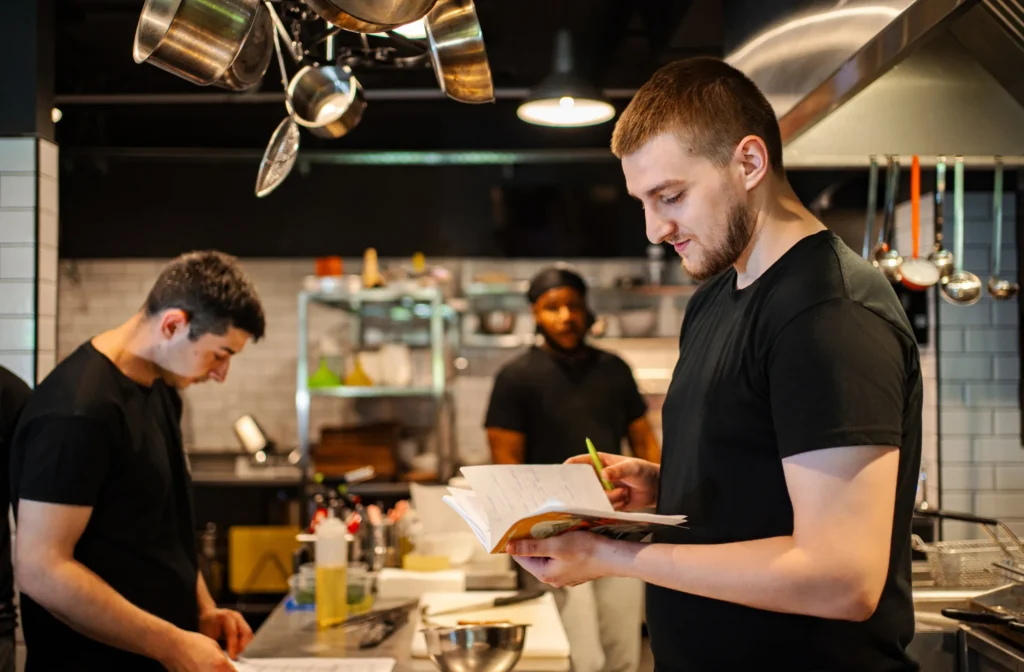
A typical day starts before the lunch rush. The team batch-cooks shared components: rice, sauces, marinades, dough.
A cross-trained team improves flexibility, shifting between brands as orders arrive. Different brands require distinct cook times, so the expediter sequences tickets to keep all brands moving.
There are two models. In a unified setup, a single operator owns all brands. In a segmented ghost kitchen facility, several operators run multiple brands from shared space independently.
Here is how orders flow through the kitchen:
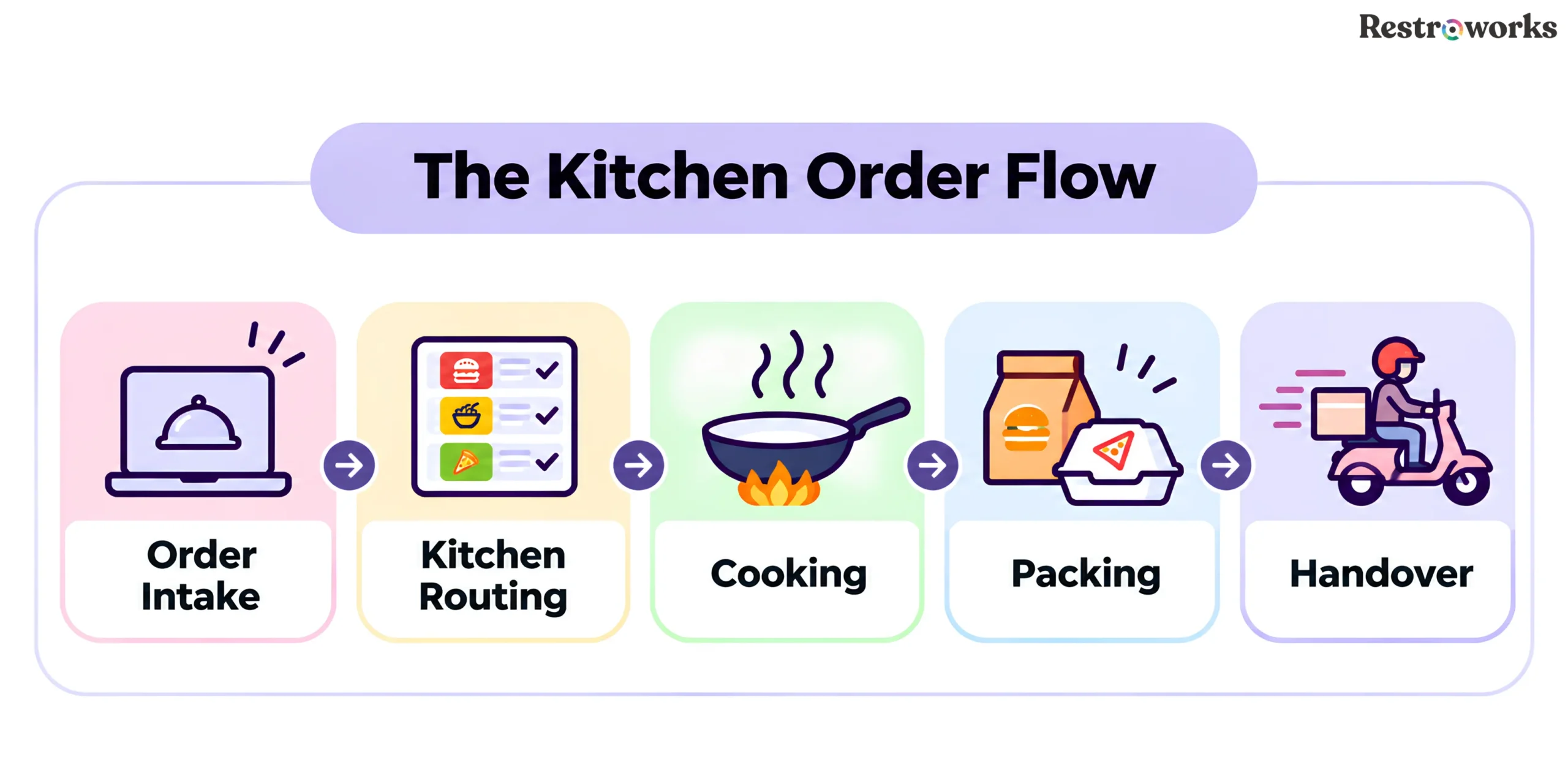
- Order intake: Aggregator apps feed orders into a unified dashboard; centralized order management reduces errors and enhances customer satisfaction
- Kitchen routing: Each order is tagged by brand and assigned to a station (grill, wok, cold prep)
- Cooking: Shared bases are prepped in bulk; brand-specific finishing happens per ticket
- Packing: Each brand has separate packaging and labeling to avoid mix-ups
- Handover: Packaged orders go to delivery riders on a timed schedule
Shared ingredients lower costs because one batch of a base serves several menus, which cuts duplicate purchasing and spoilage. One tomato gravy base can serve both a North Indian curry brand and a fusion wraps brand; the only difference is finishing spices and packaging.
How Many Brands Can One Kitchen Run?
One kitchen can serve multiple brands simultaneously in theory, but documented failures show how quickly scale and quality problems compound.
REEF Technology’s 2022 restructuring is one of the best-documented scale failures in the US ghost kitchen industry. In January 2022, REEF temporarily ceased operations at 95 underperforming ghost kitchens, nearly one-third of its ghost kitchens, most of them running its in-house virtual brands. REEF’s own model assumed each vessel could host four to six brands; the closures reflected underperformance at scale, not a brand-count cap per site.
Virtual Dining Concepts (VDC), whose MrBeast Burger orders were fulfilled by about 1,700 restaurants, shows what quality control failure looks like when brand identity is separated from execution. VDC’s model relied on third-party restaurants producing orders to brand spec; MrBeast’s 2023 federal lawsuit alleged a lack of quality control across that network, citing reviews that called the food “disgusting,” and alleging that orders were consistently late and food was often delivered in unmarked and unbranded packaging. VDC called the suit meritless and countersued.
As a rule of thumb, the practical ceiling for most independent US operators is 3 to 5 brands. Beyond that, separate prep timelines and distinct packaging SKUs outpace the revenue gain per storefront.
Brand Count and Cannibalization
As a planning rule of thumb, kitchens of 800–1,200 sq ft suit 2 to 3 brands, and commissary-style kitchens of 2,500+ sq ft with dedicated stations can support 5 to 8. Treat these as starting ranges, not limits: station layout and ingredient overlap matter more than square footage.
Brand cannibalization is a related risk. When two brands compete for the same customer segment and delivery radius, a customer splits spend across both; net revenue stays flat while operational complexity doubles.
Segment brands by meal occasion, different cuisines, or price tier to avoid cannibalization.
Brand-Count Decision Framework
Use this sizing framework before adding a brand:
If/then decision rule: If your kitchen is under 1,200 sq ft AND ingredient overlap is below 60%, add a brand only if you can stagger its peak service window by at least two hours from existing brands. If ingredient overlap is 60%+, and all existing brands pass the KPI expansion thresholds (order accuracy above 95%, prep time under 8 minutes), adding one more brand is low risk. If any existing brand is below 4.3 stars on delivery apps, fix it before launching a new concept: Uber Eats announced in 2023 that it would remove virtual brands whose average rating drops below 4.3 stars, and a new storefront competing for the same kitchen capacity will push ratings lower on both.
Failure Modes: Why Multi-Brand Cloud Kitchens Fail
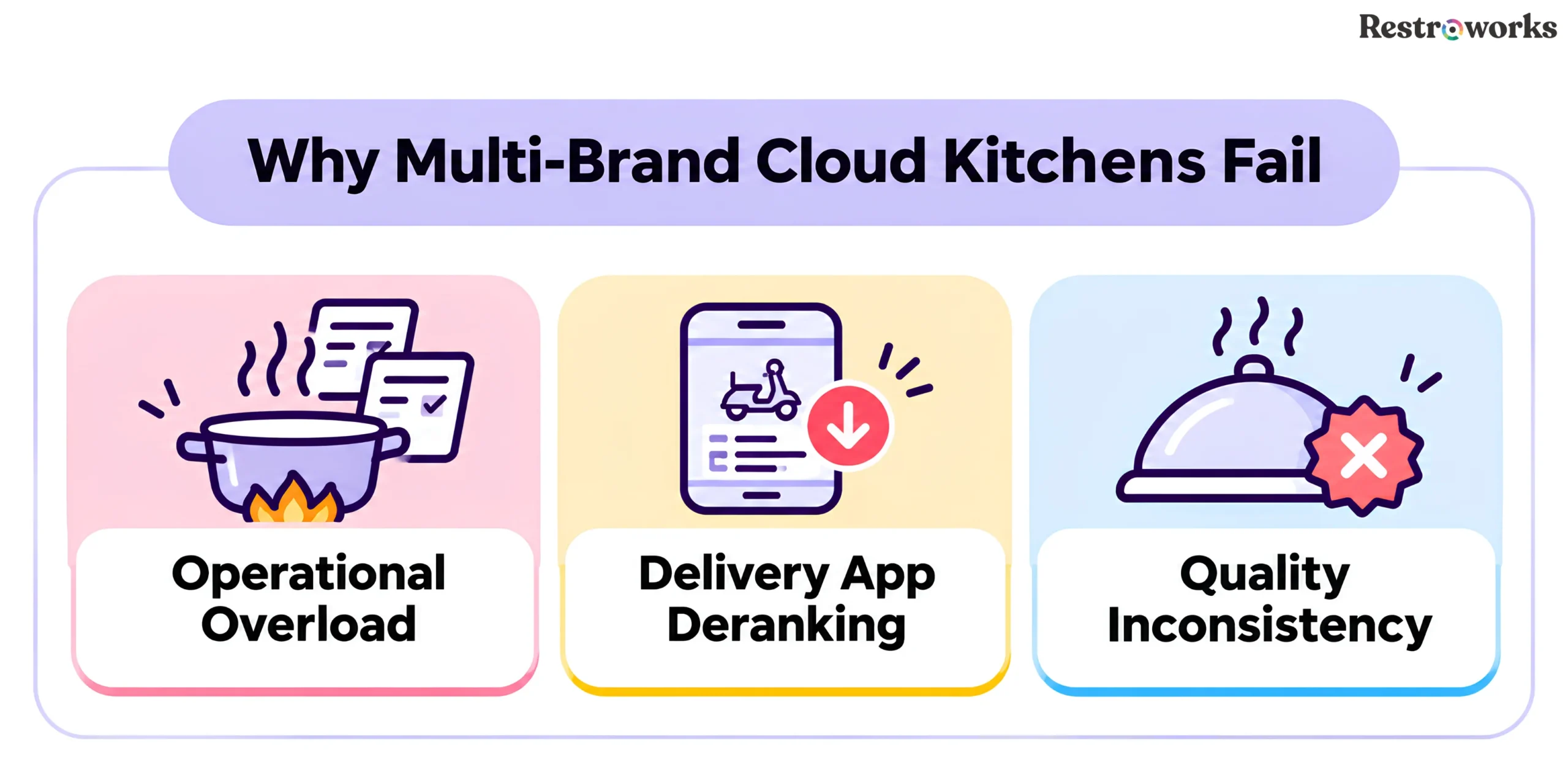
Three failure patterns show up repeatedly in multi-brand kitchen closures: operational overload, delivery app deranking, and quality inconsistency. Here is how each has played out in documented cases.
REEF Technology (2022): In January 2022, REEF temporarily ceased operations at 95 underperforming ghost kitchens, nearly one-third of its ghost kitchens, most of them featuring its in-house virtual brands, which it said would be converted to serving food from partner companies. The closures reflected underperformance across a large network of in-house virtual concepts; REEF was also dealing with health-code violations and units operating without permits at the time.
Uber Eats platform delistings (2023): In March 2023, Uber Eats announced new quality standards for virtual brands: it will take down virtual restaurants whose average ratings drop below 4.3 out of 5 stars, and more than half (60%) of a virtual brand’s menu must differ from its parent restaurant and any other brands from the same kitchen. Uber Eats said it planned to remove 5,000 online storefronts, about 13% of virtual brands in North America, and by July had removed 8,000 restaurants from its system since March. Note: ingredient overlap (sharing a tomato base between a curry brand and a wrap brand) is different from duplicate menus. It is duplicate or near-identical menus, not shared ingredients, that triggered the Uber Eats crackdown.
Virtual Dining Concepts / MrBeast Burger (2023): VDC’s failure was not a same-kitchen problem. MrBeast Burger orders were fulfilled by about 1,700 restaurants. The alleged breakdown was quality control across that distributed network. The 2023 federal lawsuit filed by MrBeast alleged a lack of quality control, orders that were consistently late, and food often delivered in unmarked and unbranded packaging.
The packaging failure is a direct lesson: in a multi-brand kitchen, each brand must have distinct branded packaging at every touchpoint. Delivery-only customers judge quality entirely by the experience that arrives at their door, and unbranded packaging destroys the brand identity that delivery-only restaurants depend on.
Prevention Protocols: Cross-Training and Deranking Mitigation
Operators who avoid these failure modes share two practices:
Cross-training schedule: Each team member trains on 2–3 brands (not all). Assign a primary brand and one backup brand per station. Run a weekly 20-minute cross-training drill during a non-peak window (Monday or Tuesday lunch), covering ticket routing for the backup brand. When the primary brand surges, any trained team member can step in without a full handoff. Never cross-train everyone on everything; a team that can operate any brand is a team with no clear accountability for any brand.
Delivery app deranking mitigation checklist:
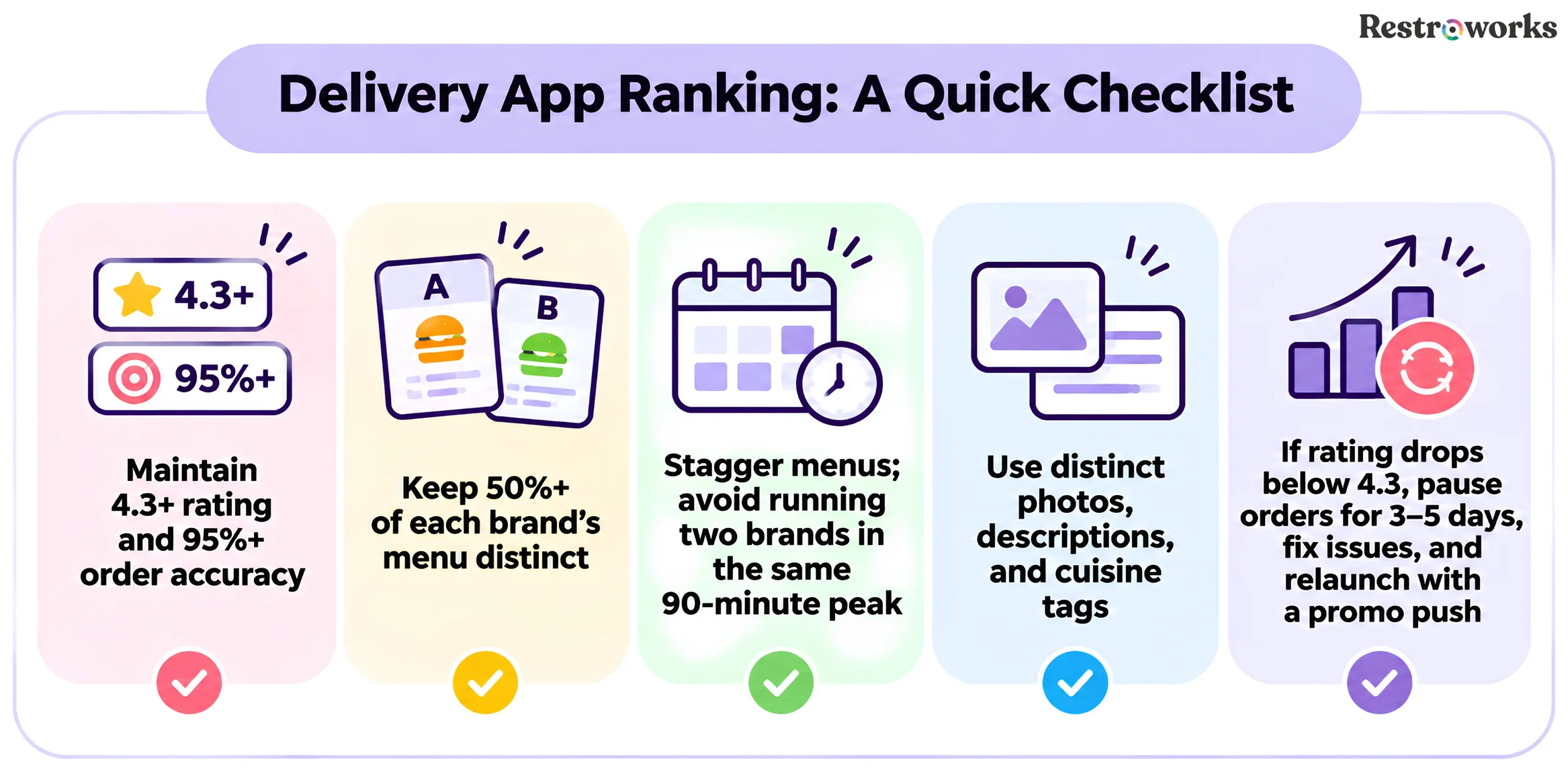
- Keep all active brands above 4.3 stars and above 95% order accuracy; Uber Eats announced in 2023 that it would remove virtual brands whose average rating drops below 4.3 stars, and other platforms set their own quality rules
- Ensure more than half of each brand’s menu differs from its parent restaurant and from any other brand at the same kitchen; Uber Eats announced this as a platform standard in 2023; shared ingredients (same tomato base across brands) are fine and expected; duplicate or near-identical menus are what trigger removal
- Stagger active menus so no two brands are “open” simultaneously during the same 90-minute peak window unless kitchen size and staffing support both
- Use distinct cover photos, descriptions, and cuisine tags for each brand; identical or near-identical storefronts attract platform scrutiny faster
- If a brand falls below 4.3, pause new orders on that brand for 3–5 days, fix the root-cause quality issue, then relaunch with a promotional push to recover rating momentum
Setting Up a Multi-Brand Cloud Kitchen: US Licensing and Regulations
In the United States, local health departments and the FDA Food Code set baseline requirements. State and county codes layer on top.
You need a business license and food service permit for a multi-brand kitchen. Every US operation requires:
- A food service establishment permit from the local health department
- A business license for each brand, or a master business license covering all DBAs under the same legal entity
- Fire safety clearance and exhaust hood permits
- A documented food safety plan with SOPs for prep, cooking, holding, and packaging, plus a formal HACCP plan if your local code or a specialized process requires one
- Cross-contamination controls: color-coded utensils, separate allergen zones, temperature logs
- Team food handler certifications and allergen management training
US permit cost and timeline reference (major markets): Fees vary by jurisdiction and kitchen type, so confirm with your local health authority before budgeting. In New York City, the permit fee for most food service establishments is $280, plus $25 if you will make frozen desserts, and you can start operating 22 days after you submit your permit application. In Los Angeles County, the annual public health permit fee is tiered by seating and facility type; check the current fee schedule with the county’s Environmental Health division. DBA filing fees are set by each state or county; see the LLC section below for examples.
State-specific licensing variance:
Fire suppression systems (NFPA 96 standard) are enforced differently by jurisdiction; verify with your local fire marshal before buildout. Before listing a new brand, ask your health department whether it changes the scope of your existing permit.
Can Multiple Brands Operate Under One LLC?
Yes. In the US, multiple restaurant brands can legally operate under one LLC using DBA (Doing Business As) registrations.
Each brand runs as a distinct storefront with separate delivery app accounts, separate menus, and one tax filing. Multiple cuisines, one kitchen, one legal entity.
DBA filing costs: DBA fees are set by your state or county. Los Angeles County charges $26 for the first business name and registrant, plus $5 for each extra name or owner. Texas charges a $25 filing fee for an assumed name certificate filed with the Secretary of State. Florida fictitious names are registered with the state through Sunbiz, where registration of a fictitious name costs $50. Your state’s Secretary of State or county clerk website handles filings directly.
Single LLC vs. separate LLCs: A single LLC with multiple DBAs saves on filing fees but exposes all brands to the same liability. Separate LLCs provide liability isolation so a lawsuit against one brand generally cannot reach the others, but each one costs a state filing fee: LLC state filing fees range from $35 to $500 depending on the state, plus registered agent and annual report costs. Operators raising outside capital for several brands may prefer a holding company with individual brand LLCs; ask a business attorney which structure fits your liability exposure.
A DBA (fictitious or assumed name) filing applies when you run multiple brands under different names; it registers the trade name and is separate from a business license. Each brand may need a commissary agreement on file with the local health department. Verify licensing rules locally.
Is There a 30/30/30 Rule for Multi-Brand Kitchens?
There is no published industry standard or regulation by that name for kitchen throughput. The phrase is sometimes used as budgeting shorthand for a rough three-way cost split between food, labor, and overhead, but no regulator, delivery platform, or trade body defines it for cloud kitchens.
What multi-brand kitchens do need is their own throughput ceiling. Decide how many tickets each station can carry at once and the longest order-to-handoff time you will accept, then track both during dinner service. When a new brand pushes either number past your ceiling, cut that brand’s hours or add staff before ratings slip.
Menu Architecture and Inventory Management Across Multiple Brands
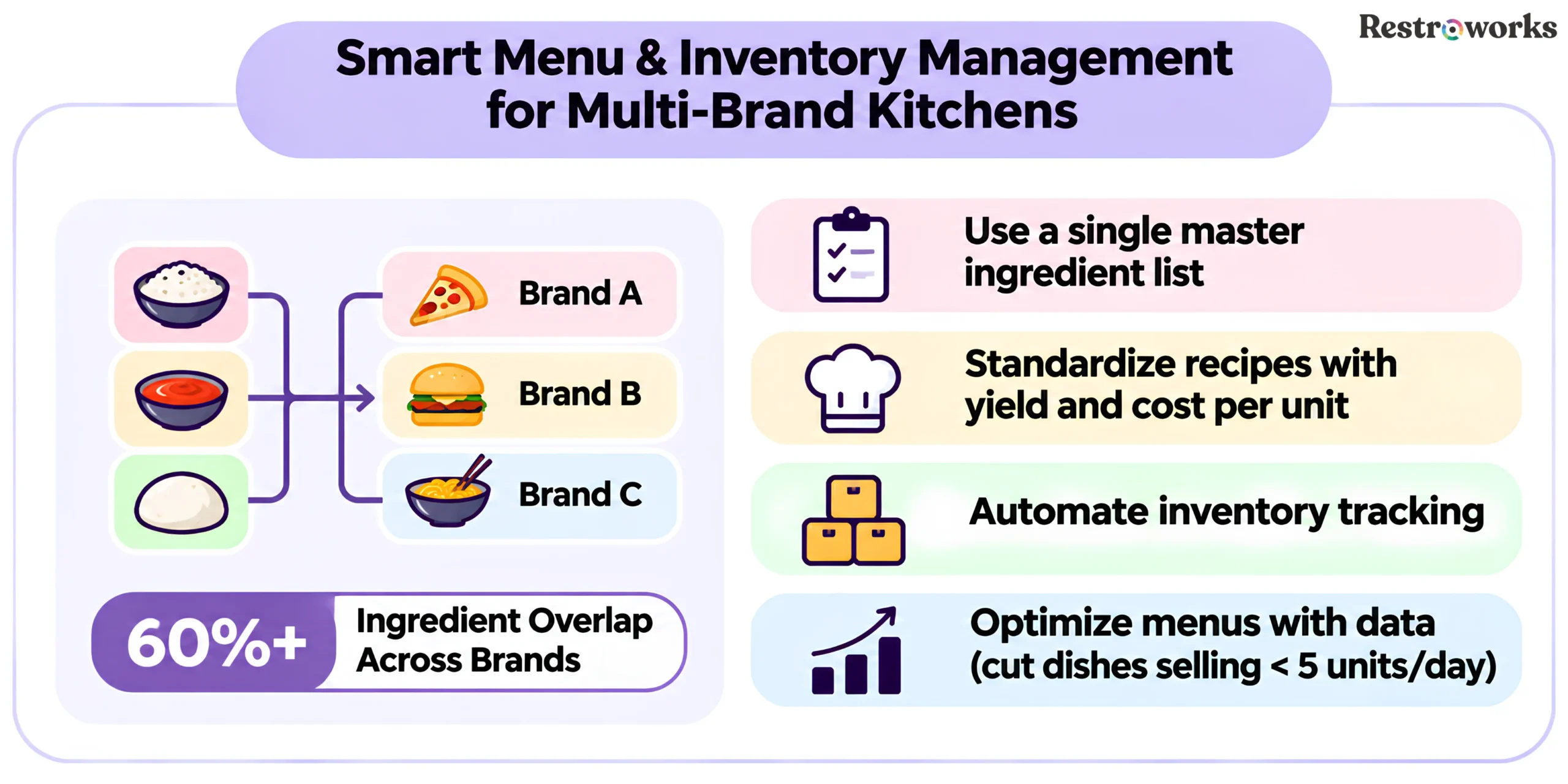
The most effective multi-brand kitchens are built around ingredient architecture, not brand identity: each menu is engineered so that a large share of its components is shared with other brands in the kitchen. The planning target in this guide is 60%+ overlap (see the decision framework above); higher overlap means fewer SKUs to buy, store, and count.
Successful operators focus on bestselling dishes and ingredient overlap. Common bases (rice, dough, gravies) are prepped once and finished differently per brand across cuisines.
Menu conflicts arise when two brands rely on the same cooking station simultaneously; resolve this by staggering peak service windows or redesigning one brand’s cooking method.
Inventory management best practices:
- Maintain a single master ingredient list; avoid duplicating SKUs per brand
- Standardized recipes help keep quality consistent across batches; define yield and cost per unit for every base recipe
- Automated inventory tracking reduces errors and enhances customer satisfaction
- Data-driven menu optimization improves performance across brands; review dishes that sell fewer than 5 units per day as candidates to cut (a starting threshold; adjust it to your volume)
Customer Perception and Brand Trust in a Shared Kitchen
Customer perception is a gap most multi-brand operators underestimate. The challenge is not disclosure; it is quality consistency.
Packaging is the primary trust signal in delivery-only operations. The Virtual Dining Concepts MrBeast Burger lawsuit alleged food often arriving in unmarked and unbranded packaging as a core failure: customers ordering a branded experience received a generic bag, destroying the identity that justified the brand in the first place. Each brand needs distinct colors, logos, and an unboxing experience at every touchpoint. Custom printed bags and boxes add a small per-order cost, and the unit price falls as order quantities rise, which is minor next to the rating damage of anonymous delivery. If you redesign packaging mid-operation, track each brand’s rating before and after the change to measure the effect.
Consistent food quality is essential to maintaining brand trust in cloud kitchens. Standardized recipes and temperature checks reduce the risk of a cross-brand quality failure.
Technology Stack for Multi-Brand Kitchens: POS, KDS, and Delivery Apps
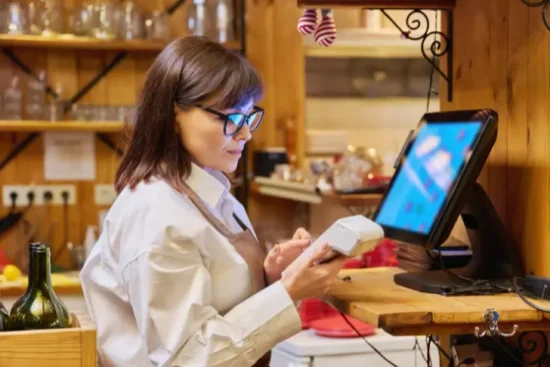
A multi-brand kitchen without a unified technology stack collapses under its own order volume. A common operational failure after brand-count mismanagement is running separate tablets per delivery platform instead of one integrated POS and KDS.
Consolidating to a unified POS and KDS removes the manual step of re-keying or cross-checking orders from several tablets, which is where ticket time and errors build up when you manage multiple aggregators by hand.
In the US, the right POS for a multi-brand kitchen must support brand-level order tagging, multi-aggregator order consolidation (DoorDash, Uber Eats, Grubhub in one dashboard), and station-based KDS routing. These features matter more than brand name. Evaluate your POS specifically on these three requirements before choosing a system.
Implementation steps:
- Choose a POS that supports brand tagging and order aggregation from DoorDash, Uber Eats, and Grubhub
- Set up a KDS that routes tickets to stations (one screen per station, not per brand) and keeps parallel orders synchronized
- Connect inventory and recipe management to POS data; flag drift beyond 7% of ideal recipe usage (a starting threshold)
- Consolidate menus across platforms; enable auto-accept with smart throttling during peak hours
- Test during peak times to validate throughput, then adjust staffing or station layout
Marketing Multi-Brand Cloud Kitchens on Delivery Apps
On delivery platforms, each brand competes independently for orders, although platforms can see which storefronts share an address and use that to police duplicate menus. That independence is your leverage: a strong new brand listing can capture search placement your existing brands cannot. Delivery apps are the primary marketing channel, and commission is the main cost: on DoorDash, for orders placed in the app and delivered by Dashers, the commission rates are 15% for the Basic plan, 25% for the Plus plan, and 30% for the Premier plan.
Marketing tactics for multi-brand operators:
- Marketing positioning: Separate branding, photos, and value propositions per concept so brands do not overlap in the recommendation algorithm
- Promotions: Run a launch-week discount aimed at first orders and early ratings, and cap it so the discount does not set your price expectations
- Upselling: Suggest dessert brand dishes on burger orders; add beverage brand upsells at checkout
- Off-platform marketing: Use local Instagram, TikTok, and food blogger collaborations to build brand identity
- Direct ordering: Build a first-party ordering website or SMS-based loyalty program to reduce commission and improve the experience for repeat customers
Direct ordering pays off because every repeat order that moves off a marketplace avoids that order’s commission. The mechanic is straightforward: include a direct-order link on branded packaging inserts, offering a small discount on repeat orders, to shift loyal customers off third-party apps where delivery commission runs 15% to 30% depending on the plan.
Operational Design: Layout, Staffing, and Workflow
Running multiple brands from one kitchen is a systems problem, not a cooking problem.
A delivery-focused kitchen layout creates clear zones for prep, cooking, assembly, and dispatch, with shared stations for grills, fryers, and cold prep. The zone structure is what keeps order coordination intact when multiple brands are running simultaneously.
A small kitchen team works better than brand-dedicated staff across brands. A dedicated expediter at the pass is non-negotiable; this team member sequences tickets and manages station load. A workable starting point is 1 expediter per 3–4 active stations during peak service; add a second when tickets start backing up at the pass.
Note on timing definitions: prep time (cook and assemble only) should run under 8 minutes per order in an expansion-ready kitchen (this is the KPI in the expansion table below). Ticket time runs from order received to handoff to the driver, including dispatch wait. Set your own ticket-time target and watch it every time you add a brand; if ticket time climbs after a launch, the new brand is costing you capacity.
Staffing formula: Estimate concurrent ticket load per brand with this formula: (orders per hour ÷ brands) × average ticket time (minutes) ÷ 60 = concurrent tickets in flight per brand. For a kitchen doing 40 orders/hour across 4 brands, with a 15-minute average ticket: (40 ÷ 4) × 15 ÷ 60 = 2.5 concurrent tickets per brand at any moment during peak. This tells you how much simultaneous production pressure each brand creates; use it to spot when a station will be overloaded, then compare which brands share that station to find your real bottleneck and headcount floor. Station count requires mapping concurrent tickets against your actual kitchen layout.
Ticket routing logic: Configure your KDS to route by station, not by brand. A grill station screen shows all grill tickets across every brand, sorted by promised delivery time, not by brand name. A brand-sorted KDS causes station staff to mentally switch between menus; a station-sorted KDS keeps each worker focused on one cooking method. Set escalation alerts at 8 minutes (warning) and 12 minutes (expediter intervention) regardless of brand.
Centralized production handles shared sauces and bases in the morning. Just-in-time finishing runs per brand during lunch and dinner service. Batch production is faster than brand-by-brand mise en place even when total volume is the same, so centralized AM prep usually lowers total labor hours; measure your own hours before and after the switch rather than assuming a fixed saving, because results vary by menu complexity.
During a 30-minute night rush, the grill handles both burger and wings orders. If the grill backs up, both brands’ delivery ratings suffer; the expediter must throttle incoming orders or reassign staff.
Retrofitting an Existing Restaurant Kitchen
If you already operate a brick-and-mortar restaurant or a single-brand ghost kitchen, the multi-brand conversion is different from a greenfield build. You are not designing from scratch; you are layering new brands onto a kitchen that was optimized for one menu.
What to audit before adding a brand:
- Station capacity: Map your peak-hour utilization per station (grill, fryer, prep, plating). If any station runs above 80% utilization (a starting threshold) during a 90-minute peak window, adding a brand will create a bottleneck. Fix the utilization ceiling first, either by staggering service windows or upgrading equipment.
- Permit scope: In most US jurisdictions, your existing permit covers the physical kitchen, not the brands operating from it. Adding a new brand name on delivery apps requires a DBA filing (straightforward) and may require updating your permit details. Confirm with your local health authority before going live, especially if the new brand adds a food category or process your permit does not cover, such as frozen desserts in NYC.
- Menu overlap calculation: Before choosing your second brand’s menu, map it against your current prep list. Target 60%+ ingredient overlap; this keeps food cost and ordering complexity manageable and aligns with the framework used throughout this guide. Below 30% overlap means two independent ordering systems, two inventory counts, and two spoilage profiles; the economics break at low volume.
- Staff retraining window: Budget 2–3 weeks of overlap training before the new brand goes live on delivery apps. Run the new brand in soft-launch mode (limited hours, no promotions) for the first two weeks to catch ticket routing and packaging errors before they affect your ratings.
Benefits, Challenges, and When to Add More Brands
The multi-brand model’s core advantage is that testing a new concept costs a menu reprint and a delivery app setup, not a new lease. Operators expand across dayparts (breakfast, lunch, dinner, late night) from one kitchen without new real estate.
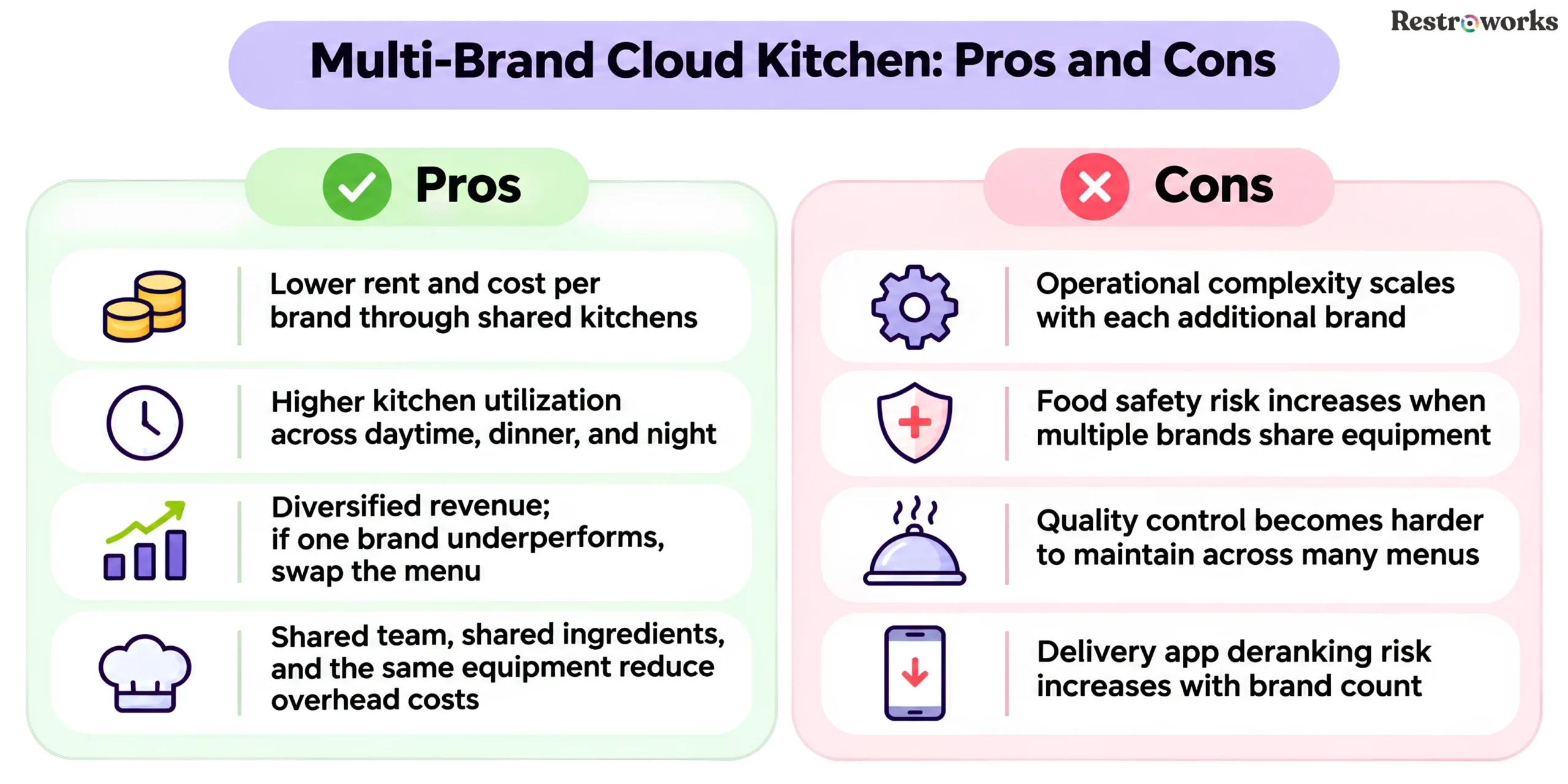
Pros:
- Lower rent and cost per brand through shared kitchens
- Higher kitchen utilization across daytime, dinner, and night
- Diversified revenue; if one brand underperforms, swap the menu
- Shared team, shared ingredients, and the same equipment reduce overhead costs
Cons:
- Operational complexity scales with each additional brand
- Food safety risk increases when multiple brands share equipment
- Quality control becomes harder to maintain across many menus
- Delivery app deranking risk increases with brand count
Brand expansion readiness framework: