

Every successful business idea starts with a clear vision. For your new bakery, you may have already visualized the kind of products you want to sell, the experience you want to create, and even the location you want to operate from.
But what’s harder to achieve is translating that vision into practical business terms. A business plan does that job for you. It helps you define how the business will run, from pricing and financial projections to daily operations, marketing, and long-term growth.
If you’re not sure where to get started, this blog explores the key components of a bakery business plan and the aspects of building one for a successful bakery launch.
What you will learn
- Why bakeries need a strong business plan
- The key components of writing your own bakery business plan
- Cost and financial planning basics for a bakery business
Why You Need a Bakery Business Plan

The global bakery products market size was valued at $494.7 billion in 2025 and is projected to reach $326.55 billion by 2034 at a CAGR of 3.59%. Clearly, the market is consistently growing and highly competitive, making it important for your bakery to stand out.
And a solid bakery business plan is your starting point. Think about it. How many baked goods can you realistically sell in a day without overproducing? How should you price your menu while maintaining profitability? What should the menu even include? How do you plan on growing the business? A bakery business plan helps you work through these decisions with clarity.
In fact, strong business plans help you work towards specific business goals for great results, as they did for an Indonesian bakery. Laziza Bakery achieved a 198 revenue index and 8% growth rate, with a 25% revenue increase by implementing a business plan.
Here’s why you need to have a plan to start a bakery–
- To Gain Clarity and Focus: A bakery business plan encourages you to put your ideas on paper, which makes it easier to set goals, keep your efforts focused, and identify any gaps.
- To Plan Finances: Running a bakery involves various costs, from rent, equipment, and staffing to utilities and wastage. A business plan helps you estimate these costs, project revenue, and plan how long it may take to get to the break-even point.
- To Build Investor Confidence: If you plan to raise capital or apply for a loan, your business plan shows that you’ve thought through the idea in detail. It gives potential investors a clear view of your assumptions, cost structure, and growth potential.
- To Guide Operations: Your plan shapes how your bakery runs day to day, influencing decisions like menu size, production capacity, staffing, and service format. And once you’re operational, the right bakery shop software helps you execute that plan — tracking sales, inventory, and daily production from one place.
- To Identify Risks and Plan Ahead: A business plan helps you anticipate risks early and set a plan of action, rather than reacting under pressure once operations begin.
Essential Components of a Bakery Business Plan
Ready to write a business plan for your new bakery? Here are the key components that you need to include for a comprehensive and actionable plan-
1. Executive Summary
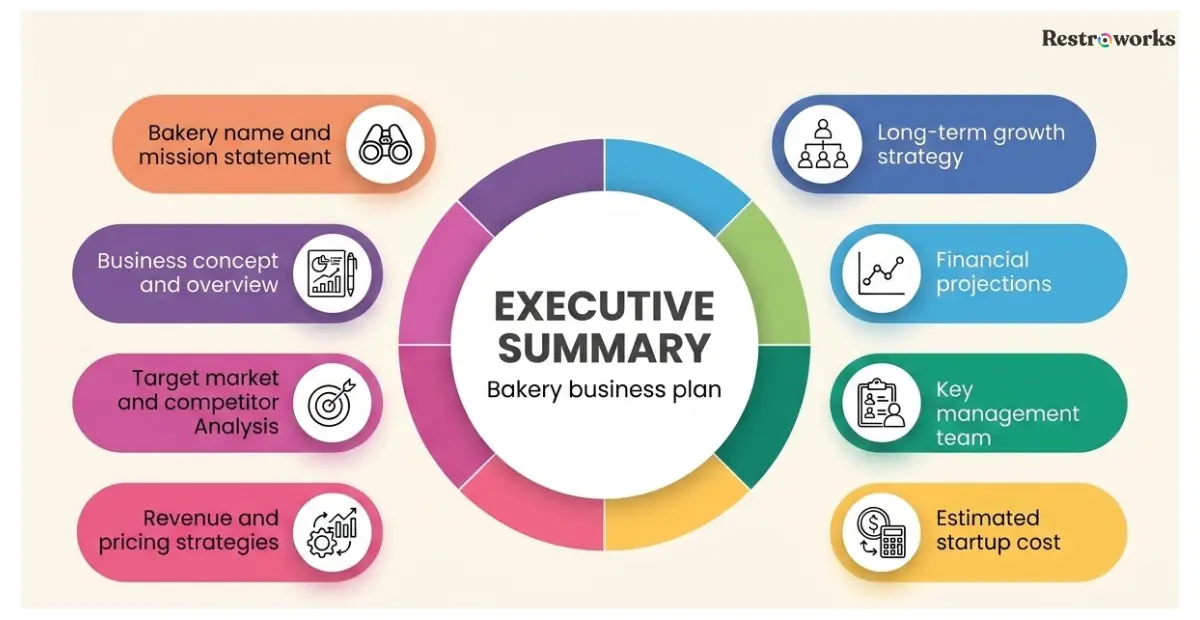
This is the first section in your bakery business plan, but it’s usually written last. By the time you get here, you’ve already worked through your concept, costs, and operations, which makes it easier to summarize them clearly.
Your executive summary should give a concise but complete snapshot of your bakery. Anyone reading it should understand what you’re building, who it’s for, and how it will make money. Here’s what it commonly includes-
- A clear, 1-2 line description of your bakery concept and format.
- A quick view of your target audience and market.
- Your revenue approach and pricing strategies.
- Important financial numbers like the estimated startup cost and break-even timeline.
- Long-term growth strategy
Here, it is important to keep the executive summary specific and to the point. Don’t make generic claims about quality or passion, but make sure it gives a clear view of your vision for the bakery business.
2. Company Overview and Mission
This section defines your bakery at a foundational level. It should clearly establish what your business is, where it operates, and how you want it to be perceived. So, start by introducing your bakery with core business details like-
- Business Name and Concept: State your bakery’s name and what it represents. If your name has a theme, specialty, or story behind it, briefly explain the meaning and thought process. This helps build credibility and relatability for your brand.
- Location and Service Model: Mention where your bakery will be located and the service format, such as takeaway, dine-in, delivery-only, or a combination of all.
- Legal Structure: Mention whether it is a sole proprietorship, partnership, or registered company. You can also dive into the organizational structure for different roles in the business.
With the core details covered, talk about the following aspects of running the business-
- Vision Statement: Your vision outlines where you want to take the business over time. This could be expanding locations or building a strong local brand.
- Mission Statement: A mission statement is a simple description of what your bakery aims to deliver every day. It defines what customers can expect from your products and experience.
- Market Positioning: Are you competing on affordability, product quality, specialization, or experience? Clearly define where you stand in the competitive market and what your business’s core strengths and weaknesses are.
- Differentiation: Define what makes you different from other bakeries: maybe a niche concept like wedding cakes, a unique menu, your pricing strategy, or a location advantage.
3. Target Market Research and Competitive Analysis
Without a clear understanding of your target market and competition, you may misunderstand demand, position your products incorrectly, or enter a highly saturated space.
Comprehensive market research helps you identify the customers you want to sell to, the price they’re willing to pay, and the products they’re likely to buy. Under this section, define-
- Local Businesses and Competitor Analysis: Identify similar other bakeries in your area and identify their niche, positioning, products, pricing, target customers, and so on. Understand how they operate and the gaps you can fill in the market.
- Target Customer: Based on your menu, identify who you want to serve. Maybe families or health-conscious busy professionals. Within this, build simple buyer personas around their habits, spending capacity, and purchase triggers. This will help you align your menu, pricing, and overall bakery experience to the right audience.
- Demographic Market Analysis: Identify the age, gender, income level, spending patterns, and behavior of your ideal customers to position yourself right in the market.
As Samer Nasrallah, F&B Country Manager for Patchi, mentions on Restrocast, “Even if you hire the best people in the market as the owner or as a board member, [if] you don’t have the experience of the market, you will fail.” He adds-
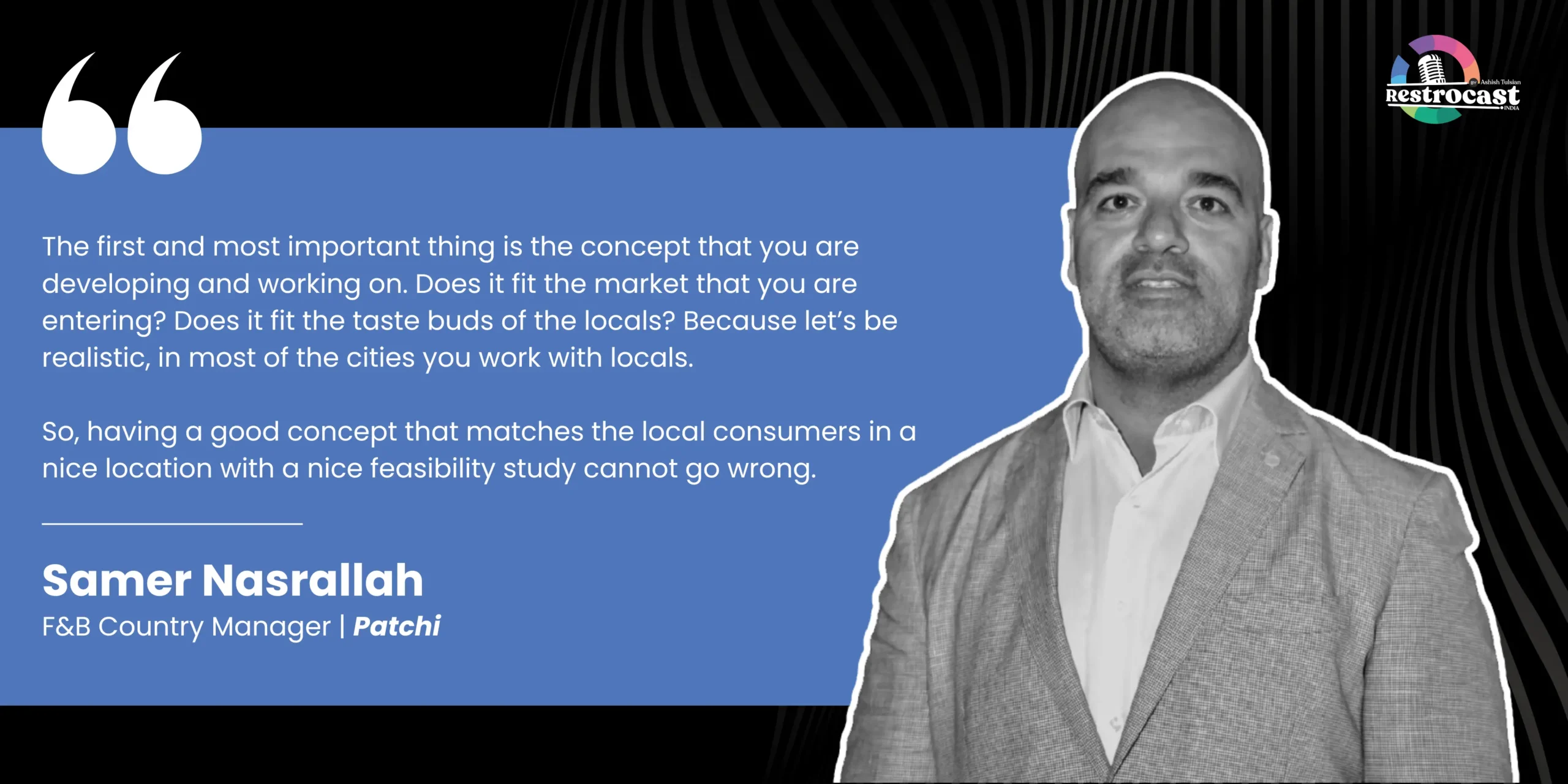
Check out the full conversation here-
4. Products and Services
The next part of your bakery business plan focuses on the hero of the business- your baked goods and services. Because ultimately, what you plan to bake and sell will define everything from your production flow and the need for skilled bakers to your inventory and even demand.
In here, start by defining your product range and planning the menu. This can be based on your specialty and your understanding of what the customer wants.
You can have a mix of basics like pastries, cakes, cookies, and beverages to build steady demand, while also offering niche or premium desserts like French pastries, cheesecakes, or gourmet cookies in the bakery menu.
Additionally, define the services you want to offer, be it delivery, catering services, or custom cakes and baked goods.
5. Marketing and Sales Strategy
This next section explores your plans for attracting customers, promoting the bakery, and generating sales. So, start by defining your marketing plans and objectives, covering basics like-
- Brand Positioning: This is your value proposition; the unique and distinctive brand personality you want to build in the customers’ minds.
- Marketing Channels: Identify the primary channels of discovery. This can include walk-in visibility driven by location, website, relevant content, social media, or community events. Instead of focusing on every possible channel, be where your customers are.
- Sales Channels: This is where you need to define your revenue mix across in-store purchases, takeaway, pre-orders, or online orders. If you want to focus on one channel more than the others, say delivery, mention the channel distribution in the plan.
- Promotions: Outline any planned offers or campaigns for the initial phase. This could include opening promotions, bundled baked goods, or limited-time offerings for driving early demand
- Customer Retention: How do you plan on keeping customers engaged? Include your retention strategies in the plan, from simple loyalty programs to targeted offers for returning customers.

6. Operations Plan
Along with your vision and ideas for the business, it is also important to talk about everyday operations in the bakery business plan. It should give a clear view of the processes, resources, and structure required to run the business smoothly.
Your operations plan includes-
- Production Process: Define the baking schedule, batch sizes, and overall production flow of the kitchen. The plan can also cover forecasting methods to align output with expected demand.
- Staffing and Roles: Outline the team structure and roles, including skilled bakers in the kitchen, cashiers and baristas in the front-of-house, and support responsibilities.
- Inventory and Suppliers: Describe the approach to sourcing ingredients and maintaining stock levels. This includes supplier selection criteria, restocking levels and frequency, and basic inventory management practices.
- Equipment and Setup: Create a checklist of the essential equipment and business tools required for your menu and production scale.
INDUSTRY INSIGHT
7. Financial Projections
Your financial plan acts as a roadmap to turn your baking business idea into a profitable venture. This section requires you to lay out the estimated startup costs and financial projections based on your market analysis.
The purpose of including financial statements in your bakery business plan is to assess your business’s viability, secure funding from financial investors, manage cash flow, and track performance against benchmarks. The major components include-
- Capital requirement for rent deposits, equipment, interiors, licenses, and initial inventory.
- Operating expenses such as rent, salaries, utilities, raw materials, and packaging.
- Revenue projections and profit and loss statements with expected monthly sales based on product pricing and daily sales volume.
- An estimate of expected profit margins and a break-even point to understand the financial sustainability of the bakery. For example, if your monthly net profit is projected at $4,000 and your initial investment is $100,000, your break-even period can be 2+ years.
- Cash flow statement projections to ensure liquidity. This also includes planning for seasonal fluctuations.
You can also connect with a financial advisor to understand the finances and build more accurate business projections.
8. Risk Management
Every bakery faces certain challenges, especially in the early stages. This section shows that you’ve considered potential challenges and have a plan to handle them. Identify risks such as supply chain disruptions, demand volatility, market changes, and competitive pressures.
Bakery Costs and Financial Planning

A bakery can range anywhere from $70,000 to $100,000+ for a retail setup, depending on scale and location.
A. Startup Costs
Your plan should clearly define the scale of your initial setup based on your core product range and expected demand, along with the capital investment needed.
1. Lease, Interiors, and Build-Out
Your physical space is one of the largest cost drivers. The rent or lease can cost you around $900-$6,000/month for a 1,500 sq ft space in urban areas.
Depending on the location, condition of the property, and the complexity of your setup, renovation and interior costs can range from $15,000 to $70,000+. This includes plumbing, electrical work, flooring, layout adjustments, and customer-facing interiors.
2. Equipment and Kitchen Setup
Equipment and kitchen setup form a significant part of your initial investment. So, instead of building for peak capacity from day one, it’s a better idea to invest in a basic setup with room to expand as demand grows.
Your core equipment will include ovens, mixers, refrigeration, and proofing units, along with baking tools like mixing bowls, baking trays, measuring cups, and more. Depending on the requirements and quality, equipment costs can range from $35,000 to $165,000+.
Another factor to consider for your equipment setup is deciding between leasing and buying core appliances. While buying increases upfront investment but reduces long-term expenses, leasing preserves cash flow, which can be useful in the first 6-12 months when you’re still setting up.
3. Marketing and Branding
Initial branding, website, signage, and launch promotions typically range from $2,000 to $10,000, depending on your marketing strategy and promotional channels. For instance, if you plan on running paid ads from the get-go or doing community events, it will add more to your budget.
4. Initial Inventory and Ingredients
Starting inventory for your bakery can cost $6,000 to $17,000, covering ingredients and packaging for the first few weeks.
B. Food Safety Licensing and Permits
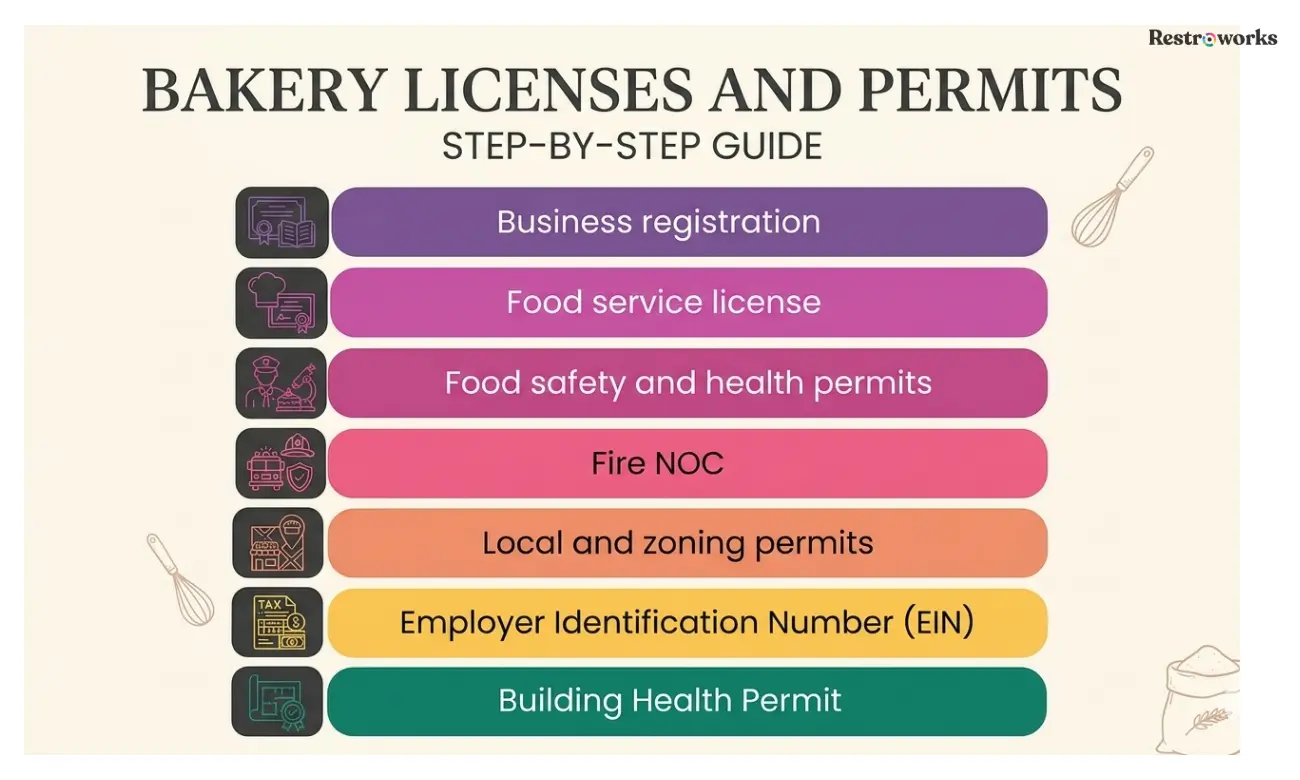
Bakery licensing is another critical part of your business plan, as it allows you to operate legally. This section should clearly outline the necessary approvals, timelines, and compliance requirements.
Forgetting to factor this step into your bakery business plan can often lead to delays. It is also an important aspect of your financial plan because different permits carry varying one-time and recurring costs. The key licenses include-
- Business registration
- Food service license
- Food safety and health permits
- Fire NOC
- Local and zoning permits
- Employer Identification Number (EIN)
- Building Health Permit
With these elements, a well-structured financial plan ensures that your business model is viable and gives you a realistic view of the capital required to launch and sustain your bakery.
Bakery Business Plan Template Example- Magnolia Bakery
Magnolia Bakery is a New York-based retail bakery that has built a global brand with a range of classic American desserts. Operating on a D2C and franchise model, the bakery gained love and recognition for its warm and vintage charm and a selection of freshly-baked, handmade treats.
The bakery brand is famous for its signature menu of banana pudding, pastel-frosted cupcakes, Tres Leches, cheesecakes, and seasonal cookies.
Company Overview
- Name: Magnolia Bakery
- Type: Brick-and-mortar bakery with global retail presence
- Location: West Village Neighborhood, New York, USA (with multiple international outlets)
- Concept: A classic American bakery known for nostalgic desserts, with a strong focus on a few signature baked goods like cupcakes and banana pudding.
Mission Statement
“To make today sweeter than yesterday.”
Products
- Banana pudding (one of its highest-selling items)
- Cupcakes and cheesecakes
- Cakes and slices
- Pies and icebox desserts
- Cookies and brownies
Target Market
- Urban consumers
- Customers seeking premium, indulgent desserts
Promotion Channels
- Strong in-store visibility and high-footfall locations
- Social media presence built around product appeal
- Word-of-mouth and brand legacy
- Seasonal product launches
Customer Engagement Approach
Repeat purchases are driven by product consistency and brand recall. Limited-time business offerings help maintain interest without expanding the core menu.
Running a bakery can be a rewarding experience, and it all starts with careful planning. Your bakery business should cover the logistics of the everyday business operations in the executive summary, as well as a detailed market, financial, marketing strategy, and risk analysis to make it highly actionable.
A well-crafted business plan gives you the clarity you need, helping you launch with direction and adapt as your business evolves.