

To an outsider, building a profitable bakery may seem easy. You invest in the setup, bake delicious treats that people enjoy, price them competitively, and start taking orders. Revenue comes in, you account for the expenses, and that’s your profit. Right?
Not really. Once you enter the bakery industry, you understand how tricky balancing costs actually is. Ingredient costs fluctuate consistently, overproduction leads to wastage, and let’s not even get started on how quickly those utility bills go up.
The result? You see profits going down. That’s what makes bakery cost management so important. It focuses on understanding where your money goes and improving efficiency to control costs without affecting quality or customer experience.
Let’s see the major bakery costs and explore the top cost management tips for bakeries.
What you will learn
- The bakery’s cost structure
- How can your bakery manage costs across inventory, labor, equipment, and menu.
- How technology can help optimize costs
Understanding Bakery Cost Structure: Where Every Bakery Dollar Goes
The first step in controlling your bakery costs is to understand what they are. Many bakery owners underestimate how quickly operational costs compound in food businesses.
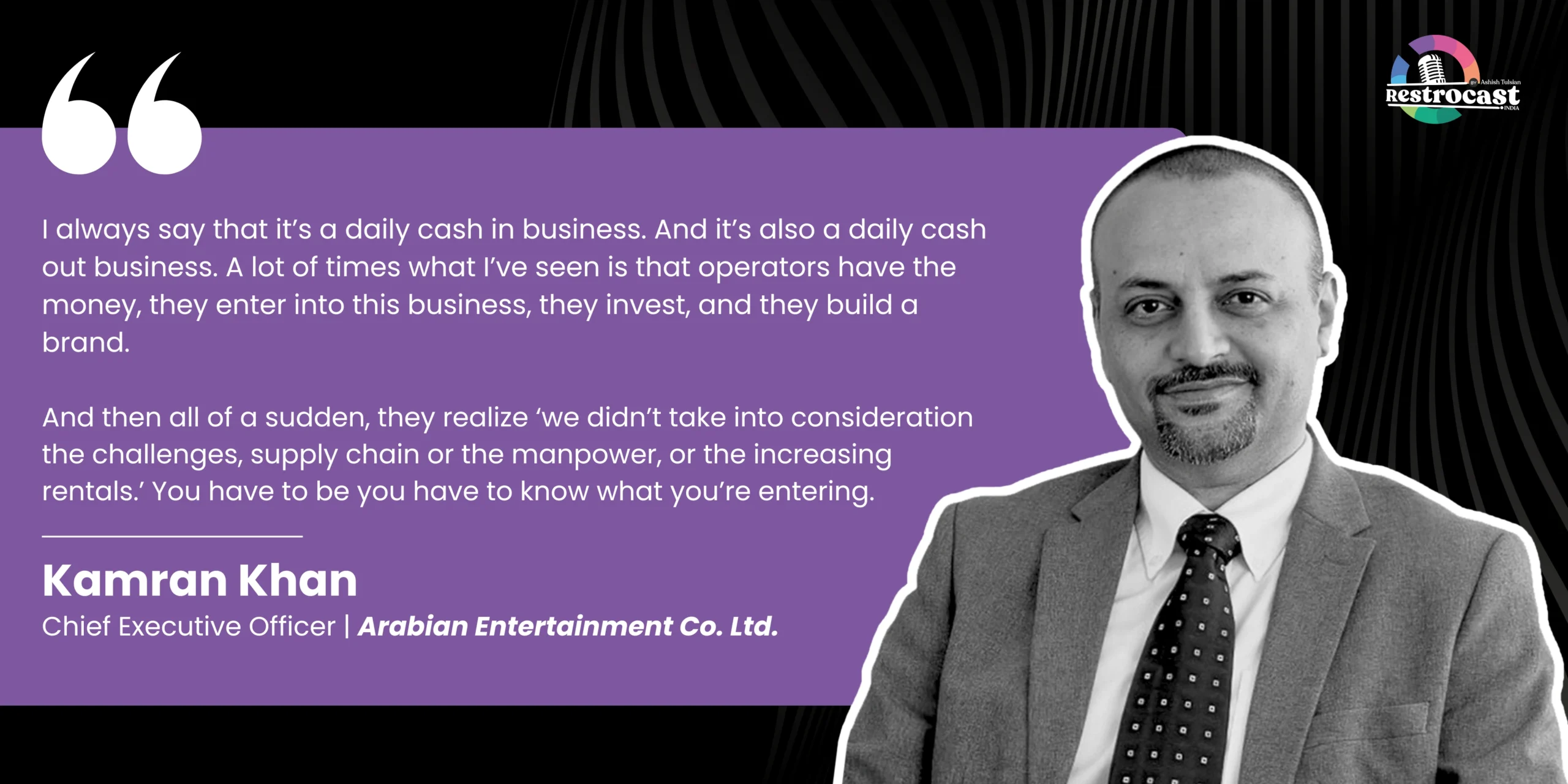
Arabian Entertainment Co Ltd. CEO Kamran Khan explained this operational reality well on Restrocast-
Fixed vs Variable Costs in Baking Businesses
The cost structure of any business includes two key components: fixed costs and variable costs.
Your fixed costs are expenses you have to incur regardless of how much you sell. These include-
- Rent or lease payments
- Equipment financing and depreciation
- Insurance
- Salaries
- Software subscriptions
- Permits and licenses
Variable costs, on the other hand, fluctuate based on production volume and daily operations. These usually include-
- Ingredients costs
- Packaging material
- Utility bills like electricity and water
- Hourly labor
- Delivery and transportation costs
This difference is important for your cost management plan because it’s harder to reduce fixed expenses in the short term. But what’s definitely in your control here are the variable costs, which you can cut with better ingredient management, smarter production planning, and operational expense management.
Labor Costs
Labor is one of the largest operating expenses for most restaurant businesses, accounting for about 20% to 30% of your total revenue. And if you run artisan bakeries or sell custom cakes, the percentage can rise even further because production requires more manual work and preparation time.
In a typical bakery operation, these labor costs can spread across multiple functions, like-
- Ingredient preparation
- Baking and production
- Cake decorating and finishing
- Packaging
- Front-of-house service
- Cleaning and closing operations
Ingredient and Food Costs
Ingredient and food costs are another major part of fixed bakery expenses. These costs represent around 20% to 30% of total revenue and can go higher with a complex product mix and or better ingredient quality.
A big issue here that most bakery owners face is price volatility. The cost of essential bakery raw materials like eggs, flour, dairy products, fresh fruits, chocolates, etc., can fluctuate constantly due to supply chain changes, seasonal demand, and inflation.
And those are just the external factors. Internally too, bakeries have to deal with cost issues arising from-
- Overproduction
- Food waste and spoilage
- Improper portion sizes
- Unsold inventory
- Incorrect demand forecasting
- Low-margin products consuming high-cost ingredients
That’s why it’s important to track food cost percentages regularly and evaluate which products contribute the most to both sales and profitability.
Cost Management Tips for Bakeries: How to Cut Costs Across Operations?
The good news is that improving bakery profitability and managing overhead costs doesn’t require you to make drastic cuts. Even small changes across inventory, production, labor, utilities, and menu planning can collectively make a significant difference to your finances.
Here are the best ways to optimize costs for your bakery business-
A. Inventory and Supply Cost Management
1. Inventory Management and Waste Reduction
If you want to control bakery costs better, inventory is one of the first places worth looking at. Because in most cases, it’s the smaller things, like overordering raw materials or preparing extra batches, that lead to waste and, thus, higher costs.
A few practical ways you can ensure less waste are-
- Tracking sales to see low-performing items
- Adjusting production quantities based on weekday and weekend demand
- Implementing FIFO and FEFO inventory practices
- Monitoring expiration dates
- Automated re-order or low-stock alerts to plan purchases better
- Storing ingredients properly to improve shelf life
2. Recipe Standardization and Portion Control
There’s a reason why most kitchens follow the exact same recipes when baking. And no, it’s not just consistent taste or quality. Standardized recipes also help you control ingredient usage much more accurately.
So if your cake recipe uses 4 eggs or 200g flour, every batch should ideally follow those measurements closely. Otherwise, small variations during production, say 250g of flour in the cake, can slowly increase your ingredient costs, and you wouldn’t even notice it.
Portion control and recipe consistency can help you save costs through-
- Adding recipes to your inventory management systems with exact measurements
- Using digital kitchen scales
- Standardizing portion sizes for your baked goods
- Pre-measuring ingredients during prep
- Defining garnish and topping quantities
3. Bulk Purchasing and Vendor Negotiations
Control the cost at source. When purchasing inventory, try to buy in bulk and negotiate prices with the vendor to significantly save on raw material costs.
This is where vendor relationships matter a lot, as your rapport with the supplier can help do more than just negotiate prices. You may even be able to negotiate-
- Better payment terms
- Volume-based discounts
- Reduced delivery charges
- Fixed pricing for frequently used raw materials
- More flexible ordering schedules
B. Labor Cost Optimization

Labor accounts for the highest costs in your bakery business. But all you need to do is plan smarter to unlock more savings. The two most important approaches to achieve this are-
1. Data-Driven Scheduling and Demand Forecasting
Tune into your POS data to review your sales and demand patterns. Are weekends attracting high customer traffic? Do customers usually avoid coming during high heat or rain? Which day of the week has been unexpectedly busy over the past few weeks?
This data will help you better project demand and customer traffic, which in turn will help you schedule your staff more effectively. You’ll no longer be short-staffed during busy services or have your staff sit idle during slow periods.
And that’s exactly how you’ll also save on payroll costs by up to 12% over time.
2. Employee Cross-Training
You’ll naturally want to hire various roles for different functions around the bakery. At the least, this will include skilled bakers, your pastry and assistant pastry chefs, baristas, cashiers, managers, and delivery staff.
Now the thing is, if someone is unavailable during busy periods, other employees may not be able to step in immediately, which can affect service. Or you may decide to hire hourly employees at a higher rate. Both these situations mean high labor costs.
The smart way out is to offer comprehensive staff training across job functions. For instance, you can train your cashier to handle delivery orders. Or if you offer dine-in, you can ask your BOH staff to also pitch in on the floor when needed.
This gives you more flexibility while creating schedules, managing busy periods, or handling unexpected absences.
C. Equipment Maintenance and Energy Cost Control
Your kitchen runs on too much equipment at the same time. You have ovens, refrigerators, mixers, proofers, and display units, all contributing heavily to electricity consumption and maintenance expenses.
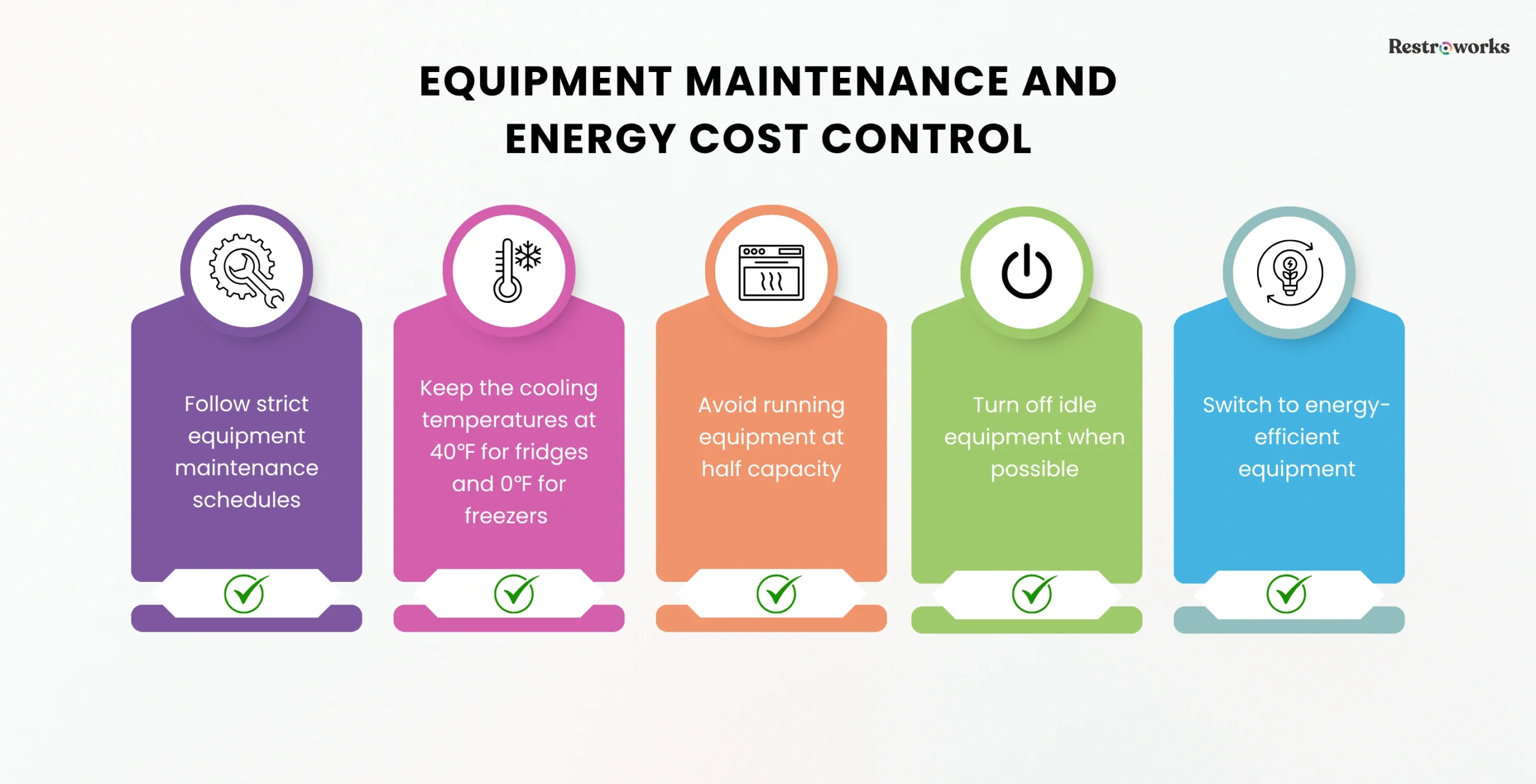
You may think of it as an unavoidable cost, but a few changes can help you control energy expenses significantly-
- Follow maintenance schedules: Small issues like worn-out oven seals, clogged refrigerator coils, or poorly calibrated equipment consume more energy. It is important to service the equipment regularly to maintain performance and reduce the risk of expensive breakdowns.
- Monitor refrigeration and storage temperatures: To ensure your refrigeration systems don’t add unnecessarily to your utility bills, make sure to maintain ideal cooling temperatures at 40℉ for fridges and 0℉ for freezers as mandated by the FDA.
- Plan production batches more efficiently: Avoid running ovens, mixers, or proofers at half capacity. Plan your production schedules in a way to reduce unnecessary equipment usage and minimize energy consumption throughout the day.
- Turn off idle equipment when possible: If you often leave lights, proofers, display units, or prep equipment running even when they are not actively being used, that’s only going to cost extra.
- Switch to energy-efficient equipment: Energy-efficient ovens, refrigerators, or dough processors feature advanced technologies that can help reduce energy consumption by 20% or more.
D. Pricing Strategies to Improve Bakery Profits
1. Cost-Plus vs Value-Based Pricing Models
Many bakery owners price products by simply calculating ingredient costs and adding a markup on top. That approach, known as cost-plus pricing, is useful because it helps ensure your products cover production expenses and are profitable.
But it’s not that simple.
Baked goods like celebration cakes, artisanal breads, cheesecakes, or vegan desserts carry a higher perceived value. Meaning, customers are often willing to pay a higher retail price for baked goods that look premium, customized, visually appealing, or difficult to replicate elsewhere.
That’s where you can use value-based pricing. Instead of pricing only based on ingredient costs, you also consider factors like-
- Product presentation
- Specialty ingredients
- Brand positioning
- Customization
- Customer experience
Pricing your menu this way helps you improve margins without necessarily increasing production costs.
2. Menu Engineering
Not every bakery product contributes equally to your profits. You may frequently sell custom cakes but at lower margins, while your croissants may bring in better profits even at a lower sales volume.
That’s where it helps to see your menu from a profitability perspective. Start by identifying-
- Products with the highest profit margins
- Items with high food or labor costs
- Products that take longer to prepare
- Low-performing menu items
- Underpriced bestsellers
As you gain this visibility, it will become easier to make pricing adjustments to boost profits. You can perhaps decide to increase prices for high-demand desserts and limit production for low-margin items.
Technology and Tools for Cost Tracking
1. POS Systems with Cost Management Features
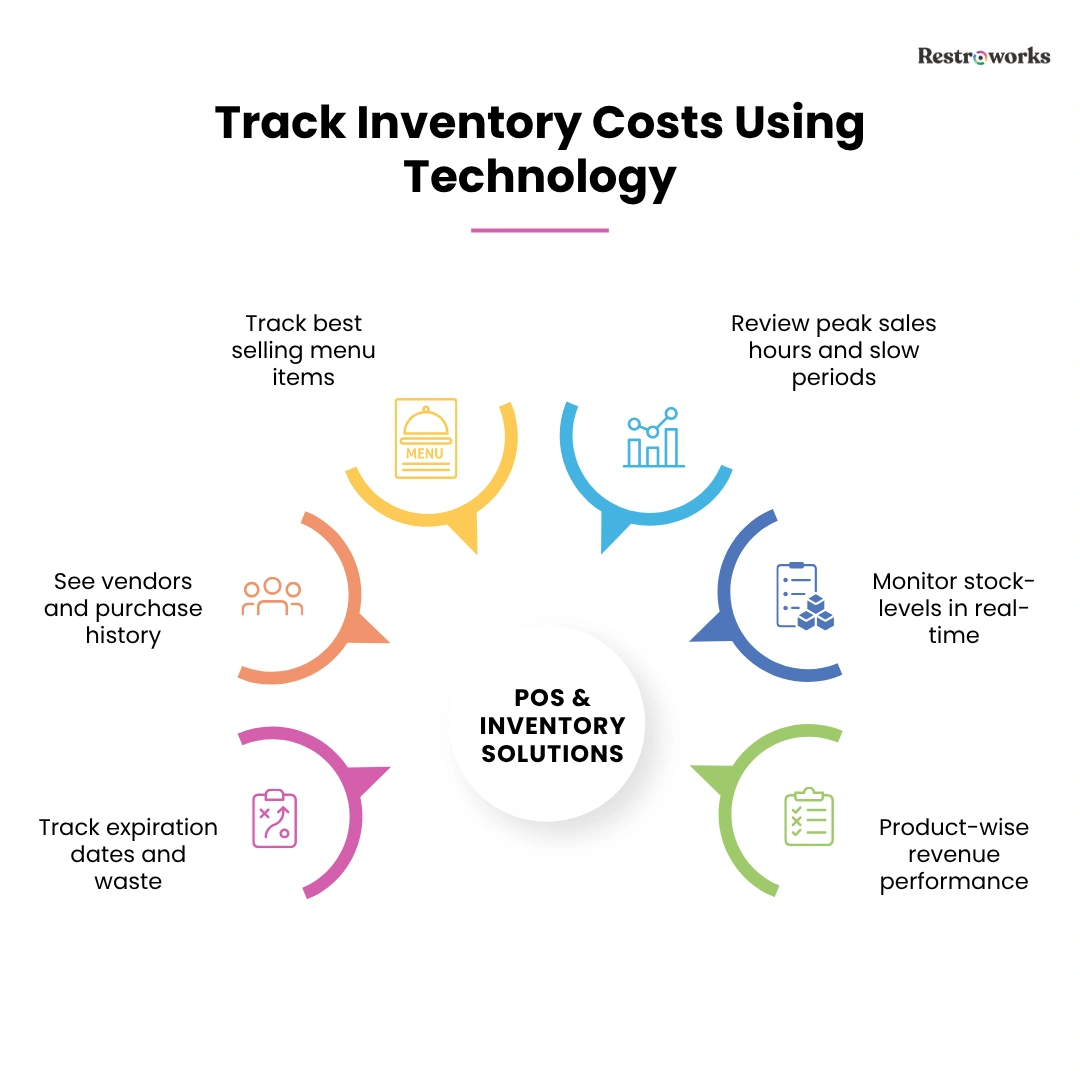
Your bakery POS system is a goldmine of information. It unlocks a range of sales, inventory, and labor data that can help you understand where your costs are increasing and where your margins are performing better than expected.
For example, your POS system can help you track-
- Your highest and lowest selling products
- Peak sales hours and slower periods
- Seasonal demand trends
- Product-wise revenue performance
- Labor hours against sales volume
All these insights make you better equipped to make informed decisions. You can prepare more accurate production quantities, schedule staff more efficiently, reduce over-ordering, and identify products that may not justify their production cost.
2. Inventory Management Software Solutions
Manual inventory tracking becomes difficult very quickly in bakery operations, especially when multiple ingredients move in and out of stock throughout the day. And because bakeries work with highly perishable ingredients, counting errors or inefficient waste tracking can lead to rising costs.
Inventory management software helps you track all this with far more accuracy. When integrated with your POS system, you can-
- Monitor ingredient stock levels in real time
- Set automatic low-stock alerts
- Track expiry dates and shelf life
- Compare actual vs expected ingredient consumption
- Monitor inventory variance and wastage
- Generate purchase orders automatically
- Track vendor deliveries and purchasing history
These systems also take it a step further with recipe-level inventory tracking, which connects ingredient usage directly to production and sales. So the inventory levels are automatically adjusted when a certain menu item sells.
Financial Planning and Budgeting for Bakery Businesses

Reducing bakery costs doesn’t always have to be about fixing immediate operational inefficiencies. If you’re thinking about long-term profitability, it’s important to plan your expenses well, manage cash flow, and prepare for slower sales periods.
Because no matter if there is demand or not, fixed costs will continue to drain your working capital. Here are two simple ways to ensure your bakery’s financial health-
Create Monthly Cost Budgets
Without a clear monthly budget, bakery expenses can become difficult to track. When that happens, any increase in raw materials, utilities, packaging, labor, or maintenance costs will become difficult to control, affecting your profits.
Creating monthly cost budgets is a smart way to determine how much your bakery can realistically spend across different operational areas. For example, you can create separate budgets for-
- Ingredient and food costs
- Labor expenses
- Utilities
- Packaging costs
- Equipment maintenance
- Marketing and promotions
This also makes it easier to compare projected costs against actual spending every month. It’s also a good idea to review budgets seasonally to change your approach based on production costs and customer demand.
CashFlow Management in Seasonal Markets
A lot of bakery businesses operate in a seasonal market where festive periods, wedding seasons, holidays, and weekends can bring more demand than usual.
During those months, it’s relatively easy to manage your cash flow and costs. But what about the slower months?
Regardless of sales fluctuations, you’ll still need to pay rent, salaries, equipment maintenance, and utility costs. So, if you don’t plan your cash flow smartly for the slower months, your finances can be in trouble.
Here’s what you can do-
- Use forecasting tools to predict high-demand and slow-demand months in advance
- Build cash reserves during peak sales periods
- Avoid excessive inventory purchases before slower seasons
- Plan staffing requirements around seasonal demand
- Review ongoing operational expenses regularly
This becomes especially important if you rely heavily on festive orders, custom cakes, or seasonal products where revenue patterns are highly unpredictable throughout the year.
Managing bakery costs doesn’t always require aggressive cuts or compromising product quality. All you have to do is build more efficient operations, understand where your money goes, and make data-driven decisions across inventory, labor, production, accurate pricing, and purchasing.