

1. Understanding the London Coffee Market
London’s café culture is a mature, competitive environment shaped by routine demand, convenience, and experience.
The UK coffee shop market, in one snapshot
A good proxy for the overall market is the branded sector. According to Project Café UK research quoted in World Coffee Portal figures for 2025, the number of UK branded coffee shops rose 5.2% to 11,456 outlets, while the average spend rose to £6.23. This reveals two things about the UK coffee shop market: people are buying, and they’re spending more, but it’s a very crowded market.
World Coffee Portal/Project Café UK projections also point to continued expansion, forecasting 13,200 outlets by 2030. A growing market helps, but it doesn’t make execution optional. You need a concept that earns repeat visits, not just curiosity.
What’s trending in London cafés right now
The most resilient concepts tend to win on one of these dimensions:
- Speed + consistency (great for commuter-heavy foot traffic)
- Product depth (specialty roast stories, seasonal menus, elevated coffee drinks)
- Place to stay (seating, ambience, “third place” energy)
- Values (sustainability, minimal waste, local sourcing)
Your job isn’t to be everything. It’s to decide what your café will be famous for and build your business plan around it.
Where niches still work (even in crowded areas)
A unique value proposition can still succeed in dense areas. The trick is to land on a positioning statement and then execute it through the menu, staff training, and service flow all pointing in the same direction. This is important whether you are opening a coffee shop business from scratch or considering a coffee shop franchise opportunity, the unit economics still require clarity over vibe.
2. Major Startup Costs of a Coffee Shop in London
This section covers the major upfront budget buckets for opening a coffee shop, the costs that typically hit before you’ve sold your first cappuccino.
A) Property rental or lease costs (the variable that can make or break you)
London rent isn’t one number; it’s a spectrum. Even within Greater London, asking rents swing massively based on catchment and positioning. To anchor expectations, here are live examples from café listings:
- Angel / EC1V (Goswell Road): £35,000 per year for 911 sq ft (listed as £2,917 pcm, £38.42 per sq ft)
- South Croydon / CR2 (Addington Road): £19,000 per year for 444 sq ft (listed as £1,583 pcm)
- Vauxhall Park kiosk: £9,000 per year for 135 sq ft
These aren’t “averages.” These are examples of why you need to consider property a strategic choice, not a box to tick. If your rent requirements require commuter traffic to sustain, you’ll need a service model that can handle the peaks without grinding to a halt.
Also, remember: leases can come with other responsibilities (repairs, service charges, business rates). These appear later in the financials, but they should be tested in your business plan from the start.
B) Renovation and interior design (fit-out)
Fit-out is where budgets quietly explode because it’s never just “paint and furniture.” In a food environment, it’s plumbing, electrical, extraction (if needed), flooring, counters, storage, safety signage, and compliance.
What drives costs up fastest:
- Fixing legacy problems (old plumbing/electrics)
- Fire safety requirements
- Accessibility adjustments
- Mechanical ventilation/extraction (especially if you expand beyond pastries)
This is why founders who start a coffee shop on a “cheap” site often learn the hard way: the rent is only part of the story.
C) Licensing, permits, and legal fees
The most important thing that most people overlook is timing. In the UK, you have to register your food business with the relevant authority at least 28 days before opening. This should be factored into your business plan because it will impact your launch date and burn rate.
In terms of compliance, your strategy should be based on food safety laws and good practice, not “pass the inspection once.” The Food Standards Agency also has Safer Food, Better Business tools to help food businesses. Food hygiene ratings are also a big trust factor (and marketing tool), with the FSA explaining how the Food Hygiene Rating Scheme works. Even if you have a very simple menu, food safety and food hygiene should be part of your operations, not your admin.
D) Equipment (espresso, grinders, refrigeration, ware)
“Cheap” equipment can cost more over time in breakdowns, inconsistency, and service delays that hurt your queue and customer experience.
That’s why you’ll see wildly different setups:
- A basic setup for a small counter
- A robust multi-group espresso machine setup for high-volume service
- Different grinder strategies depending on menu and speed targets
For the “supporting cast” (grinders, fridges, filtration, sinks, dishwashing), the same principle applies: buy for your busiest hour, not your quietest day. Your coffee machines and workflow dictate whether you can serve peaks while protecting quality, which is why many operators are turning to dedicated cafe management system to keep service, stock, and speed under control.
E) Initial inventory (opening stock)
Founders often underestimate how much inventory you need just to run smoothly in the first few weeks:
- Beans, milk, alt-milks, syrups, cups/lids, napkins
- Cleaning supplies and chemicals (don’t ignore this for food safety)
- Pastries/food inputs, if you serve them
Your inventory approach should match your concept. A premium coffee business usually needs a tighter menu with higher consistency; a convenience-led concept may prioritise speed and availability.
F) Staff recruitment and training
Labour is both a startup expense and a monthly expense. It’s also the area that will make or break service quality. From a wage compliance perspective, the minimum wage rates in the UK change every year. Many employers in London also use the London Living Wage rate as a benchmark. For 2025-26, the Living Wage Foundation rates £14.80/hour for London.
You don’t have to figure out your whole HR strategy on day one, but you do have to budget sensibly, particularly if your idea involves high-touch hospitality and creating a loyal customer base through service.
G) Marketing and branding expenses (launch groundwork)
A London café rarely “opens quietly” and wins. Even small operators benefit from:
- Strong brand identity
- Clean Google Business Profile setup
- Local community seeding
- A simple, repeatable marketing strategy that doesn’t rely on discounts forever
This matters whether it’s your first small business venture or your fifth location.
3. Ongoing Monthly Expenses (the costs that decide survival)

When people ask, ” How much does it cost, they often ignore the real pressure: monthly burn. Your ongoing costs decide whether you make it to month twelve.
A) Rent and utilities
Rent is obvious. Utilities become obvious after your first electricity bill, especially if you run multiple grinders, refrigeration, dishwashing, and a high-output espresso machine setup.
B) Staff salaries
Staffing scales with service model:
- Takeaway-heavy concepts need speed and front-line coverage
- Sit-in cafés need table flow, clearing, and service presence
This is why your coffee shop business plan must connect staffing to footfall. If you don’t have enough labour, service slows, queues grow, and your regular customers drift to whoever is quicker.
C) Supplies and restocking
Your core cost of goods includes:
- Coffee beans and milk
- Packaging
- Food ingredients (if applicable)
- Cleaning and consumables for food hygiene
A subtle but important point: the more complex your menu, the higher your operational risk. More SKUs mean more waste, more training, and more chances for mistakes that threaten food safety.
D) Insurance and compliance costs
A café is typically expected to carry public liability insurance (often required by landlords, events, or partners). Even when not legally mandated in every situation, it’s a practical baseline for risk management in a public-facing coffee shop. Treat public liability insurance as part of the cost of being open to the public; it protects your new business from a single incident becoming existential.
Also factor in compliance refresh: training updates, documentation, and whatever your local authority expects to see in practice under food safety regulations.
E) Technology: POS system, payments, reporting
A modern POS system integrates sales, inventory, and customer management into one platform. These systems enable seamless payments via cards, mobile wallets, or contactless methods, ensuring convenience for both staff and customers. Subscription fees or licensing costs for POS software typically range from £50 to £200 per month, depending on features.
Beyond transactions, POS platforms provide detailed reporting tools that track sales trends, popular coffee drinks, staff performance, and even foot traffic patterns. This data is invaluable for refining your marketing strategy, managing ongoing costs, and building a loyal customer base. While the upfront investment in hardware and software may feel significant, the efficiency, accuracy, and insights it delivers make it a necessary expense for any coffee shop aiming to thrive in the competitive UK market.
4. Hidden or Unexpected Costs (where budgets get ambushed)
These costs often catch new businesses off guard and can significantly affect profitability if not factored into the business plan.
Repairs and maintenance of coffee machines
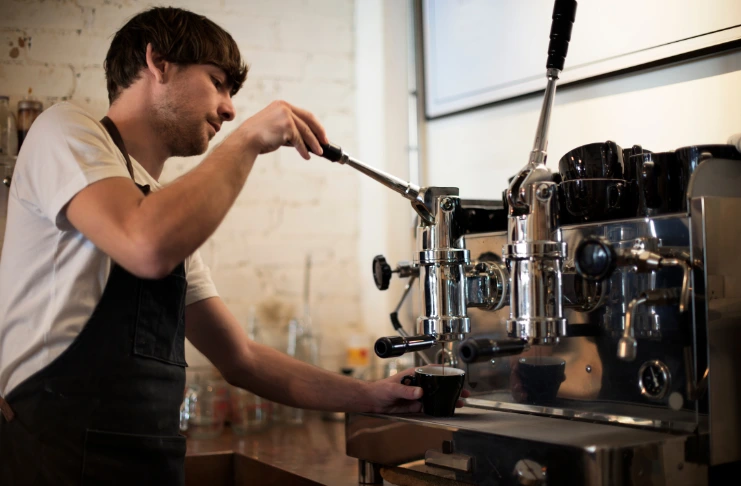
An espresso machine is the backbone of any café, and regular servicing is essential to maintain quality and consistency in coffee drinks. Breakdowns can lead to lost sales and expensive emergency repairs, with annual maintenance contracts often costing several hundred pounds.
Seasonal demand fluctuations
While summer may boost sales of iced coffee drinks, winter shifts preferences toward lattes and hot beverages. This requires flexible inventory management and marketing adjustments to avoid waste and maximize revenue.
Waste management and sustainability compliance
London councils enforce strict food safety regulations and food hygiene standards, and cafés must invest in proper disposal systems, recycling, and eco‑friendly packaging. These measures not only increase ongoing costs but also shape brand identity and customer perception.
By anticipating these potential costs, owners can build resilience, protect margins, and ensure their coffee business remains sustainable in the long run.
5. Funding Options (how most founders actually pay for it)

A café can be funded in different ways, and each one changes your risk profile.
Bootstrapping
If you’re launching as a small business owner with savings, you keep control but also carry all the risk. In that case, your business plan should include a runway buffer so you’re not forced into bad decisions at month two.
Business loan options
Many founders explore a business loan to cover fit-out, equipment, and early cash flow. The practical advice is simple: borrow to build durable capability (equipment, fit-out), not to mask weak unit economics. If you take a business loan, you’ll want:
- Clear revenue assumptions
- Conservative footfall forecasts
- Proof of margin discipline
Investors
Investors can help scale, but they’ll expect a repeatable model. They’ll ask “how much does it cost” per unit and whether your site economics can be replicated in the next location.
Coffee shop franchise route
A coffee shop franchise can reduce brand-building risk because you’re buying into systems and recognition. But it doesn’t eliminate costs; it often replaces uncertainty with structured fees and operational rules, and establishes standards. If you choose a coffee shop franchise, your business plan must reflect those realities (and ensure the numbers still work with the required specification).
6. Cost-Saving Tips for London Coffee Shops (without killing quality)
Running a coffee shop in London can be expensive, but smart planning can help reduce ongoing costs and improve profitability.
Choose the right location for your model
One of the most important decisions is choosing the right coffee shop location. While central areas with heavy foot traffic may seem ideal, rents can be prohibitively high. A balanced approach is to select a neighborhood with steady, regular customers and growing demand, rather than paying premium rates for a crowded high street.
Negotiate with suppliers and simplify your menu
Coffee beans, milk, and pastries represent significant monthly expenses, so building long-term relationships with suppliers can secure better pricing and consistent quality. Independent cafés often benefit from sourcing locally, which reduces transport costs and strengthens their brand identity.
Make social media and local SEO do the heavy lifting
A smart marketing strategy in London typically looks like:
- Local search visibility (Google profile)
- A few strong hero products (signature coffee drinks)
- Community partnerships
- Consistency over “viral” gambles
Pair that with a coherent brand identity so people remember you, not just the drink.
Start small
Starting small and scaling gradually is a proven way to manage potential costs. Instead of investing heavily upfront, begin with a modest menu and limited seating. As the new business grows and builds a reputation, reinvest profits into expansion to ensure financial stability and long-term success.
7. Profitability & Break-Even Analysis (what decides whether it’s worth it)
Let’s bring this back to the operator question: the economics. A simple break-even mindset:
- Your fixed costs are monthly rent, staffing baseline, utilities, and minimum overhead.
- Your variable costs are ingredients, packaging, transaction fees, and incremental labour.
The branded segment stats are helpful context, average spend of £6.23 suggests customers are willing to pay for value and experience. But your break-even point depends on what your site can realistically do each day, with your service model, at your rent level.
This is why your business plan should stress-test three scenarios:
- Conservative footfall
- Expected footfall
- Peak footfall
If your concept relies on commuter foot traffic, build peak-hour speed into your workflow and your pos system setup. If service slows, your queue turns into lost sales, and in London, customers have options.
8. Case Studies & Real-Life Examples
Rather than name-drop specific successful brands, here are realistic patterns seen across London cafés.
Case A: The “small counter + killer product” win
- Tight menu, fast service, consistent quality
- Strong brand identity built around one or two hero coffee drinks
- Focus on regular customers and the morning routine
- Tight food safety regulations execution (clean prep, repeatable checks)
Result: a dependable, loyal customer base that stabilises revenue quickly, even without heavy paid marketing.
Case B: The “beautiful café, weak economics” loss
- High rent, expensive fit-out, complex menu
- Labour-heavy service
- No clear differentiation beyond aesthetics
- Underestimated ongoing costs and maintenance potential costs
Result: strong first month curiosity, then declining repeat visits because the experience wasn’t anchored in consistency.
Case C: The franchise-style consistency play
- A coffee shop franchise model with strong SOPs and brand pull
- Higher constraints on design and operations
- Easier early demand, but less flexibility to adapt
Result: can work well if the rent and staffing model align — but the numbers must still be proven in your business plan.
9. Conclusion
Opening your own coffee shop business in London is both an exciting opportunity and a serious financial commitment. From the initial cost to open, covering rent, renovations, coffee machines, and compliance with food safety regulations, to the ongoing costs of staff, supplies, and public liability insurance, every expense must be carefully planned in your business plan.
Success in the competitive UK coffee shop market depends not only on managing potential costs but also on building a strong brand identity, attracting steady foot traffic, and nurturing a loyal customer base of regular customers.
Whether you choose to start independently or explore a coffee shop franchise, the key lies in balancing investment with smart strategies like negotiating suppliers, leveraging social media, and scaling gradually. With clear financial planning, compliance with food hygiene standards, and a creative marketing strategy, your coffee business can thrive and become a sustainable small business in London’s vibrant café scene.