
What Is a Quick Service Restaurant?
A quick service restaurant (QSR) is a foodservice format designed to deliver high volumes of food quickly and consistently through tightly controlled operations. The model prioritizes speed, standardization, and consistency, allowing restaurants to serve large numbers of customers with minimal service touchpoints.
Rather than relying on personalized service or extensive menus, QSRs are built around operational systems that keep throughput predictable across shifts and locations. QSRs differ from other formats in several ways:
- Fast casual restaurants typically allow higher levels of customization, operate with more complex kitchen workflows, and involve longer preparation and service times.
- Casual dining restaurants rely on full table service, longer guest dwell times, and broader menus, which introduce greater variability into labor and kitchen operations.
- Full-service restaurants prioritize service-led experiences, lower table turnover, and higher ticket sizes, where speed is not the primary operational constraint.

Here are the core characteristics of the QSR models-
- Limited menus with low preparation complexity and minimal training time
- Counter-based or digital ordering for a faster ordering and payment cycle
- Minimal or no table service, lowering dependency on staff
- High order volumes with lower average ticket sizes, requiring efficient flow
Because of this structure, cuisine alone does not define a QSR. Two restaurants serving entirely different food categories can operate under the same QSR model if their systems are designed for speed and accuracy.
Ultimately, what distinguishes a QSR is its ability to deliver the same product, at the same quality, across thousands of transactions with minimal operational friction. In this format, operations are not a background function, but the business model itself.
The Evolution of QSR Operations
Quick-service restaurant operations were originally built for simplicity and scale. Early QSR models relied on counter-only ordering, limited menus, and tightly defined workflows.
At the same time, standardization made it possible to deliver the same product quickly, train staff rapidly, and replicate the model across locations.
As QSRs expanded, this operating logic worked well until customer behavior began to change. Now, several structural shifts define how QSRs operate-
- QSRs now handle in-store, mobile, and online orders through a single kitchen setup, rather than relying only on counter service.
- Drive-thru orders make up a larger share of sales, forcing operators to focus more closely on queue flow, service speed, and order accuracy.
- Online delivery via brand websites and mobile apps is rising, bringing off-premise fulfilment, added packaging requirements, and less predictable order volumes.
Digital ordering and drive-thru now account for a significant share of QSR sales, fundamentally altering kitchen flow and staffing requirements.
As delivery volumes increased, many QSRs found that their layouts and workflows weren’t built to handle multiple order types at once. This pushed operators to separate order flows, adjust prep orders, and ease bottlenecks during busy periods.
The Defining Features of Quick-Service Restaurants
Quick-service restaurants operate on a distinct set of principles that sets them apart from other food service industry formats. Here are the key features that define the operations of a QSR establishment-
1. Speed of Service
Speed is engineered into every step of a QSR’s operation. Ordering, payment, food preparation, and handoff are designed to ensure a seamless flow and reduce service time.
This does not simply mean serving food quickly, but structuring workflows so delays are controllable, even during peak hours.
2. Standardized Menus and Processes

QSR menus are intentionally limited and highly standardized. This reduces preparation complexity, minimizes training time, and ensures consistent output across locations. Recipes, portion sizes, and prep methods are also tightly controlled, so performance does not vary based on staff skill or experience.
3. High Throughput, Low Ticket Economics
Unlike full-service formats, QSRs depend on volume rather than high per-order value. Lower average ticket sizes are offset by high order frequency, which makes it critical to handle the operations smartly. Even small inefficiencies can quickly impact margins, making operational discipline essential.
4. Simplified Service Interactions
QSRs feature minimum service steps to control labour costs and maintain consistent service. Orders are typically placed at the counter or through kiosks, with little or no table service. This lets staff focus on preparing and delivering orders quickly rather than on table-side interaction.
5. Operational Consistency Across Locations
Successful QSRs scale by running the same operating model across every location. They standardize layouts, equipment, workflows, and staffing so each outlet executes the same way. This consistency builds customer trust and makes multi-unit operations easier to manage.
6. Technology-Enabled Coordination
Modern QSRs rely on technology to coordinate orders, kitchens, inventory, and labor in real time. Digital systems, such as comprehensive restaurant management software, support visibility and decision-making, especially as ordering channels expand.
INDUSTRY INSIGHT
Types of Quick Service Restaurant Formats
Quick-service restaurants feature several operational formats, each with a different way of keeping organized, applying technology, and managing costs. Understanding these formats helps operators design workflows that match customer behavior and unit economics.
- Dine-in QSRs: These are quick-service outlets with counter ordering and dine-in seating. Guests may eat on the premises after ordering at the counter or kiosk. This remains a common format in urban areas where foot traffic is high.
- Drive-thru-Focused QSRs: Drive-thru restaurants often have limited to no indoor seating and allow diners to get food on the go. Some drive-thrus now dedicate lanes to mobile or app orders to reduce congestion and speed service.
- Takeaway-Only Outlets: These formats eliminate dine-in space entirely and focus on counter or curbside pickup. They reduce front-of-house footprint and can operate in smaller, lower-cost locations.
- Delivery-First QSRs: These may operate as “delivery only” concepts or prioritize digital order fulfillment via in-house couriers or third-party apps. Cloud and ghost kitchen models are common examples, with no traditional storefront and operations optimized for faster preparation and dispatch.
- Express formats (malls, airports, campuses): These are small-footprint QSRs located in high-traffic environments with short dwell times. They often have limited kitchen space and need rapid prep cycles to serve a steady flow of demand.
Top Examples of Quick Service Restaurants in the US
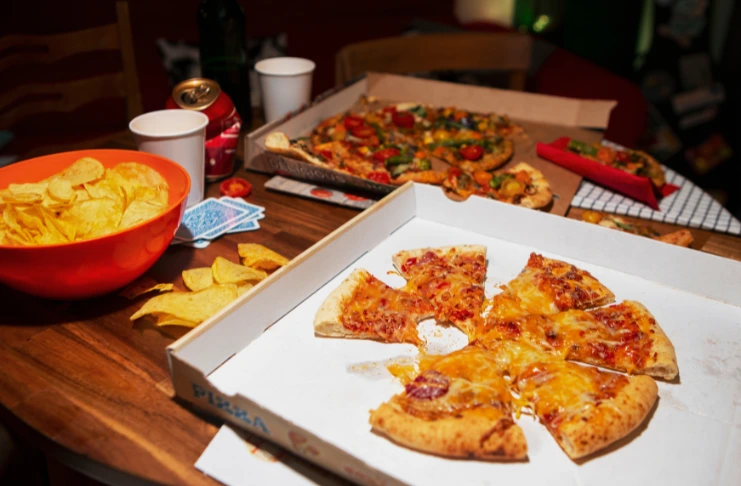
Quick-service restaurants dominate the American food landscape, offering speed, consistency, and affordability to millions of customers daily.
Below are some of the most influential QSR and fast food chains in the U.S., each with unique strengths and massive footprints-
1. McDonald’s
McDonald’s leads the quick-service restaurant sector by a wide margin, built on instantly recognizable menu items and a consistent experience across markets.
Its scale is supported by tightly standardized operations, strong marketing execution, and steady investment in in-store and digital ordering tools such as kiosks and loyalty programs.
- Locations in the U.S.: 13,794
- What makes it stand out: McDonald’s excels at operational efficiency at scale, ensuring customers have the same experience worldwide. Its ability to adapt menus locally while maintaining brand identity makes it a global powerhouse.
2. Starbucks
Starbucks has redefined coffee culture, positioning itself as a “third place” between home and work. It stands out for premium beverages, customization, and strong loyalty programs (Starbucks Rewards).
- Locations in the U.S.: ~18,300
- What makes it stand out: Starbucks thrives on customer experience, offering personalized drinks and cozy spaces. Its loyalty program and digital ordering ecosystem keep customers engaged and returning frequently.
3. Subway
Subway is the largest QSR chain by unit count, offering customizable sandwiches and healthier fast-food options. Its franchise model allows rapid expansion in diverse markets.
- Locations in the U.S.: 20,162
- What makes it stand out: Subway’s appeal lies in its “build-your-own” model, giving customers control over ingredients and portion sizes. Its focus on freshness and affordability makes it a staple in both urban and suburban areas.
4. Taco Bell
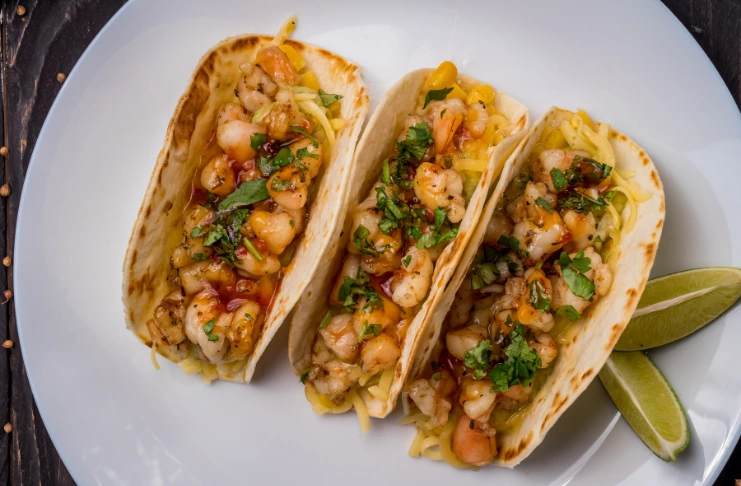
Taco Bell specializes in Mexican-inspired fast food like tacos, burritos, and quesadillas. It thrives on menu innovation and limited-time offerings that keep customers engaged.
- Locations in the U.S.: 8,165
- What makes it stand out: Taco Bell stands out for its creativity, constantly experimenting with bold flavors and quirky menu items. Its marketing campaigns resonate strongly with younger audiences, making it a cultural icon.
5. Chick-fil-A
Chick-fil-A has built its reputation on quality chicken sandwiches, exceptional customer service, and strong brand loyalty.
- Locations in the U.S.: 3,355
- What makes it stand out: Chick-fil-A is renowned for its customer service, often topping customer satisfaction surveys. It puts focus on quality ingredients and community-driven values, creating a loyal customer base despite limited operating hours.
6. Wendy’s
Wendy’s is known for its fresh, never-frozen beef, square burgers, and Frosty desserts. It differentiates itself with menu quality and witty social media presence.
- Locations in the U.S.: 5,972
- What makes it stand out: Wendy’s emphasizes freshness and quality, setting itself apart from competitors with “never frozen” beef. Its playful, bold social media strategy has also made it a standout brand in digital culture.
7. Domino’s
Domino’s dominates the pizza delivery segment with efficient logistics, digital ordering platforms, and consistent quality. It has embraced technology, becoming a leader in online and mobile ordering.
- Locations in the U.S.: 7,108
- What makes it stand out: Domino’s success comes from its tech-first approach, pioneering online ordering and delivery tracking. Its commitment to speed and reliability has made it the go-to choice for pizza delivery nationwide.
How Do Quick Service Restaurants Operate?
At a glance, QSR operations look simple. In reality, they rely on tightly coordinated systems that leave little room for improvisation. Speed, consistency, and scale are not achieved through repeatable processes that align people, kitchens, and technology around a shared operating rhythm.
In the U.S., where the QSR market was valued at $447.2 billion in 2025, these systems are crucial to meeting heavy demand and tight service expectations. Here’s what the core operational process looks like-
1. Standardized Operating Models
Standardization is what allows QSRs to function reliably under pressure. When dozens of orders arrive within minutes, decisions cannot be debated or reinterpreted. They must already be made.
QSRs rely on documented workflows that define how tasks are executed across the restaurant, including-
- Food preparation and holding procedures
- Order assembly and packaging steps
- Cleaning, hygiene, and food safety routines
- Opening and closing checklists
Recipes, portion sizes, and prep methods are fixed to eliminate variability in taste, yield, and service time. This reduces dependence on individual skill, speeds up onboarding, and ensures customers receive the same product regardless of location or shift.
Standardization does not eliminate flexibility entirely. Instead, it removes uncertainty from critical tasks, freeing staff to focus on execution rather than decision-making.
2. Workforce Structure and Labor Deployment
QSR labor models are built around service flow and volume. Staff roles shift based on what needs to be done at different points in the service cycle, rather than being tied to fixed job titles.
A typical QSR workforce includes:
- Crew members trained across multiple stations
- Shift leads are responsible for real-time coordination
- Managers focused on service speed, accuracy, and compliance
Staffing levels change throughout the day based on expected demand. Peak periods require higher coverage at order intake, assembly, and handoff points, while off-peak hours shift focus toward prep, cleaning, and restocking.
Cross-training allows employees to move between stations as bottlenecks emerge, maintaining flow during rush periods.
Productivity is measured in orders processed per hour rather than staff count, making labor deployment a continuous operational balancing act.
3. Kitchen and Food Production Workflows
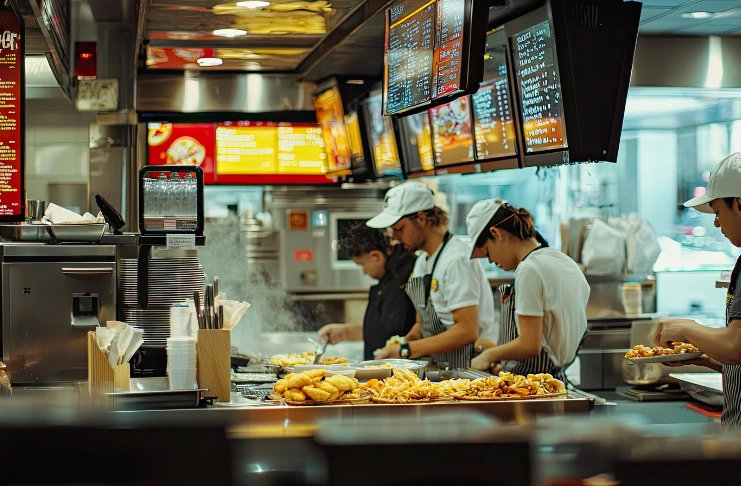
In QSRs, the layout and flow of the kitchen impact its performance. The objective is to move ingredients and orders through the kitchen with minimal movement, handoffs, or delays.
Back-of-house layouts are typically organized to support a linear flow:
- Prep stations feed cooking stations
- Cooking stations feed assembly lines
- Assembly leads directly to handoff or packaging
QSR kitchens are set up based on what the menu allows and how predictable demand is. Some items are prepared in advance, while others are finished only after the order is placed. During busy periods, batch cooking helps keep service fast. At the same time, equipment is placed to reduce walking and unnecessary steps.
When the layout doesn’t work, speed and consistency drop, even with experienced staff.
4. Front-of-House Operations and Customer Flow
Front-of-house operations act as the bridge between demand and execution. In QSRs, FOH systems are designed to keep customers moving while minimizing friction and confusion.
Ordering may take place through counters, self-service kiosks, mobile or web ordering, or even drive-thru lanes. Each channel feeds into the same operational engine but places different demands on staffing and timing.
Queue management becomes critical during peak hours, as small delays at order intake can cascade into longer wait times across the system. Clear customer handoff points, such as counters, pickup shelves, or drive-thru windows, help prevent congestion and missed orders.
5. Order Management and Fulfillment Systems
Managing orders is one of the hardest parts of running a QSR. Kitchens often deal with orders coming in at different times and at different speeds, all at once. Teams have to decide what to make first, when to group similar items, and how to keep mistakes from creeping in when volumes rise.
As more ordering channels are added, things may get harder to manage. Without clear rules in place, speed drops and errors increase during busy periods.
6. Technology-Enabled Operations
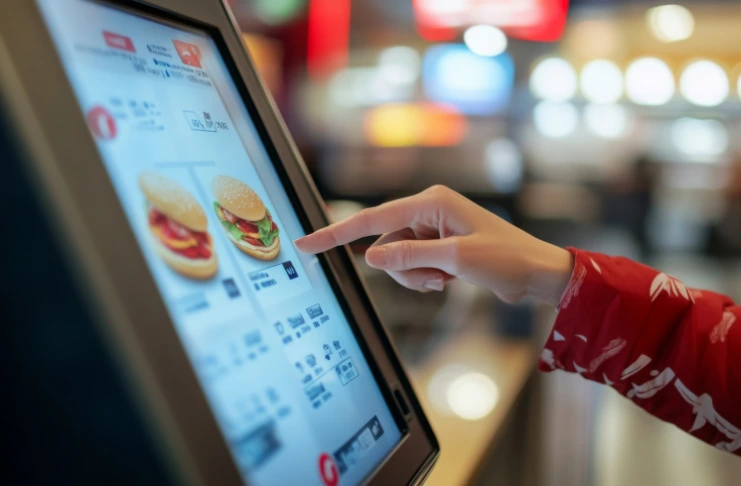
Technology plays a coordinating role in QSR operations. It connects demand, execution, and oversight into a single operational view.
Key systems include-
- POS platforms that capture and route orders
- Kitchen display systems that provide real-time visibility
- Inventory management software and forecasting tools that align prep with demand
- Reporting dashboards for sales, labor, and item performance
When systems operate in isolation, it is easy to overlook things — orders might get missed, inventory runs out unexpectedly, or staffing decisions don’t align with demand. Integrated systems, by contrast, allow teams to respond quickly and make informed decisions during service.
7. Inventory, Supply Chain, and Cost Controls
Inventory control has a direct impact on both costs and day-to-day service in QSRs. Menus are built around a small number of ingredients to make forecasting and storage easier.
Planning demand helps balance freshness with stock availability, especially for fast-moving items. Using the same suppliers across locations supports consistent quality and pricing, while frequent replenishment limits overstocking and waste.
When inventory breaks down, orders slow, mistakes increase, and service suffers. That’s why inventory is treated as an operational priority, not an afterthought.
8. Performance Monitoring and Daily Controls
Day-to-day QSR operations are guided by a small set of operational metrics that reflect speed, accuracy, and efficiency. Managers use these metrics to make real-time adjustments during service and identify recurring issues across shifts or locations.
Consistent monitoring ensures problems are addressed early, before they affect customer experience or profitability.
What are the Common Operational Challenges in QSRs?
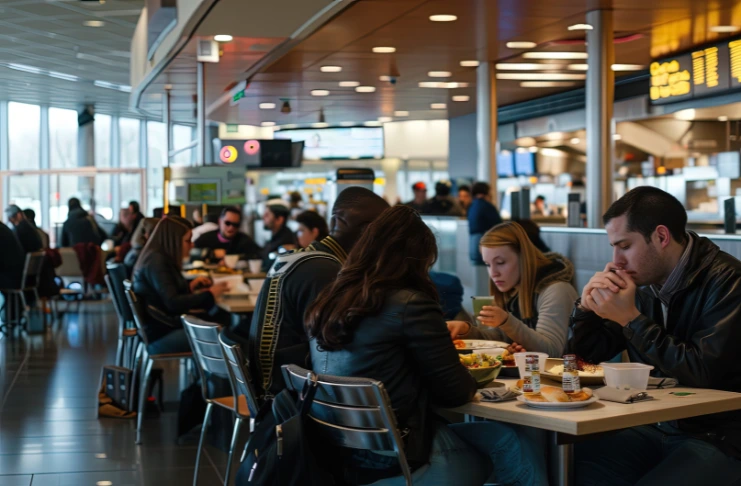
QSRs face a distinct set of operational challenges due to their high volume and time-sensitive service. These include-
1. Labor Shortages
Labor continues to be a major challenge for QSRs. High turnover and hiring gaps make it hard to keep teams stable. Even with clear processes, performance suffers when stores rely on new or frequently changing staff.
When teams are short-handed, workloads increase, service slows, and mistakes are more likely during busy hours.
2. Peak Hour Chaos
Peak hours amplify every operational weakness. Sudden order spikes can overwhelm kitchens, disrupt staffing plans, and slow fulfillment if workflows are not designed for pressure.
When prep levels fall short or key stations struggle to manage the crowd, service quality deteriorates quickly. Many QSRs perform adequately during off-peak hours but struggle to maintain control when demand is concentrated into short windows.
3. Inventory Shortages
Stockouts during busy periods force substitutions, slow service, and frustrate customers, while over-prepping leads to waste and margin erosion.
Inaccurate forecasting, inconsistent counting, or poor coordination between ordering and prep are often the root of these mismatches. Inventory challenges are especially disruptive in QSRs because volume leaves little room for correction during service.
4. Technology Overload
Technology is meant to make operations easier, but disconnected tools often create more work. Many QSRs use separate systems for ordering, delivery, inventory, and reporting that don’t sync well.
This leads to gaps in visibility, repeated tasks, and confusion during service. Instead of saving time, too many tools can slow decisions and push teams toward manual fixes.
5. Maintaining Consistency Across Locations
As QSRs expand, maintaining consistent execution across locations becomes increasingly difficult. Differences in staffing experience, local demand patterns, and managerial discipline can lead to uneven service quality.
Without strong oversight and standardized execution, small deviations compound, making it harder to deliver a uniform brand experience at scale.
How to Improve Operational Efficiency at Quick Service Restaurants?
The most effective operators focus on practical changes that improve flow, reduce rework, and make performance more predictable across shifts and locations.
Here are the best practices to achieve efficiency at your QSR-
1. Design Operations Around Peak Hours
Most QSR inefficiencies show up during peak hours, not during slow periods. Lunch and dinner rushes leave little time to make decisions quickly, often revealing gaps in staffing, prep, and kitchen flow.
Efficient operators plan backwards from their busiest hour. This involves-
- Pre-prepping high-volume items before the rush begins
- Assigning experienced staff to the busiest stations
- Temporarily limiting low-demand items
When systems are designed to survive peak pressure, off-peak service tends to stabilize on its own.
2. Standardize Tasks
Routine tasks are often where inconsistencies arise, which in turn reduces efficiency. When staff rely on personal judgment for prep, assembly, cleaning, or opening procedures, execution varies across shifts and locations. This is where clear SOPs can help bring stability to daily execution by
- Reducing training time for new staff
- Lowering error rates during busy periods
- Creating predictable service outcomes across units
Standardization works best when it defines how work is done, without attempting to micromanage performance.
3. Align Staffing With Demand
Fixed schedules are easy to manage but rarely efficient. They often result in idle labor during slow periods and understaffed floors during rushes.
High-performing QSRs staff dynamically. They use historical sales data to plan by daypart, cross-train employees across stations, and move people quickly when bottlenecks form. In this model, labor efficiency is measured by orders processed per hour, not by how lean the roster looks on paper.
4. Optimize Kitchen Layout
When service slows, adding staff is usually the first reaction. In many cases, the real issue is how work moves through the kitchen. Poor layout forces staff to cross paths, repeat movements, or wait on each other, which adds seconds to every order.
Improving kitchen layout focuses on removing this friction and results in the following operational gains-
- Reducing unnecessary staff movement
- Repositioning equipment to match prep and assembly flow
- Clearly separating prep, cook, and assembly zones
Even minor layout adjustments can shave seconds off each order, which compounds significantly at scale.
5. Engineer the Menu for Speed and Simplicity
Menu decisions directly affect how fast and reliably a QSR can operate. Over time, menus tend to grow as new items, limited-time offers, and customizations are added to drive sales. While each addition may seem small, together they increase prep time, complicate station workflows, and slow service during peak hours.
Efficient menu engineering looks at the menu through an operational lens, with an aim to reduce friction in the kitchen and improve speed and accuracy. This typically involves-
- Removing low-volume items that slow execution
- Increasing ingredient overlap across dishes
- Limiting excessive or high-friction modifiers
A simpler menu is easier to train, easier to execute, and more resilient during peak demand.
6. Streamline Order Flow Across All Channels

As the number of ordering channels increases, efficiency depends on coordination. Problems arise when counter, drive-thru, mobile, and delivery orders compete for the same kitchen attention. Well-run QSRs establish-
- Unified order queues in the kitchen
- Clear SOPs for each channel
- Dedicated handoff points to reduce congestion
This prevents any single channel from overwhelming the operation during high-volume windows.
7. Use Technology for Support
Technology improves efficiency only when it reduces effort and improves visibility. Tools that add steps or fragment information tend to slow teams down.
High-impact technology typically supports:
- Real-time order tracking in the kitchen
- Inventory visibility to avoid stockouts
- Live performance views for managers during service
Disconnected systems create blind spots. Integrated systems help teams act faster with fewer errors.
8. Track the Right Metrics
Operational efficiency improves only when performance is visible during service, not reviewed days later. In QSRs, delays, errors, and cost overruns compound quickly, which makes real-time awareness far more valuable than detailed post-shift reports.
Rather than tracking dozens of KPIs, efficient QSRs focus on a short list of indicators that reflect execution quality in the moment:
- Order fulfillment time
- Order accuracy rates
- Labor cost as a percentage of sales
- Waste and variance levels
These metrics are reviewed daily—often across shifts—not to produce reports, but to guide immediate course corrections. Small adjustments made consistently, such as repositioning staff or tightening prep levels, prevent minor inefficiencies from becoming embedded in day-to-day operations.
Quality Control and Food Safety in QSRs

In quick service restaurants, speed is non-negotiable. But it cannot come at the expense of food safety or quality. With high order volumes and standardized menus, even minor operational lapses can scale quickly, affecting hundreds of customers in a short span.
This makes quality control and food safety core operational responsibilities-
1. Quality Consistency at Scale
Consistency is one of the biggest promises QSRs make to customers. Delivering the same taste, portion size, and presentation across locations requires strict adherence to standardized recipes, prep methods, and assembly steps.
That’s why QSRs often integrate quality control checks directly into their workflows, ensuring deviations are caught early and don’t result in any service failures.
2. Food Safety Protocols
QSRs operate under detailed food safety guidelines covering hygiene, cross-contamination prevention, allergen handling, and sanitation.
These protocols are simple, with clear instructions that staff can follow even during peak hours. Regular training and visible compliance checks help reinforce safe practices as part of daily operations.
3. Temperature Control and Holding Times
Temperature management is critical in high-volume environments where food may be prepared in batches. QSRs rely on defined holding times and temperature thresholds to balance speed with safety. Equipment such as warmers, chillers, and thermometers is standardized and monitored to ensure food remains within safe ranges without degrading quality.
4. Audit Readiness
Because of their scale, QSRs must always operate as if an audit could happen at any time. Internal checklists, digital logs, and routine inspections help maintain compliance with local and federal regulations. Audit readiness reduces operational risk and ensures that health and safety standards are consistently applied across shifts and locations.
In QSRs, brand trust is fragile. A single food safety incident can escalate quickly due to social media and high customer volumes. Operational lapses do not just affect one unit; they can damage brand perception across the entire network. As a result, strong quality control systems are necessary for protective measures and long-term brand safeguard.
Conclusion
Running a successful quick-service restaurant depends on how well the operation works during busy hours. Clear workflows, well-trained teams, efficient kitchens, and disciplined menus make it easier to handle high order volumes without delays or errors.
When operators focus on removing friction from daily execution and make small improvements consistently, service becomes more reliable, and costs stay under control. Over time, this operational discipline helps QSRs control costs, reduce waste, and maintain quality as they grow.
It also makes it easier to adapt to new formats, channels, and customer expectations without disrupting day-to-day performance. In a category built on volume and speed, reliable execution remains the strongest advantage a quick-service restaurant can have.