

Running a restaurant not only involves preparing delicious meals but also making multiple decisions that require timely, accurate decisions. Estimating customer count is one of the major issues faced by restaurant owners. Excess wastage occurs when owners order more inventory than needed. On the other hand, under-ordering means risking the satisfaction of their customers.
Use of historical data to forecast restaurant sales is becoming increasingly important and useful for making accurate, effective predictions based on real trends and patterns rather than assumptions.
There are numerous benefits to using historical information. These include more efficient labor and inventory management, among many others. In this blog, we’ll discuss the basics of restaurant forecasting, including its importance and practical applications.
What You’ll Learn
- How to use historical data to improve restaurant forecasting and decision-making.
- Which data sources (sales, customer behavior, operations) matter most for accurate predictions?
- Practical methods like predictive analytics and labor forecasting are used to optimize daily operations.
- Proven strategies to reduce costs, improve efficiency, and increase profitability.
What is Restaurant Demand Forecasting?
Restaurant demand forecasting is the process of estimating how much a restaurant is likely to sell in the future by analyzing current trends and past performance. In simple terms, it uses historical sales data, real-time insights, and patterns from user demand to predict upcoming restaurant sales. This helps restaurant owners to make informed decisions rather than depending on assumptions.
So, why does it matter? Because accurate sales forecasting directly influences day-to-day and long-term success. It helps with:
- Planning inventory needs and avoiding overstocking or shortages
- Improving staff scheduling through effective labor forecasting
- Designing smarter pricing strategies and promotions
- Streamlining overall restaurant operations
- Earlier, many restaurant owners depended on intuition or experience. While that still plays a role, modern restaurant sales forecasting combines data analysis, historical data, and even machine learning to deliver more accurate forecasts. This shift allows restaurants to reduce costs, improve efficiency, and better align with actual customer demand.
What Types of Historical Data Should Restaurants Use?
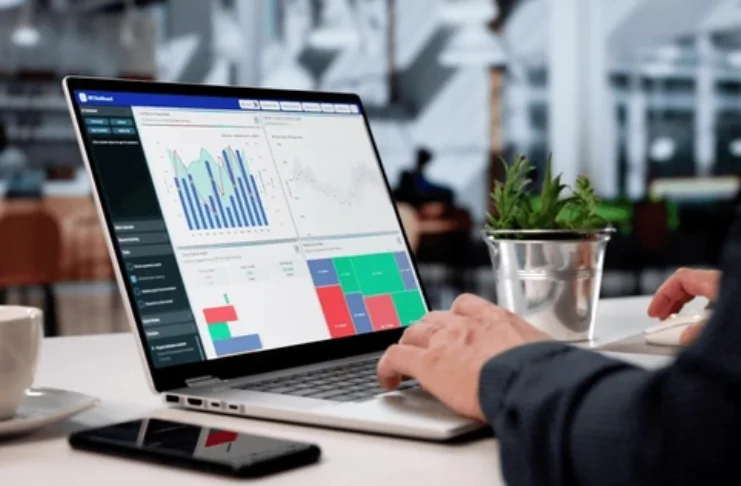
All historical data does not have the same value. To forecast effectively and efficiently, one needs to pay attention to data that affects restaurants’ demand, costs, and performance. By integrating various data sources, restaurant owners and managers will be able to make more accurate sales forecasts and gain deeper data-driven insights.
1. Sales Data
The basis of any restaurant sales forecasting strategy involves historical sales data. This includes:
- Daily and weekly restaurant sales
- Average sales per shift or time slot
- Long-term past data and sales trends
You can understand peak revenue periods, slow days, and recurring patterns by analyzing historical data. This helps them predict sales, estimate future revenue, and create more reliable projected sales. Consistent tracking of sales data also helps in better inventory forecasting and helps maintain stable profit margins.
2. Customer Behavior Insights
Understanding customer behavior is important for aligning operations with real demand. Key factors to analyze include:
- Peak dining hours and rush periods
- Frequency of repeat customers
- Patterns in overall customer traffic
The information obtained will assist restaurants in improving their workforce scheduling processes to ensure the right number of staff is available during periods of high customer demand and quiet times.
Furthermore, by observing customer behavior, restaurants can better predict customer needs and improve the customer experience.
3. Menu Planning and Performance
Another critical component of data analysis is understanding how menu items perform. By tracking historical sales at the item level, restaurants can identify:
- Best-selling dishes
- Low-performing items
- Seasonal favorites
This data will help you design your menu and control food costs. It further assists restaurant operators in deciding which items to promote, modify, or remove. When your menu planning is done based on data analysis, it becomes easier to meet customer demand while protecting profit margins.
4. External Factors
Restaurants are heavily influenced by external factors beyond their internal operations. These include:
- Weather changes
- Public holidays and festive seasons
- Nearby local events
- Broader market trends and seasonal fluctuations
For example, a major sporting event or festival can greatly increase your customer footfall, while bad weather may reduce it. Considering these factors in your forecasting process improves accuracy and helps restaurants better prepare for fluctuations in future demand.
Including market research alongside historical data analysis helps businesses stay competitive in the growing restaurant industry.
5. Operational Data
Operational metrics are often avoided, but are important when performing accurate restaurant forecasting. This includes:
- Table turnover rates
- Order preparation and service times
- Real-time sales data from POS systems
The POS system provides comprehensive forecast information to assist in determining actual sales and their performance efficiency. This is especially important in labor forecasting, inventory forecasting, and effective management of the restaurant business.
The integration of operational metrics with past sales enables efficient restaurant operations and minimizes food wastage.
Why Does Historical Data Matter So Much?
Today’s modern restaurant industry is moving at a rapid pace, and relying on gut feeling alone can lead to many errors. Here is where historical data analysis comes into play. It helps in decision-making through facts rather than mere speculations. It adds a sense of clarity to the whole process and hence eliminates any potential risks associated with it.
Key Benefits
- Helps identify patterns in customer traffic, visits, and spending habits
- Reduces uncertainty in forecasting sales and improves planning
- Improves operational efficiency by aligning resources with demand
- Supports better resource allocation, including staffing and inventory
By reviewing their sales history and comparing it with current sales, restaurants can better understand what positively affects their performance.
They can detect changes in consumer behavior much faster because they do not need to wait until the issue occurs; they start looking for ways to solve it before it actually happens. In general, the use of historical data enables making better business decisions and getting a clearer picture of forecasting results.
How Can Restaurants Use Historical Data Effectively?

Collecting historical data is only the first step; what really matters is how restaurants turn that data into meaningful actions. For effective restaurant forecasting, businesses need structured techniques that transform raw data into clear, actionable insights.
This is what makes accurate forecasting possible and helps restaurant owners make smarter decisions around operations, staffing, and revenue planning.
1. Time-Series Analysis
Time-series analysis is one of the most widely used methods in forecasting restaurant sales. It involves studying historical sales data over a specific period—daily, weekly, or monthly—to identify patterns and sales trends. The examination of sales allows for predicting future demand and improving the quality of forecasts.
2. Trend and Seasonality Analysis
Every restaurant experiences seasonal trends and seasonal fluctuations. For example, weekends, holidays, or summer months may bring higher customer traffic. By identifying these patterns through data analysis, restaurants can prepare for peak and slow periods. This will help in planning inventory better, ensure optimal staffing through labor forecasting, and help maintain quality of service throughout.
3. Regression Models
Regression models take data a step further by linking it with other influencing factors such as weather, discounts, and local events. These models help restaurants understand how external factors impact customer demand. As a result, businesses can estimate sales more accurately and adjust their forecasting process accordingly.
4. Predictive Analytics
Modern predictive analytics tools play a crucial role in advanced restaurant forecasting. They analyze large volumes of historical data and generate accurate predictions about future revenue and projected sales.
These tools provide valuable data-driven insights, enabling restaurants to improve operational efficiency and stay ahead in the growing restaurant industry.
5. Machine Learning
As machine learning becomes more prevalent, restaurant forecasting is becoming increasingly dynamic. Machine learning models learn from new data continuously, adapting their predictions as information changes. This increases accuracy and ensures that restaurants can respond quickly to changes in demand.
How Does Historical Data Improve Daily Restaurant Operations?
1. Inventory Management
Inventory forecasting helps keep stock at an appropriate level, avoiding either overbuying or shortages of critical supplies. By analyzing past sales trends, companies can better plan their operations.
Key benefits include:
- Reduced food waste due to better planning
- More accurate inventory projections
- Optimized inventory needs based on real demand
This not only improves operational efficiency but also helps protect profit margins by controlling unnecessary food costs.
2. Labor Forecasting and Cost Control
Labor costs are among the biggest expenditures for a restaurant. Labor scheduling is important in helping a restaurant plan ahead. By analyzing past sales trends and labor usage statistics, a restaurant can schedule its staff to meet customer demand.
This helps to:
- Schedule the right number of employees during peak and slow hours
- Reduce overtime and avoid overstaffing
- Control rising labor costs and other variable costs
- Maintain consistent service quality
Strong labor forecasting also ensures better control over food and labor costs, supporting overall financial management and smoother restaurant operations.
3. Menu Optimization
Sales analysis of past performance provides clear visibility about what is working and what is not. The restaurants can determine:
- Popular dishes that result in sales
- Dishes that perform poorly, resulting in increased costs for the restaurant
This improves menu planning and allows restaurant operators to focus on items that match customer preferences and expectations, ultimately helping to meet customer demand more effectively.
Jasper Reid, Founder & CEO, International Market Management, recently on Restrocast mentioned that the real power lies in how deeply restaurants analyze and apply their data. He further explained:

4. Pricing and Promotions
Combining market research with historical data allows smarter pricing decisions. Restaurants can respond to demand fluctuations and improve revenue strategies.
For example:
- Adjust pricing during high-demand periods
- Run targeted promotions during slower times
- Increase future revenue through strategic campaign
These insights help restaurants stay competitive in the evolving restaurant industry while supporting consistent growth and profitability.
What Challenges Do Restaurants Face When Using Historical Data?
Although forecasting in restaurants is an important tool, its use is complex. Restaurant owners often struggle to use information from their past performance records to accurately forecast future events.
Some of the most common issues include:
- Inadequate and inconsistent sales record information affects the accuracy of predictions
- Unexpected shifts in market trends render past data irrelevant
- Dependence on previous sales record data reduces flexibility in decision-making
- Difficulties in consolidating data from different POS systems
Beyond these, unexpected disruptions can significantly impact results. Events such as economic downturns, supply chain issues, or global crises can quickly alter customer demand and traffic patterns.
Even with advanced tools and predictive analytics, these uncertainties can affect the forecasting process. That’s why combining historical data with real-time insights is essential for improving accurate predictions and maintaining stable restaurant operations.
What Are the Best Practices for Accurate Forecasting?
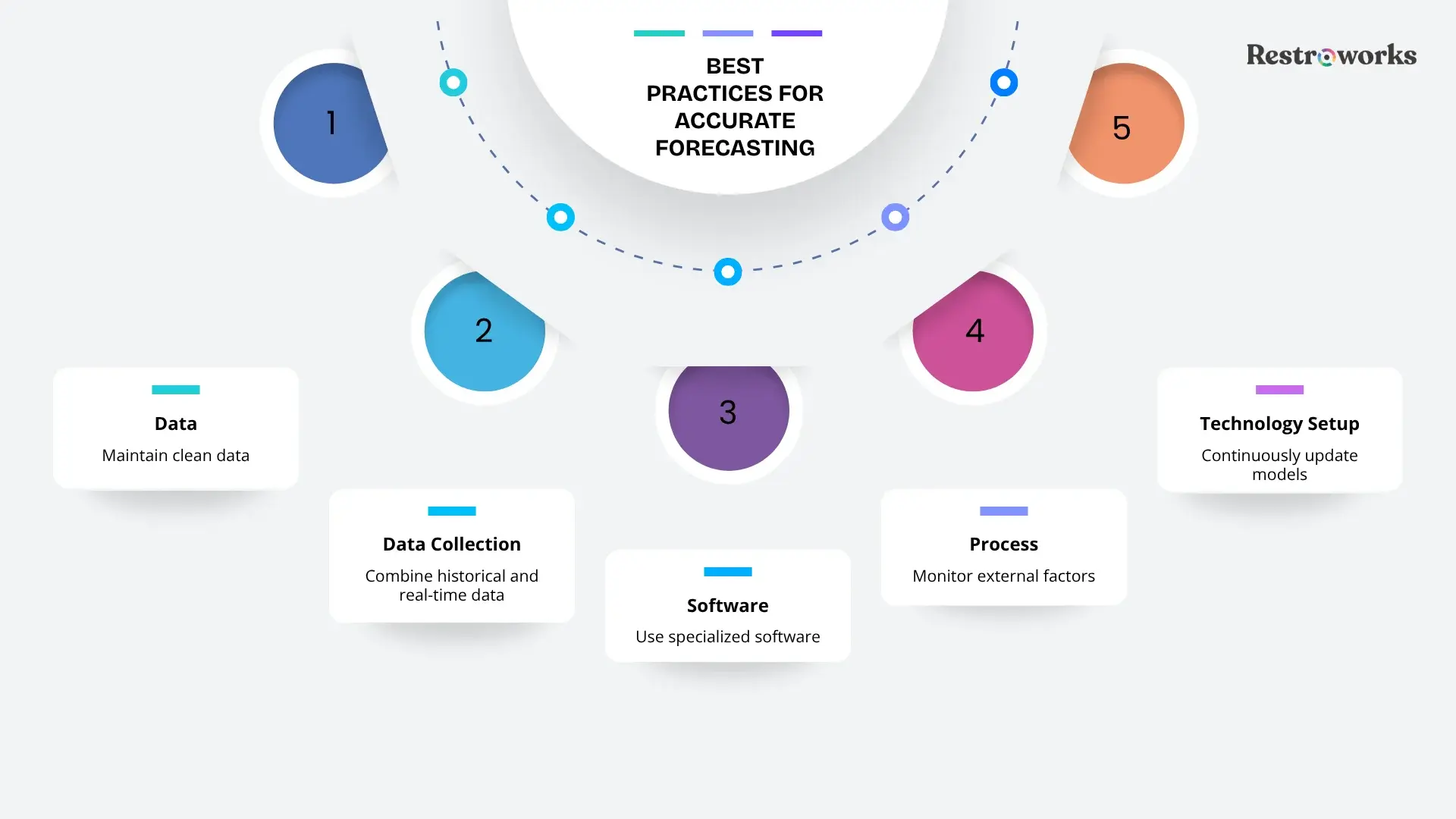
To achieve accurate forecasting in the restaurant industry, it’s important to follow a structured approach. The right practices not only improve sales forecasting but also help restaurant owners and restaurant managers make better operational decisions.
1. Maintain Clean Data
The foundation of accurate sales forecasts is high-quality data. Incomplete or incorrect data can lead to poor predictions.
- Regularly clean and organize historical data
- Clean data directly improves the overall forecasting process.
2. Combine Historical and Real-Time Data
Relying only on past sales data is not enough. Restaurants should blend it with real-time insights.
- Track live customer traffic and demand changes
- Adjust forecasts based on current trends
This combination leads to more accurate predictions and better responsiveness to customer demand.
3. Use Specialized Software
Modern tools powered by predictive analytics and machine learning can significantly enhance restaurant forecasting.
- Automate forecasting sales and reporting
- Generate actionable data-driven insights
These tools improve efficiency and reduce manual errors. For example, a popular American casual dining chain that has benefited immensely from predictive technology is California Pizza Kitchen (CPK). CPK is an American casual-dining restaurant chain that uses AI to forecast labor demand. The company previously used outdated tools to forecast labor demand and often struggled with inaccurate staffing due to frequent changes.
The company adopted advanced forecasting techniques and scheduling processes that use historical demand information to improve labor cost control. The new system enabled CPK to schedule labor based on actual customer demand.
The impact was quite significant. There was an over 50% decrease in labor variance through the use of the brand’s product, resulting in effective cost control and efficient operations in the restaurant. Furthermore, eliminating the manual schedule changes saved managers valuable time, allowing them to improve customer service.
Using artificial intelligence, the company made its operations more efficient through forecasting and better staff management.
4. Monitor External Factors
External influences can heavily impact restaurant sales. Always consider:
- Nearby local events
- Weather changes
- Shifting market trends
Including these factors ensures more realistic and accurate forecasting outcomes.
5. Continuously Update Models
Restaurant forecasting does not occur only once. Frequent updates are necessary.
- Update the estimated sales using new information.
- Adjust for fluctuations in customer demand.
The process results in improved forecasting and better future performance in restaurants.
Case Example / Scenario
Imagine a mid-sized restaurant struggling with inconsistent demand.
Before Using Historical Data:
- Over-ordering led to high food costs
- Poor scheduling increased labor costs
- Missed opportunities during peak hours
After Implementing Restaurant Forecasting:
- Improved inventory management
- Better labor forecasting reduced costs
- Increased customer satisfaction due to faster service
By analyzing historical sales data, the restaurant was able to:
- Increase profit margins
- Optimize restaurant operations
- Better predict future revenue
What Does the Future of Restaurant Forecasting Look Like?
The future of restaurant forecasting involves the continuous advancement of technologies to better utilize past data and predict future trends. In light of the increased competition in the restaurant industry, relying solely on rudimentary sales forecasting techniques is no longer an option. Instead, restaurants have started using modern software to improve forecasting accuracy.
Main Trends:
- Increased utilization of predictive analytics to derive meaningful insights and make accurate future forecasts about the revenue stream
- Effective integration with cloud-based point-of-sale systems to ensure sales data consolidation and efficient forecasting
- Real-time data analysis to address fluctuations in customer traffic and demand trends
- Tailored insights derived from the unique preferences of each customer
These advancements allow restaurant owners and restaurant managers to move beyond static reports and adopt dynamic, data-driven strategies. With machine-learning-powered tools, restaurants can continuously refine projected sales and adapt to shifting conditions.
Ultimately, businesses that invest in modern forecasting sales solutions today will be better equipped to optimize restaurant operations, control costs, and confidently navigate future challenges.
In today’s rapidly changing restaurant industry, which requires high competitiveness, mere intuition is insufficient. The use of past data helps restaurant owners and restaurant managers to make better decisions in all areas of their business.
From managing employee expenses to managing inventory, the usefulness of forecasts is undeniable. Focusing on data analysis, embracing contemporary technology, and enhancing the forecasting process enable restaurants not only to fulfill customers’ needs but also to grow sustainably.
The main learning? Data-driven decisions lead to better outcomes.
If you want to improve efficiency, reduce waste, and increase profitability, it’s time to embrace restaurant forecasting powered by historical insights.