
The biggest controllable expense in restaurants is food costs, and errors in calculating them could lead to dire consequences. A typical restaurant will allocate about 20%-40% of its income to food costs.
Effective food cost management is essential for restaurant profitability, as even small discrepancies in pricing can lead to significant revenue losses over time.
In this article, we look at all the formulas used to calculate food costs, from the simple to the complex, so you can manage them with ease.
What You Will Learn
- How to calculate food cost percentage using the correct formula, step by step
- What ideal food cost percentage looks like across different restaurant types
- How to calculate food cost for individual menu items and full menus
- How to reduce food costs, prevent waste, and save money without cutting quality
Why Do Food Costs Determine Restaurant Profitability?
The cost of food is one of the best indicators of the quality of management of the business. In other words, each percentage point of food cost that exceeds your target food cost represents the money lost before you can even realize your profits.
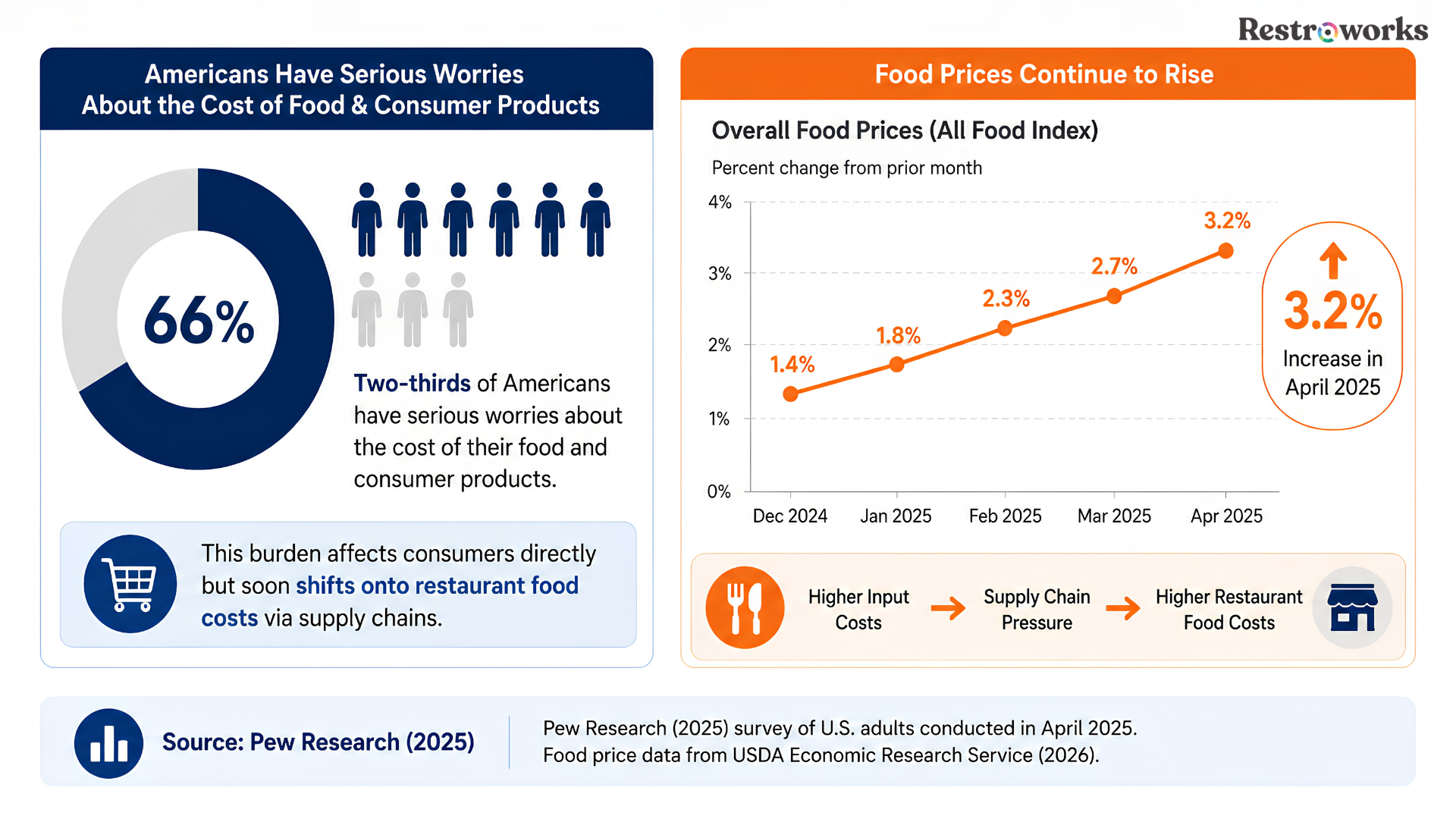
A survey conducted by Pew Research (2025) finds that two-thirds of Americans have serious worries about the cost of their food and consumer products. This is a burden that affects consumers directly but soon shifts onto restaurant food costs via supply chains. Food prices overall rose by 3.2% from April 2025, as reported by the USDA Economic Research Service (2026).
What Is The Food Cost Formula?
The food cost formula is the calculation restaurants use to determine what percentage of their food sales revenue is spent on ingredients. In simple terms, it answers one question: for every dollar of food sold, how many cents went toward buying the food?
To calculate the food cost percentage, you can use the formula:
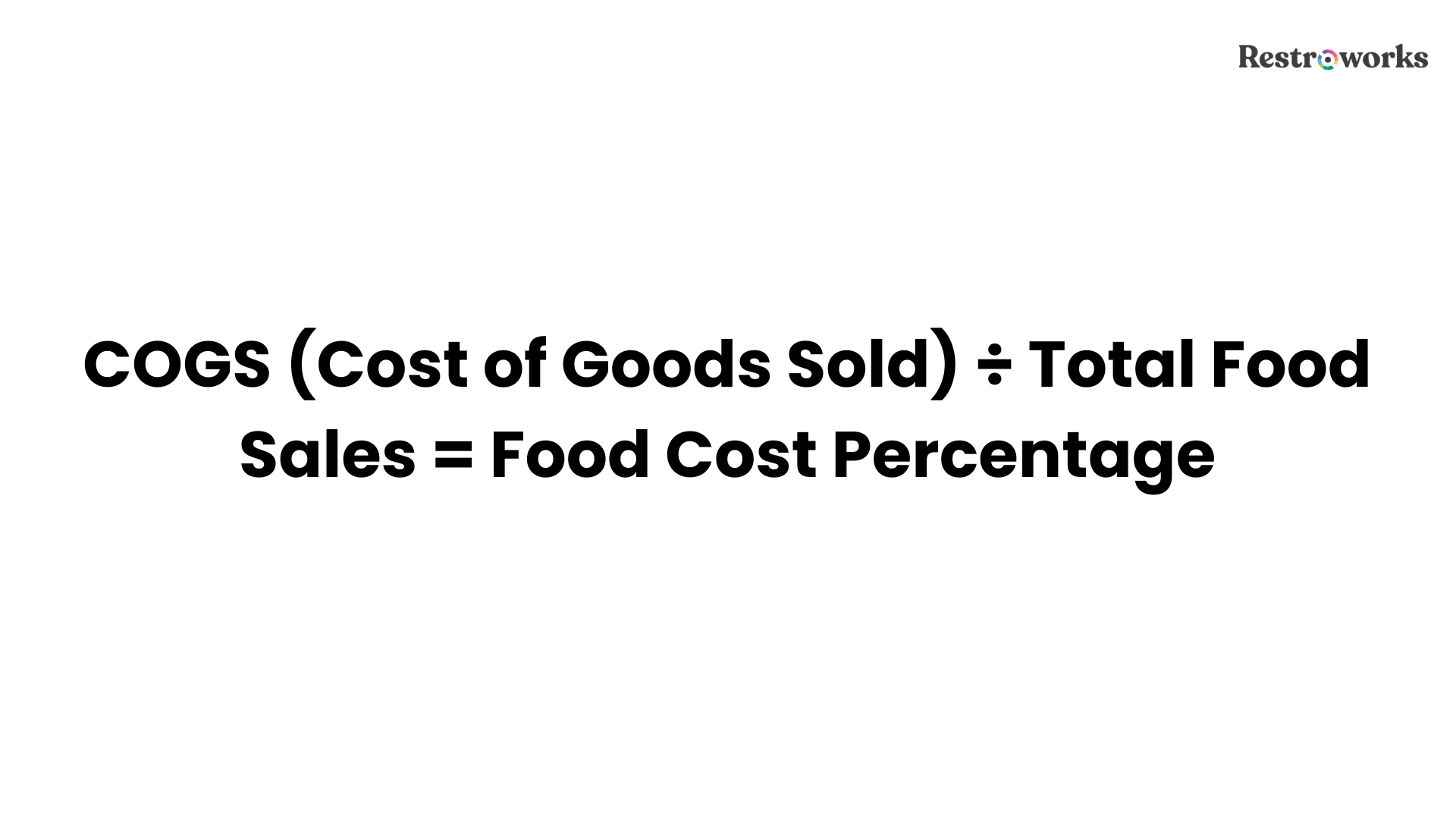
This helps monitor the financial performance of a restaurant.
Where the cost of goods sold is calculated as:
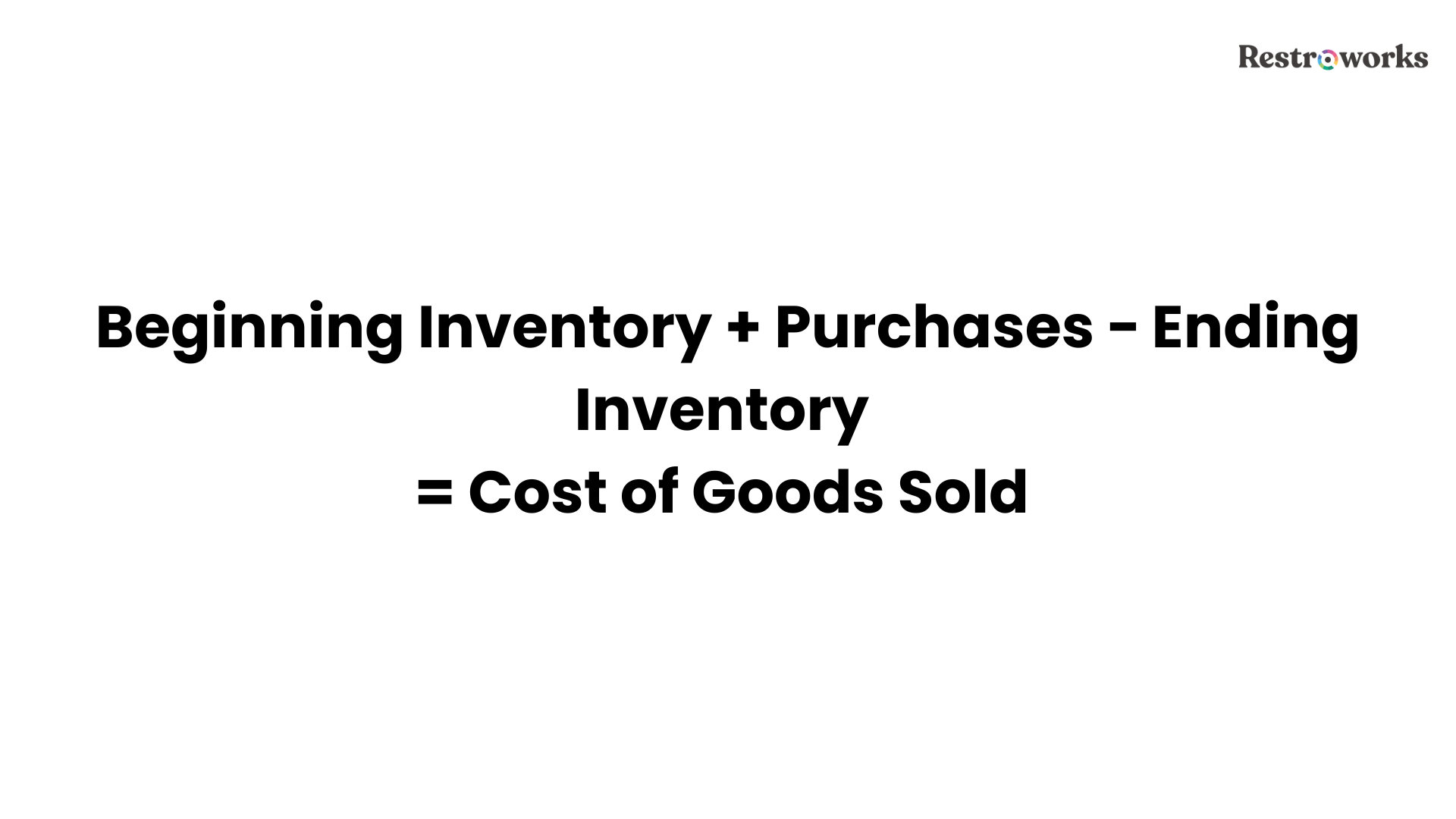
This food cost formula applies to any time period: weekly, monthly, or quarterly.
How Do You Calculate Food Cost Percentage Step by Step?
Calculating food cost percentage involves five clear steps. Each step feeds the next, so accuracy at every stage determines whether your final percentage is trustworthy.
- Step 1: Begin with the beginning inventory. As you start recording your data in the selected time period, count all the food in your restaurant. The beginning inventory is the total value of all food in dollars prior to any purchases being made.
- Step 2: Make note of all purchases. Record all the food purchases during the time period. This includes bulk purchases, small-amount purchases, and mid-week emergency purchases. You need to record everything that comes into your storeroom.
- Step 3: Note your ending inventory. As the time period ends, you should count all the remaining food in your restaurant and calculate its total dollar value. Ending inventory will be subtracted from the beginning inventory and purchases to give the total cost of food used.
- Step 4: Calculate cost of goods sold. Use the following equation: Beginning Inventory + Purchases – Ending Inventory = Cost of Goods Sold. This is the total cost of food for the period.
- Step 5: Divide by the total food sales. Divide your cost of goods sold by your total food sales for the period. Multiply by 100 to get a percentage value. This is your food cost percentage.
How Do You Calculate Food Cost For a Single Menu Item?
Calculating food cost at the menu item level is just as important as tracking overall restaurant food costs. It is how you determine whether each dish on your menu is priced correctly and contributes to profit.
To calculate food cost for a single menu item, add up the cost of every ingredient used in that dish. This is the total food cost for that plate. Then divide that figure by the menu item’s sales price to get the food cost percentage for that dish.
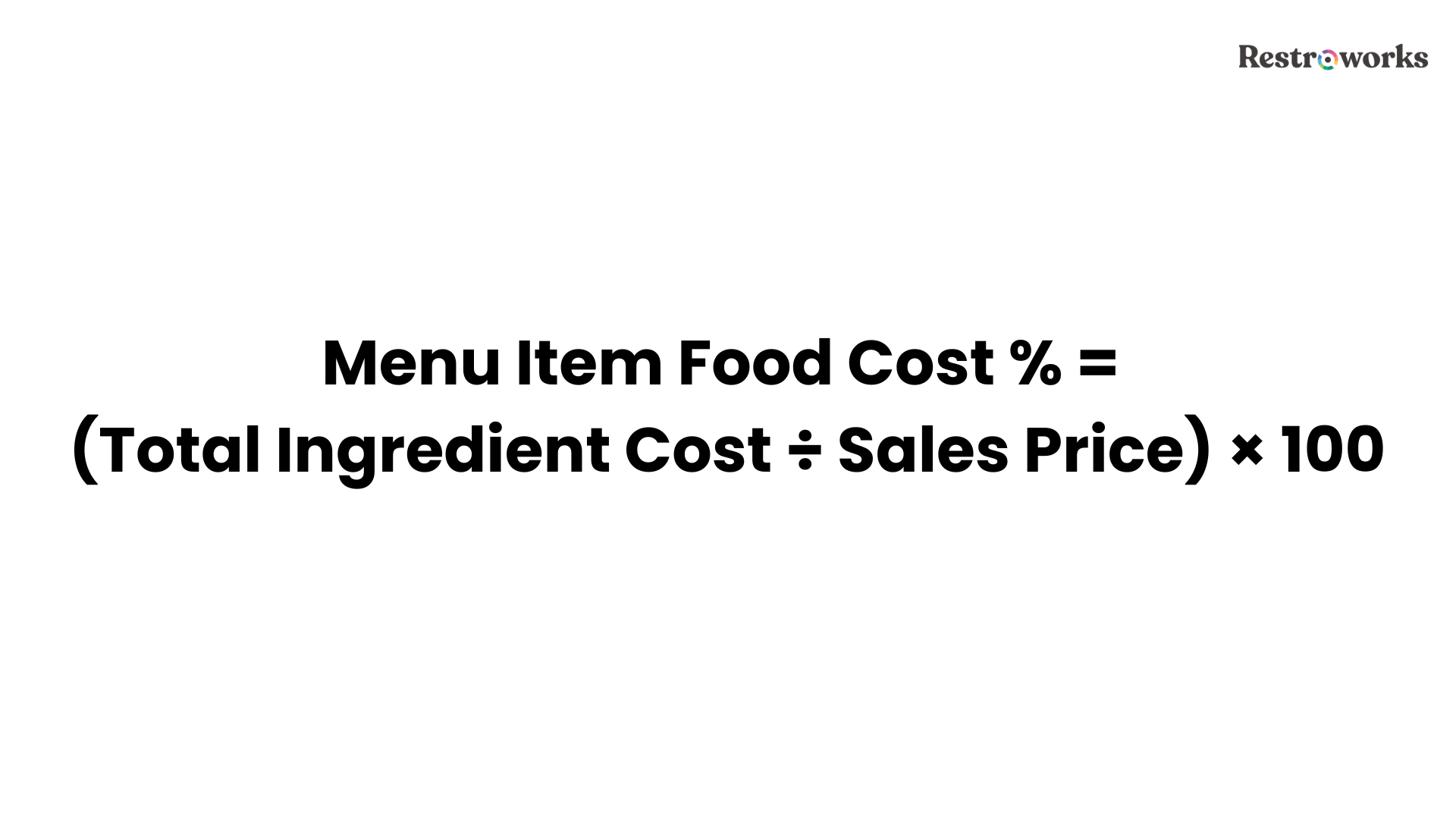
Calculating food costs at this level helps you identify which menu items are eating into margins. A dish with a food cost percentage above your ideal food cost threshold tells you to either renegotiate ingredient prices, reduce portion size, or adjust your menu pricing upward.
What is The Ideal Food Cost Percentage?
The desired food cost percentage is the target achieved in relation to the restaurant’s concept, menu pricing, and service delivery model. The desired food cost percentage does not apply across all restaurants; it depends on the nature of the restaurant and the mode of operation.
Most restaurants aim for a food cost percentage of about 25%-35%, depending on the operational model and menu. Fast-casual restaurants tend to target a desired food cost percentage of 25%-30%, while fine-dining restaurants target 35%-40%.
The ideal food cost formula calculates your target cost based on what you need to charge to stay profitable:
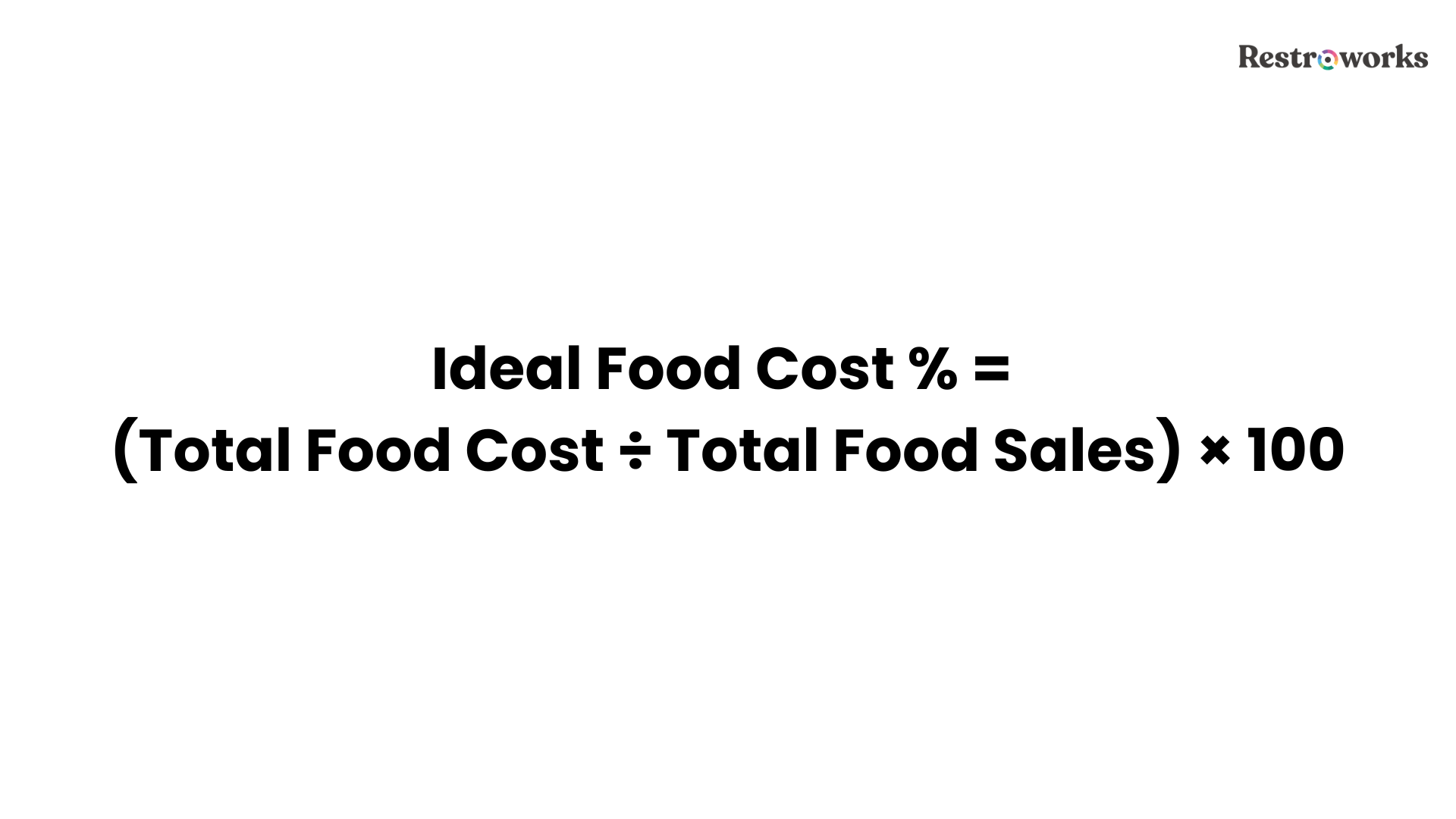
The difference between your actual food cost percentage and your ideal food cost percentage is the gap you need to close. If your actual food cost percentage is 35% and your ideal food cost percentage is 29%, that 6-point gap represents real money leaving the business.
What is The Actual Food Cost Percentage and Why Does It Differ from Ideal?
Actual food cost percentage is how much money was spent on actual food items in relation to food sales in the specific time period. Ideal food cost percentage represents your planned food cost based on your recipes and pricing. The difference is explained by waste, shrinkage, stealing, overportioning, and human mistakes when calculating food costs.
If you don’t know how to estimate food wastage and spoilage, your restaurant will be underestimating the actual food costs by about 3-8%, which will make budget planning impossible. The same pizza restaurant may have margherita at an actual food cost of 30.4% because it uses actual food cost for the pizza and the dough, and allows customers to have their pies remade for free.
INDUSTRY INSIGHT
How Do Food Cost Calculations Change for Different Restaurant Types?
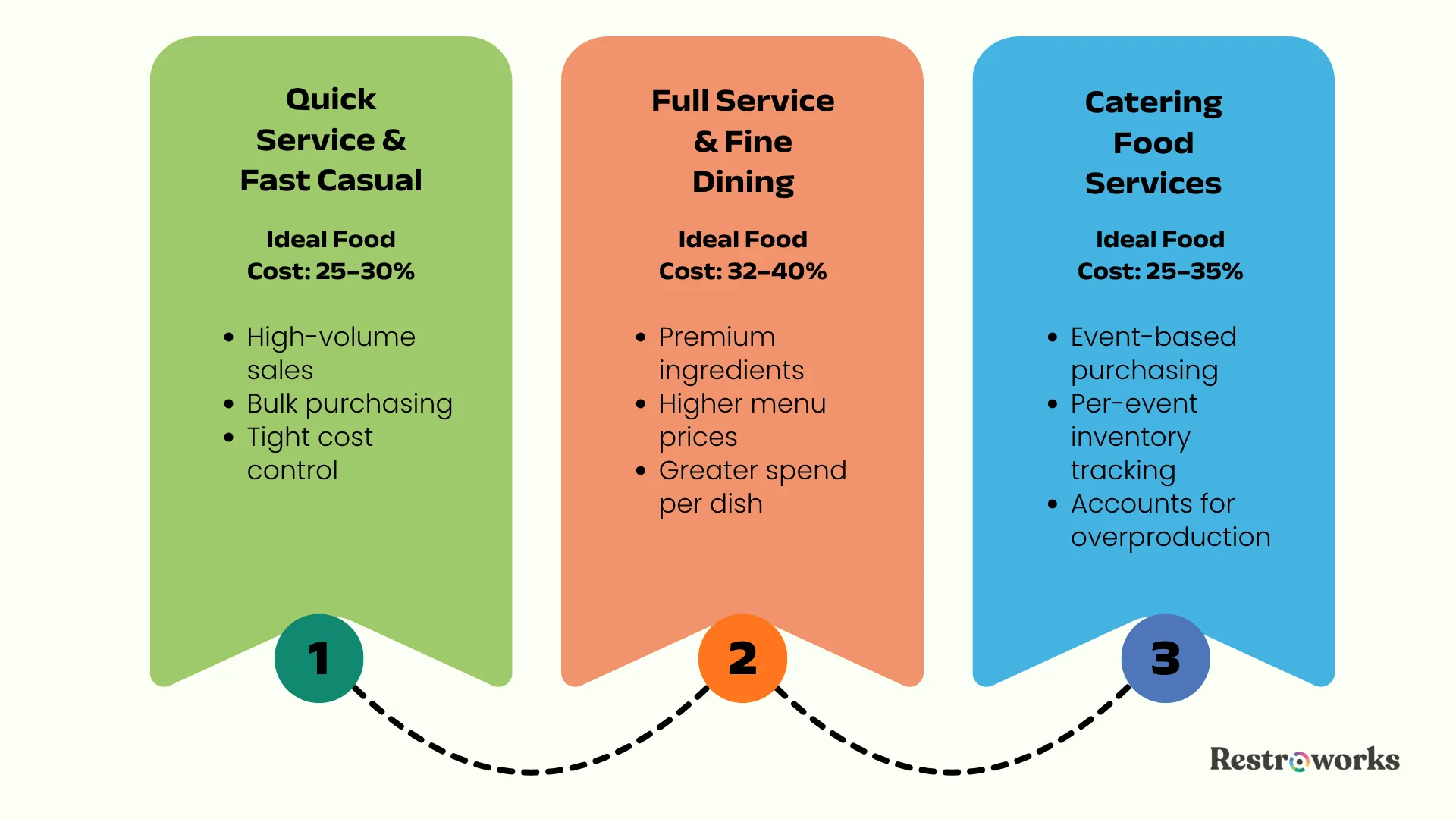
Food cost calculations use the same formula across all restaurant types, but the target ideal food cost percentage varies significantly depending on your service model. Understanding this prevents operators from applying the wrong benchmark to their specific business.
- Fast-casual and quick-service restaurants normally aim for food costs between 25% and 30%. With lower menu prices and a large number of transactions, food costs need to be stricter. Each menu item needs to be added to food sales effectively, and bulk buying is necessary to keep the cost of each serving low.
- The food cost for full-service and fine-dining restaurants will be between 32% and 40%, since menu prices will reflect higher-quality products and better plating. The greater revenue per customer enables the establishment to spend more on each dish and achieve the required profits.
- Food cost calculation for catering is different from other businesses, since buying is made on an event basis and not regularly. Calculations of beginning and ending inventories are made for each event separately, and food cost needs to include overproduction in the catering estimation to be able to provide for all customers. The food cost in catering is between 25% and 35%.
How Do Advanced Food Cost Calculations Reduce Variance?
Advanced food cost calculations go beyond the basic food cost formula to identify exactly why the actual food cost percentage deviates from the ideal food cost percentage. The most powerful of these is the theoretical-versus-actual cost of goods sold analysis.
Theoretical cost of goods sold is what your food costs should be if every recipe were prepared perfectly, with no waste, no over-portioning, and no spoilage. The actual cost of goods sold is what your inventory movement shows actually happened. The variance between these two figures tells you precisely where to look for problems.
There are countless case studies where brands have reduced their actual food cost variance.
How Do You Save Money on Food Costs Without Reducing Quality?

In a recent appearance on the Restrocast podcast, John Peyton talks about technology and innovation and how it helps restaurants. His point is clear: controlling food costs requires continuous operational improvements, smarter technology, and supply chain efficiencies that reduce waste and protect margins at scale.
Managing food costs doesn’t mean buying cheaper ingredients; it is about using the ingredients you buy more intelligently. There are five areas where most restaurants can reduce food costs and save money without affecting the customer experience:
- Portion control is the first and most immediate lever: Portion control is one of the simplest and most effective ways to manage food costs, as it helps avoid over-serving and reduces waste. Standardizing portion sizes across every menu item and training front-of-house staff on the portions being served eliminates one of the top challenges in food cost control: over-serving at no extra charge to customers.
- The second lever is menu engineering: after figuring out the food cost percentage for each menu item, it will become clear which menu items push the food cost percentage over the desired food cost percentage. Changing the price of expensive items, changing the ingredients, or simply eliminating those items from the menu allows you to have control over the total food sales contribution.
- Purchasing is the third lever; bulk purchases of ingredients that are easy to store lower the cost per unit and the price of these ingredients. Beginning inventory and ending inventory calculations on a weekly basis will show that overordering is one of the most common reasons for food waste, which does not bring any income.
- Waste tracking is the fourth lever: Food waste is the hidden variable that makes the actual food cost percentage exceed the ideal food cost percentage even when recipes and portions are correct. Regular inventory calculations are vital in food cost management to prevent spoilage and ensure that costs align with budget forecasts, helping to maintain financial health in restaurants. Effective food cost management requires knowing not just what you sold, but what you threw away.
- Technology is the fifth lever: Using restaurant management software or even an Excel spreadsheet to track purchases, calculate cost of goods sold, and monitor food costs weekly eliminates human error from food cost calculations.
Food costs are manageable only when the food costs are accurately measured. The food cost formula is quite simple, but implementing the food cost formula in each menu item, monitoring the food cost percentage relative to your desired food cost percentage weekly, and taking action based on the variance will make the difference between successful restaurants and unsuccessful restaurants.