
Why Do You Need to Market Your Cloud Kitchen?
On most delivery platforms, customers browse dozens of restaurants offering similar cuisines, prices, and promotions. What separates a successful cloud kitchen from one that struggles is the quality of its marketing.
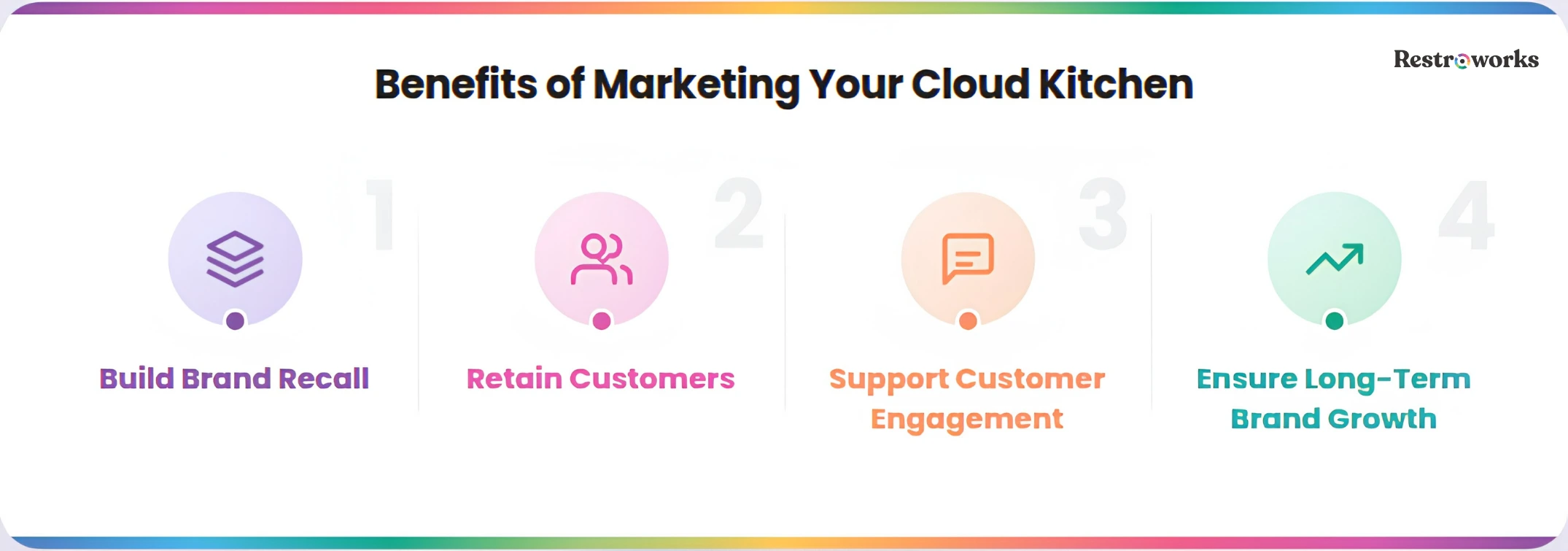
Cloud kitchen marketing builds four capabilities a delivery-only restaurant cannot get any other way:
- Brand recall: Consistent branding and engagement help your kitchen stay memorable so customers return instead of browsing competitors.
- Customer retention: Loyalty programs, win-back messages, and direct-channel incentives are the only mechanisms that change those odds. A working marketing engine should push your 30-day reorder rate above 30%.
- Ongoing engagement: Social media, email, and promotions keep your brand visible between orders.
- Long-term growth: Once your brand gains visibility, expanding your reach or launching additional virtual brands becomes significantly easier.
The global cloud kitchen market was valued at roughly $76.5 billion in 2025, projected to reach $175.14 billion by 2034. For a new operator, the implication is direct: more kitchens enter the market every quarter, so the delivery-app shelf space you compete for gets more crowded.
Operators who invest in marketing from day one claim positions that become progressively harder to win later.
Here are 13 strategies for marketing your cloud kitchen, sequenced from foundational to advanced. If your budget is under $2,000 per month, focus on strategies 1 through 4 and 10 first. Layer in the rest as order volume grows.
1. Build a Strong Brand Identity
A clear brand identity makes it easier for customers to recognize and choose your cloud kitchen when scrolling through dozens of options. For delivery-only restaurants, branding is entirely digital, so every element needs to work inside a small screen.
Before building the checklist below, answer one positioning question: what gap exists in your delivery zone that nobody is filling well? Open DoorDash and Uber Eats, search your cuisine category, and look at the top 10 results.
If every listing is generic with phone photos, your differentiation is specificity and quality (a focused concept like “Nashville Hot Chicken” with professional photography). If the top results are already polished, your angle is cuisine whitespace or occasion targeting: late-night, healthy lunch, family combo packs.
A delivery-app brand identity checklist:
- Restaurant name: Keep it under 30 characters so it displays fully on DoorDash and Uber Eats without truncation. Check name availability on all target platforms before finalizing.
- Logo: Use a high-resolution file so your logo renders crisply on delivery-app thumbnails across all screen sizes.
- Photography style: Consistent lighting, angles, and backgrounds across every menu item so your listing looks cohesive.
- Tone and descriptions: Same voice across every platform.
- Packaging alignment: Physical packaging should visually match your digital presence so the delivery reinforces the brand a customer saw on screen.
Consistent branding across digital touchpoints can increase revenue by up to 23% because customers recognize and trust the brand faster. At the same time, use a reliable cloud kitchen platform to keep your processes, menus, and inventory in sync to achieve that consistency.
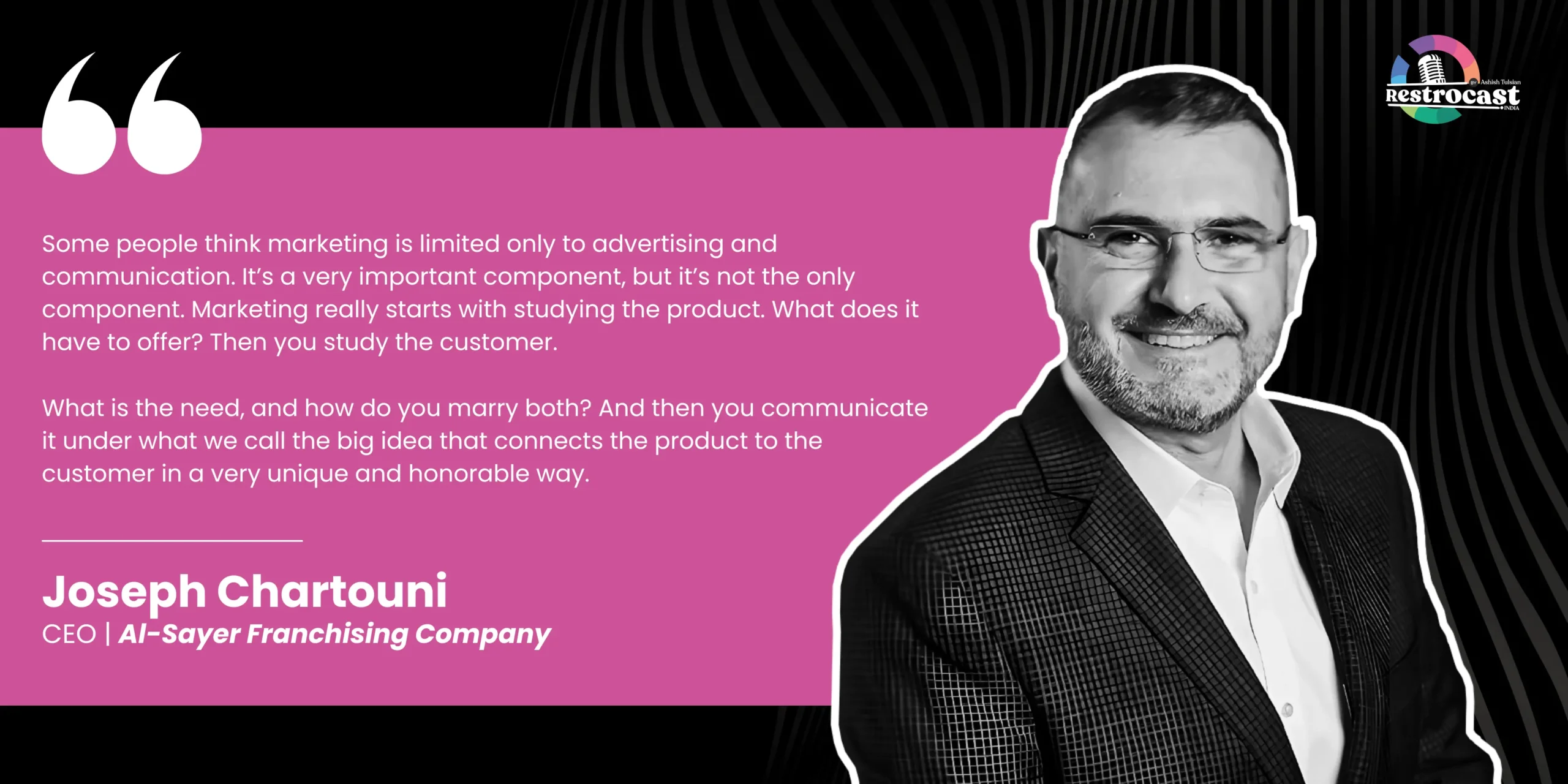
That said, study your target audience and customer preferences so as to keep your restaurant relevant for them. As Joseph Chartouni, the CEO of Al-Sayer Franchising Company, puts it in a conversation on Restrocast–
Run Several Virtual Brands From One Kitchen
One kitchen can carry several delivery-only brands, each with its own listings, photography, and menu aimed at a different occasion. Operators running multiple brands can see higher margins meaningfully because rent, utilities, and core labor are already paid for; each additional brand adds revenue with primarily incremental food and packaging costs.
A practical sequence for a new operator-
- Launch one brand on one delivery platform with a focused menu of 8 to 12 items.
- Photograph every item before the listing goes live.
- Judge the brand on order volume, rating, and repeat rate for 30 to 60 days before adding a second platform.
- Close it down if the numbers do not hold. The cost of stopping is a listing, not a lease.
About 41% of independent US restaurants operate virtual brands as of 2022, but timing matters. A second brand launched before the first reaches roughly 400 to 500 orders per month at a 4.5-star rating risks splitting kitchen staff attention during peak hours, increasing prep times, and dropping both brands’ ratings.
3. Create a Website and Build Your Direct Channel
On delivery apps, you compete with hundreds of other brands. Your own website gives your virtual restaurant a home and a direct-to-customer ordering channel. Customers order directly, and you save on platform commissions.
Even without a dine-in address, claim and optimize a Google Business Profile for your cloud kitchen. List your delivery radius, upload menu photos, and post weekly updates. This improves your visibility in local “food delivery near me” searches, which account for a growing share of delivery discovery outside the apps.
Your website should:
- Feature your brand details: name, tone of voice, and color scheme.
- Be simple, fast-loading, and optimized for mobile.
- Make it easy to view the menu and place orders.
- Show service location, contact details, and hours.
What a marketplace order actually costs: Let’s see an example. Say at a $38 average order value, a 30% commission costs $11.40 per order. The same order through a direct channel at 2.9% plus $0.30 processing costs $1.40.
Even if you factor in the 10% to 15% direct-order discount you offer to incentivize the switch: at 12.5% (midpoint), that is $4.75 off, bringing the direct-channel cost to $6.15 per order.
The net saving is still $5.25 per order versus marketplace. Every 100 orders moved from marketplace to direct retains roughly $525 after accounting for the discount.
Capture every direct customer’s email and phone number at checkout. A single customer who reorders three times through your direct channel saves you $15.75 in commission compared to three marketplace orders.
4. Be Active on Social Media
Social media helps your cloud kitchen stay visible even when customers are not ordering. The key difference from traditional restaurant social media: you cannot show a dining room, a patio, or a location. Everything has to convey quality through food and process alone.
- Pick 2 platforms, not 5: Instagram and TikTok work best for delivery-only kitchens because food content thrives on visual-first feeds.
- Lead with the unboxing moment: The content that performs best for cloud kitchens is the delivery experience: how the food looks when the bag opens, whether the container kept it intact. This is the moment your customer actually experiences.
- Show prep speed and care: Short reels of food being assembled quickly and cleanly signal operational quality.
- Repost customer photos: User-generated content from real deliveries is one of the strongest forms of social validation a delivery-only brand can share.
- Every post needs a next step: A link to your direct ordering site, a promo code, or your delivery-app handle. Posts without a conversion path are visibility without revenue.
Academic research confirms that social media strategies significantly influence cloud kitchen customer awareness and purchasing decisions (Journal of Management and Service Research, 2025). But followers do not correlate with revenue unless you drive them to a direct ordering channel. Social media without conversion infrastructure is vanity marketing.
5. Consider Digital Marketing and Advertising
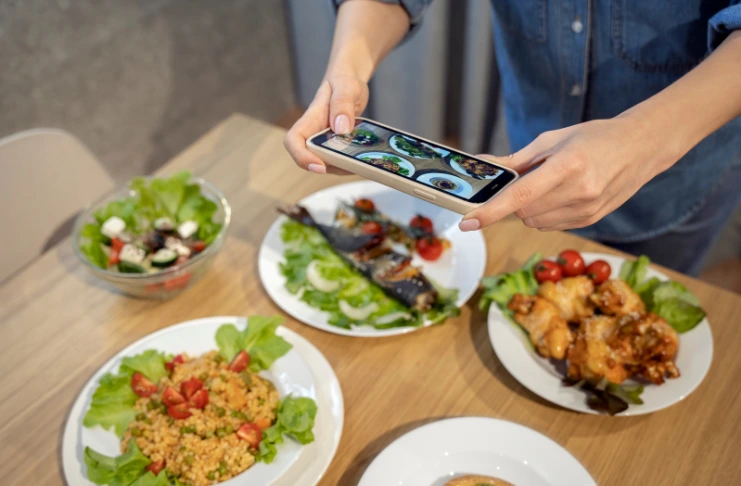
Organic visibility only gets you so far. Digital ads put your cloud kitchen in front of people who would not have found you otherwise.
Instagram, Facebook, and Google offer pay-per-click advertising where you only pay when a customer shows interest. Start with $15 to $25 per day, see what performs, then scale what works.
For delivery-platform ads, operators typically report ROAS of 2x to 3x with default settings and 4x to 5x with optimization. Run promotions during peak windows (11 AM to 2 PM and 5:30 PM to 9 PM weekdays, plus weekends), and pair every promoted listing with strong food photos.
One common mistake: running Instagram or Facebook ads that link to DoorDash or Uber Eats. Restaurant social ads typically cost under $1 per click, but that traffic lands on a platform that takes 28% commission and owns the customer data.
Route paid social traffic to your direct ordering website instead, where you capture the customer’s email and phone for future marketing at near-zero cost.
6. Work With Local Food Influencers
Influencer marketing for cloud kitchens works differently from traditional restaurants. You are trying to drive orders within a specific delivery radius, not build long-term brand recall through big names.
A smaller, local food creator saying “I ordered this, you should too” can outperform larger influencers because the recommendation feels personal and the audience is geographically concentrated.
- Collaborate with micro-influencers (10K to 100K followers) in the food niche. In US metro areas, expect $150 to $500 per post.
- Send curated meal kits to local creators and ask for reviews.
- Post influencer-created videos showing packaging, portion size, and real delivery experience.
- Pair collaborations with a clear hook: a limited-time offer, combos, or exclusive deals.
Gusto’s Deli, a cloud kitchen launching in Dubai, used experiential marketing and organic social amplification from local creators instead of paid advertising. The approach generated over 400,000 combined reach and exceeded their sales target by 3x during the launch campaign with zero paid ad spend.
While this is Dubai, the mechanics transfer directly to US metro markets: local creators, curated drops, and earned social content instead of paid ads.
7. Offer Deals and Discounts
Discounts can accelerate early order volume, but they require careful math.
- Offer first-time-order discounts to reduce the risk of trying something new.
- Push offers during low-demand windows.
- Offer combos to increase average order value.
- Run limited-time offers to create urgency.
The risk: offering 20% off without calculating how many orders are truly incremental versus orders that would have happened with existing customers at full price. If 60% of redemptions come from existing customers, your effective CAC through that discount is higher than you think.
Platform algorithms see increased velocity and rank you higher, but turning discounts off can cause a volume crash if the algorithm expects promotion-driven ordering.
8. Tap Into Retention Marketing with Customer Loyalty Programs
Most cloud kitchens spend too much time chasing new customers and not enough keeping the ones they have. If someone ordered once and had a satisfactory experience, a digital loyalty program (referral rewards, points per order) can boost frequency and value.
Wow Bao, a Chicago-based virtual kitchen brand operating through 600-plus partner locations, addressed this by launching one of the first virtual-kitchen loyalty programs, rewarding direct orders with points redeemable for future purchases.
The program was designed to shift repeat customers off third-party platforms and onto owned channels.
Build retention around-
- A points-based loyalty program through your direct ordering channel
- Win-back sequences triggered when a customer has not ordered in 14 or 30 days (email or SMS)
- Personalized offers based on past order history
- Packaging inserts with QR codes linking to loyalty signup
Build an Email and SMS Engine
Email and SMS are the lowest-cost retention channels available and the only ones where you own the audience. Every direct order should capture an email address and, with consent, a phone number.
- Automated triggers: Set up three sequences: a welcome offer after the first order, a win-back message after 14 days of inactivity, and a re-engagement offer after 30 days.
- Weekly or biweekly sends: A short email featuring a new menu item, a limited-time combo, or a loyalty point reminder keeps your brand top of mind between orders.
- SMS for time-sensitive offers: Flash promotions during slow periods (Tuesday lunch, late-night) perform well via text because open rates for SMS consistently exceed 90%.
A list of 500 direct-order customers receiving one email per week costs under $20 per month through most email platforms and can generate 15-25% more repeat visits.
9. Focus on Menu Engineering
Your menu is the heart of your cloud kitchen model. Use the classic menu-engineering matrix adapted for delivery: categorize every item by contribution margin (revenue minus ingredient cost) and order volume-
- Stars (high margin, high volume) get top placement and promotion spend.
- Workhorses (low margin, high volume) need price optimization.
- Puzzles (high margin, low orders) need better positioning or photography.
- Dogs (low margin, low orders) get removed.
At launch, start with a focused menu of 8 to 12 items to keep operations tight, reduce waste, and maintain quality during peak hours. As you scale, expand to 15 to 25 items based on order data. A menu much larger than that leads to slower prep times, more ingredient waste, and inconsistent quality.
Keep your menu design and branding consistent across delivery apps, social media, and your website.
10. Encourage Online Customer Reviews
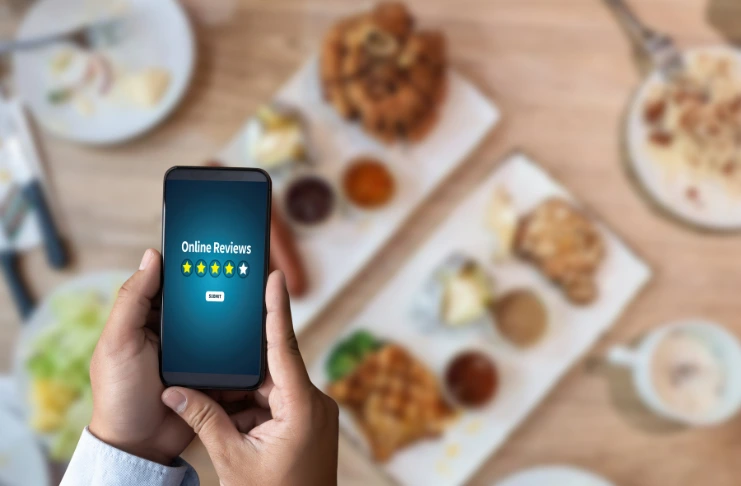
Any customer choosing between restaurants on a delivery app will almost always check reviews. Positive reviews boost your profile visibility, but most customers will not leave one unless prompted.
- Include a short note in packaging or a quick message after delivery.
- Highlight recent reviews on the delivery app listing.
- Respond to every review, especially negative ones, within 24 hours.
- Use negative reviews to improve operations.
Not all negative reviews affect your ranking equally. Platform algorithms weight recent reviews more heavily and treat specific complaint types differently.
A 1-star review about “late delivery” (a driver issue) impacts your ranking less than “food was cold” (a kitchen issue). Prioritize resolving complaints the algorithm weighs most.
11. Use Location Data Analytics to Capture High-Demand Delivery Zones
Growth usually comes from going deeper in the right areas, not wider everywhere. Platforms actively segment delivery areas into zones because demand and delivery efficiency vary by location.
- If 40% to 50% of your orders come from a few zip codes, increase visibility there instead of chasing new areas.
- Test new concepts only in high-performing areas to reduce risk.
- If one area orders more on weekends or late nights, run targeted offers there.
Your kitchen’s physical location matters more than most guides acknowledge.
Tenants in industrial locations several miles from dense residential areas pay significantly less rent but typically face higher customer acquisition costs and lower order frequency because they fall outside platform “priority zones” for promotion. Location alone can predetermine your marketing ROI before you run a single ad.
12. Use Packaging as a Promotional Tool
Packaging is one of the few physical touchpoints you have with customers. Every order is an opportunity to influence the next one.
Ensure your packaging keeps meals secure, maintains food quality and temperature, looks presentable, and uses eco-friendly materials. In the US, branded packaging typically costs 5-10% per unit above generic containers. Insert cards with a QR code linking to your direct ordering site and a next-order discount.
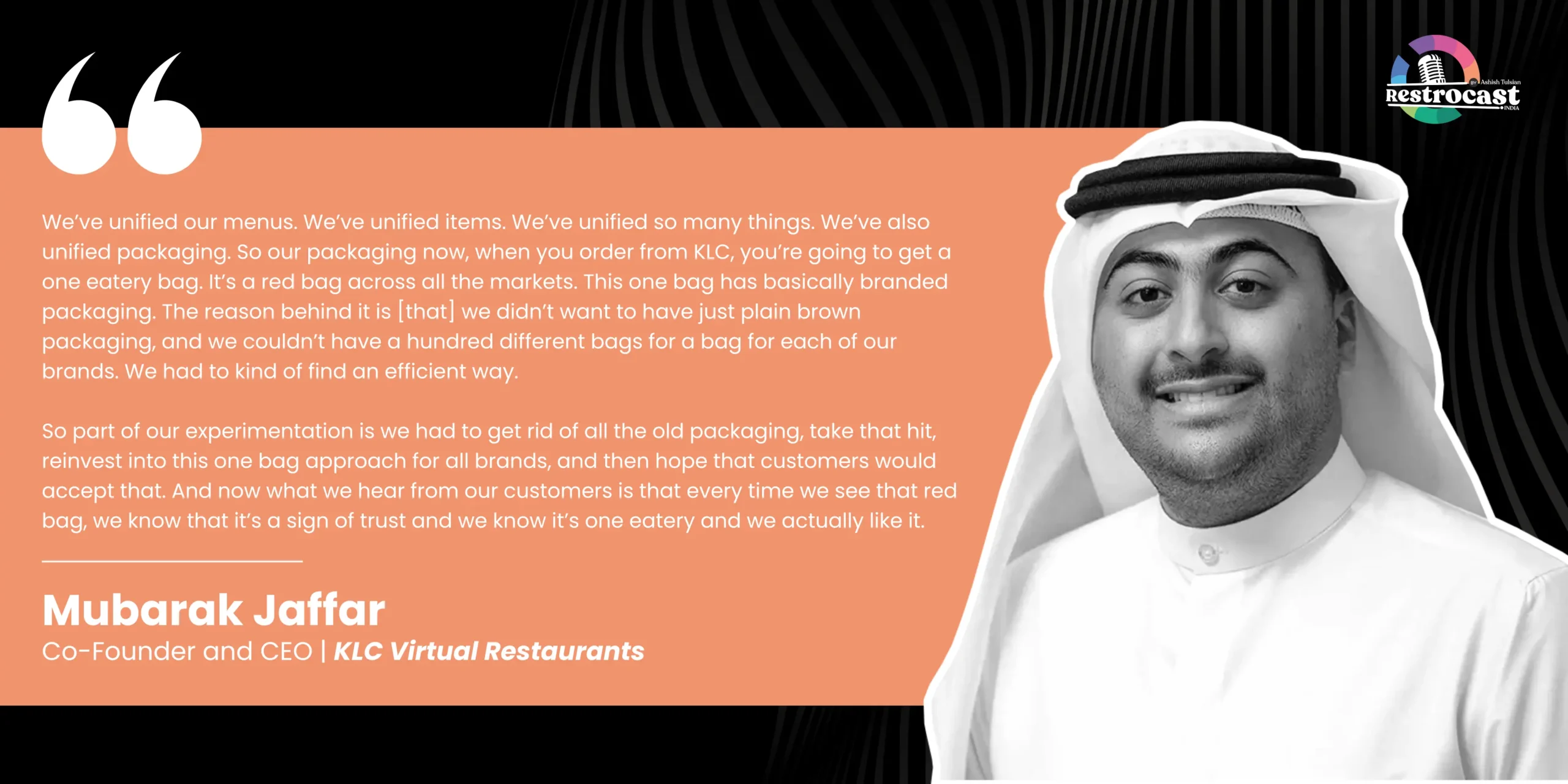
Next, make sure all your packaging materials- from bags, containers, napkins, and utensils have consistent branding, as Wow Bao does. Even if you have multiple brands, keeping even one branding element consistent (color or font) across brands is a good way to establish familiarity.
Talking about maintaining operational efficiency and consistency across brands at KLC Virtual Restaurants, Mubarak Jaffar, the Co-Founder and CEO, says-
13. Build a Multi-Brand Marketing Strategy
One of the biggest advantages of a cloud kitchen is running multiple brands from the same setup. Once your first brand sustains 400-plus orders per month at a 4.5-plus star rating, you can begin marketing a second brand without doubling your overhead.
Create separate brands for different customer preferences or occasions, and manage the marketing systematically:
- One social media presence: One strong primary page featuring different brands.
- Reuse content: The same dish can work for two brands with different naming and positioning.
- Identical operations behind the scenes: Same kitchen, same ingredients, similar preparation. Only branding, menu naming, and packaging differ.
- Cross-promote through packaging: If someone orders from one brand, use inserts to introduce your other concepts.
Everybody Eats, the holding company formed when C3 founder Sam Nazarian acquired Kitchen United’s ghost kitchen assets in 2024, operates dozens of delivery-only brands including Krispy Rice and Sam’s Crispy Chicken through shared kitchen infrastructure.
The model works because each brand targets a different occasion while sharing the same kitchen, staff, and core ingredients.
What are the Key Metrics to Measure Marketing Success?
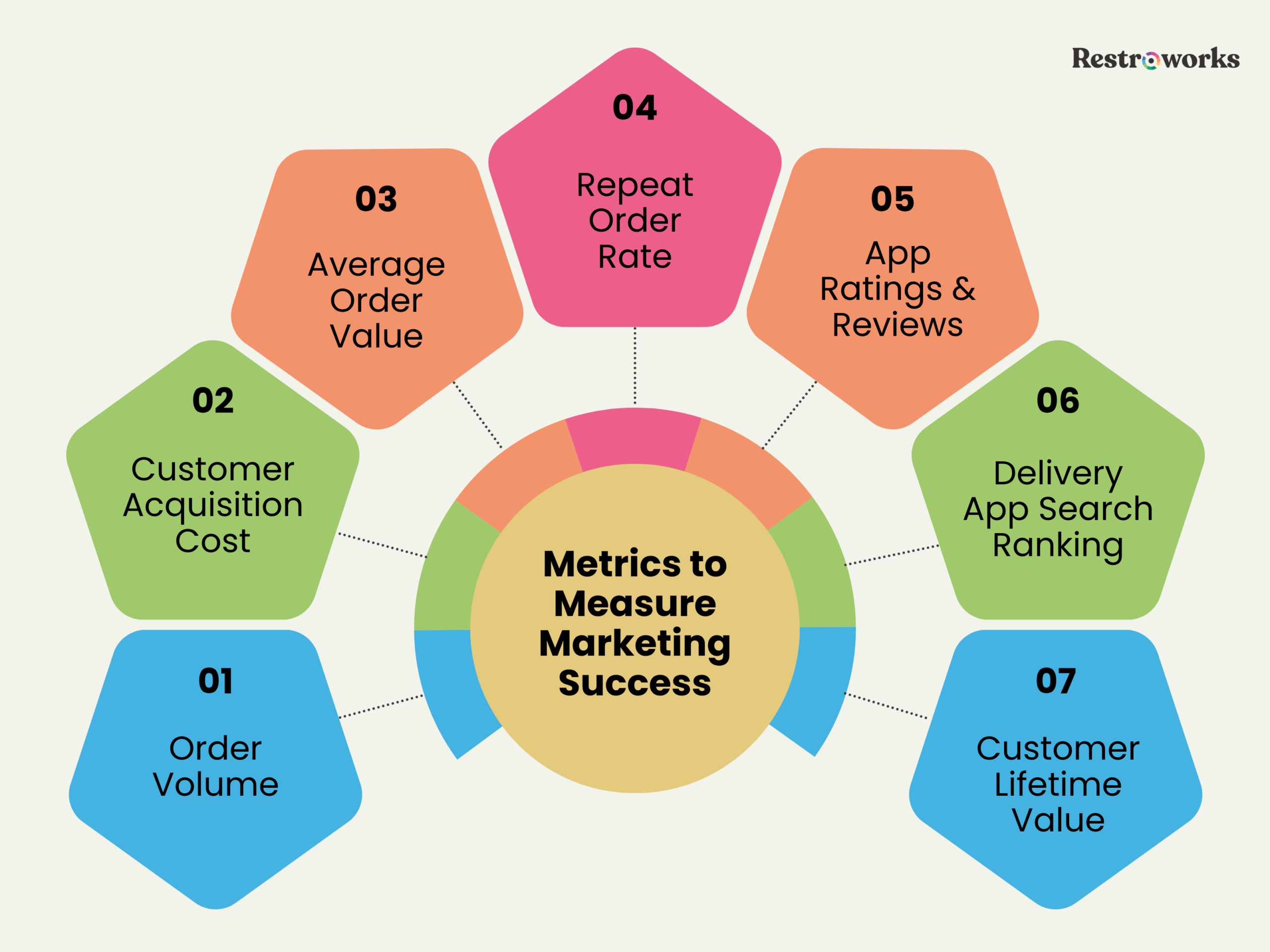
Clearly define success metrics for your online marketing campaigns and track them regularly to understand performance.
- Order Volume: Daily, weekly, and monthly counts compared year-on-year. Track whether orders stay steady or spike only during promotions.
- Customer Acquisition Cost (CAC): What you spend to get one new customer.
- Customer Lifetime Value (CLV): How much a customer is worth over time. Low CLV means focus on retention over acquisition.
- Average Order Value (AOV): Revenue per order across segments and channels.
- Repeat Order Rate: The percentage of customers who order multiple times.
- Delivery App Search Ranking: Where you appear in search results directly impacts visibility.
- App Ratings and Reviews: Look beyond overall rating to identify patterns in feedback.
How to Allocate the Marketing Budget for Cloud Kitchens?

A US cloud kitchen typically spends $500 to $5,000 per month on marketing.
Use the 70-20-10 framework: 70% resources to proven channels already producing orders, 20% to promising channels you are testing, 10% to experiments. At $3,000 per month, the framework maps like this:
- Proven channels (70%, ~$2,100): Delivery platform promotions and listing optimization. These are where your customers already are and where conversion data is strongest.
- Promising channels (20%, ~$600): Retention campaigns, social media content, and micro-influencer collaborations. Channels showing early traction that you want to scale.
- Experiments (10%, ~$300). Test new formats, platforms, or offers. Scale what works into the 70% bucket next month.
Once you identify what brings in orders, concentrate on improving those channels.
Quick-Reference Checklist
- Target: A good target is 50+ orders in your first 30 days to trigger platform algorithm visibility.
- Monthly marketing budget: $500 to $5,000; allocate using the 70-20-10 rule.
- Direct channel math: At an estimated $38 AOV, every 100 orders shifted from marketplace to direct saves roughly $525 after accounting for a 12.5% direct-order discount.
Cloud kitchen marketing strategies come down to being deliberate with where you focus your effort and spend. Once you figure out what’s actually bringing in orders, shift the focus to improving those areas instead of constantly experimenting with new tactics or channels.
Over time, small improvements in online visibility, conversion, and repeat orders can generate great results and stabilize growth for your cloud kitchen business.