

It is not enough for anyone interested in opening a fast-food restaurant to just locate and build a menu. The fast food business calls for optimization of speed, quality, and price at once. This guide offers insight into the true costs of starting up, business models, and processes that differentiate winners from losers.
What You Will Learn
- How to choose the right fast food business model for your capital and goals
- How to build a comprehensive business plan that lenders and investors will take seriously
- What projected costs, permits, and technology investments you actually need to budget for
- How to attract customers and build a marketing strategy that drives sustained growth
What Defines a Fast Food Business (vs Other Restaurant Types)
A fast-food restaurant focuses on order fulfillment time more than any other dimension of service delivery, striving for a 90-second-or-less order delivery goal. Its menu is short and consistent rather than creative. A short menu containing only 10 to 15 items can be very beneficial to maximizing speed and profitability in your restaurant.
INDUSTRY INSIGHT
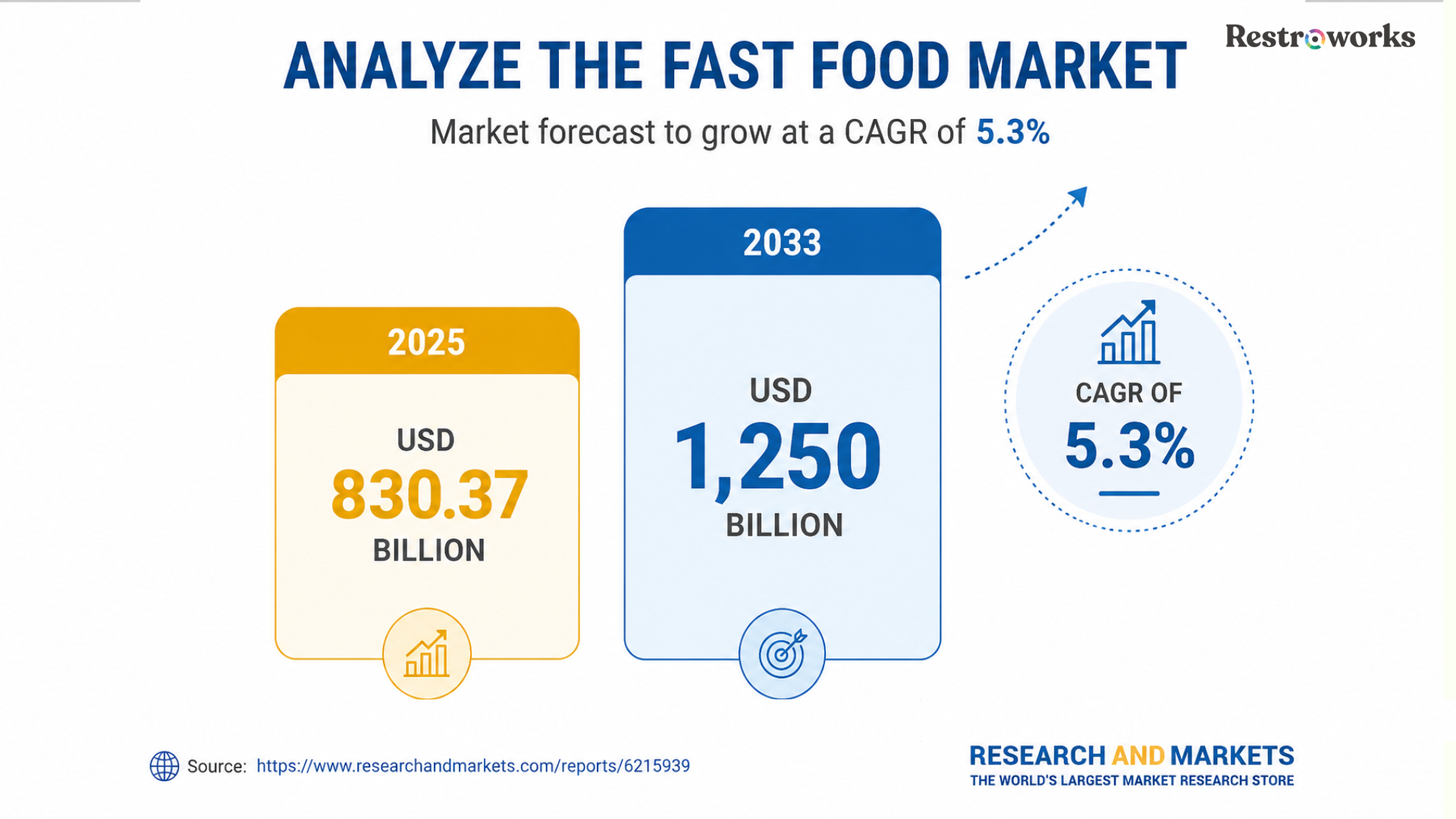
Innovation in fast-food research conducted on a sample of 5,500 consumers has revealed that taste remains the most important criterion, with convenience next. This combination of good-tasting fast food is precisely what your fast-food business concept should strive for to succeed in a market dominated by roughly 122,042 franchise fast-food restaurants, accounting for almost 54% of the total number of fast-food restaurants and 73% of their total sales.
Fast Food Industry Business Model Options
The fast food business is a broad category, and it includes several other options. Let’s explore those:
Franchise vs. Independent Ownership: Complete Cost Comparison
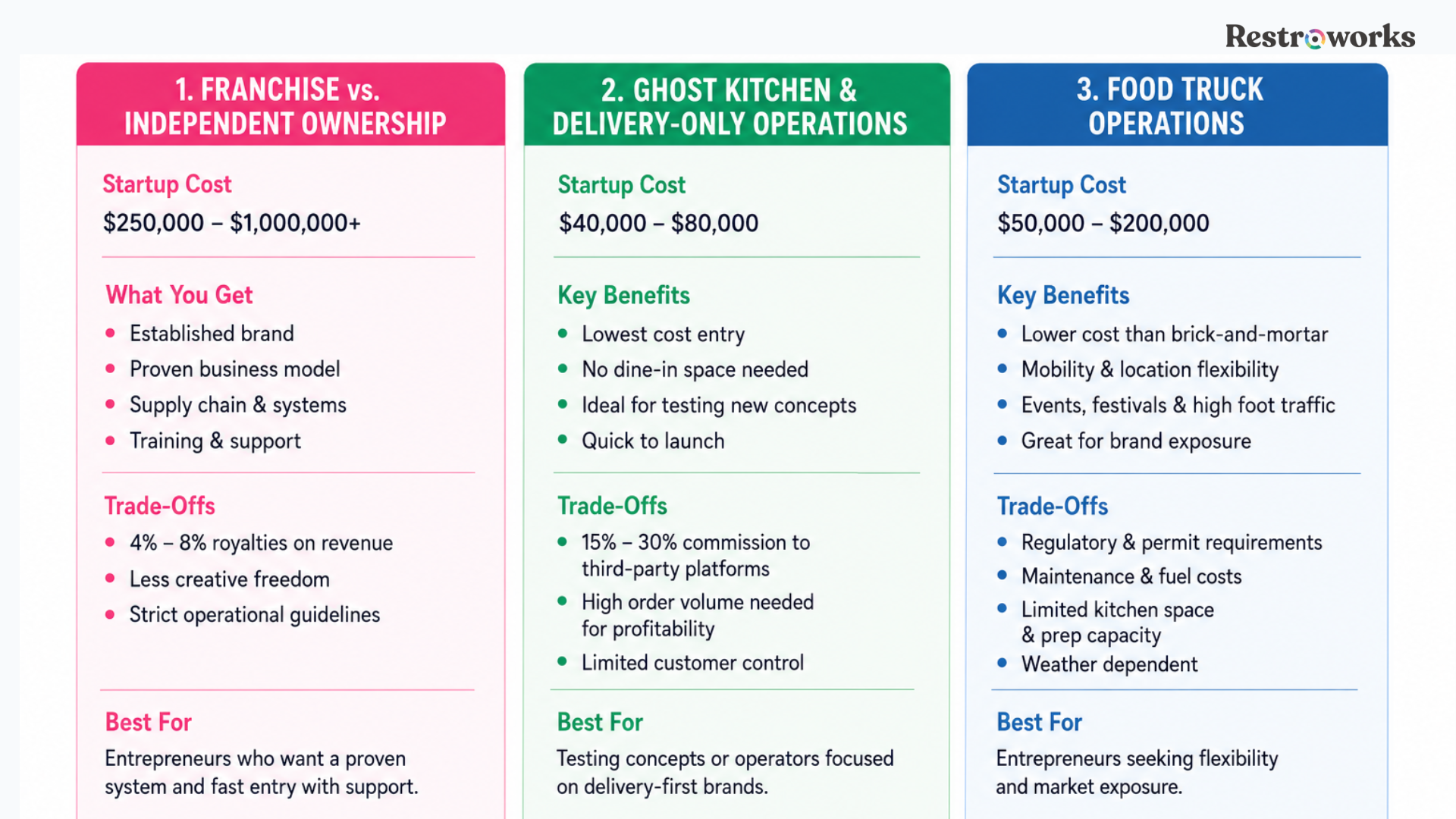
The decision whether to open a fast food franchise restaurant or build your own concept will be the most critical choice that you will have to make. Fast food franchises usually cost you between $250,000 and $1,000,000 or more initially, which covers franchise fees and the required technology system.
You receive a known name, supply chain, and business model in return, yet you must pay 4 to 8% of your income in royalties and lose control over your creativity. Empirical evidence shows that site selection and branding play a crucial role in the development of fast food franchises.
Food franchises may work well for entrepreneurs who like a fast-paced, high-energy atmosphere and a large staff. If you do not have any previous experience running a restaurant, a franchise will provide you with all the necessary facilities to ease your entry into the industry significantly.
Ghost Kitchen and Delivery-Only Operations
Delivery-only fast food and ghost kitchens are the quickest entry route into the world of food businesses. It will cost you between $40,000 and $80,000 for a delivery-only business from your ghost kitchen, as opposed to $300,000 to $500,000 that you would need for a conventional fast food restaurant. The fast food industry has been evolving to include health alternatives among other items on its menus. In such a scenario, delivery-only restaurants can be quite useful for testing new food products without much hassle.
There is a trade-off involved here: you will rely completely on third-party platforms for delivery, which charge you a 15%-30% commission per order. You either need to charge premium prices or have extremely high daily orders to remain profitable at such a rate.
Food Truck Operations
A food truck sits between a ghost kitchen and a traditional fast food restaurant in both cost and complexity. Food trucks represent a lower-cost entry into the food industry, with startup costs ranging from $50,000 to $200,000, depending on the vehicle and kitchen installation. They offer the advantage of mobility: you can follow foot traffic, test different locations, and participate in events, but they also entail regulatory requirements, maintenance costs, and operational limitations tied to kitchen size and prep capacity.
Market Research and Concept Validation
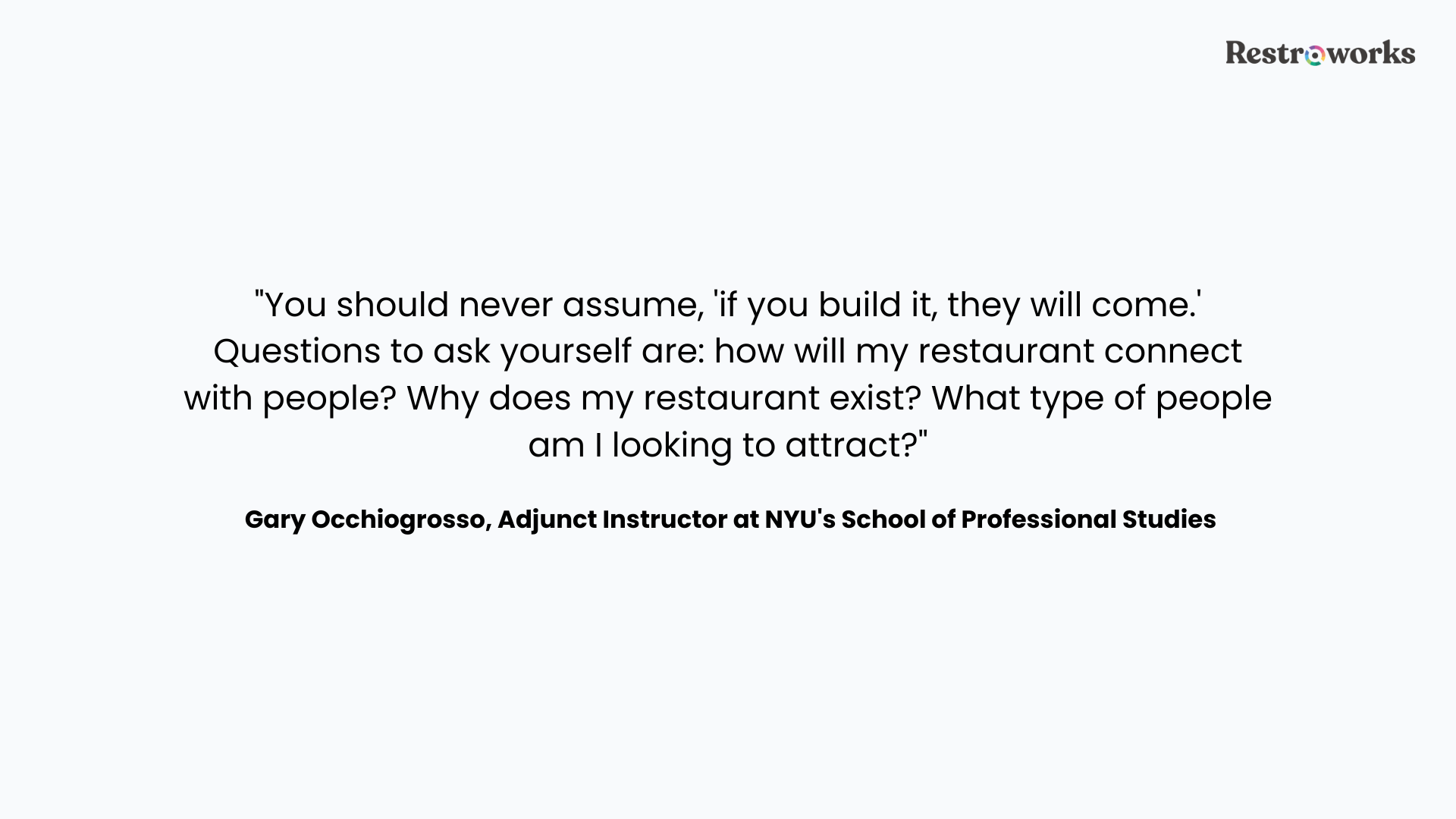
Researching the market is critical when developing a menu, as it enables one to discover the kind of fast food that is demanded in the particular area. Ask yourself the following questions: “Who are your local competitors, and what is the niche that you will be filling?” What prices will your market afford? Does your food concept have any demand in that particular area?
There is no such thing as everyone is my customer. It is important to know why your restaurant exists and for whom. You can hold a soft opening or a pop-up event to test your menu with real existing customers and attract potential customers as well.
Fast Food Business Plan Essentials
A comprehensive business plan for a fast-food restaurant should include market research on customer trends, estimated startup costs, projected revenues, and details on brand identity and the business name. A business plan serves as a navigational tool for fast-food restaurant owners, guiding operational, financial, and marketing strategies, and as a formal declaration of the restaurant’s vision and objectives.
Executive Summary
Your executive summary should capture your food concept, target market, competitive advantage, and financial ask in 2 pages or less. Lenders read executive summaries first. If yours does not immediately communicate why this fast-food business will succeed in your specific market, the rest of the plan will not be read.
Company Description
Company description includes the business structure, ownership, and operational format. Most new restaurant owners incorporate their business as a limited liability company in order to protect their personal assets from any business liabilities and lawsuits and also get an Employer Identification Number from the IRS.
Industry Analysis and Financial Projections
The industry analysis will require you to do a proper assessment of the competitive environment in the area along with how your restaurant is differentiated. The financial projections, on the other hand, require you to provide information regarding start-up costs, the estimated operating costs per month, revenue projections, along with the break-even period. Most of the new restaurant owners fail to allocate money for at least six months of operating costs.
Startup Costs and Funding
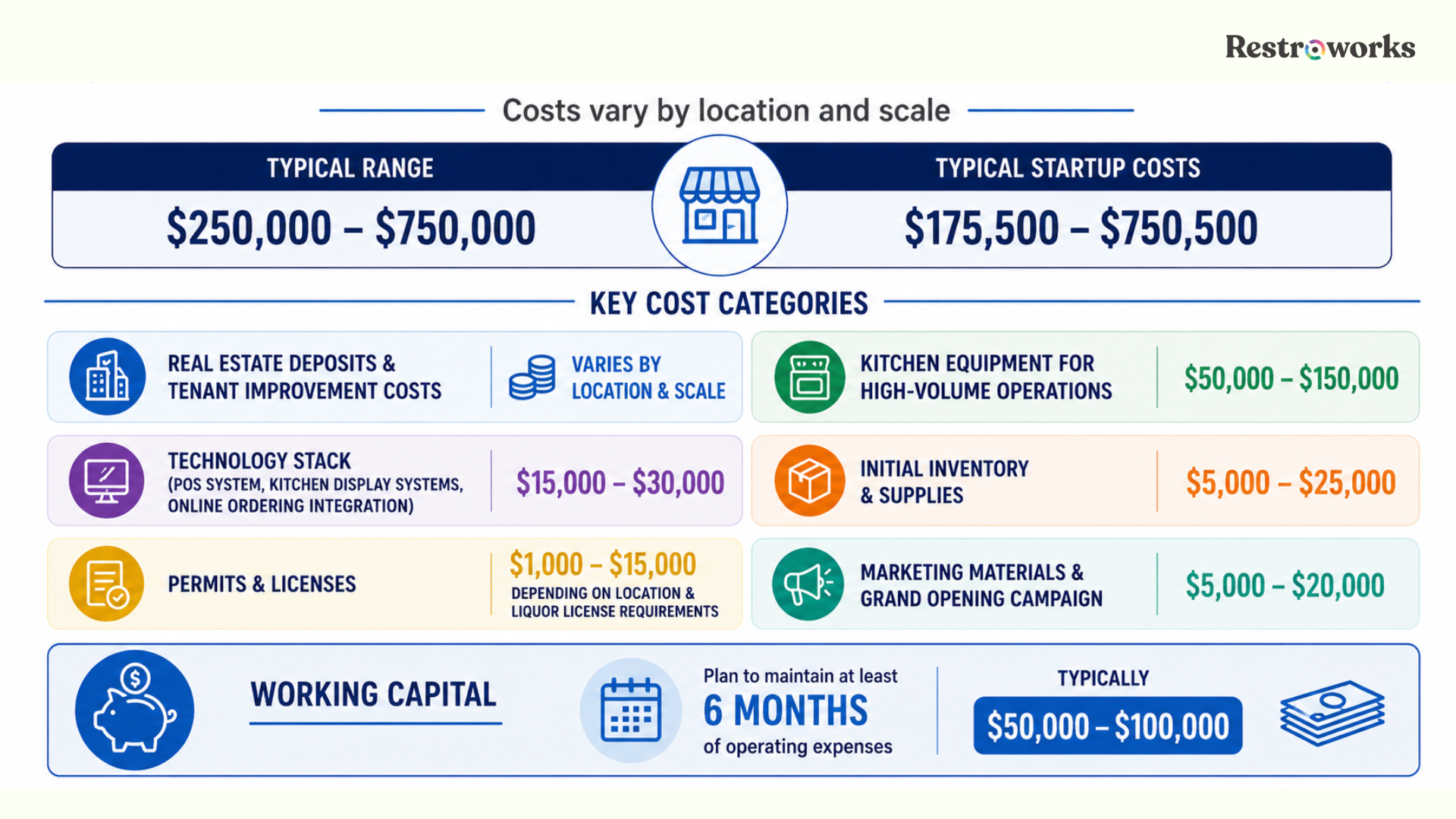
There are many startup costs and funding needed for a fast food startup. The costs associated with operating in different neighborhoods, including rent, utilities, and labor expenses, should be carefully evaluated to ensure the sustainability of the business model. To operate a fast food restaurant, you will need a food service license, which can cost between $100 and $1,000, and it is advisable to start this process 90 days before opening due to the required inspections. In addition to a food service license, fast food restaurant owners typically need a general business license from their city, and all staff must have a food handler’s permit, which usually costs under $20 per person. The typical startup costs for opening a restaurant can range from $175,500 to $750,500. Let’s understand this in detail.
What Does It Actually Cost to Open a Fast Food Restaurant?
Startup costs for a fast-food restaurant can vary significantly, with estimates ranging from $250,000 to $750,000 depending on factors such as location and scale. The typical startup costs for opening a restaurant can range from $175,500 to $750,500. Key cost categories include:
- Real estate deposits and tenant improvement costs
- Kitchen equipment for high-volume operations: $50,000 to $150,000
- Technology stack including POS system, kitchen display systems, and online ordering integration: $15,000 to $30,000
- Initial inventory and supplies: $5,000 to $25,000
- Permits and licenses: $1,000 to $15,000, depending on location and whether a liquor license is required
- Marketing materials and grand opening campaign: $5,000 to $20,000
To ensure financial sustainability, new fast-food restaurant owners should plan to maintain sufficient working capital to cover at least 6 months of operating expenses, typically $50,000 to $100,000.
Securing Funding for Your Fast Food Business
The SBA 7(a) loan is one such financing avenue that is used by many for starting up restaurants and gives a range of $50,000-$350,000, along with an interest rate that ranges from the Prime rate plus 2.75% – 4.75%. The credit score requirement for the SBA 7(a) Loan program is 680 and above. You will be required to have a business plan, financial history, and experience in the industry.
Business loans from community banks, equipment financing for kitchen equipment, and investor partnerships are additional options. The Restaurant Revitalization Fund provides restaurants with funding equal to their pandemic-related revenue loss up to $10 million per business and no more than $5 million per location, a resource worth reviewing if you are opening in a market affected by prior economic disruption.
Location Strategy and Real Estate
Selecting an ideal location for a fast food restaurant is crucial, as a strategic spot with high visibility and easy accessibility can significantly enhance foot traffic. When choosing a location, consider factors such as foot traffic, proximity to competitors, and the availability of parking facilities, as these can impact customer access and convenience. Let’s see this further:
Choosing the Right Location
An appropriate selection of a location for a fast-food business is important because the right placement will improve its performance through high visibility and accessibility. Considerations such as visibility, distance to other similar businesses, and the availability of parking at the selected location can influence consumers’ access to the location. Time wasted due to traffic affects food stores’ decisions, and consumers tend to choose places with faster service because of congestion.
The cost of doing business in various neighborhoods, which includes rent, electricity costs, and labor costs, needs to be analyzed to ensure that the business model is sustainable. Tenant improvement allowances you can negotiate in your lease agreement can help reduce your build-out costs.
Permits, Licenses, and Legal Requirements
To open your fast-food restaurant, you will need to obtain a food service license, which costs $100-$1,000. The best practice would be to start the licensing process 90 days before the opening due to the mandatory inspections. In addition to a food service license, the owners of fast-food restaurants will require a general business license issued by the city, and all employees should have a food handler’s permit, which costs less than $20 per employee.
All fast-food restaurant employees must have a food handler’s permit, while management might consider ServSafe certification to ensure compliance with food safety regulations. Sanitation routines are key to health inspections and to keeping your business operating. Contact the health department in your area; requirements for running a fast-food restaurant vary widely from city to city and state to state, and permit delays are among the top reasons for extended opening deadlines.
BOP will usually cover general liability, property insurance, and workers’ compensation. Plan these expenses from the very beginning, as they are mandatory.
Technology Stack and Operations Setup
The use of technology, such as modern POS systems, will help increase efficiency through faster order processing and better inventory tracking. However, there is much more to the technology used in a fast-food restaurant than just a POS system. There are other elements of a technology stack, such as kitchen display systems that range from $3,000 to $8,000, and mobile ordering integration that ranges from $200 to $500 per month. Overlooking such expenses is probably the biggest downfall for any new fast-food restaurant business.
Efficient design of an operational workflow in the kitchen should ensure that workers avoid redundant movements, thus saving time spent serving customers. While creating the kitchen layout, plan the workflow from the moment of receiving the order to serving the order, and cut out all the unnecessary actions. In a busy fast food establishment, saved seconds translate into significant dollars and productivity differences.
Menu Development and Pricing Strategy
Successful menu development involves linking dishes with a cohesive restaurant theme and using key ingredients in various combinations to create a customizable menu. Menu prices should be set to ensure profitability, with a common goal of keeping food costs between 28% and 35% of the menu price. When developing a menu, it’s important to consider customer convenience through options like digital menus, which can enhance the dining experience.
EXPERT INSIGHT
Keep your initial menu focused. Scaling menu complexity too early increases kitchen times and inventory costs, destroying the speed advantage that defines fast food. Start with 8 to 12 core menu offerings, execute them consistently at speed, and expand based on customer feedback and operational confidence.
Staffing and Labor Management: A Comprehensive Business Plan for Long-Term Success
Employee turnover in the U.S. fast food industry averages 150% per annum, indicating significant workforce challenges. Labor costs in restaurants should typically be managed to be between 25% and 35% of total revenue. Attracting and retaining the right talent starts with a company culture that offers competitive salaries, benefits, and opportunities for advancement. Developing a plan to find, hire, train, support, and retain restaurant staff is crucial, as the team is key to bringing the restaurant’s vision to life. Clear job descriptions and a defined path from crew to management reduce turnover and improve operational consistency.
Marketing and Customer Acquisition
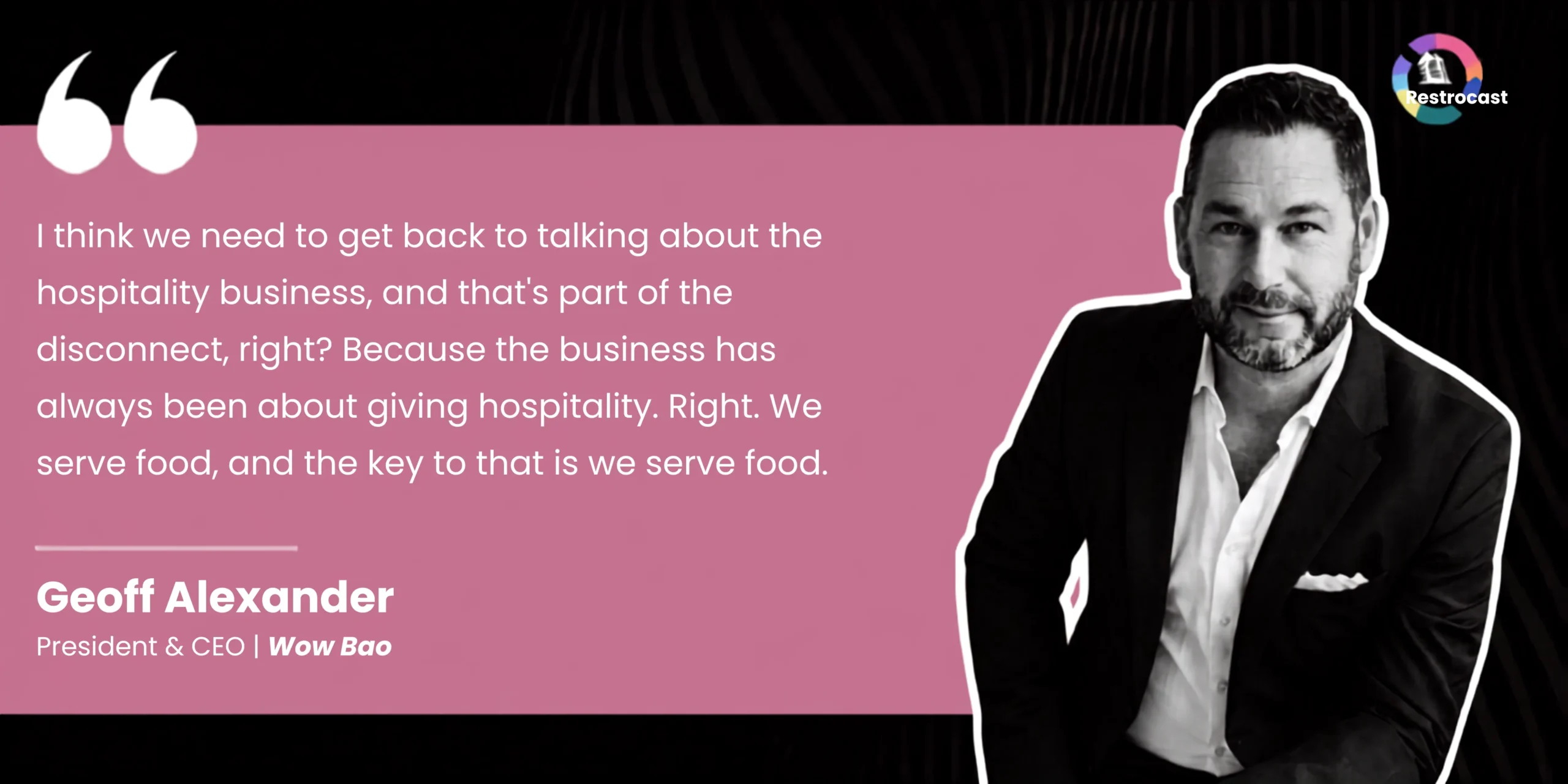
Alexander’s observation cuts to the core of what separates fast food businesses that build loyal customer bases from those that treat every transaction as purely transactional. Speed and efficiency win on the first visit. Hospitality, the sense that the people serving you actually care, wins the repeat business that drives long-term profitability.
Effective marketing can significantly impact a restaurant’s profitability and longevity, making it essential to develop a strategic marketing plan that establishes initial market presence and drives customer retention. Utilizing social media for marketing is crucial, as research shows that a significant percentage of customers visit restaurants they discover through social media platforms as they generate buzz. Local marketing efforts, such as offering vouchers or discounts to nearby households, can effectively attract customers and build a loyal customer base for a new fast food restaurant.
Build a Digital Presence First
A digital presence, like having a Google Business profile, is key for visibility in search queries. Marketing has a major influence on the profit-making capabilities and sustainability of a restaurant, and thus it is imperative to formulate a marketing strategy that will help establish market presence and retain customers.
Social media marketing is important since studies indicate that there are many customers who will go to restaurants whose existence they have learned through social media. Prior to the launch of your business, you should make your presence felt on social media, create some hype, and engage with local influencers who can introduce your food concept to their fans.
Attract Customers at Launch and Beyond
Marketing campaigns at a local level, like giving coupons or discounts to locals, can successfully help attract customers as well as create a loyal clientele for your fast food business. The grand opening of your restaurant should be more of a marketing campaign than anything else. Make sure you do a soft opening the week prior to test out any operational issues.