

Poor weather conditions will affect the availability of raw materials for the manufacturing process. High temperatures directly affect the amount and quality of milk cows produce. Cocoa prices have been extremely unstable due to changes in the cost of cocoa used for flavored chocolate ice creams.
Cold Chain Management Failures
Maintaining temperatures below zero degrees centigrade, typically below -20°C, from the start of manufacturing to delivery to consumers is critical to cold chain management in ice cream.
Temperature variations can cause heat shock, leading to ice crystal formation and ice cream spoilage. Energy and refrigerated transport costs increase the cost of manufacturing ice cream. However, you can minimize overheads if you manage the process correctly.
Major limitations facing the cold chain industry include environmental sustainability, limited warehousing space, and labor shortages, as cited by the US Department of Commerce International Trade Administration.
One cold chain error for a small ice cream store, depending on suppliers’ regular supply, can be very costly because the product and raw materials are perishable.
Competitive Market Pressure
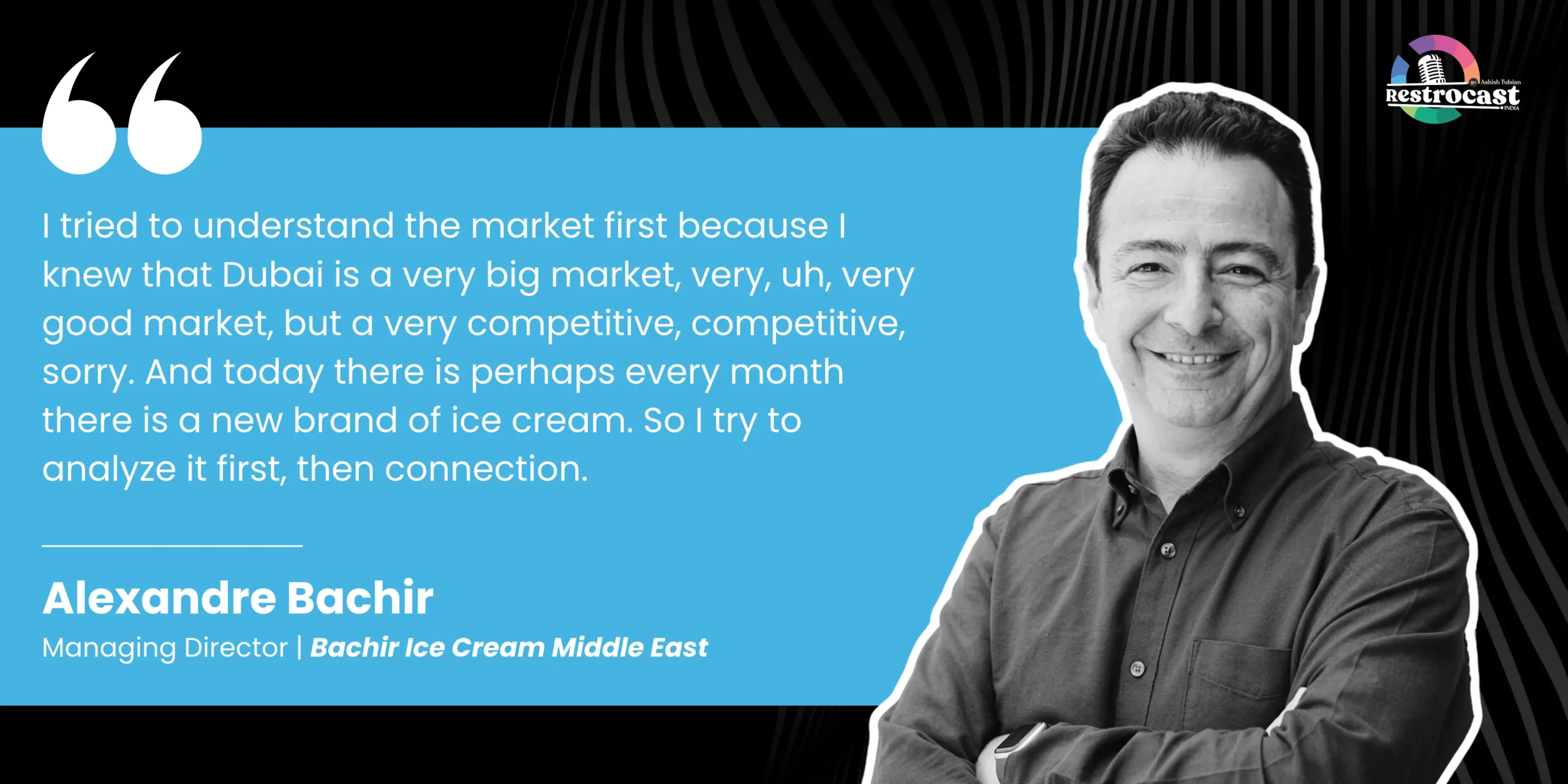
Alexandre Bachir, Managing Director of Bachir Ice Cream, explains on the Restrocast, why understanding the market and doing thorough research matters before starting a business.
The competitive environment for ice cream is more complicated than foot traffic and flavor variety. Weather conditions, disposable income, and diets affect ice cream sales. The increase in inflation has adversely affected ice cream sales.
INDUSTRY INSIGHT
Intense competition is eroding the market share of profitable frozen-treat lines, according to an analysis by Bain & Company (2024). The private label ice cream in grocery stores has added to that challenge, providing consumers high-quality ice cream at affordable prices, something that specialty shops can not compete with.
Building Product Differentiation
Ice cream shops can differentiate themselves through unique branding, high-quality ingredients, and a unique customer experience to establish themselves and succeed in a competitive environment.
An ice cream shop can differentiate itself through unique branding, unique flavors, or dietary-friendly products that help it stand out. By offering novelty, the ice cream shop can present something that cannot be found in any other grocery store.
Plant-based ice cream products are in increasing demand because customers want healthy, dairy-free options, according to Horizon Publishing Food Science Technology.
This market segment, which includes dietary-friendly products such as vegan products, low-sugar products, products made with natural sweeteners, and allergy-friendly products, is a niche where existing brands serve customers slowly.
Startup Costs and Financial Planning
The cost of starting a successful ice cream shop is low compared to many other food service establishments; however, some costs are unavoidable. Ice cream stores do not have minimal equipment for freezing, storage, and serving the product, which is expensive to acquire, repair, and replace.
Cooling facilities consume a lot of energy, and fluctuations in energy costs make it hard to budget overhead each month. Most companies ignore this cost when making their budgets and therefore fail to plan for the cash reserve needed to cushion against variability.
To ensure the enterprise is sustainable, develop a budget that accounts for all costs of opening and operating an ice cream store, including a contingency reserve.
Ice cream stores earn 12 percent to 30 percent more than other food service establishments because their overhead is low and they require less labor. But profits depend on steady revenue, which seasons influence.
Labor Costs and Minimum Wage Pressure
Labor costs in the food industry typically make up 25%-35% of revenue. For ice cream parlors, where labor is mostly part-time and seasonal, managing labor costs depends on strict schedule discipline.
Increasing minimum wage rates in US states creates ongoing expenses that businesses must cover through cost absorption or higher product prices, neither of which is easy.
The ice cream industry pays $1.9 billion in wages and provides 26,704 direct jobs, according to International Dairy Foods Association estimates. This suggests an intensive-labor industry.
For one ice cream parlor, the difference between adequate staffing and overstaffing is extremely narrow during low-demand periods. Customer loyalty programs that generate additional visits may help cover labor costs that cannot be reduced below the minimum.
Regional Differences: Shop Type and Food Truck Considerations
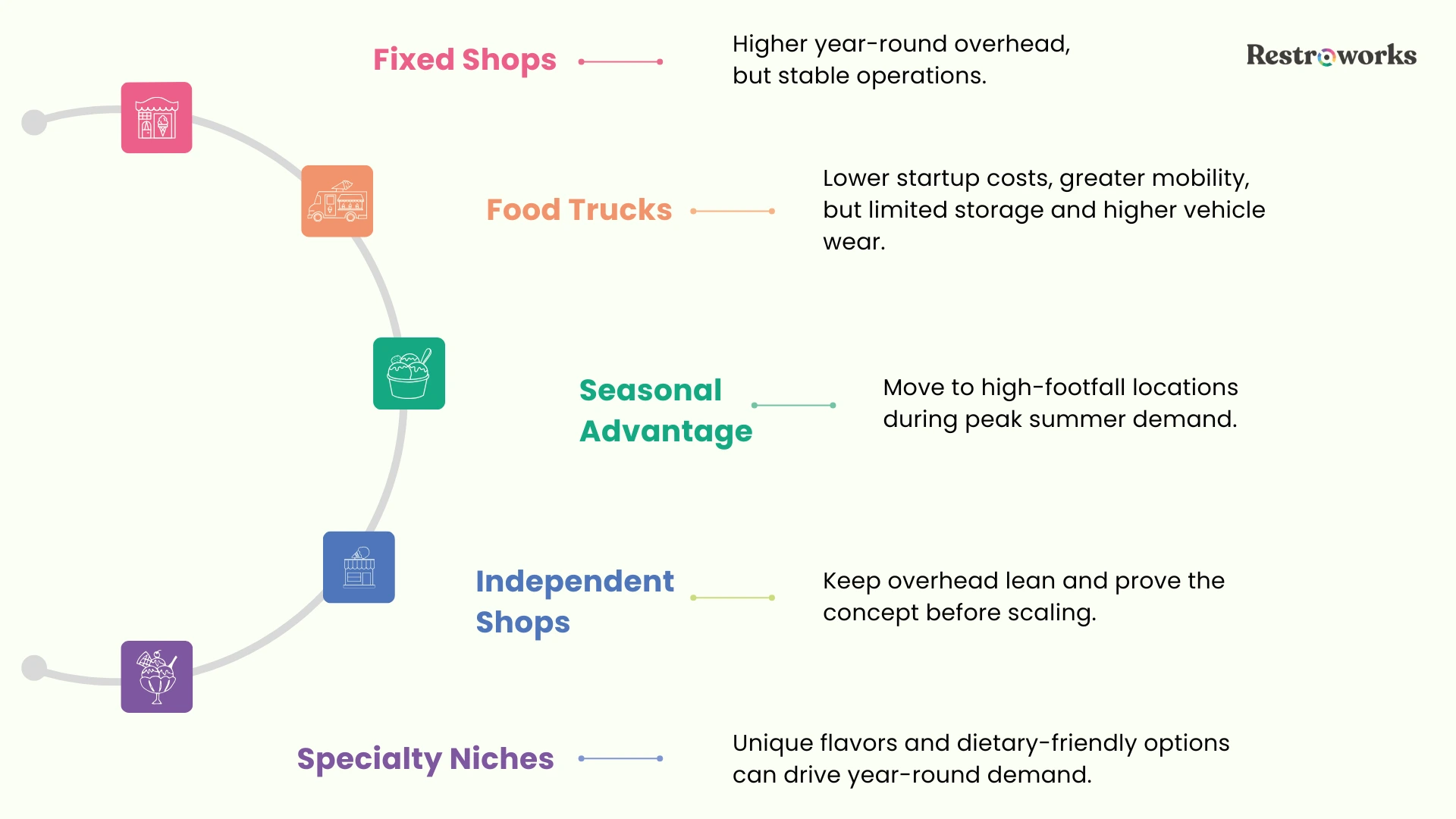
Ice cream businesses can take several forms, from permanent specialty shops to ice cream trucks and even seasonally operated kiosks. Each format has its own set of challenges. Fixed shops have overhead costs that remain the same year-round, regardless of seasonality.
The costs of overhead and startup are much lower for food trucks and mobile ice cream vendors in comparison with fixed shops; however, there are other challenges that are related to this kind of shop – restricted capacity for storing goods, additional vulnerability because of vehicle wear, and dependence on pedestrian flow in particular locations.
Here, a food truck selling ice cream can benefit from its ability to adapt to regional and seasonal trends compared with fixed shops, as it can move to places with greater pedestrian flow in summer.
Independent shops in smaller areas, which keep overhead costs low in the initial stages, stand a better chance of success than those that spend too much money before proving the idea will work. The boutique shops that create an impression of specialty flavors and dietary-friendly niches do better throughout the year.
Seasonal Flavors and Year-round Strategy
Seasonality management goes beyond simply having pumpkin spice-flavored items in October. Ice cream stores that develop year-round strategies, using warm desserts, specialty beverages, ice cream cakes, and gifts in winter, reduce reliance on summer customers and create more opportunities to sell.
Case Studies
By diversifying their income sources, Amy’s Ice Creams saw a 15% increase in ice cream cake sales and a 57% increase in online sales through the implementation of a business transparency approach.
McConnell’s Fine Ice Creams received a 55x return on investment by analyzing data across platforms and marketing to target customers, showing how data can drive revenue in the ice cream industry.
Loyalty programs provide a structure that keeps customers coming back regardless of the season. A customer who receives a free scoop of ice cream after visiting the store ten times is more likely to return, regardless of weather conditions.
Sustainability and Packaging Challenges
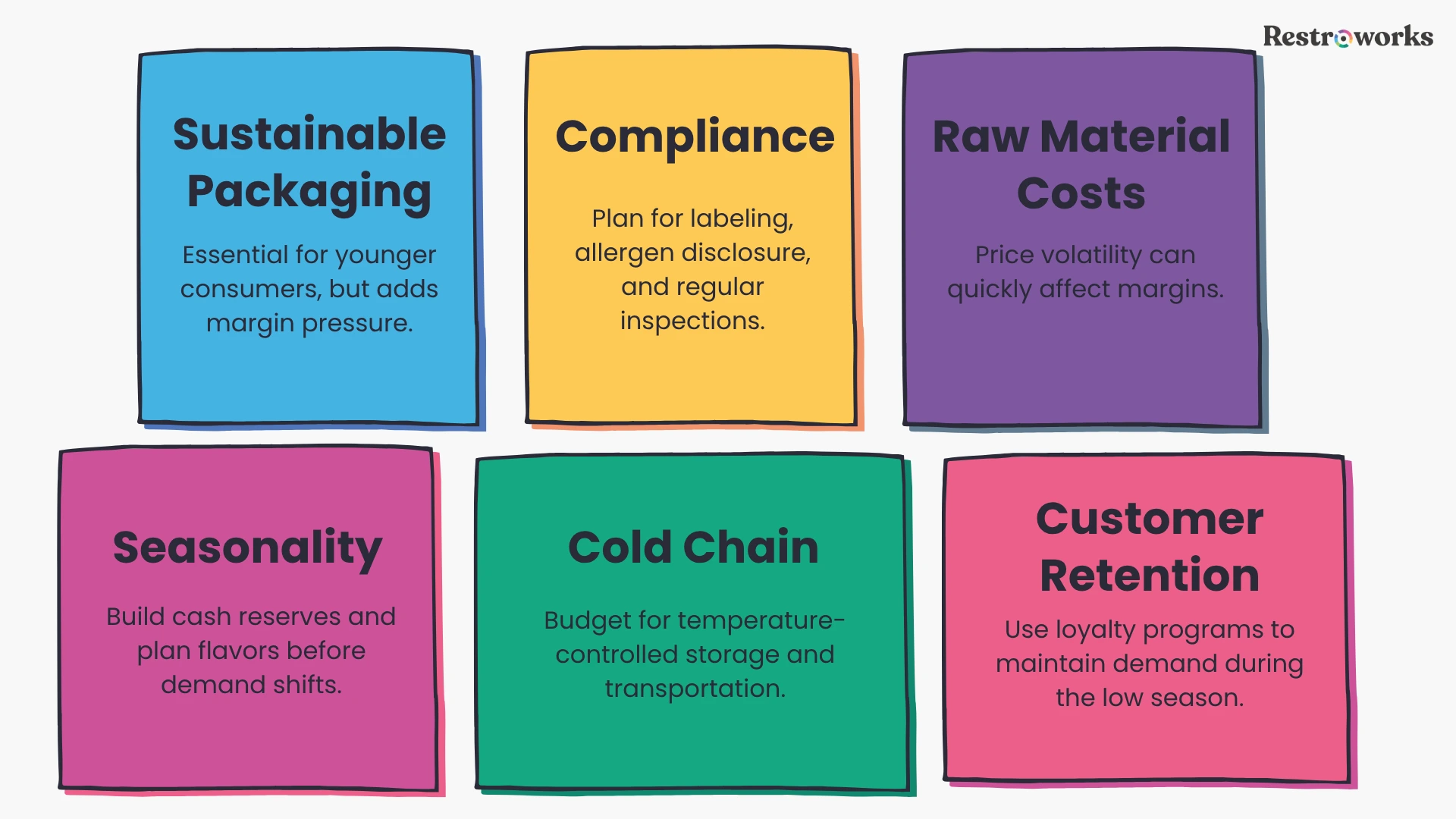
Eco-friendly packaging has shifted from a marketing priority to an operational necessity for ice cream stores targeting the youth market.
Leak-proof, eco-friendly packaging that retains heat is necessary to maintain quality and meet rising demand for sustainability. Eco-friendly packaging costs more than non-eco-friendly packaging and must be factored into pricing.
The ice cream industry will experience difficulties associated with volatility in the price of raw materials and regulations from the government, according to Stellar Market Research (2026).
Labeling, allergens, and inspection are some challenges that may be overlooked when estimating startup costs.
Difficulties in the ice cream industry are predictable and can be managed with enough preparation. Seasons affect cash flows, supply-chain volatility affects input costs, and competition makes differentiation necessary. Ice cream businesses that survive the first five years understand the industry’s challenges.