

The USA’s food game is changing rapidly due to the cloud kitchen. The industry is growing with an annual growth rate of 11.8%, and big companies are also experimenting with this trend. In 2021, the real estate company CBRE predicted that cloud kitchens would account for 21% of the USA’s restaurant industry by 2025.
This blog provides information on the “ins and outs” of various cloud kitchen concepts. Want to know the secrets behind a restaurant with no chairs and tables? Learn about single-brand independent cloud kitchens like Wow Bao, where the only focus is on delivery. Read about multi-brand cloud kitchens like Rebel Foods, where multiple cuisine options are available under one roof.
Get information on the advantages and disadvantages of kitchens owned by food delivery apps, shared kitchens, and franchises. Last but not least, find out how the hybrid concept combines various options. Learn which concept is best for your business plan and how to be successful in this exciting food sector.
What You’ll Learn
- How a virtual kitchen model works and why it’s growing rapidly in the US food industry
- The key advantages and challenges of running a cloud-based kitchen business
- A clear breakdown of startup costs and ongoing expenses
- Practical steps to build and scale a profitable cloud kitchen
What Are the Different Types of Cloud Kitchen Business Models?
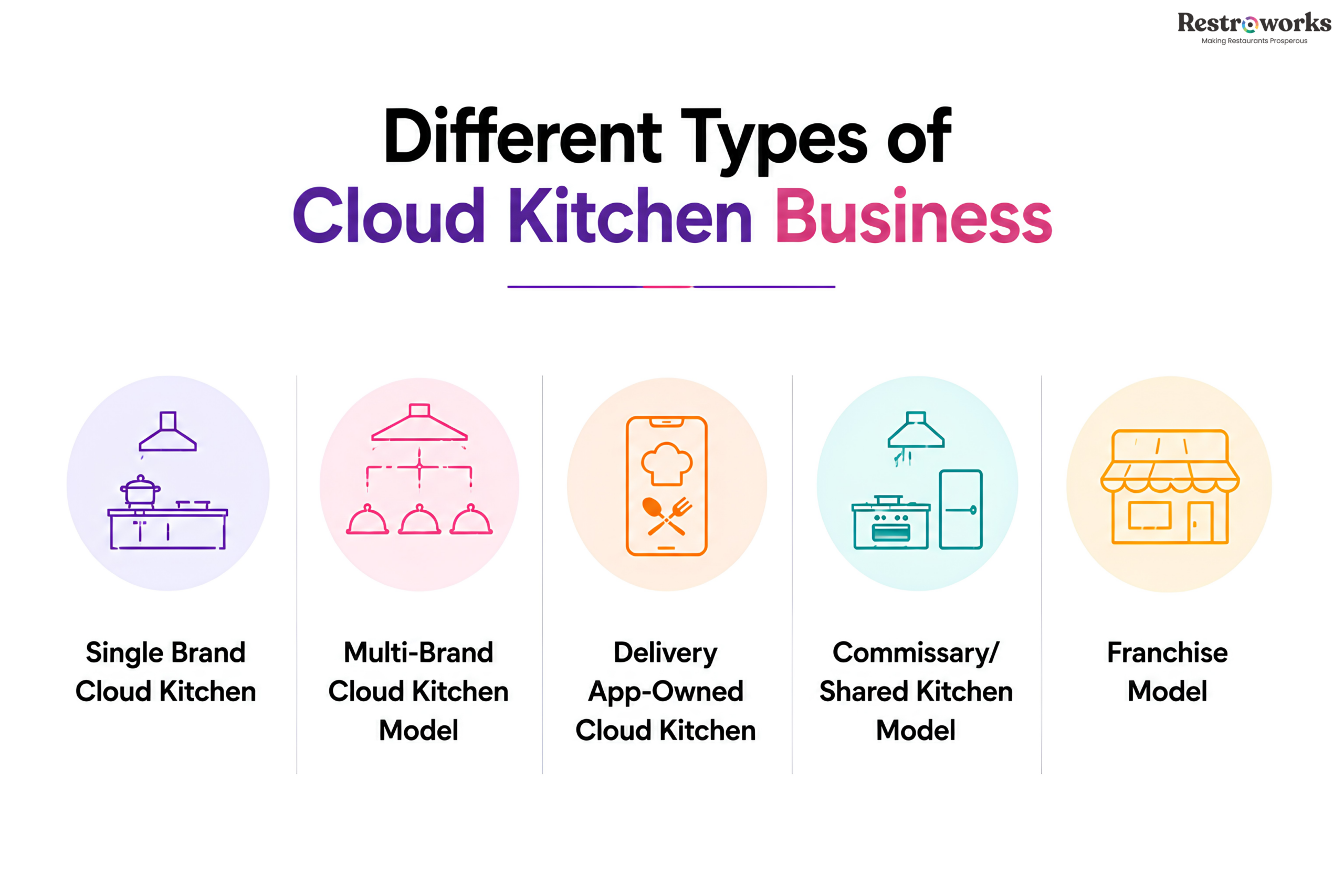
1. Single Brand Cloud Kitchen
Ever imagined how cloud kitchens function without tables and chairs? Well, that’s a single-brand cloud kitchen model. A single-brand cloud kitchen is like your secret virtual kitchen, which focuses on a single type of cuisine, be it your awesome pizzas, your favorite burgers, and others.
This model has gained popularity in the restaurant industry and is the only delivery-only restaurant. Unlike traditional restaurants, where the aim is to focus on dine-in customers and serve consumers in-house, the single-brand cloud kitchen model is designed for the sole purpose of delivery. Hence, it provides new opportunities to the food delivery industry.
Example: Wow Bao is a cloud kitchen in the United States, and it is a single-brand cloud kitchen, meaning that it is a brand-owned cloud kitchen. They specialize in serving Asian-inspired cuisine such as steamed buns, potstickers, and rice bowls, and they only accept delivery and takeaway orders. This means they don’t have a permanent location. Their outlets are in locations like Chicago and New York, which comes as a cost-effective factor. Advanced technology is used to ensure all the food is fresh and well-prepared.
Concept: Does not have any physical location. Customers use websites or apps to place orders and provide delivery information. Tablets or POS systems are used to receive the order and convey it to the team to prepare the food. It’s like a virtual restaurant where you can order tasty food and have it delivered to your door.
Pros:
- Cost savings: No dining area is required, and hence, you can set up your virtual kitchen in cheaper places, and also, fewer staff are required as there are no waiters.
- Focus on Quality: A short and focused menu helps to make every dish perfect.
- Flexibility: You can open multiple locations in cheaper locations, and it will be easier for you to reach more customers.
- Efficiency: By improving delivery, you can maintain operations and deliver food quickly. Modern technology helps manage orders and track deliveries.
- Wider Reach: This cloud kitchen business model offers an opportunity to serve a larger area and reach a wider audience.
Cons:
- Limited Customer Interaction: Without face-to-face contact, it is tough to get immediate feedback. Customers also do not receive the ambiance of a traditional dining experience.
- Underutilization During Off-Peak Times: Customer flow is required to keep the kitchen busy and maximize profits.
- Marketing and Brand Awareness: Building your brand can be tougher without a physical location. You should invest more in online marketing to attract and retain customers.
- Marketing can be difficult without a brick-and-mortar restaurant location. You should market your brand more online to keep customers coming back.
2. Multi-Brand Cloud Kitchen Model
A multi-brand cloud kitchen is a virtual kitchen in which multiple brands operate under one roof. This means that brands, often under the same company, can use the same virtual kitchen. This leads to efficiency, as one brand can offer multiple kinds of food from the same kitchen.
Example: All Day Kitchens is a good example of a multi-brand cloud kitchen concept in the USA. It involves a series of small, dispersed kitchen units strategically located near residential areas, which allows efficient delivery services. Each kitchen offers a variety of dishes from many local restaurants, allowing consumers to order from multiple restaurants with a single delivery order.
This cloud kitchen business model has helped several local restaurants expand without incurring the high operating costs associated with traditional setups, thereby promoting efficient operations. All Day Kitchens has managed to expand its business rapidly, achieving high delivery and profitability rates.
Concept: A multi-brand cloud kitchen is a kitchen located in a single facility that shares resources like equipment, supplies, and staff. This reduces costs and makes operations more efficient. Orders can be placed through a number of food delivery applications or directly on brand websites. The cloud kitchen can prepare multiple cuisines simultaneously, and the chefs are trained to maintain quality across all dishes.
Pros:
- Cost Efficiency: Sharing kitchen resources reduces rent, utilities, and equipment. Bulk purchasing further reduces the cost.
- Flexibility and Scalability: The expansion of the cloud kitchen through the addition of new brands or new markets is easily achievable compared to the traditional kitchen, where expansion is difficult.
- Resource Optimization: Sharing the same workforce, equipment, and kitchen space across various brands helps optimize resource utilization.
- Market Reach: The more the food is equal, the broader the market reach. The offering of various cuisines from the same kitchen helps in reaching a broader market.
- Risk Mitigation: Operating multiple restaurant brands reduces financial risk in the kitchen, as there is no chance of failure.
Cons:
- Operational Complexity: Managing multiple brands under a single kitchen can be complex, especially during peak hours.
- Resource Allocation: Managing multiple brands under a single kitchen can be complex, especially when allocating resources, leading to slower service delivery and errors.
- Customer Experience: Since a physical restaurant is used, connecting with customers on a personal level is a bit easier, which may significantly affect their loyalty.
- Technological Dependence: Because this business relies heavily on technology, any system downtime can be a significant setback. Managing a large number of customer details may expose this business to security risks that must be addressed appropriately.
3. Delivery App-Owned Cloud Kitchen
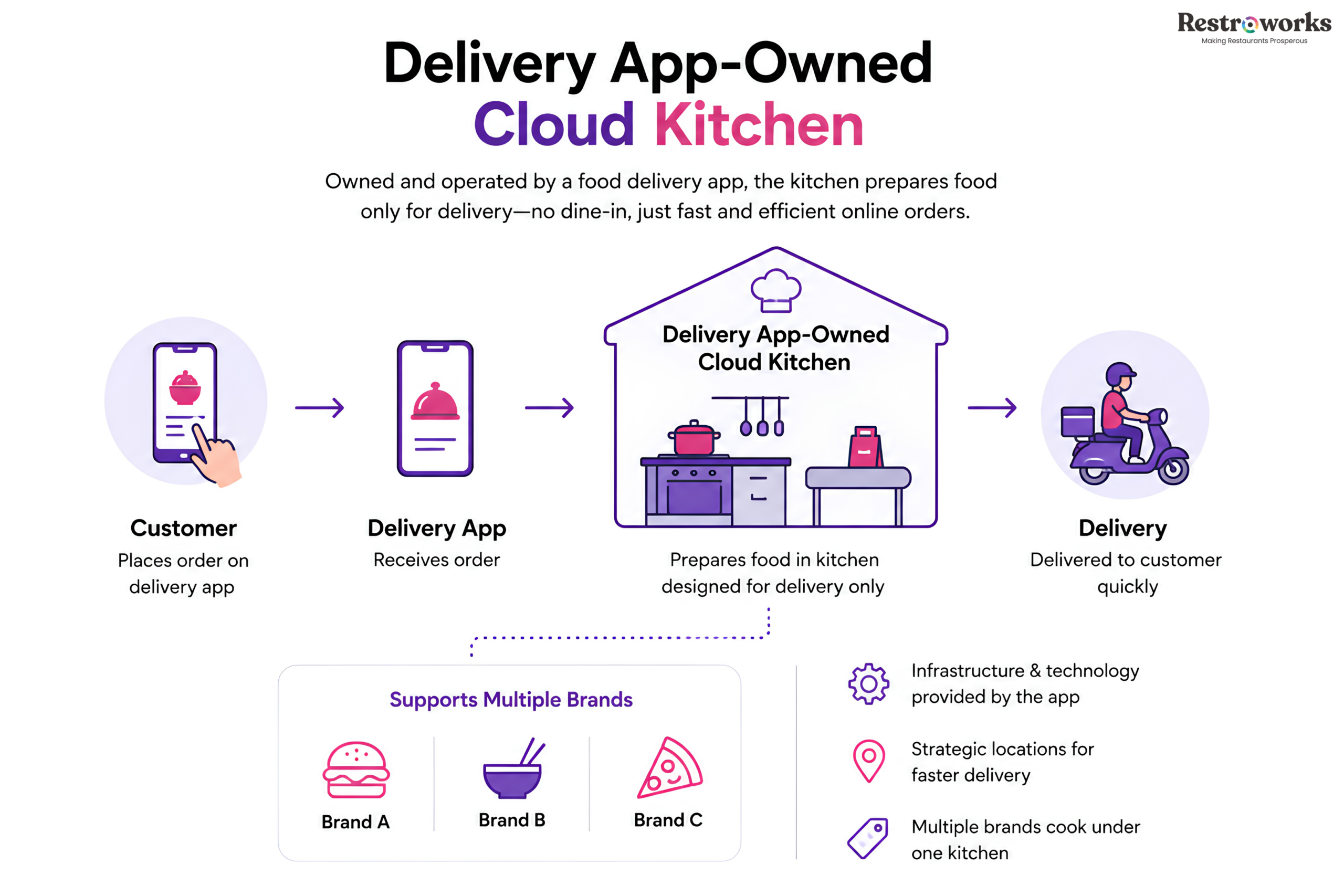
A Delivery App-Owned Cloud Kitchen is a cloud kitchen owned by food delivery services. The kitchen only prepares food for delivery and does not have a dine-in facility. The food delivery app owns and runs the kitchen space and provides the infrastructure and technology for different brands to cook and deliver food online.
Example: The food delivery platform Uber Eats also operates virtual restaurants that only serve food for delivery purposes. The food is prepared in these restaurants and delivered to customers quickly via their extensive network. DoorDash also operates cloud kitchens where different brands only serve food for delivery purposes. The location of these kitchens is such that food is delivered quickly. The food delivery app Deliveroo also operates a cloud kitchen network called ‘Deliveroo Editions’ where different brands operate and serve food for delivery purposes.
Concept: Delivery app-owned cloud kitchens, such as Uber Eats, are a combination of food prep and delivery services. The kitchens are owned by online food delivery services, which specialize in preparing food for delivery through their apps. The kitchens do not serve customers directly, unlike other food establishments.
Instead, they depend on the large number of delivery drivers of the company to serve the customers. The idea of these kitchens is simple because they are built for efficiency in food preparation and delivery. They can help in maintaining the quality of service by reducing the time of delivery through control of the kitchen and the delivery. The use of technology to control the operations of the kitchen can help improve efficiency.
Pros:
- More Customers: The kitchen’s visibility on food delivery platforms makes it more accessible. The kitchen can attract more customers without a physical restaurant. These kitchens can open in different locations, which helps a restaurant grow its business faster.
- Efficient Operations: Delivery apps give a restaurant advanced technology to help with order management and tracking inventory, which makes operating a kitchen smooth and efficient.
- Data Analysis: Delivery apps provide a restaurant with significant information on what its customers like and how they order their food. This helps a restaurant improve its business by using this data.
- Better Customer Experience: Customers get a good experience with delivery apps because they can order from multiple brands on one app. The delivery service is reliable, so their food will get to them on time and in good condition.
Cons:
- Limited Control: The restaurant has limited control over how its brand looks on the app, which can impact its image. Moreover, the app has control over customer data, making it difficult for the restaurant to reach the customers directly.
- High Dependence: The high commission paid to the app can impact the restaurant’s profits. Any changes made by the app can impact the restaurant’s visibility and profits. However, the restaurant has limited control over these changes.
- Operational Challenges: Managing different brands from a single kitchen can be operationally challenging. Different brands have different menus, which can impact the type of ingredients used.
- Tech Dependence: The restaurant is heavily dependent on technology, which can impact operations in case of technology failures. Moreover, the restaurant is dealing with a lot of customer data, which can lead to data breaches. Hence, security is a major concern.
4. Commissary/Shared Kitchen Model
Originally designed for food truck operators’ requirements, the Commissary/Shared Kitchen Model is a commercial-grade kitchen rented by restaurants. It provides food truck operators with necessary cooking equipment, cleaning supplies, food storage equipment, etc. This model lets foodies operate without having to pay for a commercial kitchen.
Example: The Commissary/Shared Kitchen Model has been a game-changer in growing several food brands into fame. For instance, Vancouver, Canada-based Kozu Sushi Pizza serves a unique blend of sushi and pizza from Coho Commissary Kitchens in Vancouver. Famous American gyros and platters manufacturer, The Halal Guys, has avoided opening more stores by using a shared kitchen in several US locations.
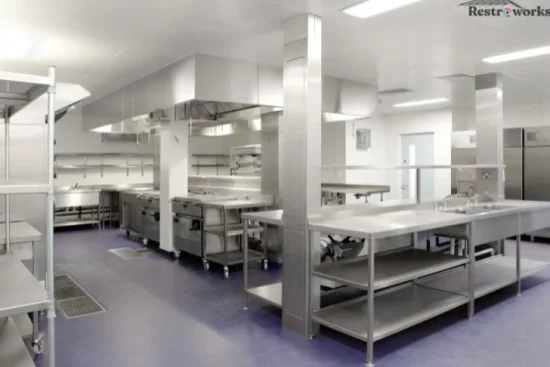
Concept: Shared kitchens are places with preinstalled kitchen equipment. The commercial kitchen spaces have different chefs, first-timers, food truck operators, and stall operators who can achieve a breakthrough here. They can rent a kitchen by the hour, day, or month. They can then sell food without spending too much money.
Pros:
- Cost-Effective Option: The cost of renting a shared kitchen is relatively low compared to constructing your own kitchen, which is very important for new food businesses and startups.
- Shared Resources: You have access to good-quality and commercial-grade kitchen appliances without a high initial investment.
- Potential Collaboration: You have the opportunity to network and work with other food business startups and entrepreneurs.
- Scalability: You have the option to rent more kitchen space if your business grows without a high initial investment.
- Compliance and Safety: You are assured of working in a kitchen that is safe and legal.
Cons:
- Less Kitchen Control: There is no room for customization of the kitchen since the brand does not fully own the place.
- Access and Scheduling: The worst part of shared kitchens is that they tend to be crowded at times, making it difficult to access a cooking station.
- Increased Costs: Although the cost of renting a kitchen is less than owning a kitchen, the cost of rental is still quite high, especially for a small business.
- Brand Recognition and Customer Proximity: Shared kitchens also affect a brand’s ability to create a strong brand identity.
- Operational Challenges: Managing a shared kitchen also presents a challenge, as operations need to be planned to avoid conflicts with other businesses.
5. Franchise Model
The concept of a franchise in the cloud kitchen allows you to have your own version of a renowned food brand without having to open a full-service restaurant. You pay a fee to operate the business under their brand name, logo, and business strategy. In return, they will offer you support, which will help you succeed in your business. The concept of a franchise in the cloud kitchen works because you get to be part of a renowned brand, in addition to being your own entrepreneur.
Example: Wayback Burgers is a renowned food brand that has successfully implemented the franchise model. It was founded in 1991 and has over 170 outlets. Even though they have most of their outlets in the full-service restaurant format, they also have ghost kitchen outlets. By opting for the cloud kitchen business model of Wayback Burgers, you will not only save money on business operations but also expand your business to different markets and serve premium-quality burgers and other delicious food to customers without having to open a full-service restaurant.
Concept: The concept of a franchise is that you get to run your own business, but it is a known brand. You pay a certain fee to use their brand name, then you pay royalties on the sales. In return, they help you, which is beneficial for your success in business, unlike doing business on your own. It is a win-win situation for both parties because they expand their business with little risk on your side.
Pros:
- Faster Brand Recognition: Customers will recognize the new cloud kitchen sooner through a brand they already know.
- Built-In Customer Base: Franchisees benefit from the trust and brand recognition of the customers, thus speeding up the entry of the new business into the market.
- Operational assistance: The restaurant owners assist the franchisees in everything, thus reducing the risk of business failure.
- Standardized Processes: The staff, as well as the restaurant owner, have pre-defined processes to follow in order to maintain quality in service and food.
Cons:
- Initial Fees: You have to pay a substantial license fee, which increases your initial costs.
- Ongoing Royalties: You may have to pay royalties to the company regularly, which can decrease your profit margin.
- Tight Compliance: You are bound to follow the rules set by the franchisor, which can limit your freedom of decision-making.
- Lack of Flexibility: To maintain brand uniformity, you cannot make significant changes in menus, marketing strategies, etc.
What Challenges Do Cloud Kitchen Owners Face?
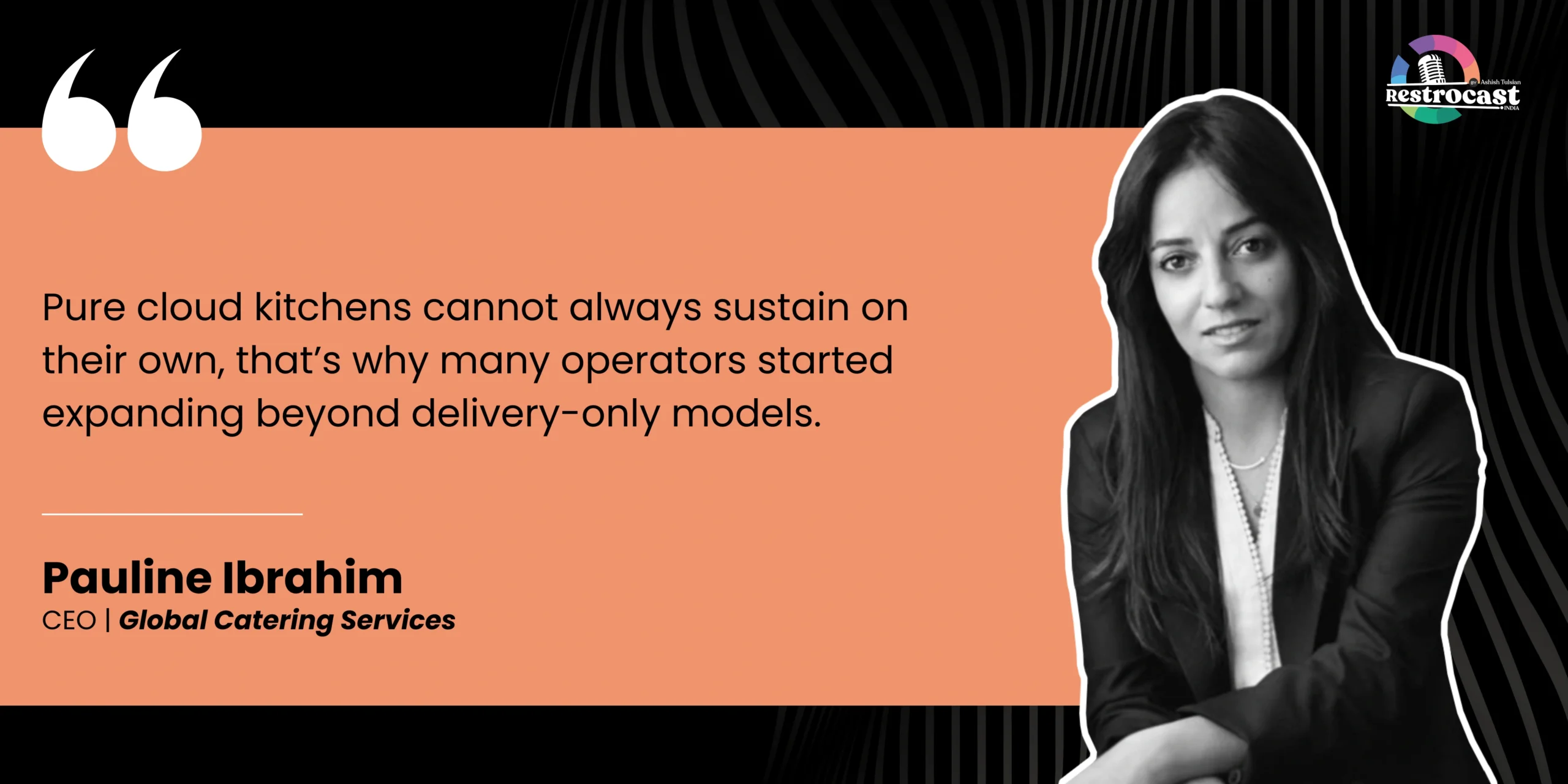
Although there are a lot of benefits of a virtual brand, it has its own challenges, most commonly in a competitive US market. In a recent conversation, Pauline Ibrahim revealed why pure cloud kitchens often struggle to sustain themselves in the long run.
1. Heavy Dependence on Delivery Apps
Most cloud kitchen business models rely on delivery apps and delivery services like Uber Eats or DoorDash. This leads to:
- High commission fees
- Limited control over customer experience
- Dependency on platform algorithms
2. Intense Competition
The barrier to entry is low, and many food and restaurant brands compete in the same space. It becomes tough to stand out without proper branding and marketing.
3. Maintaining Food Quality During Delivery
Since you only provide delivery, maintaining food quality is important. The food should not deteriorate during delivery.
4. Branding Without Physical Presence
You don’t have in-person service or ambiance to offer your users, unlike dine-in restaurants, so your brand depends on:
- Packaging
- Online reviews
- Food presentation
5. Operational Complexity
Handlong inventory, staff, and food preparation properly in a commercial kitchen space is very tricky, especially when handling multiple brands.
What Does the Cost Structure & Investment Look Like?
To start a virtual kitchen, you need careful planning, and it needs to be cost-effective. Here’s a breakdown of typical US-based costs.
1. Initial Setup Costs
- Renting a commercial kitchen space or shared commercial kitchens
- Kitchen equipment (ovens, refrigeration, prep stations)
- Licenses and permits
According to the U.S. Small Business Administration, it takes around $175,000 to $750,000 to start a restaurant, but a cloud kitchen reduces this cost as it does not require any dining space.
2. Technology & Tools
A modern kitchen business depends on tech:
- POS systems
- Order aggregation tools for multiple delivery apps
- Software for inventory management
3. Operational Costs
- Staff salaries (chefs, helpers)
- Raw materials and food costs
- Packaging
4. Marketing & Platform Fees
- Commissions from delivery platforms (typically 15–30%)
- Paid promotions on delivery apps
- Social media marketing
Statista reports that online food delivery revenue in the US continues to grow steadily, highlighting the importance of digital presence.
How Can You Build a Profitable Cloud Kitchen?
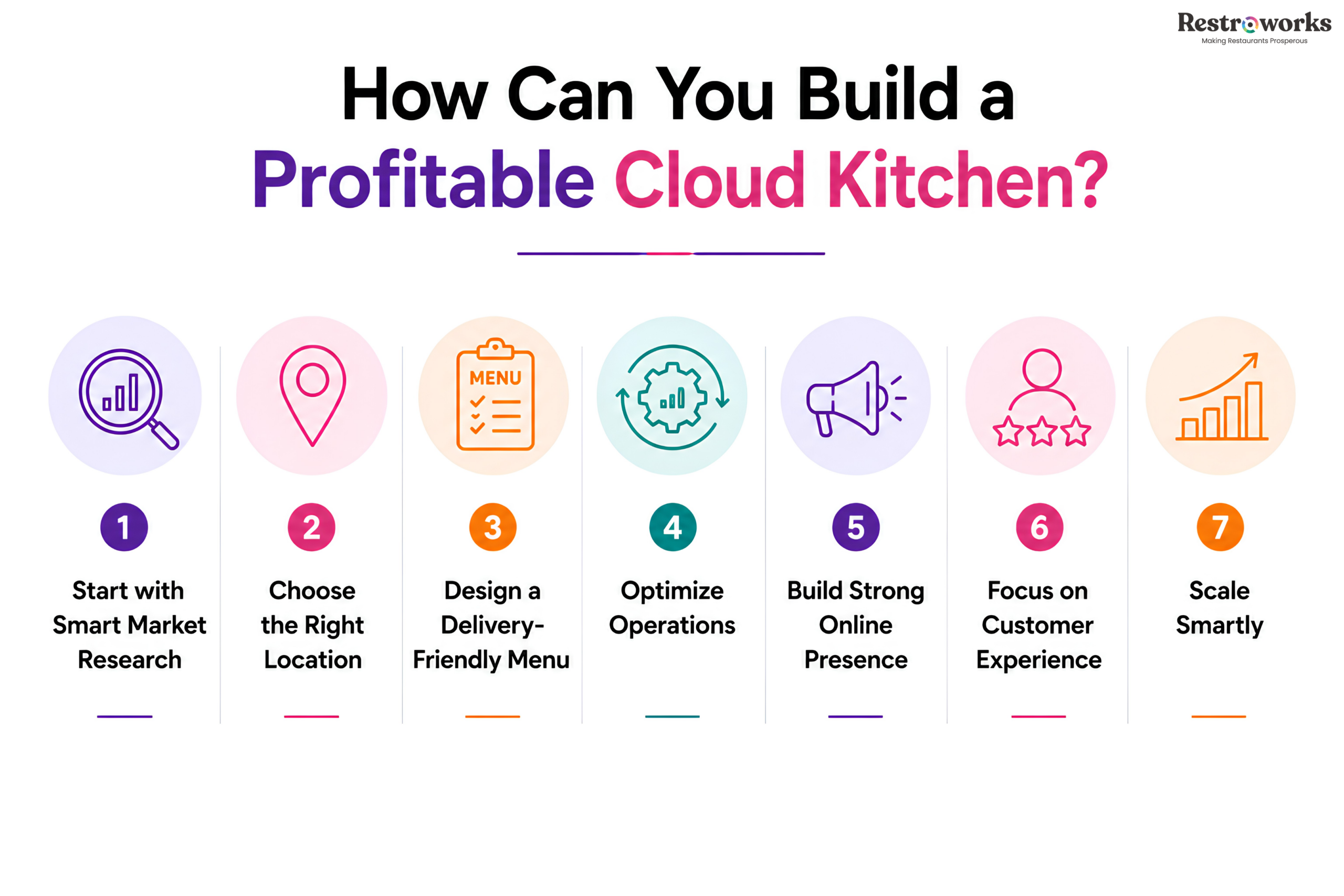 A virtual kitchen is not just built on great food but also demands efficiency, strategy, and knowledge of the market.
1. Start with Smart Market Research
Understand the demand, what the audience is looking for, read your competitors, and industry trends. Identify gaps in cuisines or underserved neighborhoods.
2. Choose the Right Location
You need to focus on locations with high delivery demand instead of foot traffic. A well-located commercial kitchen helps in maintaining faster delivery logistics.
3. Design a Delivery-Friendly Menu
Not all dishes reach their consumers properly. Select menu items that are easy to prepare, package, and deliver.
- Do not include complex dishes
- While preparing food, focus on consistency
- Test packaging for quality retention
4. Optimize Operations
Efficiency is key in a kitchen business:
- Streamline workflows to prepare food quickly
- Use software for inventory management
- Train staff for speed and consistency
5. Build Strong Online Presence
The growth of your business depends on visibility across delivery services and apps.
- High-quality food images
- Competitive pricing
- Positive reviews
6. Focus on Customer Experience
You can improve your customer experience, even without a dining room:
- Fast delivery
- Secure packaging
- Consistent taste
7. Scale Smartly
You can launch new food brands or enter new areas using the same kitchen space model, once profitable
After doing research on different types of restaurant models, their benefits, and limitations, it’s time to select a model that best suits your company’s goals. Whether you choose to open a ghost kitchen, a pop-up store, or a delivery-only model, will depend on your target market.
Some may find dark kitchens or central kitchens appealing for their low overhead costs and efficiency. Irrespective of the model you choose, you need a technology partner to help you manage costs and operations.