

Customers come back to your bakery for a reason.
It’s often more to do with the freshness and quality of the baked goods than the menu variety. They loved your muffins or jar cakes, and now they expect the same taste, the same quality, and consistency every time they visit.
But from an inventory POV, delivering consistency can get hard because you’re also managing ingredient availability, supplier deliveries, and daily production schedules. And it just gets even more complicated if you’re handling all this manually.
That’s why inventory management software is critical to bakery operations. You get visibility into ingredient usage, stock levels, and purchasing, and you can ensure product quality, reduce waste, and meet customer expectations.
Let’s dive deeper into why bakery inventory management software matters and how it delivers efficiency.
What you will learn
- What is bakery inventory management, and how can technology help?
- Key capabilities of inventory management software for your bakery business
- What KPIs should you track with your bakery inventory system?
What Makes Bakery Inventory Management Different?
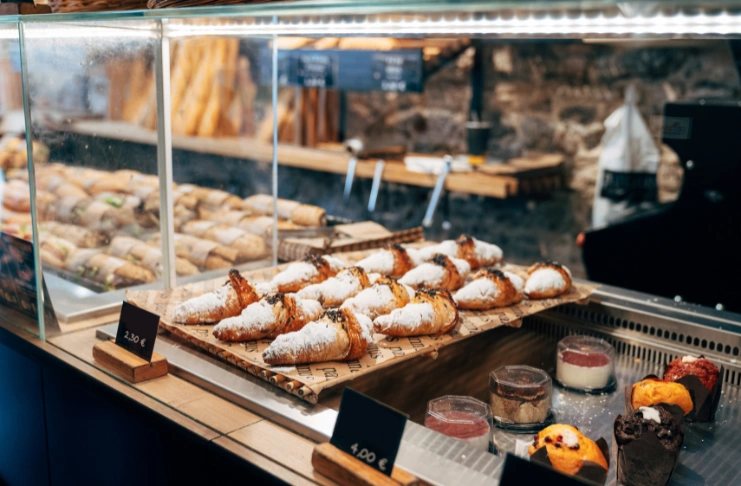
Accurate inventory management for bakeries is about knowing three things. One, the stock you physically have; two, the stock levels showing in your inventory systems, and three, how much of it you can actually use based on customer orders and shelf life.
Inventory management is a major pain point in any food business, but more so for bakeries because they operate under a unique set of constraints. These two factors make bakery inventory particularly challenging-
- Ingredients have short shelf lives: Butter, cream, fruits, and other ingredients have limited shelf lives. Plus, most baked goods need to be sold quickly to meet customer expectations around freshness.
- Too many common ingredients: One thing that works both in and against your favor is that a single ingredient is used across dozens of recipes. While this is good for cost management, tracking how much flour, sugar, or chocolate you really use for your recipes becomes difficult.
What is Bakery Inventory Management Software?
Bakery management software is a digital tool for tracking, streamlining, and optimizing your bakery’s raw ingredients and product inventory.
It replaces your manual inventory management processes with automated tools to give real-time visibility into bakery inventory and avoid stockouts, control costs, and minimize waste.
How Smart Inventory Management Improves Bakery Operations?
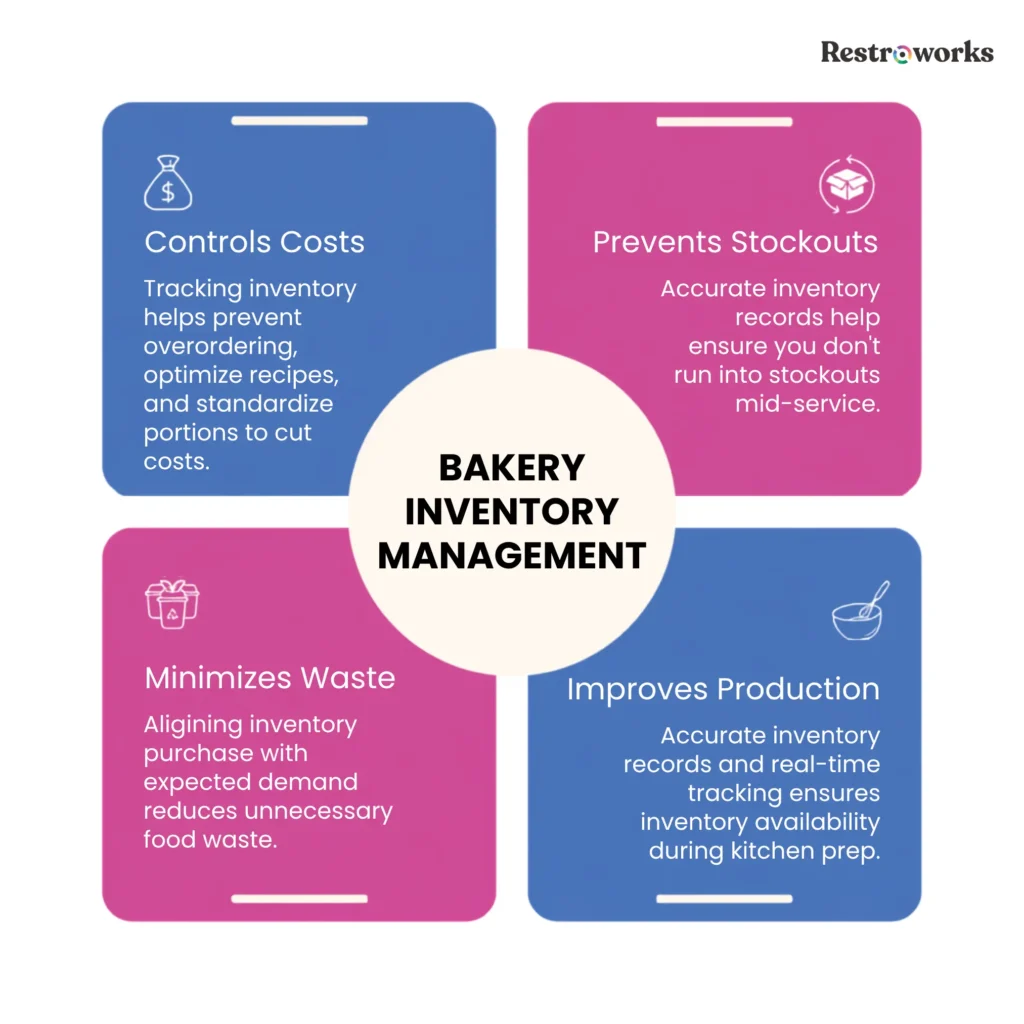
Here are four ways smarter inventory management with automated systems can help improve profitability, efficiency, and customer satisfaction in your bakery-
Helps Control Costs
Ingredient costs are highly unpredictable. Any internal or external factors, such as last-minute ordering, supply chain issues, changes in transportation costs, or environmental issues, can impact inventory cost.
And if you don’t track these costs regularly, you may end up overspending or underutilizing inventory. With proper management, you can avoid overordering, optimize recipes, and standardize portions for better cost control.
Helps Prevent Stockouts
What’s worse than overestimating your inventory usage? Underestimating inventory and running out of key ingredients during service. But when you keep accurate inventory records and use them to forecast demand, you can ensure you’re never out of stock again.
Helps Minimize Waste
Fresh ingredients like dairy products, fruits, or eggs have a short shelf life. If you order more than needed, you’ll be throwing away bakery products that never make it to production. On the other hand, keeping inventory aligned with actual demand reduces unnecessary food waste and protects your profit margins.
Helps Improve Production Efficiency
Every morning, your production depends on having the right ingredients available at the right time. When inventory records are inaccurate, the kitchen may run out of ingredients mid-prep. That’s why real-time inventory tracking is important to optimize the production schedule.
Bakery Inventory Management Software: What Does It Offer?
The bakery products market was valued at $625.5 billion in 2025 and is expected to grow at a CAGR of 4.5% between 2026 and 2035. The market is vast, and overlooking inventory can impact how your bakery business performs in this market.
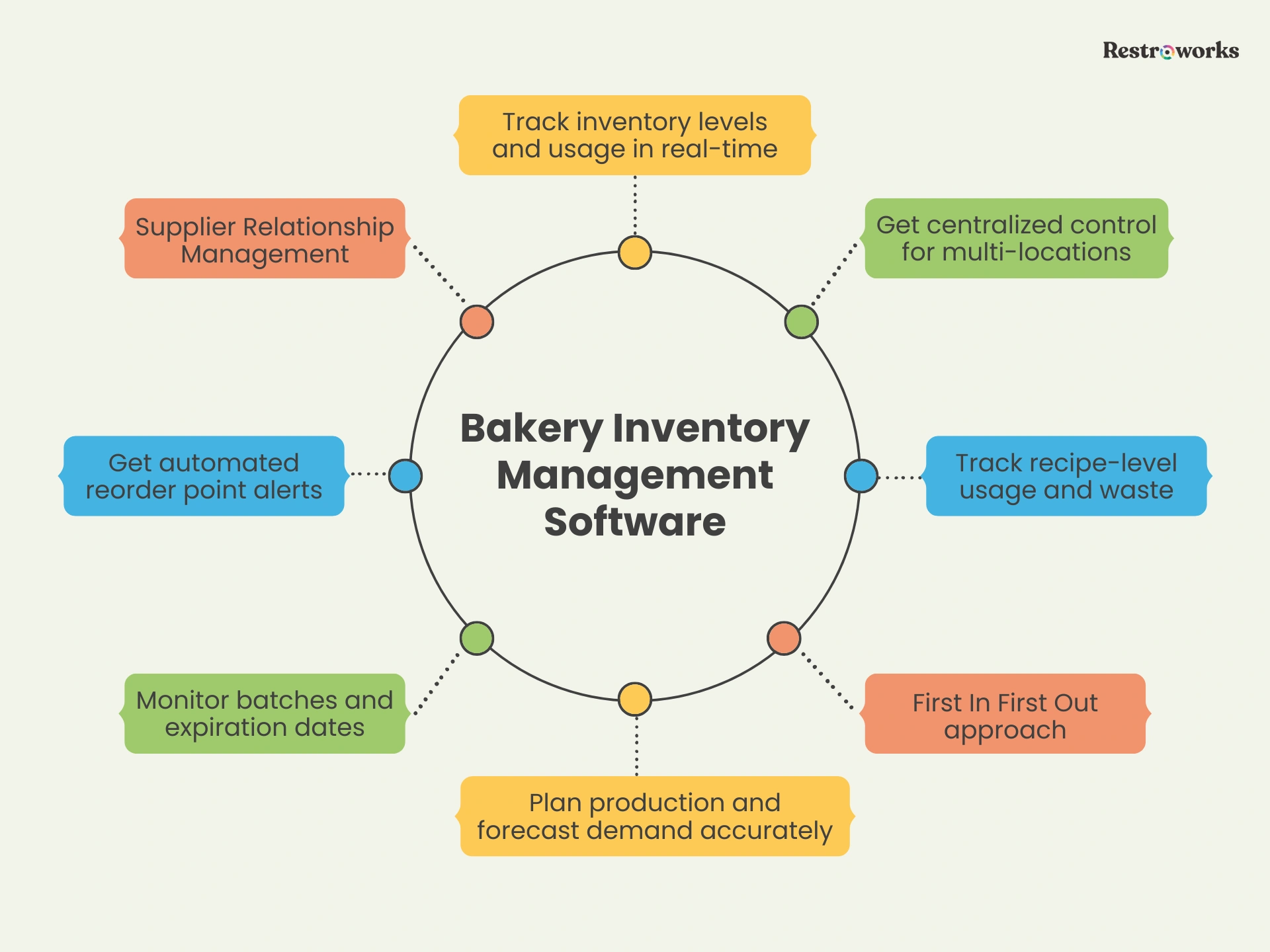
A bakery inventory management system brings greater accuracy and consistency to your inventory sourcing and usage process. Here’s what the software brings to the table-
1. Real-Time Inventory Management
Inventory levels change throughout the day. You have deliveries arriving, the kitchen using ingredients during production, or other outlets requesting stock transfers.
In between all this, if you’re relying on manual counts, the information you’re working with will already be outdated. A bakery inventory management system solves this. When integrated with your POS and kitchen systems, it helps you-
- Monitor current stock levels across ingredients and supplies
- Identify low-stock items and share re-order alerts
- Track ingredient usage more accurately
- Make purchasing decisions based on current inventory levels and expected sales.
This reduces surprises in the kitchen and gives you greater confidence in your day-to-day inventory planning.
2. Centralized Control for Multi-location Bakeries
As your bakery grows into more outlets, managing inventory gets trickier. Why? Because each location maintains its own records and has its own ordering process. And you can’t be everywhere, tracking minute-by-minute inventory usage, right?
Your bakery inventory system, integrated with a POS system for centralized access, allows you to-
- View inventory information for all locations in one place
- Standardize inventory processes across stores
- Compare ingredient usage and purchasing trends
- Track inventory transfers between locations
Plus, most of these systems work via cloud, so you can seamlessly access all data and reports from anywhere and make informed decisions.
3. Recipe-Based Tracking
One of the biggest challenges in a bakery business is understanding ingredient usage for each recipe and its impact on costs. Every extra gram of chocolate or tablespoon of sugar matters in maintaining profitability.
Recipe-based tracking connects inventory consumption directly to your recipes and recipe costs, making it easier to track usage and monitor waste in each batch.
Once you feed the specific recipes into the inventory system and define ingredient and batch quantities, you can track consumption in real time.
So, for each batch produced, the inventory system will deduct the corresponding ingredient quantities. This also makes it possible to standardize recipes. This way, you can-
- Identify unexpected variations in consumption
- Monitor wastage and pilferage
- Calculate product and recipe costs
- Maintain greater consistency in baked goods across locations
4. First In First Out (FIFO)
Freshness matters in every bakery. Using newer inventory before older stock can increase spoilage and create unnecessary waste.
But the bigger challenge is maintaining that discipline when there are hundreds of perishable ingredients moving through your bakery every week. The FIFO approach to inventory management ensures you only use what you bought first by accurately tracking expiration dates.
Your bakery inventory software supports this approach by recording purchase dates, batch information, and stock movement history. So, it ensures you prioritize older inventory during production. As a result, this will-
- Reduce spoilage and expired inventory
- Improve ingredient freshness
- Minimize unnecessary waste
- Make better use of existing stock before reordering
5. Production Planning and Demand Forecasting

Efficient inventory management isn’t only about knowing what’s in stock today. It’s also about knowing what you’ll need next week, or the week after that.
A bakery inventory management system combines historical sales data, ingredient usage, and customer traffic data to help you forecast future demand accurately. You can see which menu items were in demand, or which day attracted the most traffic. And then use this information to answer practical questions like-
- Should you increase production ahead of a holiday weekend?
- Are you ordering more ingredients than demand actually requires?
- Which menu items should you be producing more of to meet the demand?
- Which items are creating waste?
- How much customer volume should the kitchen plan for?
This way, you’ll be making decisions grounded in real demand and not your instinct to avoid production delays.
6. Batch and Expiry Tracking
Batch tracking assigns a unique identifier to each delivery, allowing you to track inventory based on when it was received, who supplied it, and how it was used.
Bakery inventory software makes this process much easier by automatically recording batch information and linking it to inventory movement and expiration dates. Say, if a quality issue arises, you can quickly trace ingredients back to a specific delivery instead of reviewing invoices and stock levels manually.
As your bakery grows, this level of traceability helps you maintain consistent product quality and control inventory costs much better.
7. Automated Reorder Points
Having too much inventory ties up cash and increases the risk of spoilage. But if you have too little? It can leave you unprepared. Automated reorder points help you avoid situations like these.
With inventory software, you can set minimum stock thresholds for individual ingredients. When inventory levels fall below those thresholds, the system automatically alerts your team or creates a purchase recommendation.
- Reorder ingredients on time
- Reduce emergency purchases and rush delivery fees
- Maintain more consistent inventory levels
- Spend less time manually checking stock
8. Supplier Relationship Management
Most bakeries work with multiple suppliers for ingredients, packaging materials, and specialty products. This means you have to keep track of pricing, delivery schedules, and purchasing history for each item and each supplier.
Automate this with your bakery management software. It stores supplier information alongside purchase orders, delivery records, and inventory data. This gives you a complete record of your supplier relationships in one place.
You can use that information to:
- Compare pricing across suppliers.
- Review past purchasing trends
- Track supplier performance over time
- Make more informed purchasing decisions
So when ingredient costs rise, or supply chain disruptions occur, you can also evaluate your vendors and see if you want to continue with the partnership.
Having access to this information becomes especially important when evaluating long-term supplier relationships.
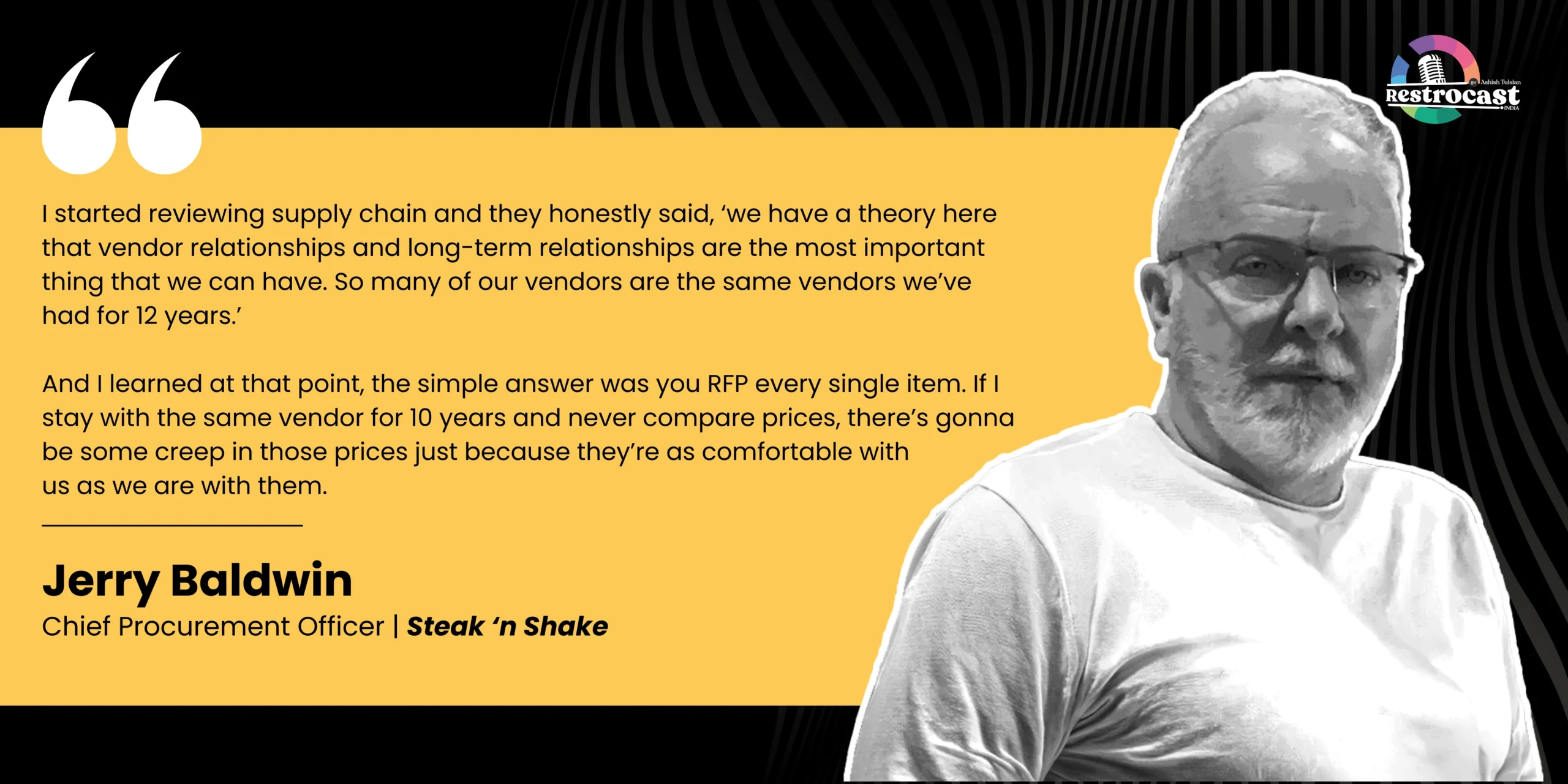
Speaking on Restrocast, Jerry Baldwin, Chief Procurement Officer, Steak ‘n Shake, shared a lesson he learned while reviewing the procurement strategy of a restaurant chain-
Watch the full podcast episode-