
Industry-wide, 85% of marketing campaigns flop, and those of bars are no exception. When promotions aren’t backed by a clear brand identity and intent, they only drain budgets.
But, how can you make sure yours doesn’t? First, ensure everything the public sees, i.e., your logo, interiors, website, menu design, and social media, tells a consistent “story.” Your customers must know exactly what kind of bar they’re walking into before they arrive.
Next, set tangible goals you want to achieve via promotion. Maybe you want to fill slow weekday hours, or launch a new cocktail. Whatever it is, be specific. For example:
- I want a 20% increase in footfall between 4-7 PM.
- I want my newly launched drink to sell 15% more than X over a week.
Once in place, you can now put these bar promotion ideas into action. Mind that not every idea will work for every bar, so A/B-test them and double down only on what compounds.
What You Will Learn
- How to attract more customers to a bar and keep them coming back
- Top bar promotion ideas that actually work in 2026, and how bar owners can implement them while on a budget
- How creativity, data, and brand-led experiences give you an edge?
Why & How Should You Actively Promote Your Bar?
Because visibility drives choice, as simple as that.
According to a report by the National Restaurant Association, 52% of people say promotions help them decide which restaurants or bars they should/should not visit.
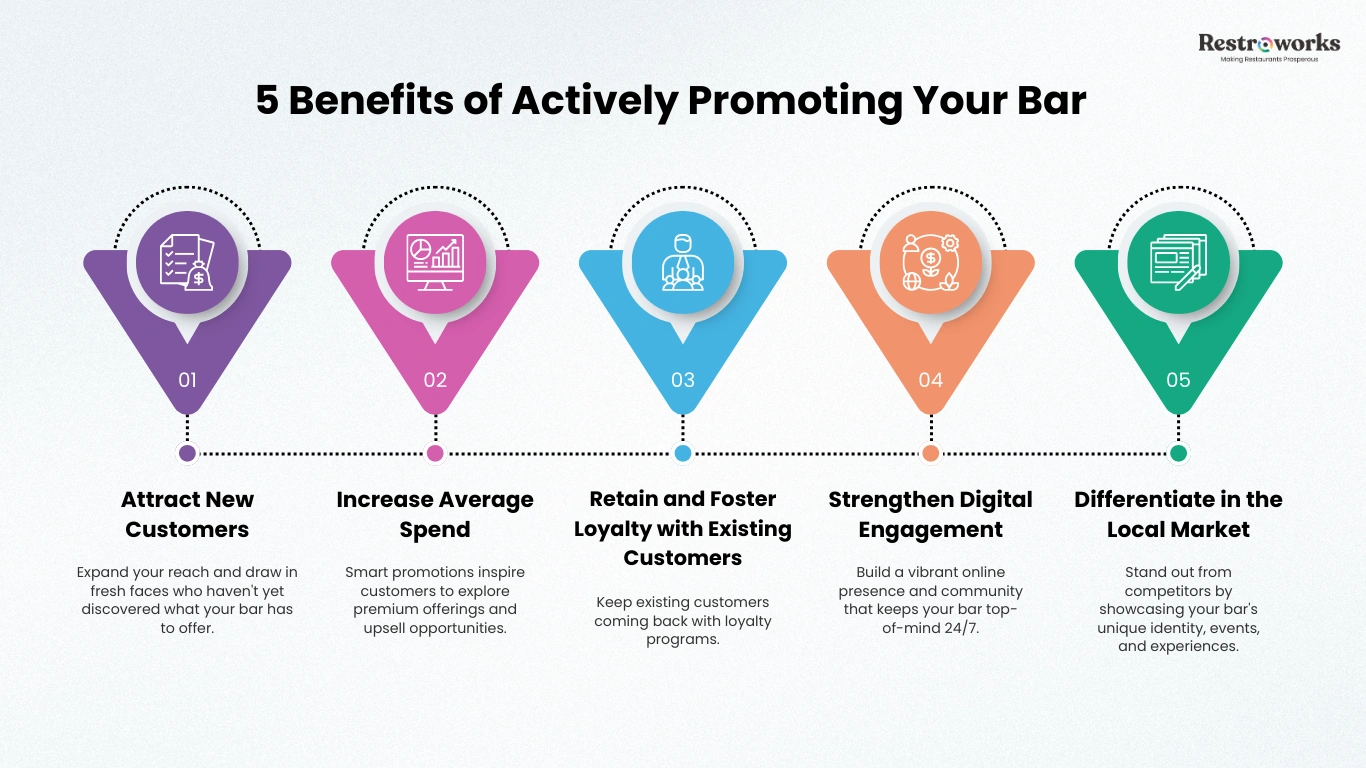
When done right, effective bar promotion helps you:
Mind, again: Promotion only works when it is intentional.
As Kevin Stirtz puts it: “Every contact we have with a customer influences whether or not they’ll come back. We have to be great every time, or we’ll lose them.” For bars, that truth plays out in every detail, from how customers discover you to what keeps them returning.
Here are 30 creative, high-impact bar marketing ideas that give people real reasons to show up and keep coming back for more:
#1: Happy Hours
Happy hour is when you offer drinks at a discount during a specific time frame, usually during your slowest hours. This encourages customers to visit during times your bar would otherwise be empty.
In fact, a study found that, on average, bars with happy hours see a 26% lift in revenue and a 24% increase in transactions compared to those without.
But this only works when discounts are controlled. That means you should keep the discounts tight enough so they feel like a steal (30-50% on select drinks, for example), but not so tight that you lose money across the entire menu.
#2: Loyalty Programs
You have probably heard of the 80/20 rule. It applies here, too. About 20% of your customers are responsible for roughly 80% of your revenue. Those are your loyal customers, and if you are not actively rewarding them, you are leaving money on the table.
After all, repeat customers spend up to 67% more than new customers. They are also 61% more likely to recommend your bar to a few friends.
So, how exactly can you reward your loyal customers? It can be as simple as them earning points per purchase, which they can later redeem for free drinks or discounts. Or you may offer them early access to new menu items, invite them to exclusive events, give them a cute little birthday gift, etc.
#3: Themed Nights
Guess what – maybe people aren’t showing up at your bar because you haven’t yet asked them to cosplay Stranger Things characters.
Themes like these reduce decision fatigue and give customers a reason to choose this Friday over any other. Instead of letting them decide, “Where should we go?”, you hook them with “Let’s do the Stranger Things night.”
You decorate the bar, name cocktails after characters, organize games around scenes from the series, and share it all on social media channels.
But, but, but…don’t just pick any movie or cultural moment as a theme. Do proper research to figure out exactly what has been trending lately, and build around that. The more massive the following a trend has, the higher the footfall you may expect.
#4: Trivia Nights
A trivia night is one of the most effective bar promotion ideas for one very practical reason: people come in groups, and groups order more. That’s a win for you.
To run a trivia:
- Fix a day. It’s going to be a weekly thing.
- Choose a theme or a format – General knowledge works, but questions around movies, sports, and pop culture work even better.
- Start promoting it on social media at least 5-7 days in advance.
- Cap limit. “Only a group of 4-6 people can join.”
- Run 3-4 rounds of 8-10 questions each.
- Offer prizes to the winner – It can be as little as a free drink or as grand as international flight tickets.
- Collect each customer’s contact details so you can ring them up next time an offer opens or add them to the weekly emailer list.
You can easily get a trivia kit from Etsy or create one on your own. One fun touch is to include a question about your own bar each week. Regular customers love the inside joke, and new customers start paying closer attention to your story.
#5: Live Music or DJ Nights
Music changes how people experience the space. For the record, they linger longer, order more, and leave more satisfied.
Take the words of the owner of a family restaurant in Atlanta, GA, “Without the [live] music, we didn’t have the linger time. We would close sometimes at 9 PM. With the live music, we could push to 1 o’clock in a bedroom community. We sold more liquor and got to a 75% profit margin.”
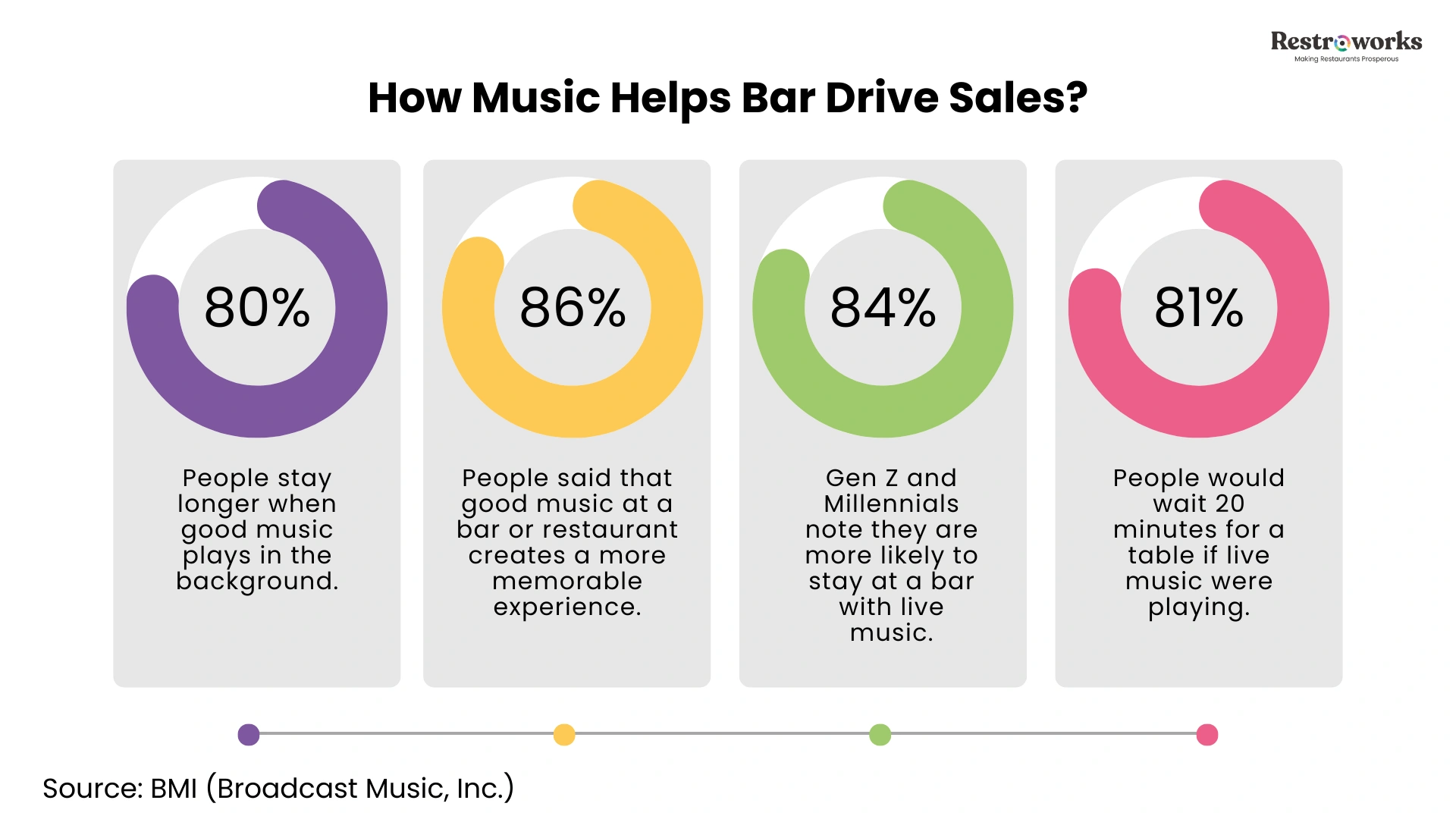
In short, if you have a space for a small stage at your bar, start inviting local artists or bands to perform once per week. Since local acts are more affordable, they’d be a good starting point.
But in case live performances feel like too much to manage consistently, a good DJ night would work in your favor, too.
#6: Karaoke Nights
Just put a karaoke system in your bar, and you’ll see how people who sang on a Thursday night come back the following Thursday. That’s almost guaranteed.
Sounds like a plan? You might still make a mistake by treating karaoke as a mere side activity. Instead, do this:
- Fix a recurring night – Any one weekday and stick to it.
- Have a host (staff member or external MC) manage sign-ups, pacing, and crowd.
- Run songs in slots and track performers of the night.
- Introduce a weekly leaderboard of top performers and display it prominently.
- Let the audience vote for the “crowd favorite.”
- Offer a small reward.
- Post it on social media with a hashtag and prompt the audience to share the same on their stories.
And there you have it – user-generated content (UGC) that’s worth more than most paid social media posts.
#7: Happy Hour With a Twist
When Cynthia Daniels, Chief Event Strategist at Cynthia Daniels & Co., said, “What I try to do is create something they’ve never seen before…anything unique, outside of the box, unconventional…people are more open to going to that than the exact same thing they’ve seen time and time again,” she must be talking about happy hour but with a twist.
See, it’s simple – You give discounts to your customers during happy hour. Now, you’ll also give them a unique experience to behold. This could be:
- An off-menu cocktail personalized per their liking.
- Spin the wheel for surprise upgrades.
- A small live acoustic set (exclusive for that window)
- A celebrity visit, if you can afford it.
The idea is to create an experience that people specifically want to show up for. And if the experience is memorable enough, people will tell their friends about it. That’s word-of-mouth marketing for your bar.
#8: Mixology Classes
This is one of those bar promotion ideas that generate direct revenue from ticket sales while also doing your restaurant marketing alongside. Think about it – People show up to learn to make a cocktail at your bar, and since they made one themselves, they become advocates for that drink and for you.
However, for that outcome, the class in itself should feel deliberate, personal, and worth talking about.
How can you make it happen? First and foremost, cap the class at 15 to 20 people at max. Charge them a flat, all-inclusive fee.
Then walk customers through making 2-3 of your “best” drinks from scratch. Don’t just focus on how, but also why you use a particular ingredient, tool, or technique.
Involve every participant in the process. They should shake, stir, measure, and taste it all themselves. How will this help? People will leave with a skill, a story, and a very strong positive association with your bar.
#9: Seasonal Promotions
Trust us – “Our winter menu is here” is a complete marketing campaign on its own. It gives your regulars, your social media followers, and local media something to talk about when nothing new is happening otherwise.
The trap to avoid here is slapping a seasonal label on the existing drinks, though.
#10: Social Media Contests
Before you run any social media contest, pick a goal.
- Do you want more followers?
- Are you targeting more user-generated content?
- Are you launching a new drink and want people to talk about it?
You can’t (and shouldn’t) be chasing all three at once.
With a goal in mind, design the mechanic around it. For example, for user-generated content, you’ll have to prompt people to post a selfie while at your bar. To gain more followers, you might run a giveaway with the condition that each person tags 2 new people.
Whatever you wish to achieve, make sure the entry mechanic is simple and quick enough that people will actually do it.
Once the contest is over, reshare the best entries on your own page. It will work as proof that real people are having real fun at your bar.
#11: Behind-the-scenes & POVs
Got featured in the media? Celebrate with your customers. Added a new bartender to your team? Post an introduction video online before guests meet them at the counter.
Take time to showcase your expertise, your team, and your culture that makes you – YOU. Highlight how you focus on “growing together.” How does your team benefit from working with you?
These may sound like little things no one would care about, but they humanize your brand.
POVs take this a step further. They let people experience your bar through someone else’s eyes.
For example, see this video –
We (with the other 678k viewers) are in love with this sneak peek from Mírate in Los Angeles. That’s the power of perspective. When people feel like insiders, they’re far more likely to walk in as customers.
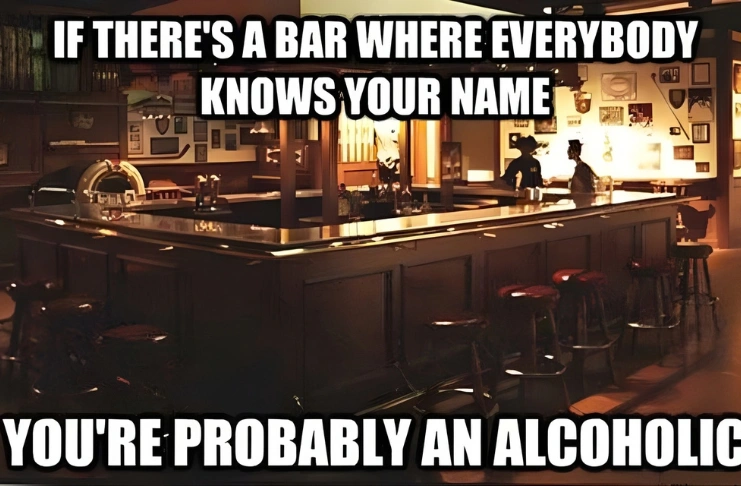
#12: Memes
Because a good laugh is always appreciated!
Select a ‘good and trendy’ image or GIFs from movies or cartoons, add a witty ‘real-life’ text to it, and post. And, yes, you can use actual moments from your bar, just take consent if it involves your staff or customers.
The text should be relatable and something that’ll have your audience chucking and hitting ‘share.’
Make sure to keep it light and avoid anything controversial.
#13: Day-in-the-life videos
You wake up. Go to the gym. Have a coffee. Arrive at your bar. Instruct the staff. Welcome your first customer. Solve a random fight. Get home. Eat and sleep.
Maybe this is your life, or maybe it’s a bit more dull? Spicy?
Whatever! You can at least dedicate a video to yourself and your team. Highlight the hustle, the successes, and even the much-needed espresso shots.
For a series, you can consider the following ideas:
- X things I wish I knew before opening my bar
- Day in the life of [bartender]
- What is it like to work at [X bar]?
- What is it like for a bar owner to go on a vacation (which rarely happens!)?
- A week in the life of [bartender at X bar]
- X things I learned too late as a bartender
Remember: Someone out there aspires to be where you are today. Such videos help.
#14: Loyalty Programs with POS Integration
This is your regular loyalty program now synced with the point-of-sale system. This way, you can automate the experience to feel more personal without requiring your staff to put in extra effort.
For example, every time a customer reaches a milestone (their 10th visit, their 5th order of a specific cocktail), the system triggers an automatic reward.
You can also use your customer database to understand which customers are starting to drift away (they used to come every week, now it has been a month) and send them a targeted “we miss you” offer before you lose them entirely.
#15: Guest Bartender Nights
The concept is super simple: invite someone outside your regular team (They need not be a bartender themselves) to take over your bar for a night and make their own signature drinks.
Now, the most important thing here is who you invite, because it will ultimately determine the footfall, press interest, and social reach your bar can garner.
#16: Viewing Parties
In noob terms, install a big screen at your bar and let people watch something on it together. The most obvious choice is sports. A cricket match, for example, is very popular in India.
Other than sports, you could project a massively popular show, the Oscars pre-show, or basically anything with a cult-like following.
The trick is to theme everything around what you are screening. If it is a sports night, create a game-day food and drink menu. If it is a cult show finale, name cocktails after characters and encourage people to dress up.
The dressing-up element specifically is great for social media because people will photograph themselves and post before they even arrive at your bar. Free promotion!
#17: Open Mic Nights
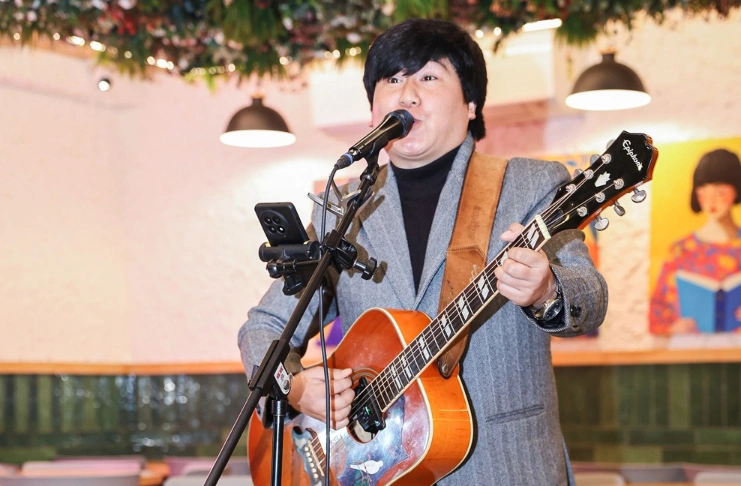
Every performer has their own audience. So, when you invite the performer, their circle naturally follows.
All you have to take care of in advance is to fix the slots, create a sign-up process, and encourage performers to promote their slots on their respective social accounts.
To make it more than just a weekly night, consider running it as a six-week competition format. Each week, the audience votes and someone gets eliminated. The more a performer wants to win, the more people they’ll bring in to vote for them. By the final week, you’ll have a room packed with supporters of multiple finalists.
Pair this with drink specials tied to the event, and there you have one of the highest-ROI bar events you can run.
#18: Live Streaming
“Going live in 3, 2, 1…” And yes, we assure you that your target audience wants those sneak peeks from the parties you’re attending, behind-the-scenes before the big night, and casual pranks you pull on your team.
If there’s something really interesting going on around you or at your bar, go live on the spot. Or if there’s an event coming up, announce the session well in advance. Either way, you’ll see people flocking in with their emojis ready. (You must have a good online presence for this to work, though!)
When you’re live, keep it very natural. And give people a reason to tune in the next time too – discuss something valuable and entertaining for them.
#19: Team activities
Got something fun going on in your team? Take a selfie.
For example, you may have organized a field trip, a surprise birthday party, or a salsa dance competition – anything that got your team members smiling big and playing like kids.
That’s the moment worth sharing.
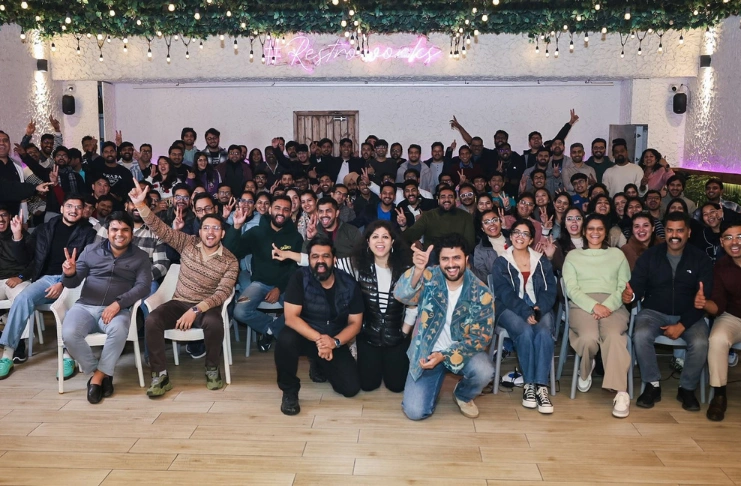
(That’s us, btw! Feels good looking back!)
#20: Throwback Night
Nostalgia always strikes a chord.
Whether it’s your bar’s first anniversary or you won a prestigious award some years ago, get on a stage and share a few words expressing your emotions.
How do you feel about reaching where you are today? What would you do differently if you could do something all over again?
How do you miss that very first team of yours – some might have left for better opportunities, and some might have stayed; how do you feel?
Share memories, express gratitude, and appreciate the people you have around you today.
Moments like these humanize your journey. Customers who’ve been with you since day one will feel seen, some may even drop a tear and chime in during the celebration. New customers will get the context.
Such nights – once in a while – do wonders!
#21: Mascot or Cartoon
An interesting difference between a meme and a cartoon is that memes borrow from culture, while the latter becomes your culture.
You create the character. You create a story that fits your bar’s image. You create costumes, comic strips, or animated videos around your cartoon.
You make your cartoon part of your brand image.
For example, do you know that green bird that has been on the hunt for those who leave their language lessons in between? Yeah! We’re talking about Duolingo’s mascot.
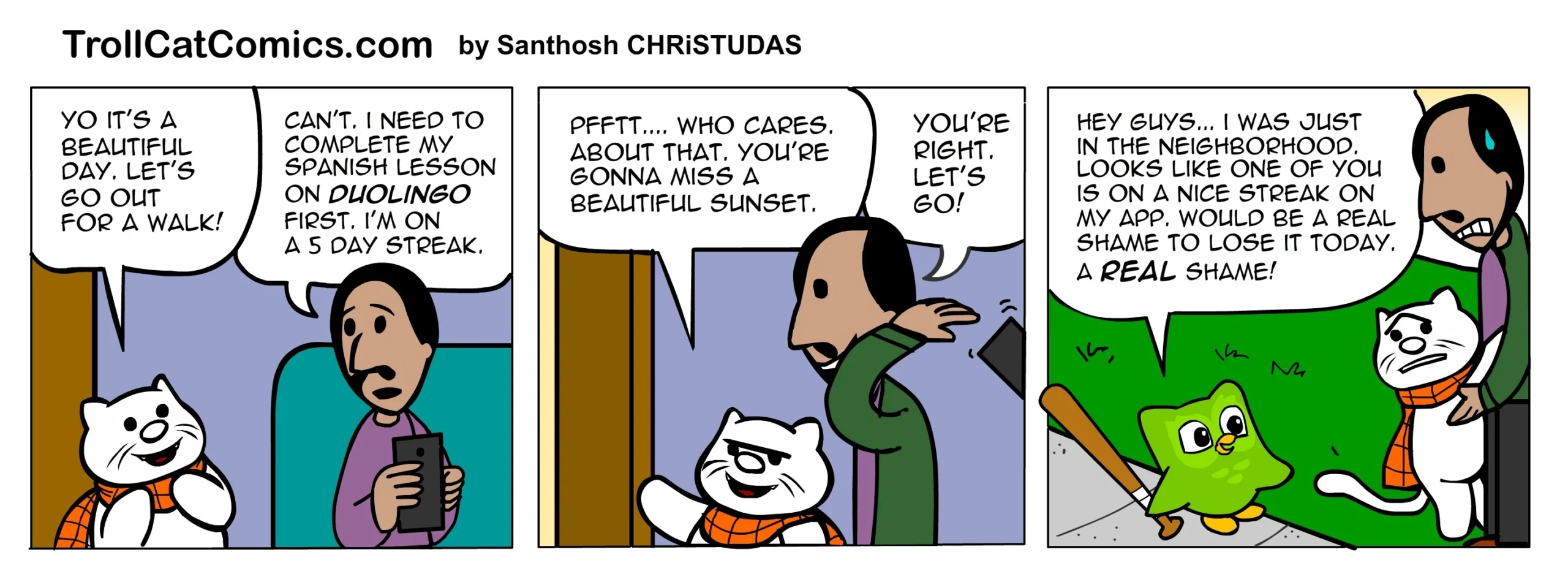
This bird is how we recognize the brand; the world recognizes the brand.
You can also create a simple original character for your bar. Inject your personality into it.
Use it to create comic strips, YouTube videos, TikTok reels, etc. Create a costume for it and have your team members wear it at an event.
Heck, post your webtoon with your cartoon bartender on a quest to save its signature drink from, let’s say, demon invasion. Make it dramatic, romantic, and humorous.
Believe us – there are innumerable ways to use cartoons for bar promotion. Try it!
#22: Paint Nights
Wine-and-paint nights are among the easiest, high-revenue bar events to run because most of their execution is outsourced. Platforms like Yaymaker will connect you with a local artist who runs the session, provides the instruction, and handles the creative side of the evening. Your job is to serve drinks and collect cover charges.
Guests pay a flat entry fee that covers canvas, paint, and brushes, and then they spend the rest of the evening building up a bar tab. People stay for 2 to 3 hours on average, significantly longer than a typical night out, so their spend per head is higher.
The social media content that comes out of a paint night is also genuinely good because people love posting their finished artwork, especially when it is charmingly bad.
#23: Bar Olympics
Bar Olympics is a format where you set up multiple bar games (darts, pool, foosball, beer pong, cornhole – basically whatever you have space for), keep score across all of them, and crown a winner at the end of the night.
Small teams sign up in advance and compete across stations throughout the evening.
The advance sign-up is actually one of the more valuable parts of this format because it:
- Tells you exactly what kind of customer traffic to expect
- Lets you prepare your staff accordingly, and
- Creates commitment from attendees before the night even starts (people are far more likely to show up if they have already registered their team)
You may end the night with a proper medal ceremony and take a photograph of it for your social media platforms.
#24: Outdoor Movie Nights
If you have an outdoor space or a patio, outdoor movie nights surprisingly do really well.
Screen a classic film or a crowd favorite, set up comfortable seating, offer themed cocktails and snacks to match the movie, and promote it in advance so people can plan for it.
The experience of watching a film outdoors with a drink in hand is something people will talk about and want to repeat.
You can make it a monthly event with a different theme each time:
- A horror double feature in October
- A romantic classic in February around Valentine’s Day
- A Bollywood night for something more local and community-driven
Try to build a regular audience that looks forward to it each month.
#25: Bingo Nights
Bingo has had a genuine cultural resurgence, especially among younger crowds who find its kitsch appeal genuinely fun when paired with cocktails.
The game is super easy to run, requires minimal equipment, and keeps people seated and ordering for extended periods.
To attract a younger crowd specifically, add a twist to the standard format. For example, there may be a cocktail version where every time someone gets a number wrong, they take a sip. The more you make it overall feel like a social experience, the better it performs.
#26: Ladies’ Nights
Got ladies in the house? Make sure they have extra, extra, extra large fun. Because who doesn’t love women laughing and charming the night?
But how can you really make it happen? Be intentional about everything you put around them. Everything, be it your menu, aesthetic, games, etc., should appeal to your female customers.
#27: Influencer Marketing
The common mistake most bars make with influencer marketing is going after the biggest local account they can find and hoping the target audience follows.
What actually matters here instead is audience fit. A food and nightlife blogger with 15,000 genuinely engaged local followers will drive more traffic to your bar than a lifestyle influencer with 200,000 followers across three countries.
When you onboard the right influencer, invite them to your bar. Let them explore your menu, talk to your bartenders, and get a feel for what makes your bar different.
The content they will then make will read differently to their audience than any sponsored post that runs on a script. That authenticity is what you are actually paying for.
INDUSTRY INSIGHT
According to data, influencer collaborations on Instagram yield 11x higher ROI for restaurants than traditional ads. Within this, too, nano-influencers (those with 1k-10k followers) drive 24% more authentic engagement.
In fact, 67% of millennials prefer bars and restaurants endorsed by influencers or bloggers, suggesting that personal recommendations now carry more weight than polished ads.
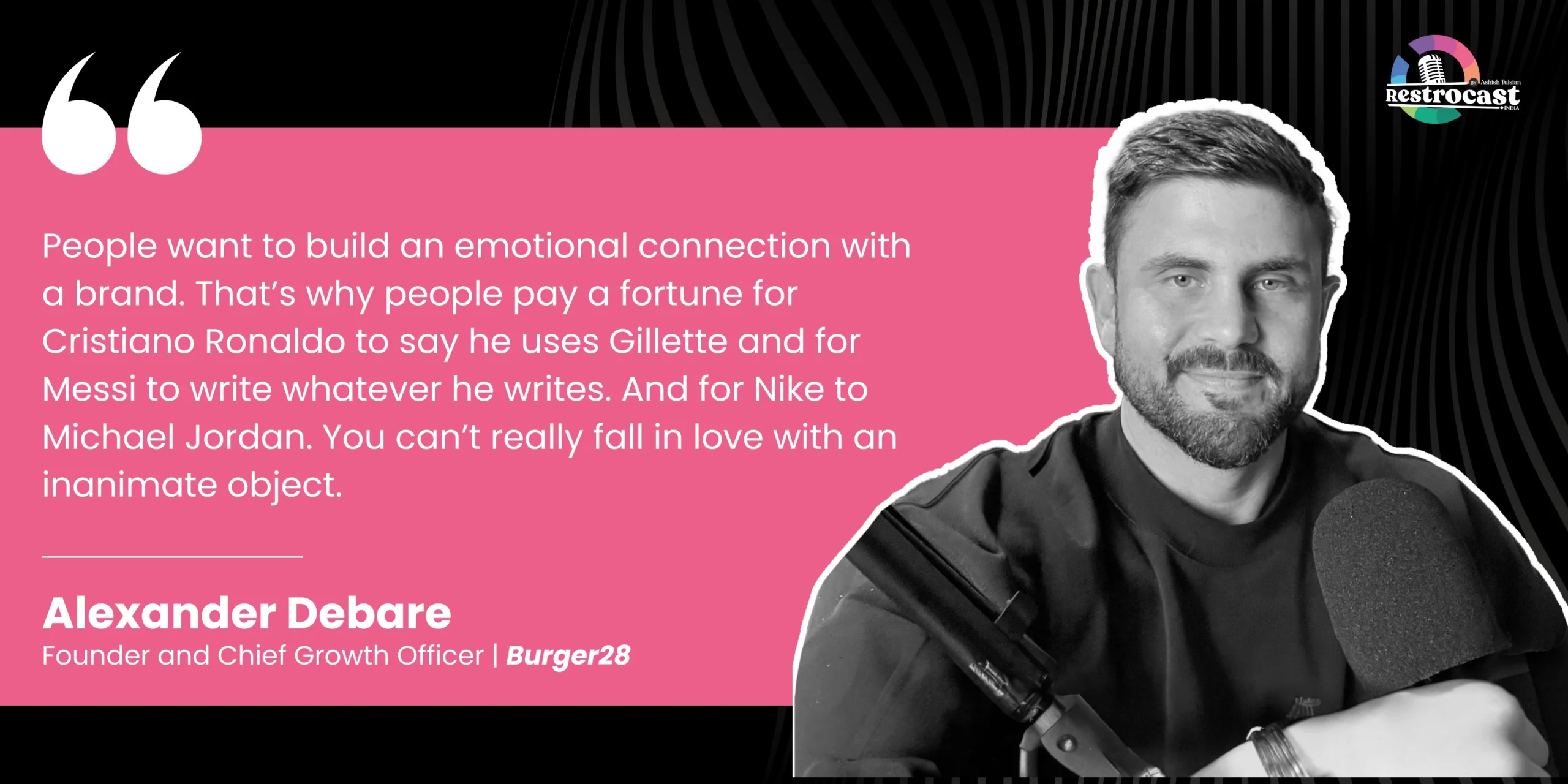
Even Alexander Debare, Founder and Chief Growth Officer at Burger28, backs this idea. In one of the Restrocast episodes, he shares: