
So, if you have ever gone down that rabbit hole of trying to figure out all of the different types of models that are being utilized by restaurants today, let me just tell you that when you come back up from this rabbit hole, you will be more confused than when you went in.
Whether you are looking for information on how to get your food business up and going, or you are looking for information on how to make changes with your business.
At a surface level, both cloud kitchens and ghost kitchens look identical. They don’t dine in spaces, they don’t rely on walk-in traffic, and they operate almost entirely through delivery apps like Uber Eats. From the outside, they both appear to be part of the same delivery-first ecosystem.
A ghost kitchen is typically a shared facility where multiple brands operate from the same kitchen, often managed by a third party. A cloud kitchen, on the other hand, is a broader, more flexible concept. It can be a single-brand operation, a multi-brand setup, or even a delivery-focused extension of an existing physical restaurant.
What You Will Learn
- Clear, standalone definitions of both models
- How each actually operates day-to-day
- A verified cost and margin comparison (US figures)
- Which model fits your business goals
- Real examples from US chains and operators
- The most common mistakes that kill these businesses
- An honest look at when neither model works
Let’s get into it.
Why the Restaurant Industry Rewrote the Rules
So, before we get into all those models, let me give you a quick sense of the reason why this conversation is relevant today.
The Old Restaurant Business: Great location, great restaurant, great food, word of mouth, etc.
Well, that is a great business model, but that is not a great business growth model.
A parallel economy has been built, and that parallel economy has grown at a greater rate than the traditional dine-in business, and that parallel economy is the food delivery business.
In the pre-pandemic world, the US restaurant business was growing at a 3 to 4% rate.
The delivery business grew at a rate almost twice that, 8%.
And then COVID-19 arrived. The dining rooms went dark again. Delivery was still the only way to go. But what’s important is this: The dining rooms reopened. Delivery has not gone away.
Prior to the pandemic, the US food delivery business was expanding twice as fast as the dine-in business. After the pandemic, consumer behavior has shifted. That’s what cloud kitchens, ghost kitchens, are based on.
The global online food delivery services market size was $380.43 billion in 2024. It is expanding to $618.36 billion by the end of 2030, growing at a CAGR of 9%.
Moreover, the food ordering business is expanding 300 percent more than the dine-in business since 2014. The food ordering business accounts for 40 percent of all food sales in the US.
This is not a secondary business. This is the main event.
What Is a Ghost Kitchen?
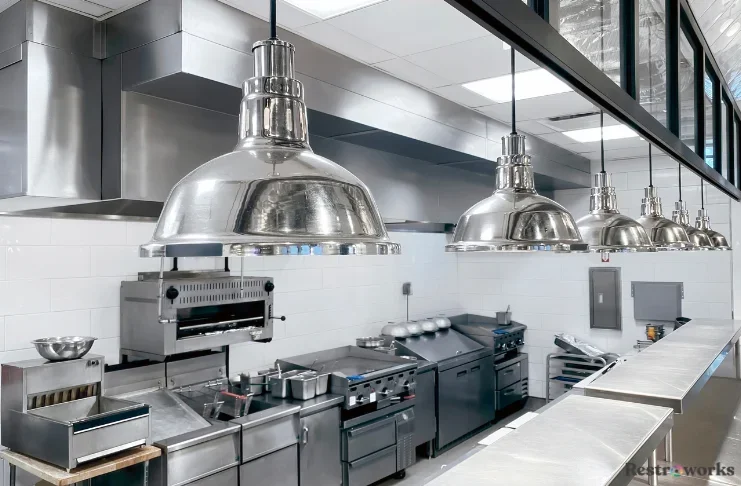
A ghost kitchen is a type of kitchen used as a delivery-only concept, with the end goal of being able to run multiple concepts out of one single kitchen, without any type of physical presence of any kind.
No storefront. No dining room. No walk-in traffic. No front-of-house staff. It’s called a ghost kitchen, but you might also refer to it as a dark kitchen because of the fact that it operates completely out of sight, and the consumer has no idea it exists.
The whole business model is built around this single concept of receiving orders, cooking them, and then passing them off to the delivery drivers.
How Ghost Kitchens Actually Operate?
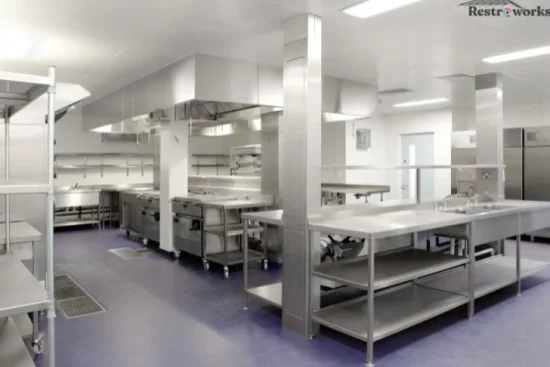
Think of the picture of the commercial kitchen facility in Chicago or Los Angeles, and within that facility, there are five different concepts of the virtual restaurant, all operational at the same time within the same facility.
So, within that facility, there could be an area that’s preparing orders of burgers, an area that’s preparing orders of Thai noodles, and yet another area that’s preparing orders of sushi rolls, and all of these orders are being prepared and sent out to delivery drivers that are heading in different postcodes across the city, and yet no customer would even be aware that they are being prepared in the same facility.
So, the idea of the kitchen facility with multiple revenue streams, and that’s the efficiency argument, and that’s as compelling as the argument can get as far as food entrepreneurs are concerned.
The challenge comes on a Friday evening at 7:30 PM when all five brands go up at once. It is challenging to operate five different brands, which translates to operating five different menus, five different prep times, and five different volumes of orders all at once.
It is challenging enough to operate under pressure and maintain quality, and it becomes even more challenging to maintain consistency across all five virtual brands.
Mubarak Jaffar, Co-Founder and CEO of KLC Virtual Restaurants, which has successfully scaled up a multi-brand delivery business in Kuwait and the GCC, walked us through this in detail in an episode of Restrocast, a podcast hosted by Ashish Tulsian, CEO, Restroworks. He said, “If the idea is to run a 250 Square meter location efficiently, you would need to generate more than 500 orders a day from that kitchen. Build multiple brands and capture a cuisine, as opposed to having one brand to capture a cuisine.”
That’s not a small operational footnote. It’s the foundation of whether a ghost kitchen survives.
Where Ghost Kitchens Genuinely Work
Launching fast with limited capital
- Using the limited capital, the company could test the new virtual restaurant brands.
- Entering new cities in the US without signing leases on physical locations.
- Developing additional revenue streams alongside an existing full-service restaurant.
- The reality of the costs: The cost of launching a ghost kitchen in the US is between $20,000 and $60,000.
This is in contrast with the $750,000–1.5 million it could take to open a traditional restaurant in a high-demand US market like New York City or Los Angeles.
What Is a Cloud Kitchen?
A cloud kitchen, as the name suggests, is a business that is centered on food delivery and, at the same time, gives you much more flexibility in terms of business ownership and business structure than the traditional concept of the ghost kitchen.
The difference, as said, is that your business, in this case, could be a single brand, single concept. Your business could be multiple brands under one roof. Your business could be shared, as in, your business is multiple food businesses under one roof. Your business could be aggregator-owned, as in, your business is the kitchen united model, as in, rent and operate.
The difference, as said, is that it gives you much more control over your business than the traditional concept of the ghost kitchen. And, as said, that is not a subtle difference, especially when we are talking about a business that we want longevity with.
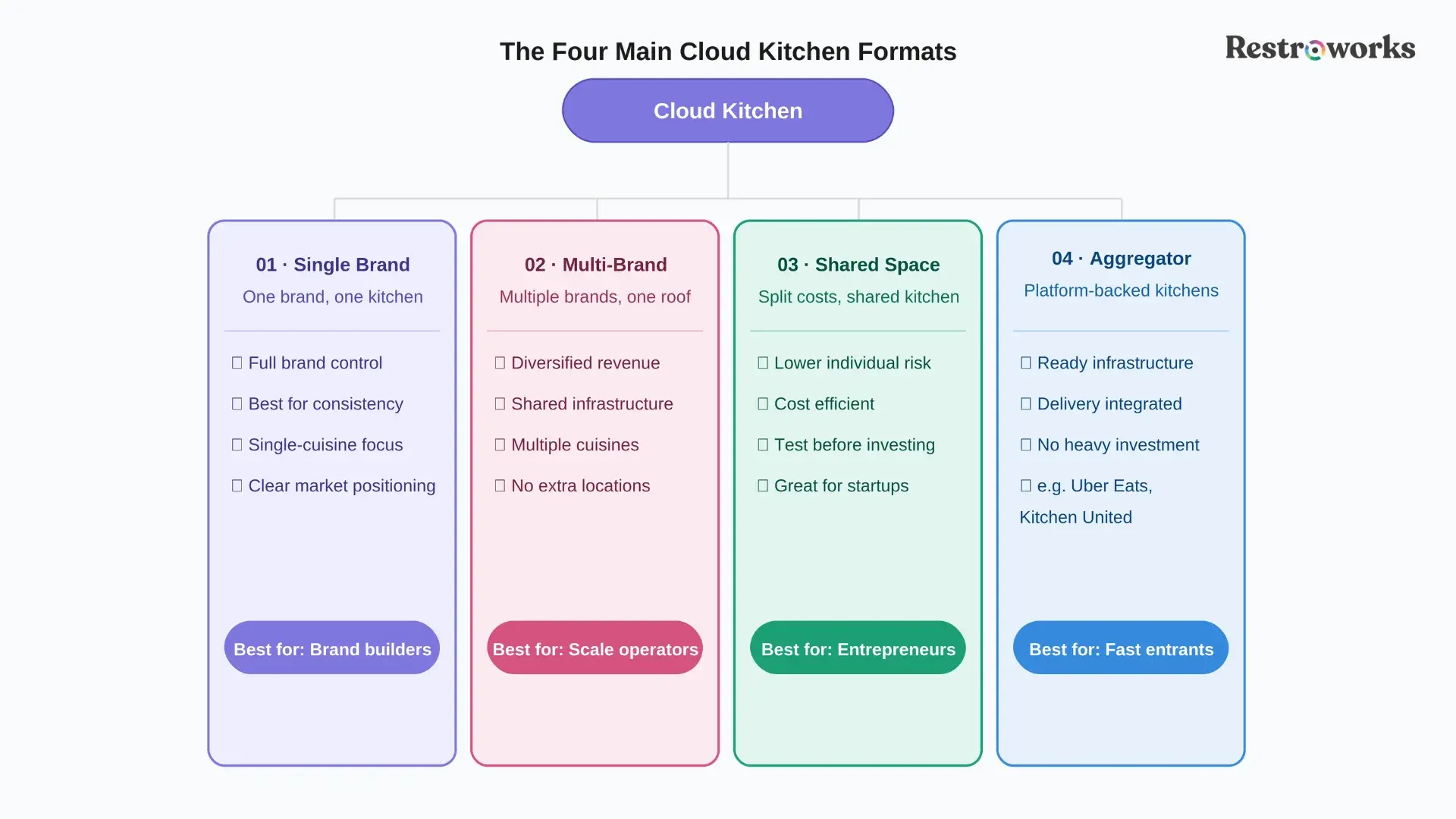
The Four Main Cloud Kitchen Formats
The four main cloud kitchen formats are:
- Single-Brand Cloud Kitchen: One brand, one kitchen, completely focused on food quality and consistency. The best model if the goal is to create a real restaurant brand identity, not just a delivery entry.
- Multi-Brand Kitchen: Multiple virtual brands operating under the same kitchen infrastructure, typically coordinated through a single cloud kitchen system. Optimal utilization of resources, diversified revenue streams, and the ability to operate different cuisine types without the need for multiple locations.
- Shared Kitchen Spaces: Multiple food businesses share the cost of the infrastructure and overheads of the kitchen. Reduced individual risks, cost efficiency, and an opportunity for food entrepreneurs to test demand before investing.
- Aggregator-Owned Kitchens: Uber Eats, etc., and companies such as Kitchen United offer pre-operating kitchen spaces with delivery solutions integrated. You get a pre-existing infrastructure without the need to invest heavily, and you still maintain more control over the structure than you would with a ghost kitchen.
The KLC Model: What a Cloud Kitchen Done Right Looks Like?
Another real-life example of the concept of cloud kitchen can be seen in Mubarak Jaffar’s business venture, KLC Virtual Restaurants. Mubarak Jaffar explained his business strategy on the Restrocast podcast as follows-
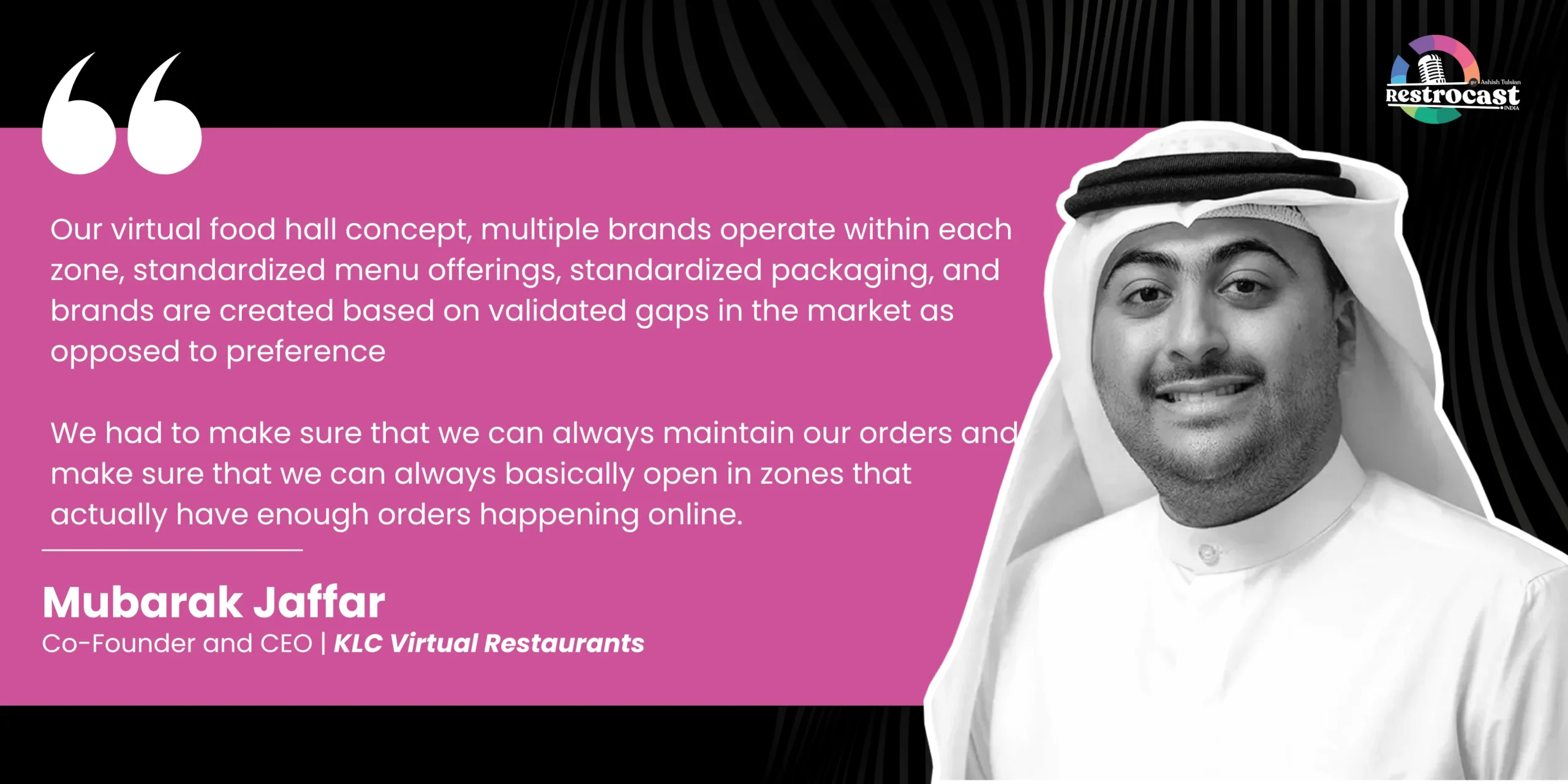
KLC created over 20 virtual brands across 18+ cloud kitchens in the GCC region. His business strategy was based on the following key philosophies: Name brands to enable search-based discoverability, build brands based on existing demand, and avoid over-reliance on the brand lifecycle.
That systematic, demand-led approach is the cloud kitchen mindset working as intended.
Cloud Kitchen vs Ghost Kitchen: Key Differences
Factor | Cloud Kitchen | Ghost Kitchen |
Ownership | Brand-owned or shared | Often third-party managed |
Flexibility | High | Limited |
Brands | One or multiple | Primarily multiple |
Operational Control | High | Medium |
Expansion Style | Structured scaling | Rapid expansion |
Setup Cost | $50,000–$150,000 | $20,000–$60,000 |
The one-line summary: ghost kitchens are optimized for speed. Cloud kitchens are optimized for control.
Choosing Between Cloud Kitchen vs Ghost Kitchen
Choose between cloud kitchen vs ghost kitchen:
If Speed and Low Risk Are Your Priority
Rather, go with a ghost kitchen. It’s entirely possible to launch a new virtual restaurant brand in a matter of weeks, understand the market, and kill concepts that aren’t working without losing six figures in the process. The reason is that this model was built with food entrepreneurs in mind who want to test concepts out, as well as restaurants that want to find incremental revenue opportunities within existing kitchen space.
Kristen Barnett, founder of Hungry House and former COO of Zuul (now known as Kitchen United), described this reality quite nicely on the Restaurant Growth Podcast: “The most critical thing when thinking about ghost kitchens as a solution is defining your customers first, starting from that point.”
The operators who succeeded in ghost kitchens, she noted, were often those with an existing restaurant using it to offload demand they couldn’t handle on-premise, not operators launching blind into an untested market.
If Brand Building and Long-Term Margins Are Your Priority
The stronger foundation is the cloud kitchen. The additional investment is one that brings something that the ghost kitchen concept does not easily provide: identity.
When you own it, you own it all, whether that’s food quality, packaging, experience, relationship, etc. Time, not so much if you’re just renting someone else’s space, their rules, etc.
The Budget and Cost Reality
Entry costs associated with ghost kitchens in the US: $20,000 – $60,000, while cloud kitchen infrastructure costs: $50,000 – $150,000 or more, depending on building/leasing.
In both cases, you avoid the high costs of traditional restaurants, including dine-in space, high-end physical locations, front-of-house staff, and décor. That’s a genuine structural cost advantage.
At the same time, both business models also create new costs that owners of traditional restaurants often don’t realize:
- Third-party delivery apps charge 15-30% commission per order
- Additional costs for packaging specifically for deliveries
- Your margin is limited by the platform, not you.
The Margin Picture
An interesting thing to note about delivery-only kitchens is that they are actually more profitable than traditional restaurants, as long as the business is run properly.
- The average margin of ghost kitchens in the US is 10-30%.
- The average margin of ghost kitchens is 15%.
- The average margin of cloud kitchen tenants is 20-25%.
- The average margin of traditional restaurants is 3-9%.
McKinsey partner Victoria Lord said in the firm’s podcast on food delivery: “Not all revenue is good revenue. If I were a restaurant owner, I’d be asking: how much do I actually make on an average delivery order after all of my costs and the third-party fees?”
That’s the question that comes before any discussion of which type of kitchen to use.
Real-World Example: How the US’s Biggest Chains Validated Ghost Kitchens
The most compelling real-world case study in US ghost kitchen history isn’t a ghost kitchen, however. It is Brinker International, the Dallas-based parent company of the popular casual dining chain, Chili’s.
In June of 2020, Brinker International launched It’s Just Wings, a virtual brand, as a delivery-only concept, cooking out of existing Chili’s and Maggiano’s kitchens, delivering exclusively via DoorDash. No new leases, no new space, no new kitchen staff required. Just existing infrastructure, with a new revenue model in mind.
In their first year of business, It’s Just Wings achieved $170 million in sales, exceeding their internal projection of $150 million. In their first month of business, 70% of their customers were DoorDash customers, never having ordered from Chili’s before.
This is the ghost kitchen concept at work, doing exactly what this concept was designed to do for a concept that already had the infrastructure in place within the kitchen itself.
The concept of the cloud kitchen has also been viewed as a more defensible position from which food entrepreneurs can look to enter the business.
Joseph Unger, the President and COO of GOSH Enterprises, with experience at REEF Technology at the height of the ghost kitchen concept, spoke on the Restrocast regarding the concept of the ghost kitchen and stated the following:
Common Mistakes That Actually Kill These Businesses
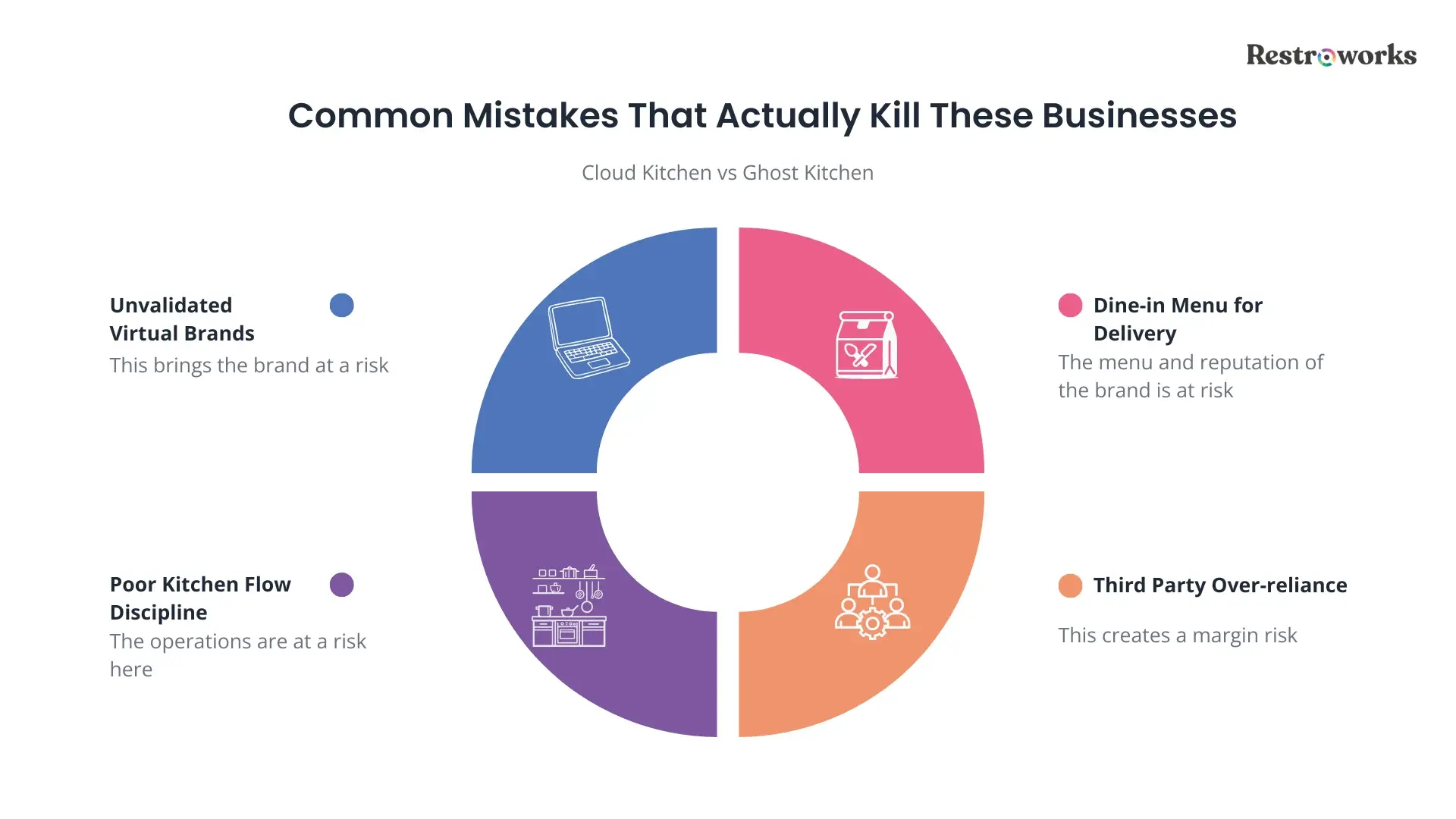
Let’s be direct, because these mistakes are common and they’re expensive.
1. Launching Too Many Virtual Brands Without Validation: The more virtual brands, the more revenue. The less validation, the more complexity, waste, and executional inconsistencies. The way KLC went about launching virtual brands, addressing the gaps in cuisines that they had already validated, was the way to go.
2. Creating Menus Suitable for the Dine-in Model Instead of the Delivery Model: Food that looks good on a plate does not look good in a bag after 25 minutes. Menu engineering for the delivery model is not the same as menu engineering for the dine-in model, and this concept is not well understood by many operators, with disastrous results.
3. Too Much Dependence on Third-Party Delivery: If 15-30% of every single order is going through a third-party delivery model, then the business is capped from the very beginning. The successful business operators are those developing their own ordering platforms.
4. Lack of Discipline When It Comes to the Way the Kitchen Flows: Inefficiency is not static; it is exponential and grows with every single order that goes out the door inefficiently.
That is a stark reality check for all the restaurant owners who do not think that their kitchen workflow is of the utmost importance.
When Neither Model Is the Answer
The key, however, is to drive home the point that not all food concepts are conducive to being delivery-only.
If your food business is heavily dependent on ambiance, experience, and other things that do not exist unless the patron is physically in the room with you, then having a physical restaurant with a proper dining space is not optional. There is no cloud kitchen, ghost kitchen, or other type of kitchen that replaces that.
The food operators that attempt to shoehorn an experience-dependent business model into a delivery-only business model will do so at great cost to themselves.
If your menu economics cannot survive a 15% to 30% commission on delivery orders and still maintain profitable profit margins, then your problem is not your kitchen type. Your problem is your menu. Fix that problem first.
Consumer behavior has changed, and delivery is preferred; that trend is not going away. Not all consumer experiences, however, have changed. The food operators that understand that nuance, that subtlety, are the ones that will survive.
The argument that is being put forth outside of that, of whether it is a cloud kitchen or a ghost kitchen, we think it is really what you are creating and what you are looking for.
We think that the cloud kitchen and the ghost kitchen are creations of the market that created a need for us to create these.
The people who are using this application and using this food don’t really care if it is coming from a dark kitchen, from a cloud kitchen, or from a brick-and-mortar store that is literally just down the street from them. They don’t really care. They want it to come quickly, they want it to taste how it was described, and they want it to perform how it was described.
That is your competitive advantage. That is not your business model. That is not your size. That is your execution.