
Number of Fast Food Restaurants in America Statistics
As of 2024, there are roughly 212,888 fast food restaurant locations operating across the United States, up roughly 1.7% from the previous year. These are outlets defined under limited-service or quick-service formats where customers order at a counter, drive-thru, kiosk, or digital channel.
A. Fast Food vs. Total U.S. Restaurants
To put that number in context, the total number of eating and drinking establishments in the U.S., including full-service restaurants, bars, cafés, and fast-casual concepts, is well over 700,000 units.
This means that fast food accounts for roughly one-third of all restaurant units in the country, reinforcing how central quick service remains to dining patterns.
B. Market Size and Growth of Fast Food Restaurants in the U.S.
- The fast food market in the U.S. is valued at almost $189 billion in 2024, thanks to the rising consumer demand for convenience, growing delivery and pickup orders, and ongoing menu diversification supporting the growth.
- The same forecast projects the U.S. fast-food market to grow at about a 3.4% CAGR between 2025 and 2033, reaching $261.9 billion by 2033.
C. Independent Fast Food Outlets vs. Chain Footprint
The fast food sector consists of both large multi-unit chains and independent operators:
- Major chain networks account for the bulk of total units and are typically franchised. For example, in 2025, Subway operated around 20,162 U.S. locations, followed by Starbucks with 17,286 and McDonald’s with 13,711 outlets.
- Independent and regional operators serve smaller markets and contribute to local diversity, though they represent a smaller share of total outlet counts.
What’s Fueling Fast Food Demand in the U.S. Today?
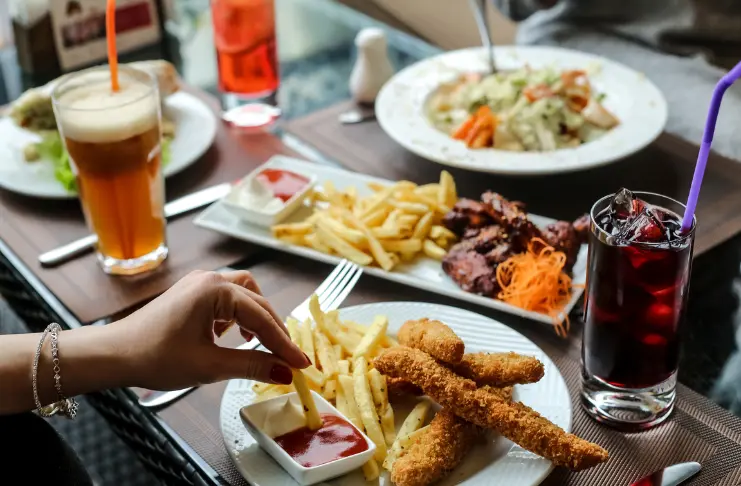
The U.S. fast-food footprint continues to expand as demand consistently grows across multiple consumer groups and channels. Here are the key forces shaping this growth-
1. Convenience Culture and Time-Pressed Consumers
For most Americans, time is the most limited resource, and fast food fills that gap. With urbanization and high workforce participation, the need for quick, ready-to-eat meals is also rising.
Today’s consumers want meals that fit into their daily routines, between work commitments, errands, and family life. Fast food satisfies that demand with low preparation and wait times without requiring a full dining-in experience.
2. Value Perception vs Full-Service Restaurants
Value is another reason why fast food is in demand. Even as discretionary spending shifts, many consumers continue choosing quick service because it feels more affordable and offers clear portion value.
The fast food sector grew at a 3.7% CAGR to reach roughly $412.7 billion by 2025, outpacing some full-service segments and illustrating continued consumer reliance on quick meals.
Consumers often compare cost with perceived quality and portion size. Fast food outlets offer value meals, bundles, and deals more aggressively than many full-service competitors, keeping demand strong even when broader dining spending fluctuates.
3. Delivery, Takeout, and Digital Ordering
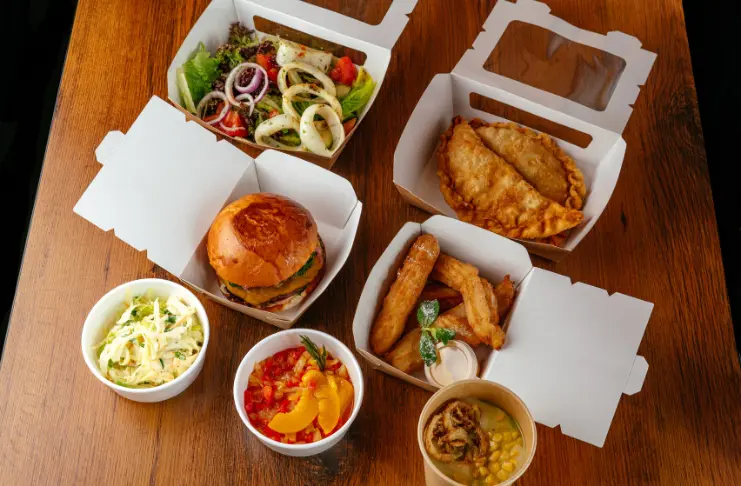
Off-premise dining has become a staple of how Americans eat, and popular fast food chains have adapted quickly.
- During the pandemic era and beyond, the U.S. food delivery market more than doubled, building on historical growth rates and making delivery a core revenue stream for restaurants of all types.
- Consumer data indicates that around 23% of Americans prefer having fast food delivered, while another 10% favor online ordering and pickup.
Takeout and delivery now drive a substantial share of restaurant traffic, with recent industry reports showing about 75% of all restaurant orders are takeout or delivery. This trend makes fast food more attractive than sit-down dining for many consumers.
4. Familiarity and Brand Recognition
Brand strength drives repeat visits. Many fast food concepts have become household names across generations, and that recognition helps bring in repeat business when choosing where to eat.
Familiar menus and consistent customer experiences make marketing more efficient and reduce the trial barrier for customers, which helps large chains convert casual diners into frequent guests.
5. Portion Expectations and Price Anchoring
Consumers don’t just want fast food because it’s fast. They want perceived value in portion size and pricing psychology.
Fast-food pricing strategies use anchoring (e.g., combo deals, upsell bundles) to make higher-priced tiers feel more economical relative to classic full-service offerings. This approach keeps customers coming back for both everyday meals and occasional indulgences.
EXPERT OPINION
The Role of Franchising in Fast Food Restaurant Expansion
Franchising is one of the biggest reasons the U.S. fast food industry continues to scale to hundreds of thousands of locations. It spreads capital requirements across thousands of owner-operators while allowing brands to grow quickly, standardize operations, and compete on a national scale.
Share of Outlets Run by Franchisees
The vast majority of chain restaurants in the U.S. rely on franchise operators:
- Roughly 74% of all chain restaurant locations are operated by franchisees or licensees rather than corporate ownership. This represents more than 191,000 franchised units among nearly 260,000 total chain restaurants.
- In specific fast food systems, this share can be even higher. For example, historically, around 82% of McDonald’s U.S. restaurants were owned by franchisees, and several other major brands follow similar models.
- According to market projections, fast food franchises were expected to grow by about 2.2% in 2025, adding new establishments even as some independents face tighter competition.
This franchise dominance enables brands to aggressively expand their footprint without deploying their full capital.
A broader look at franchising in the U.S. shows that food franchises account for about 30% of all franchise establishments nationally and a large share of total franchise employment and output.
Franchise vs. Corporate Ownership
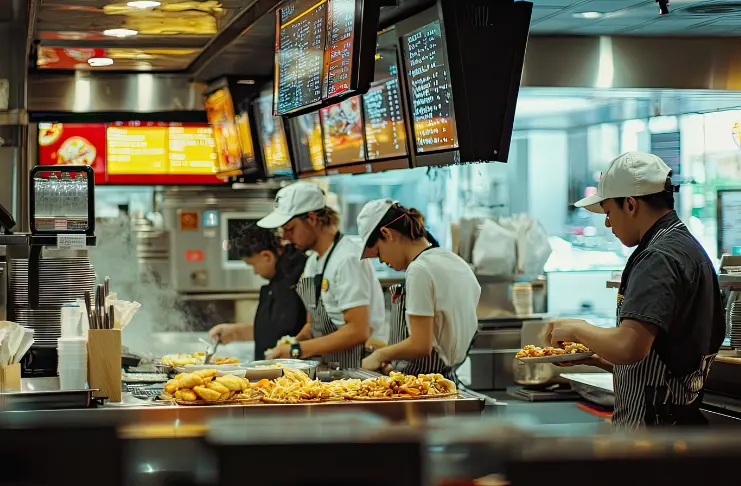
Franchise ownership changes the expansion equation-
Franchise Model
- Franchisees invest their own capital to build, staff, and operate units.
- Operators carry local risk and incentivize performance because earnings tie directly to store success.
- Parent brands collect royalties, marketing contributions, and technology fees without financing most builds.
Corporate Ownership
- Brands retain full control but must fund expansions themselves, which limits expansion speed and increases capital strain.
- A minority of units remain corporate-run for strategic control points, test kitchens, or high-visibility markets.
Across fast-food chains, multi-unit franchisees dominate the landscape, a trend that lowers overhead for parents and speeds network growth.
What are the Advantages of Franchises for Fast Food Restaurants?
The franchise model offers real operational benefits that directly influence how fast food brands expand and grow. Key advantages include:
1. Supply Chain Power
Larger franchised systems can negotiate better pricing on food, packaging, and equipment because they purchase at high volume. That lowers unit costs and protects margins for both franchisor and franchisee, especially when input prices rise.
2. National Marketing
Franchised brands pool marketing dollars to fund national advertising, loyalty programs, and brand-building activity that independents simply can’t match. Local operators get the benefit of national visibility without carrying the full spend alone.
3. Shared Technology Infrastructure
Franchisees often have standardized POS systems, online ordering, loyalty, inventory management, and delivery integrations across thousands of units. That spreads tech investment over a larger base, reducing per-unit cost and speeding up adoption of new tools.
4. Data and Performance Benchmarking
Big franchise networks operate with huge volumes of unit-level data, from labor efficiency to menu mix and throughput. That allows brands to test, optimize, and roll out proven strategies quickly, helping new and existing locations ramp up faster.
5. Financing and Expansion Support
Scale improves access to capital for operators and investors. Lenders are more comfortable financing units tied to established systems with predictable economics, which accelerates market expansion.
6. Training, Support, and Talent Pipelines
Franchised brands also benefit from centralized training, playbooks, and leadership development, creating consistent execution across markets and reducing onboarding time for new staff and new stores.
Fast Food Restaurants in America: Consumer Behavior and Preferences

Understanding the size of the fast-food footprint is only half the picture. The other half is consumer behavior. This includes how often people choose fast food, how much they spend, and what drives those decisions. These patterns explain why the category continues to scale, even in a competitive and cost-pressured environment.
A. Frequency of Fast-Food Consumption
- 80% of U.S. consumers eat fast food at least once a month, and 43% do so four or more times a month.
- About 65% of people consume fast food at least once a week.
- 13% of Americans report eating fast food every day.
- 95% of people have eaten fast food in the past 12 months, showing near-universal penetration.
B. Spending and Purchase Behavior in Fast Food
- Consumers spend an average of about $148 per month on fast food, reflecting how routine quick-service dining is in household budgets.
- Online food delivery is the top preference for purchasing fast food for Millennials.
- 70% of U.S. diners say they’ve used delivery in the past month, and fast-food/quick service restaurant brands are among the most frequently ordered categories.
- 63% of Americans choose fast-food cuisine when they order takeout or delivery, making it the single most popular category for off-premise spending.
C. Preferences & Attitudes
- Consumers in the South and West regions report a higher frequency of eating fast food, with about 10% getting fast food more than 10 times per month.
- On any given day, roughly 32% of adults aged 20 and older consume fast food, with younger adults more likely to include it as part of their daily diet.
- Younger adults (ages 18-34) have the highest regular consumption, with around 42% eating fast food several times per week, compared with lower shares among older adults.
How Ordering Channels Influence Fast Food Operations?
Ordering behavior can influence the way restaurants design locations, staff teams, and plan growth. Let’s take a look at them-
1. Drive-Thru

Drive-thru is a dominant ordering channel in the U.S. fast food market.
- Industry reports show 40% of American diners prefer drive-thrus to purchase fast food.
- That share increased during the pandemic and is consistently growing because consumers still choose car-based ordering for speed and convenience, especially in suburban markets.
Because such a high share of revenue comes through drive-thrus, restaurants are designed around traffic flow, order accuracy, and throughput optimization. That directly impacts building footprint, staffing patterns at peak times, and even site selection strategy.
2. Mobile Ordering and Delivery
Digital ordering keeps expanding, driven by loyalty apps and third-party delivery platforms.
- At many leading QSR brands, online and mobile orders now represent 20%+ of total transactions, and much higher for some chains.
- Delivery usage remains widespread, with a majority of U.S. diners reporting delivery use in the past month, and fast-food cuisine consistently ranking as the top delivery category.
Mobile and app ordering have streamlined operations by shifting volume away from traditional counter queues and into off-premise workflows. Kitchens now cater to drive-thru, walk-in, mobile, and delivery orders simultaneously, , which means they often need-
- Dedicated pickup shelves or cubbies
- Separate staff roles for digital order assembly
- Integration of third-party delivery platforms into POS systems
These changes make fast food operations more complex but also contribute to higher average checks and customer frequency over time.
C. In-Store Ordering
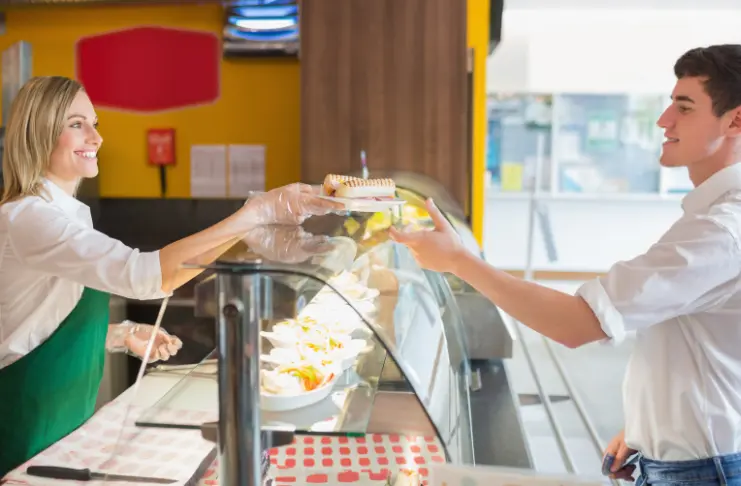
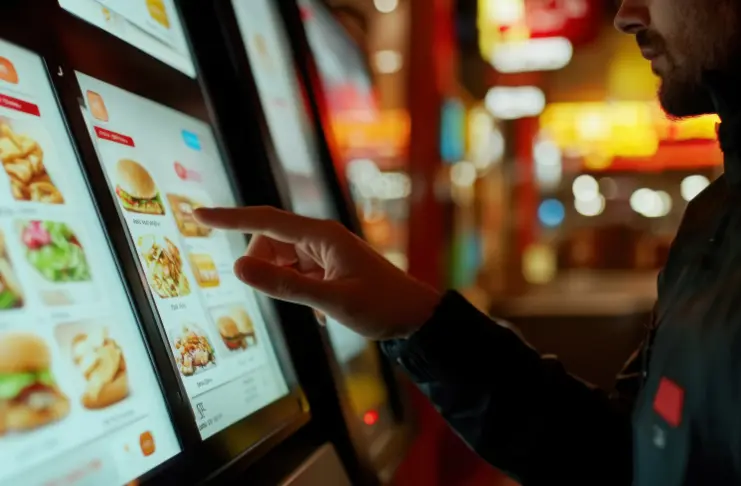
Even though drive-thru and digital channels dominate sales, in-store ordering still plays a meaningful role in fast food, especially in dense urban areas and walk-up locations. Many popular quick-service brands accommodate counter, kiosk, or table ordering for customers who choose to dine in or pick up on site.
Even as off-premise channels expand, in-store ordering supports brand visibility, upsell opportunities through menu displays and staff suggestions, and complements digital loyalty engagements. It’s also a key touchpoint for younger or experience-oriented diners who value customization and brand interaction.
Conclusion
Taken together, the data show how the fast-food category in the U.S. has reached its current scale through a combination of high location density, franchise-led expansion, strong consumer demand, and ordering channels built for speed and volume.
The data across consumption patterns, spending behavior, and channel usage explain why fast food continues to support such a large footprint.
Understanding these patterns is essential for fast-food restaurant owners to evaluate where the market is still expanding, where growth opportunities lie, and how fast-food restaurants continue to fit into everyday eating habits across the country.