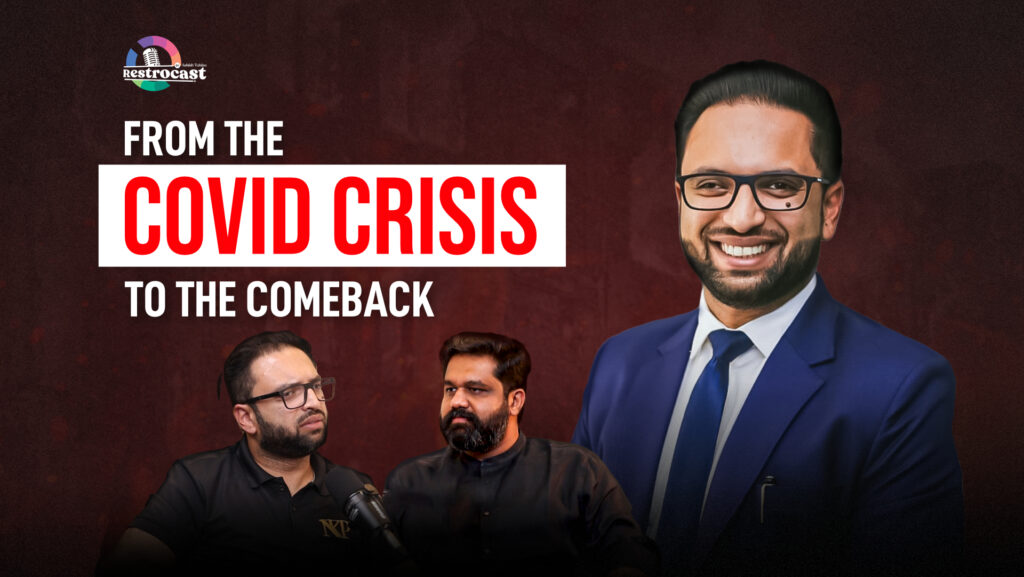

In this candid conversation, Ashish Tulsian sits down with Shakir Haq to unpack the moments that shaped him as a restaurant leader, from early lessons learned on the floor to high-stakes decisions during COVID, and the shift from “growth at any cost” to building the systems and culture required for sustainable scale. The discussion moves beyond outlets and numbers to something deeper: why restaurants are ultimately a people business, and why consistency, governance, and intent determine whether a brand can truly expand without diluting the experience.
Shakir, take us back to the start. What did the early days in the restaurant business look like for you?
Shakir Haq: I was inspired by my dad from the time I was 9 or 10. I would hop into his car on weekends and go with him to the restaurant. The moment he walked in, the whole vibe changed. People called him “Tiger.” He was obsessed with perfection, protocols, process, and quality control. Even the smallest lapse, like serving our complimentary gravy cold, could set off a tsunami. But what stayed with me even more was how he treated people. He respected the cleaning staff, security, cooks, waiters, and everyone. He taught me something that never left: we are in the people business, not the food business. Everything in our business starts and ends with people, from vendors to staff to customers.
That “people business” line is powerful. How did your father explain it to you?
Shakir Haq: He said everything we do involves people. If you serve a customer well, he smiles and comes back; that’s how a brand is built. If the day is bad and the food is not great, what else will ensure the customer still returns? And he went further. He said it doesn’t even start with the customer. It starts with the vendor, because you can’t cook unless you procure. So people are the foundation, and nothing can replace that in our business.
You describe 2018 to 2020 as being a “watchman” in the business. What do you mean by that?
Shakir Haq: For those two years, I was mostly observing. I didn’t know what to say, what to project, or even fully understand the systems. It was painful. But it also signaled to people that I was planning something, even if quietly. After my dad passed, my wife’s uncle told me something I’ll never forget: my father’s life is like an encyclopedia. I will face the same chapters, and my job is to change the outcome. But the key is intent, niyat. And he warned me: don’t start off big, endure, move slow and steady. That’s why I watched. If I took big actions overnight, the consequences could sink us, because we were already on a thin line financially.
Then COVID hit. What was the situation like for Empire when lockdowns started?
Shakir Haq: It was brutal. We had opened an outlet three days before the lockdown announcement, and we were already in debt, around 25–30 crores. Restaurants shut down, thousands of people had no salary, and their bank accounts were negative. It felt like: Is this the end of Empire? What saved us was the goodwill built by my grandfather, father, and uncles. People came forward asking how they could help us bounce back. We started Zoom calls, and my team’s assurance was clear: “We are here for you, for your father, for your uncle.”
Once you had the money, what were your immediate priorities?
Shakir Haq: Landlords, vendors, and staff. We had around 67 landlords, including outlets and staff rooms. Some waived rent for months because of the relationship. I used the money to start clearing obligations, even though payables were higher than what I had. I told staff openly: I will pay you back, but I don’t know when. Then we reopened in phases and built a contactless dining program with strict safety protocols, including tray-based service and even live kitchen visibility on screens. Delivery platforms helped keep kitchens running. Revenue dropped massively, and it took over a year to return to pre-COVID levels.
Let’s talk about growth philosophy. You’re strongly against “scale will fix it.” Why?
Shakir Haq: Because if the taste is not the same in outlet A and outlet B, we haven’t cracked it. What’s the point of scaling? We made mistakes, including burning money in the cloud kitchen hype cycle. Then I realized our backend was broken: procurement governance was weak, the central kitchen setup was chaotic, vendors were unmanaged, and aggressive growth made us ignore fundamentals. Even the same chef could produce inconsistent results when volume and complexity increased. That’s when the idea of a Centre of Excellence started forming for me.
What does the Centre of Excellence actually represent for you?
Shakir Haq: It’s about building artisanal creativity with industrial consistency. We expanded the facility significantly, invested heavily, and brought in technology, IoT, and intelligence at a factory level to replicate what a great chef does in a restaurant, but consistently at scale. We had to balance science and art to create magic, while maintaining quality and precision.
Your expansion strategy is unusually selective. What’s the thinking behind Vision 2030?
Shakir Haq: Vision 2030 is not “open hundreds of outlets.” I’m looking at around 25 more outlets, with a focus on cultural and structural shift. Empire is a regional brand with regional importance. Karnataka is home turf, and I want to strengthen the state first and expand nearby thoughtfully. There are markets I consciously avoid because they can dilute the brand’s “excitement” and value for the customer. The bigger focus for Vision 2030 is mindset and culture, including how leaders treat people, down to basics like calling staff by their names.
What’s your view on Gen Z as customers and as the next generation shaping dining habits?
Shakir Haq: Gen Z is more balanced and purposeful than we give them credit for. We’re seeing night business reduce, and Gen Z plays a role because they are more health-conscious, drink less, and don’t want to stay out late. But they still want comfort food and a safe, predictable environment. They’re clear about what they want and can switch quickly, so consistency matters even more. And Gen Alpha is a different level altogether, very clear, very vocal, and potentially far more entitled.
Finally, what’s your learning system? How do you keep growing?
Shakir Haq: I learn by following my gut. If something catches my attention and my gut says there’s something in it, I try it. A lot of learning comes from mistakes and negative outcomes. I’m not a voracious reader, but I learn from movies, situations, and people. If you want three recommendations: The Blacklist, the Batman trilogy for the “why do we fall” lesson, and Ratatouille for precision and zero compromise. Even today, we’re dealing with challenges like switching to natural alternatives in recipes while protecting product experience, because consistency is non-negotiable.
Conclusion
Shakir’s reflections show what happens when leadership shifts from reacting to daily fires to intentionally rebuilding fundamentals, protecting culture, and designing systems that hold up under scale. Whether it’s navigating a crisis, clearing debt to restore stability, or investing in a Centre of Excellence to deliver “artisanal creativity with industrial consistency,” the larger message is clear: sustainable growth doesn’t come from opening more locations. It comes from earning trust, every day, in every outlet, with every plate.