

What is Restaurant Service?
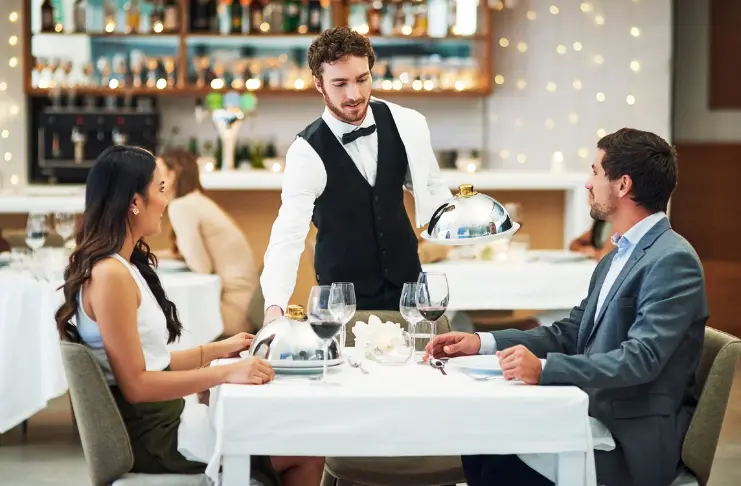
Restaurant service refers to how food and beverages are delivered to customers, from the moment they walk in to the time they leave.
It includes everything from greeting guests and taking orders to serving dishes, handling requests, and managing billing. Good service ensures customers feel comfortable, valued, and have a satisfying dining experience.
Beyond just serving food, restaurant service shapes how customers perceive your brand. Service style can vary depending on the type of restaurant, such as quick-service, casual dining, or fine dining. The right service approach helps balance speed, customer experience, and operational efficiency.
Why Does Restaurant Service Style Matter?
Service is the framework that connects a restaurant’s concept to its execution. It influences how guests interpret the value of a meal, operational efficiency, and the business’s ability to sustain its margins in the long term.
Here’s why the service style is important for success in the restaurant industry-
A. Alignment with Customers, Menu, and Pricing
The chosen service style has to reflect the restaurant’s positioning. Fine dining works with prompt tableside service, while a low-cost eatery benefits from fast, simple service. When service, menu, and pricing are misaligned, both brand perception and profitability suffer.
B. Impact on Customer Experience and Loyalty
Guests often judge their dining experience more by how they are served than by what they eat. Service shapes how long they stay, how they feel about the brand, and whether they recommend it to others. Positive, consistent service builds loyalty that food quality alone cannot guarantee.

C. Operational Efficiency and Staff Training
Different types of services in restaurants demand different skill levels. Fine dining requires expertise in etiquette and presentation, while food trucks rely on systems that prioritize speed and standardization. These decisions also affect recruitment, training costs, and daily efficiency.
D. Revenue Strategy
Service also determines how much a restaurant can charge and how it manages costs. High-touch, attentive service allows higher prices and bigger margins, while fast, simple service works best for high-volume, low-cost operations. Choosing a style that fits the concept helps protect profits and avoid wasted resources.
INDUSTRY INSIGHT
What are the Different Types of Restaurant Food Services?
Restaurants operate within a wide range of dining formats. Understanding the key characteristics of each category helps operators design a concept that meets market demand while optimizing efficiency and profitability.
1. Fine Dining Service
Fine dining represents the highest level of service sophistication, where every detail, from the atmosphere to meal presentation, is carefully curated. These establishments typically feature an upscale ambiance, multi-course menus, and highly trained staff capable of delivering precise, attentive service.
Fine dining service is a type of formal waiter service which includes-
Personalized dining experience: Staff often guide guests through the menu, recommend wine pairings, and tailor service based on preferences.
Advanced service elements: Tableside preparation, specialty plating, and formal serving techniques are common.
High training and coordination standards: Teams require strong product knowledge and service training to maintain consistency and justify premium pricing.
2. Casual Dining Service
Casual dining restaurants provide sit-down service with moderate pricing, creating a balance between comfort and quality. Unlike fine dining, the environment is laid-back and approachable, making it accessible to a broader range of customers while still offering table service and attentive staff.
Menus feature a wide variety to appeal to diverse tastes, with familiar dishes that encourage repeat visits.
This segment is particularly popular among families, groups, and everyday diners seeking consistency without the formality of high-end establishments.
It relies on smooth front- and back-of-house coordination to maintain a pleasant dining pace without compromising service quality.
3. Fast Casual Service
A fast casual restaurant sits between casual dining and quick service, offering higher-quality ingredients and fresh preparation with shorter wait times. As a result, ordering often happens at the counter or via self-service kiosks, and limited table service reduces labor demands while keeping the dining experience more personal than a typical fast-food outlet.
Urban markets have driven much of fast casual’s growth, where convenience and menu customization matter. Operators need kitchens and workflows that support fast turnaround without compromising quality, and menu design emphasizes flexibility and freshness to meet customer expectations.
Urban markets have driven much of fast casual’s growth, where convenience and menu customization matter. Operators need kitchens and workflows that support fast turnaround without compromising quality, and menu design emphasizes flexibility and freshness to meet customer expectations.
4. Quick Service Restaurants
Quick-service restaurants focus on speed, consistency, and high-volume operations. Customers expect fast and accurate service through drive-thru lanes, counters, or delivery apps. Menus are usually standardized to support faster preparation and consistent output across locations.
In the QSR model-
Workflows are designed to handle large order volumes with minimal wait time.
The staff is trained to maintain accuracy and pace for higher operational efficiency.
The use of technology, such as kitchen displays and digital ordering systems, helps streamline operations, ensuring that orders move quickly from placement to fulfillment.

5. Family Style Service
Family-style service, also known as English service, involves serving large portions of food in shared dishes placed at the table. Customers serve themselves, creating a more social and interactive dining experience. This style is common in casual restaurants, group dining, and certain traditional cuisine formats.
6. Self-Service
Self-service style allows customers to select or collect their food without direct table service. It is widely used in food courts, quick-service outlets, and modern digital-first dining formats.
This model typically works best where-
Speed is a Priority: Customers can order, pick up, and leave quickly
Operators Want to Control Labor Costs: Since customers are picking orders themselves, fewer service staff are required
There is a Well-Defined Service Flow: Customers should be able to order and collect food without confusion or long wait times
7. Cafeteria Service
Cafeteria service is built around a serving line where customers move through food stations, select items, and then proceed to billing. It is widely used in corporate cafeterias, hospitals, schools, and other institutional dining setups where large groups need to be served quickly and consistently.
To keep this service running smoothly, operators usually focus on-
Managing Queue Movement: Keeping lines moving steadily to avoid crowding during peak meal times
Portion Consistency: This is done through pre-served items to help control food cost and reduce serving variations
Regular Menu Rotation: Keeps daily diners interested and prevents menu fatigue
8. Buffet Service
Buffet-style dining offers customers the freedom to serve themselves from a variety of dishes laid out on a spread. This self-service model is popular in settings like hotels and large group events. Since guests serve themselves, buffets can handle large crowds efficiently without requiring heavy table service staffing.
However, food safety and quality control can get operationally complex. Shared serving stations increase the risk of contamination if hygiene isn’t tightly managed. So, teams usually need to-
Monitor food temperature continuously
Replace serving utensils regularly
Refill dishes in smaller, fresher batches
Keep service areas clean throughout meal periods
9. Banquet/ Chinese Banquet Service
Banquet service is designed for large group dining, events, and celebrations, with food served in courses or shared platters. Chinese banquet service specifically focuses on shared dishes placed on rotating tables (lazy Susans) for group sharing.
This service typically depends on-
Coordinating multiple dishes across large guest groups
Staff coordination
Event planning because it impacts the menus and service style
10. Counter Service
Counter service is centered around quick ordering and fast food handoff, where customers place orders, pay, and collect food from a service counter. It is commonly seen in bakeries, quick-service restaurants, dessert shops, and takeaway-focused outlets.
11. Tray Service
Tray service is commonly used in hospitals, room service operations, airlines, and institutional dining. Food is prepared, plated, and delivered on trays directly to customers or patients.
This model usually requires attention to-
Order Accuracy: Especially important in healthcare or controlled diet environments.
Temperature Control During Transport: To ensure food quality at delivery.
Timely Delivery Coordination: To manage timely service across multiple rooms or zones.
12. Delivery-Only Service
Delivery-only service operates without a physical dining space and focuses entirely on online and app-based orders. Often called ghost, dark, or cloud kitchens, this model helps reduce costs by removing the need for dine-in space and front-of-house staff. Customers place orders through delivery apps or the restaurant’s own digital channels.
Customers increasingly favor this format for convenience, speed, and the ability to access diverse cuisines from home or work. In 2025, the U.S. ghost kitchen market is projected to reach $98.28 billion, with a compound annual growth rate (CAGR) of 62.3% through 2032.
What are the Various Types of Table Service Styles?

A. Formal Silver Service
Formal silver service is an elaborate table service style, typically followed at fine dining restaurants, reserved for special occasions where guests expect a high level of skill and attention. It focuses on precision, presentation, and personalized guest interaction.
How it works: The entire dining experience is meticulously curated, with multiple servers bringing each course separately to the table on an individual plate.
Suitable formats: This style suits fine dining restaurants, luxury hotels, and high-end banquet or private dining settings where premium guest experience is the priority.
B. Informal Silver Service
Informal silver service follows the same service style but in a more relaxed and less ceremonial format. The focus is still on quality presentation and attentive service, but without the strict formalities of traditional fine dining service rituals.
- How it works: Food is presented by servers at the table and encourages higher friendliness and relaxed atmosphere. Service is quicker and more conversational compared to formal silver service.
- Suitable formats: This style works well in upscale casual dining, boutique hotels, and premium restaurant businesses that want elevated service for breakfast, lunch, or dinners.
C. American Service
American service, or plated service, is the most common dining style in U.S. restaurants, where pre-plated meals are delivered directly to guests. Diners expect reliable service, consistent portions, and timely delivery of their orders.
The experience emphasizes efficiency, predictability, and straightforward hospitality rather than elaborate presentation.
How it works: Kitchen staff prepares and plates dishes in advance. Servers then deliver meals to the table, coordinating timing so multiple tables can be served efficiently.
Suitable formats: This service style suits casual dining, mid-range sit-down restaurants, and fast casual concepts. It works best where standardization and operational efficiency are key.
D. French Service
French service is a formal, high-end style where dishes are often prepared or finished tableside. It features an elegant, personalized experience, with attention to presentation, timing, and interactive elements such as tableside carving or flambéing.
How it works: In French service, chefs or trained waitstaff may finish sauces, carve meats, or assemble dishes in front of diners. Each course is coordinated carefully to ensure perfect timing, and service is highly choreographed to maintain flow and presentation.
Suitable format: French service is most appropriate for fine dining restaurants, luxury hotels, and formal events where the objective is to provide a premium, memorable dining experience.
E. Russian Service
Russian service focuses a lot on presentation, where the food is served from large platters directly onto guests’ plates. The style conveys elegance and formality without the labor intensity of French service.
The service is highly polished and organized, with uniform portions and smooth timing, creating a refined dining experience suitable for events or formal meals.
How it works: Waitstaff brings large platters to the table, serving guests in a coordinated sequence. The system allows multiple diners to be served simultaneously while maintaining presentation and portion consistency.
Suitable format: It works well in banquets, corporate events, and formal group dining, particularly when multiple courses are served.

F. Gueridon / Tableside Service
Gueridon service involves a portable trolley used by waitstaff to prepare, finish, or flambé dishes in front of guests. This approach adds theatrical flair and a personalized touch to the guest experience. Customers expect both culinary skill and entertainment, enjoying the visual preparation as part of the meal.
How it works: Dishes are partially prepared in the kitchen, then brought to the table on a gueridon trolley. Waitstaff complete final steps such as carving, tossing salads, or flambéing desserts directly in front of diners.
Suitable format: Gueridon service is typically found in fine dining establishments and upscale restaurants. It is ideal for high-end experiences where presentation, guest interaction, and a dining spectacle justify higher pricing.
G. Buffet Table Service
The buffet table service hybrid combines self-service with partial waiter assistance. Guests serve themselves from a buffet line for most dishes while staff handles beverages, desserts, or specialty items. This format allows diners flexibility in choosing portions and combinations, creating a casual yet structured experience.
How it works: Restaurants set up designated buffet areas with chafing dishes, heat lamps, or cold stations. Guests move along the line, selecting items at their own pace, while staff monitor replenishment and attend to specific table services like drinks or plated desserts.
Suitable format: This hybrid model is common in hotels, resorts, and event spaces where efficiency, variety, and guest autonomy are priorities.

H. Takeaway Service
Takeaway service focuses on meals prepared for off-premises consumption, prioritizing convenience, speed, and order accuracy. Customers expect well-packaged food that maintains temperature, presentation, and flavor during transport.
How it works: Kitchen staff prepares and portions meals with packaging designed for transport. Orders are either picked up at the counter or handed over through a dedicated takeaway window.
Suitable format: Takeaway service is common in fast casual restaurants, QSRs, and ghost kitchens.
What are the Elements of a Great Restaurant Table Service?
Great restaurant service starts with standardized processes and highly-skilled staff. Here are the key elements of exceptional service-
Accuracy: Taking and delivering the order exactly as requested is of utmost importance. Servers must remember the dishes ordered, modifications, allergies, and special requests. High accuracy reduces food waste, improves guest trust, and prevents service delays.
Attention to Detail: Small details like correct cutlery placement, plate presentation, cleanliness in the dining room, and refill timing can strongly influence guest perception. Consistency in these details helps create a polished and enjoyable dining experience.
Efficiency: Service should move smoothly without long waits or rushed interactions. Efficient coordination between kitchen and service teams helps ensure timely delivery and improves the overall customer’s dining experience.
Staff Skill and Knowledge: Well-trained staff should understand menu items, ingredients, preparation methods, and service standards. This helps them answer guest questions confidently and make informed recommendations.
Customer Interaction: Well-trained staff should understand menu items, ingredients, preparation methods, and service standards. This helps them answer guest questions confidently and make informed recommendations.
Atmosphere: Table service should support the overall dining environment. Lighting, music, cleanliness, and staff presentation all contribute to how guests experience the restaurant beyond just the food.
Restaurant service shapes the entire experience, sets expectations, and communicates a brand’s identity. Each style, whether a quick-service counter, a casual café, or an immersive fine dining setup, brings its own rhythm, challenges, and opportunities for connection with guests.
By experimenting thoughtfully and adjusting formats to fit both concept and customer needs, businesses can create memorable and distinct experiences. In this sense, service is both a tool and a differentiator, a way to define a restaurant’s identity in every meal it serves.