

About Spice Lounge (Buffalo Wild Wings India)
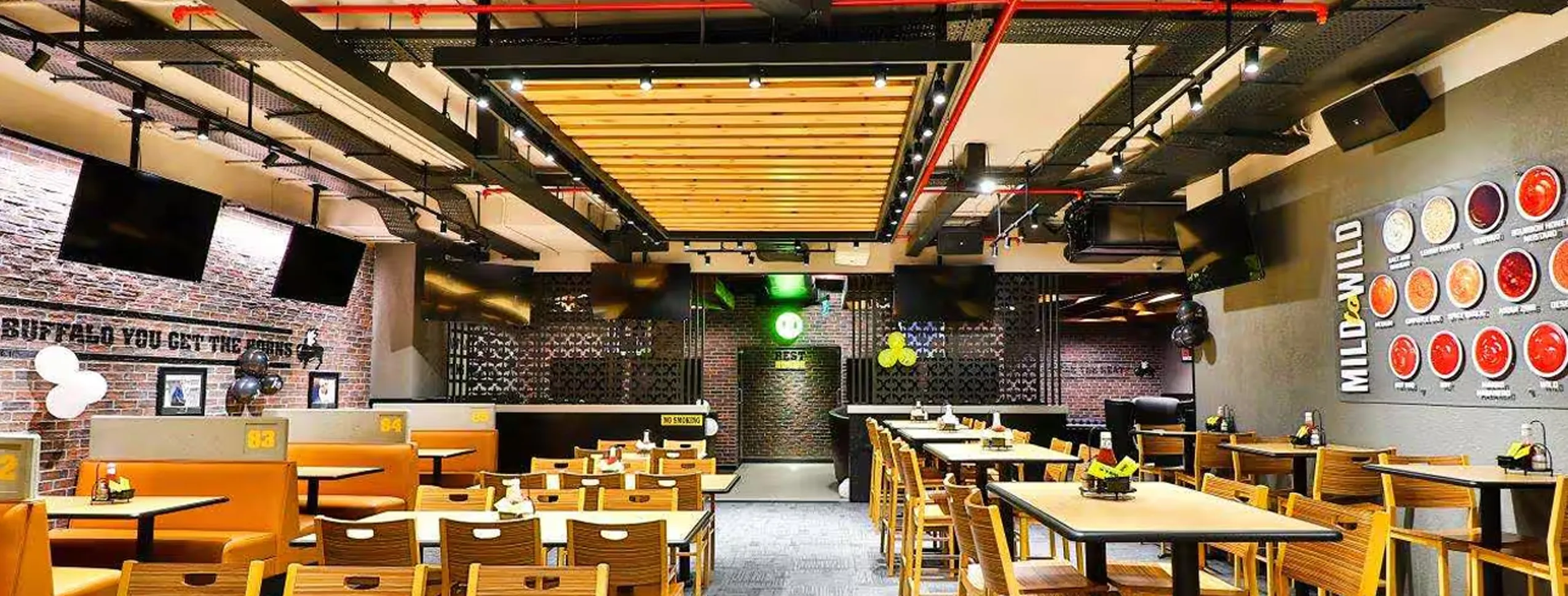
Spice Lounge Food Works Ltd is one of India’s fastest-growing multi-brand hospitality companies. Headquartered in Hyderabad, the company is listed on the BSE. It holds the master franchise for Buffalo Wild Wings in India and has since added Wing Zone, Blaze Kebabs, and Tortilla to its portfolio. The group has a team of more than 500 people, with over 75 years of combined experience in hospitality. Buffalo Wild Wings entered India in 2017 with its first flagship outlet in Jubilee Hills, Hyderabad. It brought the world’s largest sports-bar chain to a country where live sports, from IPL and ISL to PKL, have become a big part of the dining experience. For two IPL seasons, the brand also partnered with Sunrisers Hyderabad.
The Problem
Global brand, local tastes, new challenges
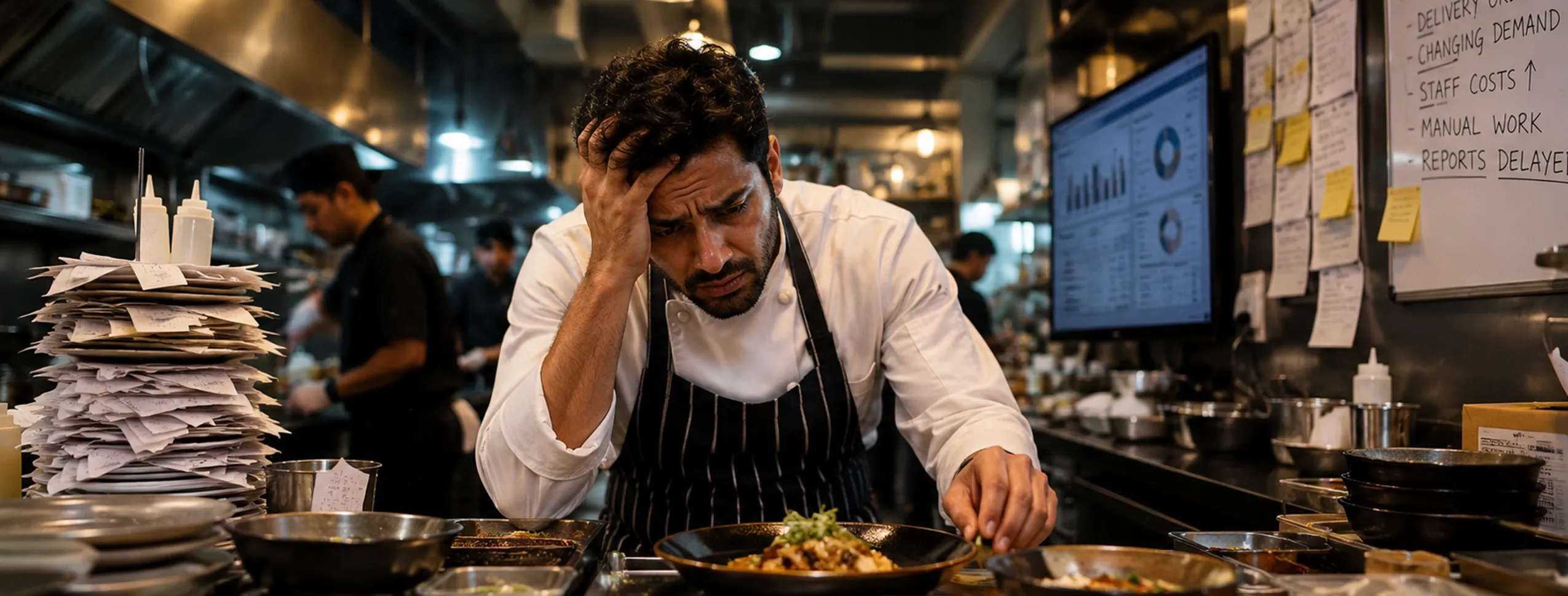
- Adapting a US menu for Indian customers – The BWW menu was created in Ohio, but Indian customers have different tastes and eating habits. The brand needed to change flavors, spice levels, and portions while still keeping the BWW experience. Doing these changes on a manual system was difficult.
- Management had no live view of outlets – There was no real-time view of individual outlet performance. Reports came in days later, slowing down decision-making.
- Customer demand kept changing – Post-COVID, more customers started ordering for delivery. Without live outlet data, it was difficult to plan ahead as old buying patterns kept changing.
- Cashiers relied on paper and manual work – A lot of the work was still done on paper. Cashiers were working in fixed shifts and when something went wrong, it was hard to find the error. Staff costs were also difficult to control.
- Teams could not easily trace outlet-level issues – When something went wrong, teams struggled to find out where or why it happened. Fixing the issue took time, and the same problems could happen again.
The Solution
One cloud stack across counter, kitchen, inventory, and delivery
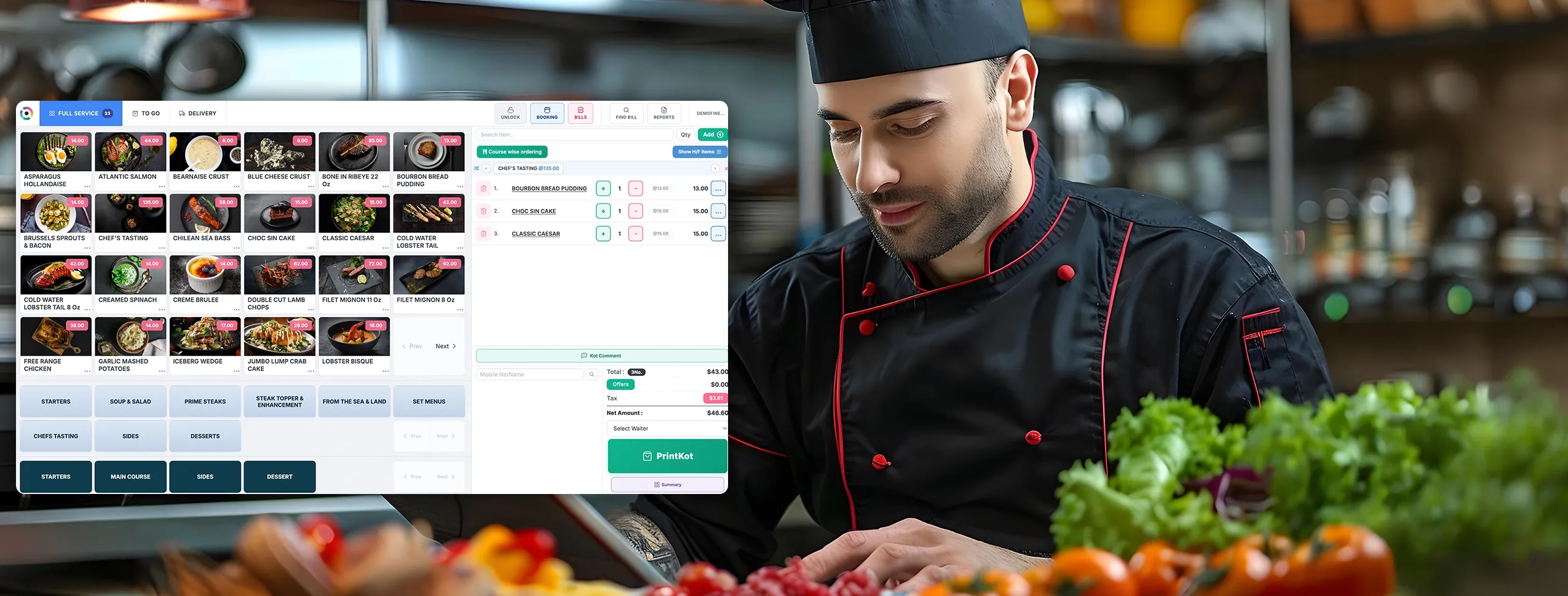
- Cloud-based billing across all outlets – All four outlets moved from the old legacy POS to Restroworks Billing on cloud. Sales, taxes, and modifiers are updated in real time and visible to all teams.
- KDS in every kitchen – The POS sends orders directly to the right kitchen station. Kitchen Display Systems (KDS) are configured for multi-station routing. There are no more paper tickets. And the extra rush on match nights is easy to manage.
- Central menu management for India – The Menu Management module keeps the global BWW menu and India-specific menu in one place. Regional changes can be made at the outlet level. When something changes centrally, it updates everywhere at once, with no spreadsheets or emails to store managers.
- Every billing action is tracked – Each cashier logs in with their own credentials. Discounts and cancellations are linked to the person who made them, when it happened, and which POS terminal was used. And any high-risk action needed to pass through the approval workflows.
- Central inventory management – The Restroworks Inventory module keeps stock levels updated in real time. The team can plan stock based on actual usage and prepare for busy match nights.
- Delivery channels connected to one POS – Orders from every delivery channel flow into the same POS and kitchen queue as counter orders. All menu, pricing, and stock updates can be made centrally from one place without affecting daily outlet operations.
The Outcome
Faster kitchens, tighter stock, room to grow
- Up to 30% faster kitchen throughput – With KDS live in every kitchen, BWW India was able to cut ticket times by almost 30%. The team served more guests during peak IPL evenings while also ensuring a good experience.
- Up to 20% less food waste, protecting margin on perishables – Food waste is down by up to 20%, especially on perishables like wings, beer and other short-life items. With less stock going to waste, outlets have better control over food costs.
- Faster decisions with live numbers – Leadership can see sales, discounts, and other activity as it happens. This means issues can be picked up and acted on the same day instead of showing up a week later. This reduces the need for constant supervision, and managers spend more time on the business.
- Expansion without rising operational cost – Now, with billing, kitchen, inventory, and delivery all running on a single cloud stack, new outlets can be added faster without having to rebuild the systems each time. This makes it easier to expand into new markets without any additional overhead expenses.